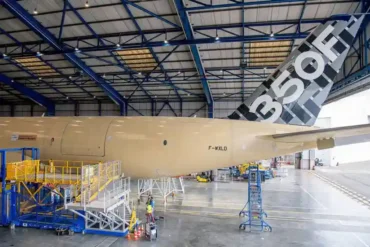
Airbus is approaching one of the most important milestones in the development of its new-generation cargo aircraft. The first Airbus A350F freighter, registered F-WXLD, is scheduled to make its maiden flight from Toulouse-Blagnac Airport on September 29, 2026, subject to weather, aircraft readiness, and final operational conditions. Airbus has confirmed the first-flight event through its A350F program materials, making the upcoming sortie the moment when the freighter moves from an extensively tested ground aircraft into an active flight-test program.
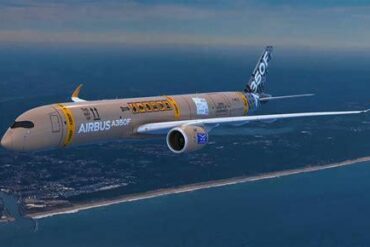
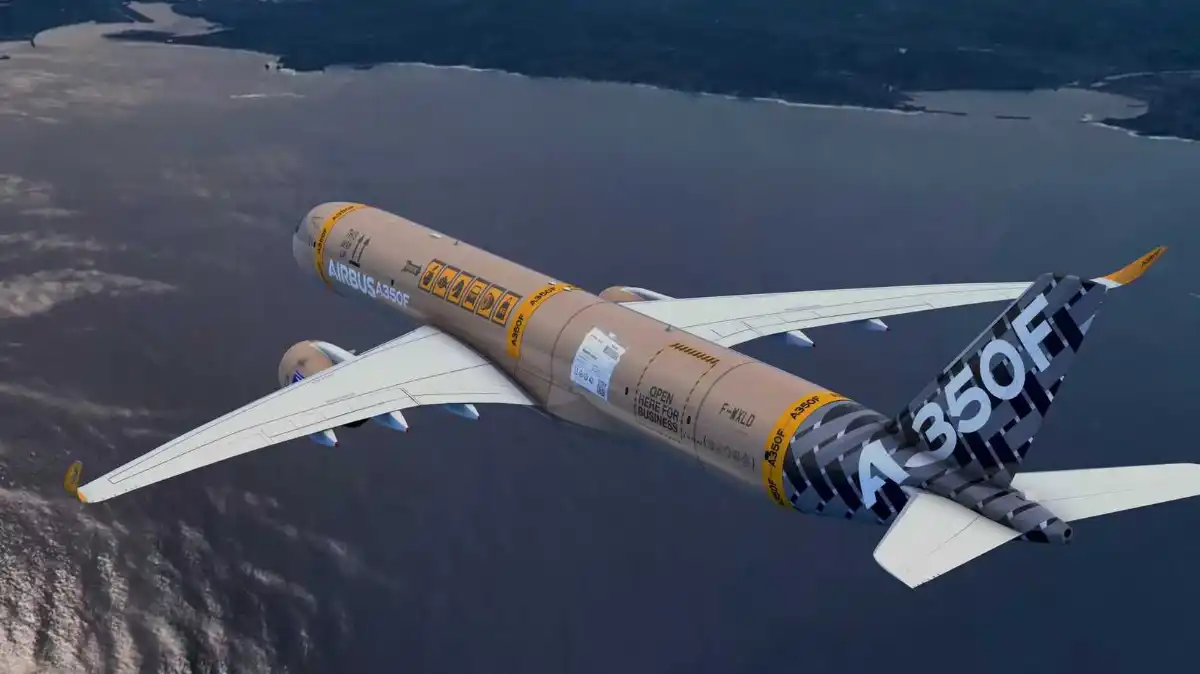
The aircraft has already attracted considerable attention because of its unusual appearance. Instead of wearing a conventional test livery, F-WXLD has been transformed into a giant flying parcel, complete with packaging-inspired graphics that reflect its future role in global air freight. Airbus selected the concept after receiving approximately 4,000 public submissions for the aircraft’s special livery. The result is unusually easy to recognize, even at a distance, and gives the first A350F an identity well before the type enters commercial service.
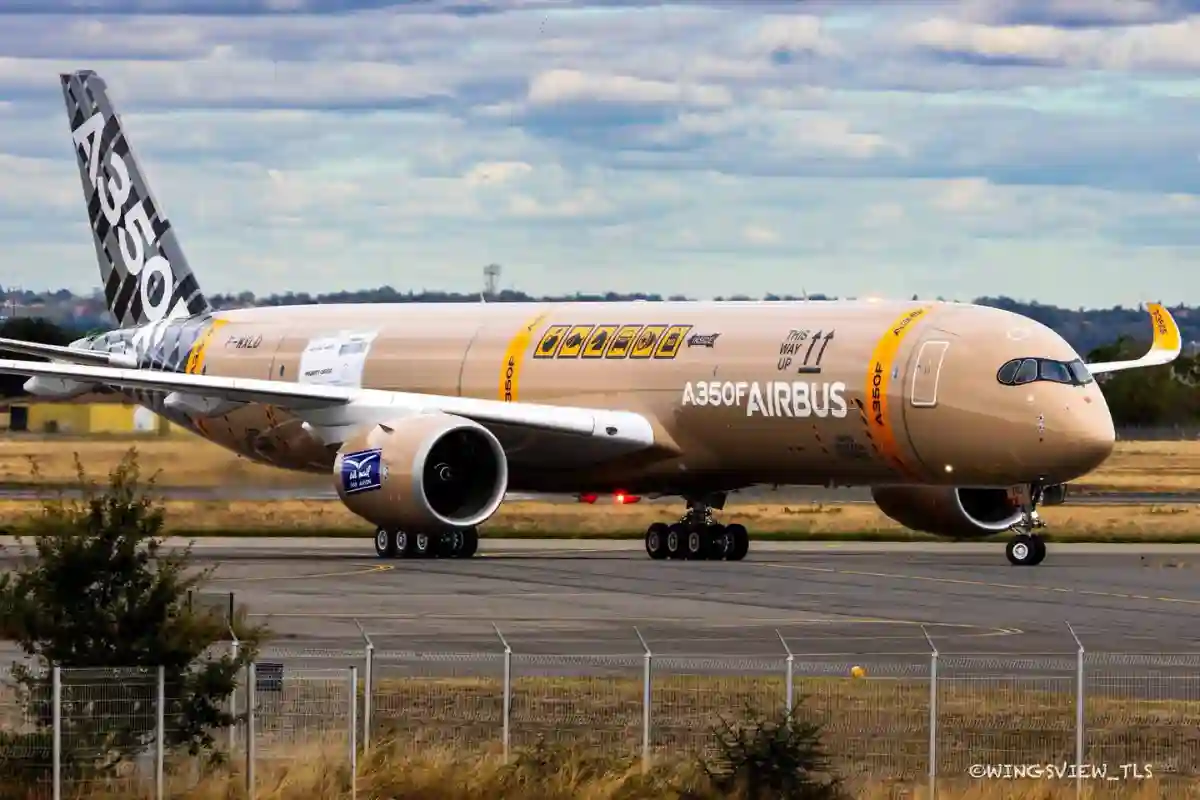
For aviation enthusiasts, however, the paint scheme is only the beginning. The first flight will provide the first opportunity to see the A350F operating in the air, rather than sitting inside the Airbus final assembly complex or undergoing ground testing. It will also start a much longer certification campaign designed to examine the aircraft’s handling, systems, structures, cargo equipment, performance, and operating envelope. Airbus says it is building two A350F aircraft for flight testing during 2026 and 2027, meaning F-WXLD will be the first aircraft in a broader development effort rather than a one-off demonstration aircraft.
The Airbus A350F First Flight Is the Start of a Major Test Campaign
A maiden flight is naturally the most visible milestone in any new aircraft program, but it is important not to treat the September 29 flight as the moment when every A350F specification will suddenly be proven. The aircraft will begin its flight-test career cautiously. Engineers need to establish basic handling characteristics, verify aircraft systems in flight, gather aerodynamic data, and confirm that the airplane behaves as predicted before moving toward increasingly demanding test conditions.
Airbus has already completed a substantial amount of preparation. Its A350F development program has included ground vibration testing, cargo loading trials, main-deck door testing, system checks, and simulator-based preparation for the first flight. Airbus describes a planned 400-hour flight-test campaign, underlining how much work remains after the aircraft first leaves the runway.
That makes the first flight valuable less because it will demonstrate the aircraft’s ultimate capabilities and more because it will validate the transition from ground testing to flight testing. A successful takeoff, climb, test sequence, and landing will give engineers real-world data that cannot be obtained entirely through simulation or static testing. Each subsequent flight can then expand the aircraft’s tested envelope and provide additional evidence for certification.
For observers, this means the most significant developments may occur after the headlines surrounding the maiden flight have faded. A growing number of test flights, increasingly complex test points, successful system evaluations, and progress toward certification will tell a much larger story about whether the A350F is moving smoothly toward entry into service.
A New Freighter Built Around Heavy Cargo
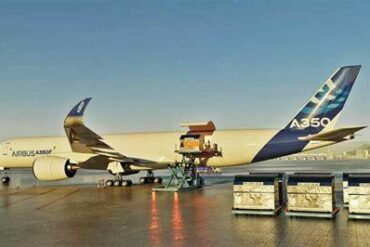
The A350F is not simply an A350 passenger aircraft with its seats removed. Airbus has developed it specifically for freight operations, with structural changes, cargo systems, a reinforced main deck, dedicated loading equipment, and a large main-deck cargo door. The aircraft’s design has been optimized around standard cargo pallets and containers while also allowing operators to handle outsize and heavy freight.
One of the most important features is the enormous main-deck cargo door. Airbus describes it as the largest main-deck cargo door in the commercial aviation industry, with a clear opening approximately 4.3 meters wide and 3.15 meters high. Its location toward the rear fuselage is intended to support efficient cargo loading while maintaining suitable aircraft balance as freight is loaded and unloaded.
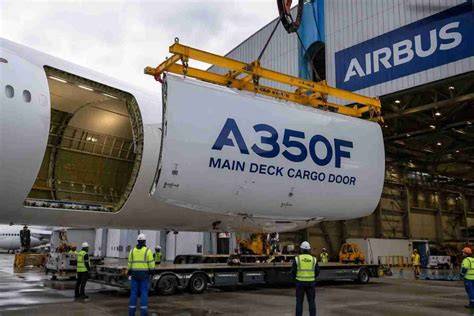
The door is also a structural engineering challenge. A large opening in an aircraft fuselage has to provide enough access for cargo while preserving the strength and stiffness required during flight. Airbus therefore developed the door using advanced composite materials and an electrically actuated opening and closing system. The surrounding fuselage and floor structure have also been designed to withstand the repeated loading demands associated with heavy freight operations.
The cargo floor and loading system are equally important. Airbus says the A350F can accommodate up to 30 standard pallets on the main deck and 12 on the lower deck in a general cargo configuration. An express configuration can use main-deck containers and lower-deck LD3 containers. The aircraft also includes temperature-control capabilities across its cargo compartments, broadening the types of freight that can be carried.
The Payload Figure Needs a Closer Look
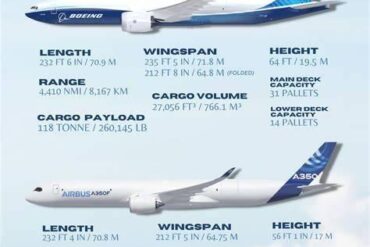
The A350F’s headline payload figure is another area worth watching because some early descriptions of the aircraft have used different numbers. Airbus’ current technical documentation lists a maximum structural payload of 111 tonnes, with a maximum range of approximately 4,700 nautical miles when carrying 109 tonnes. Earlier program material described a 109-tonne payload capability, while newer Airbus documentation has established the 111-tonne maximum structural payload figure.
That distinction matters because payload and range are closely connected in freighter operations. An aircraft may be structurally capable of carrying a particular maximum weight, but the amount of cargo it can carry on a specific mission also depends on fuel requirements, distance, airport conditions, and other operational factors. The A350F is therefore being designed around a balance between payload, range, volume, and operating efficiency, rather than one headline number.
During the first flight, there will be no reason to expect the aircraft to demonstrate its maximum payload capability. Flight testing normally progresses in stages, and the aircraft will initially be evaluated under controlled conditions before engineers gradually increase the demands placed on it. The first flight is about collecting reliable data, not recreating a fully loaded commercial cargo departure.
Why the A350F’s Efficiency Matters to Cargo Operators
The A350F arrives at a time when freighter operators are looking closely at fuel consumption, emissions, maintenance costs, and fleet age. Airbus says the aircraft can deliver up to 20% lower fuel consumption and CO₂ emissions compared with previous-generation aircraft with similar payload-range capability. The manufacturer also says more than 70% of the airframe is made from advanced materials, helping reduce structural weight.
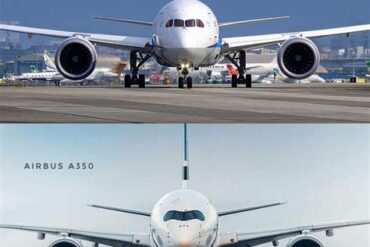
The aircraft is powered by Rolls-Royce Trent XWB-97 engines, a member of the same engine family used on the passenger A350. This commonality is significant for operators that already fly A350 passenger aircraft because it can contribute to common training, maintenance, and spare-parts arrangements.
Airbus also positions the A350F around forthcoming emissions requirements. The company says the aircraft is designed to fully meet the enhanced ICAO CO₂ emissions standards applicable to new production aircraft from the end of 2027. It is also designed to operate with up to 50% sustainable aviation fuel at entry into service, with Airbus targeting compatibility with 100% SAF by 2030 across its aircraft.
These claims will eventually need to be supported by the aircraft’s certification and operational experience. The flight-test campaign will therefore be closely watched not only by aviation enthusiasts but also by cargo operators evaluating the economics of replacing older large freighters.
Airbus Already Has a Commercial Audience Waiting
The A350F is not entering flight testing without customers. Airbus’ June 2026 figures listed 107 A350 freighter orders from customers, making the freighter a substantial commercial program before its first aircraft has completed certification.
The customer base includes major cargo operators and airlines such as Atlas Air, Air China Cargo, Etihad Airways, Starlux Airlines, Cathay Pacific, and Singapore Airlines. Atlas Air became Airbus’ largest A350F customer in March 2026 when it ordered 20 aircraft, while Air China Cargo increased its order to 10 aircraft in May.
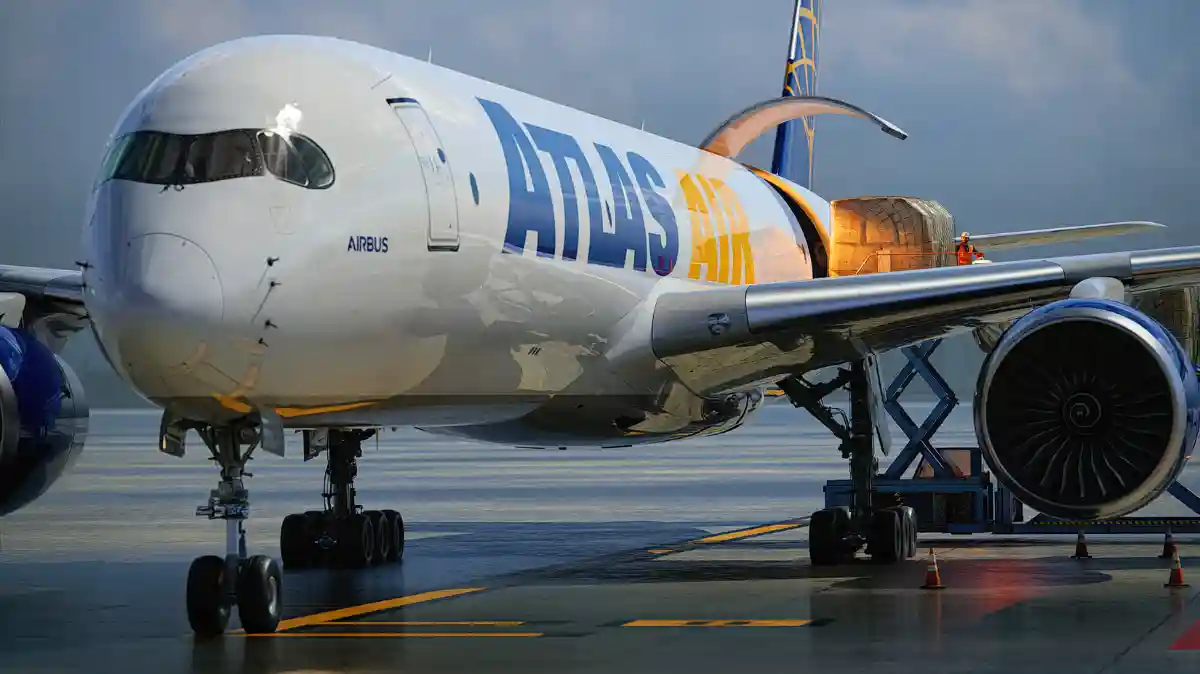
Those commitments give Airbus an important commercial foundation, but they also raise the stakes for the test program. Customers have ordered the A350F based on expected performance, capacity, efficiency, and operating economics. The aircraft now has to move from promised specifications to demonstrated capability.
The customer mix also shows that Airbus is targeting more than one narrow freight market. Large integrators, cargo specialists, airline cargo divisions, and leasing companies can use freighters in different ways. Some may prioritize long-haul general cargo, while others may emphasize express freight, special cargo, or network flexibility. The A350F’s design has therefore been developed to cover a broad range of cargo missions.
The Flying Parcel Livery Has Become Part of the Story
F-WXLD’s unusual livery deserves attention because it is not merely decorative. Airbus organized a public design competition for the aircraft and received thousands of proposals before selecting the packaging-inspired concept. The idea is particularly appropriate for a freighter because the airplane itself becomes a visual representation of the cargo it will eventually transport.
The design also solves a practical problem for aviation enthusiasts. Test aircraft can sometimes look anonymous, especially when they wear basic primer, temporary markings, or standard manufacturer colors. F-WXLD is the opposite. Its distinctive package graphics make the aircraft immediately identifiable in photographs, airport videos, and flight-tracking records.
That visibility could become useful throughout the test campaign. As the aircraft moves between Toulouse and other test locations, the flying parcel will remain recognizable even when the flight is not associated with a normal commercial airline schedule. For a new freighter program, that kind of visibility is unusual and gives aviation followers a particularly easy aircraft to track.
What to Watch When F-WXLD Takes Off
The first detail to watch will obviously be the takeoff itself, but the aircraft’s behavior afterward will be more informative. Observers will be able to see the first climb, the initial flight-test profile, the duration of the sortie, and the eventual return to Toulouse. The exact route may not resemble a normal cargo operation because engineers will be designing the flight around test objectives rather than transportation demand.
The aircraft’s attitude during climb and cruise will also provide the first visual impression of how the freighter looks in flight. Ground photographs reveal the large cargo door, landing gear, engines, wing, and fuselage, but airborne footage adds another dimension. The first flight will show how the completed freighter moves through the air and how its proportions appear when viewed from different angles.
Live flight tracking should become particularly useful once F-WXLD is airborne. A tracking map can reveal the aircraft’s route, altitude, speed, and return path, providing a much fuller picture than a short departure video. For enthusiasts following the aircraft throughout its development, the first flight will be only the beginning of a much longer sequence of appearances.
The scheduled date itself should also be treated as a target rather than an absolute guarantee. Weather, technical readiness, air-traffic considerations, and final test preparations can all affect a first-flight schedule. Airbus’ current public material identifies September 29 as the first-flight date, but aviation programs routinely retain flexibility around major test milestones.
The Real Test Begins After the Headlines
The most important story surrounding the A350F will not end when F-WXLD touches down after its first flight. In many respects, that landing will mark the beginning of the most demanding phase of the program. Airbus will need to build a large body of flight-test evidence covering aerodynamics, systems, performance, structural behavior, cargo operations, and reliability before customer aircraft can enter service.
That is why the A350F’s first flight should be viewed as a starting point rather than a conclusion. The aircraft represents Airbus’ return to the clean-sheet large-freighter market with a design that combines the A350 platform’s composite structure and aerodynamic technology with a purpose-built cargo architecture. Its 111-tonne structural payload, 4,700-nautical-mile range at a high payload, large cargo door, and targeted efficiency improvements give the program substantial ambitions.
If F-WXLD takes off as scheduled on September 29, aviation enthusiasts will witness the first airborne chapter of a freighter program that already has more than 100 orders behind it. The distinctive flying parcel will finally leave Toulouse as a real flight-test aircraft, carrying with it not commercial cargo but something just as important for Airbus: the engineering data needed to turn the A350F from an ambitious design into an operational freighter.