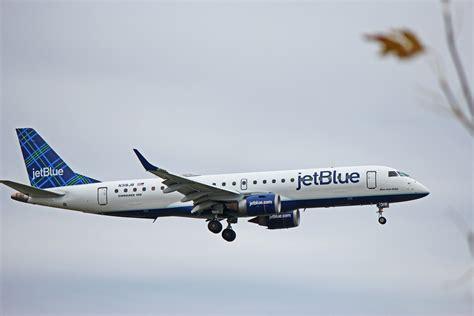
JetBlue Airways has officially set September 4, 2025, as the date for its final scheduled Embraer E190 flight, marking the end of an aircraft era and the completion of its fleet transition to the Airbus A220-300. The move signals a major step in the airline’s long-term strategy to modernize operations, cut carbon emissions, and improve passenger experience on domestic and regional routes.
The final E190 flight, listed under flight code B61900, will operate from New York’s JFK Airport to Boston Logan International Airport, departing at 12:00 PM and arriving at 1:15 PM. This historic flight will be the last to feature the Embraer E190, which has served the airline since 2005. JetBlue has gradually retired the aircraft type from most of its routes, with the final nine E190s scheduled for decommissioning immediately after the flight.
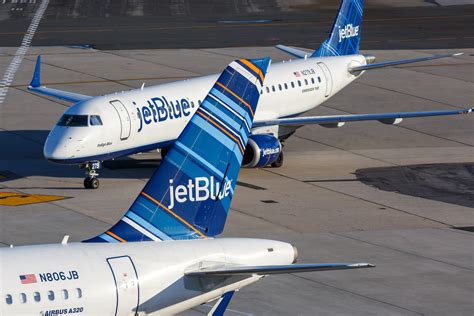
Two Decades of Service: JetBlue and the Embraer E190 Legacy
JetBlue’s relationship with the Embraer E190 began on November 8, 2005, with its inaugural flight from Boston to JFK, the very same corridor chosen for its farewell. At the time, JetBlue became the launch customer for the 100-seat E190, leveraging the aircraft’s blend of efficiency, cabin comfort, and medium-range performance. It was a game-changer, allowing JetBlue to penetrate new markets while maintaining cost-effective service.
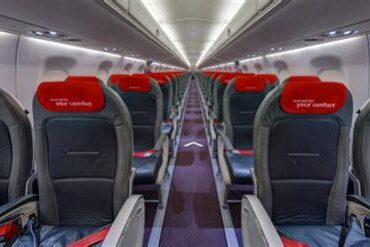
The E190 introduced passengers to features ahead of its time, including leather seats, spacious two-by-two seating, and enhanced in-flight entertainment systems. These amenities helped distinguish JetBlue from its low-cost competitors and positioned the airline as a hybrid model offering value without sacrificing comfort. The E190 also supported JetBlue’s expansion into secondary cities and underserved regional markets, helping the airline grow its footprint across the U.S. and parts of Latin America.
A memorable moment in the aircraft’s debut year was JetBlue’s publicity stunt in Manhattan, where 190 randomly selected pedestrians received free roundtrip tickets for the New York–Boston route—a clever marketing campaign that cemented the E190’s role in JetBlue’s brand identity.
Why Retire the E190? JetBlue’s Strategic Shift Toward Sustainability and Efficiency
As of April 2025, JetBlue’s E190 fleet had dwindled to just nine active aircraft, with 26 units already retired. The average fleet age reached 15.2 years, and while the E190 was once hailed for its fuel economy, newer aircraft have since outpaced it.
The decision to retire the E190 aligns with JetBlue’s sustainability goals. The aircraft, though efficient in its time, is now surpassed by modern jets like the Airbus A220-300, which delivers up to 20% better fuel efficiency, lower noise levels, and reduced carbon emissions per seat mile.
The Airbus A220 is not only eco-friendlier, but also operationally superior, offering a longer range, higher payload, and the flexibility to serve both dense and developing markets. With the aviation industry under pressure to curb emissions and meet carbon neutrality targets, the transition is both economically and environmentally sound.
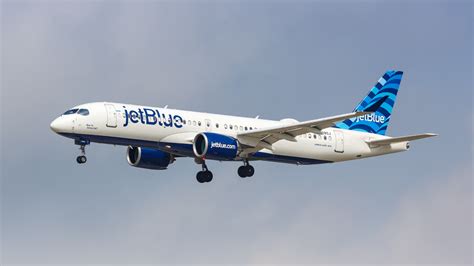
The Rise of the Airbus A220-300 in JetBlue’s Fleet
JetBlue first introduced the Airbus A220-300 to its fleet in April 2021, targeting routes formerly served by the E190. Today, JetBlue operates 47 A220s, with an additional 53 aircraft on order, reflecting the airline’s aggressive push toward fleet modernization.
The A220-300 features a 140-seat configuration, surpassing the E190’s 100-seat limit while maintaining JetBlue’s standard for passenger space and comfort. Passengers benefit from larger windows, higher cabin ceilings, extra carry-on space, and more fuel-efficient engines. Cabin noise is drastically reduced, enhancing the onboard experience.
JetBlue has gradually shifted core short-haul and mid-haul services to the A220. In July 2025 alone, the airline is set to operate nearly 1,400 flights using the A220, spanning over 140 routes. High-traffic corridors, including New York–Boston, now feature up to 32 A220-operated flights per week.
Operational and Environmental Advantages of the A220
The A220 is a product of modern aviation engineering, designed specifically for the 100–150 seat market segment. For JetBlue, its advantages extend beyond capacity:
- Fuel Efficiency: Thanks to its Pratt & Whitney PW1500G geared turbofan engines, the A220 consumes significantly less fuel than legacy regional jets, resulting in lower operating costs.
- Range: With a range of up to 3,400 nautical miles, the A220 can access routes that were previously uneconomical for the E190, allowing JetBlue to explore new destinations.
- Noise Footprint: The aircraft is among the quietest in its class, contributing to JetBlue’s commitment to reducing community noise pollution, especially around urban airports.
- Maintenance and Lifecycle Costs: Built with composite materials and modern avionics, the A220 promises a lower total cost of ownership and extended maintenance intervals.
From a network planning perspective, the A220 offers JetBlue the freedom to increase capacity without sacrificing route frequency, a crucial factor in business-heavy markets like Boston, New York, and Washington.
Passenger-Centric Innovation: Comfort and Technology in the A220 Era
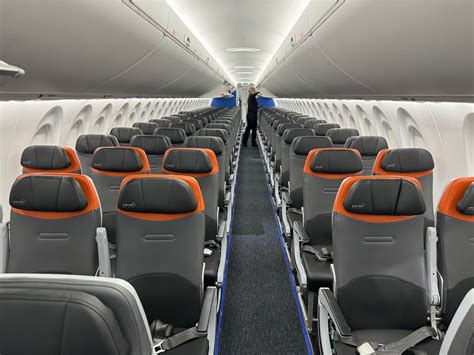
One of JetBlue’s major selling points has always been its commitment to passenger comfort, and the A220 reinforces that brand identity. The aircraft features wider economy seats (up to 19 inches), larger windows, and improved pressurization for a more comfortable ride.
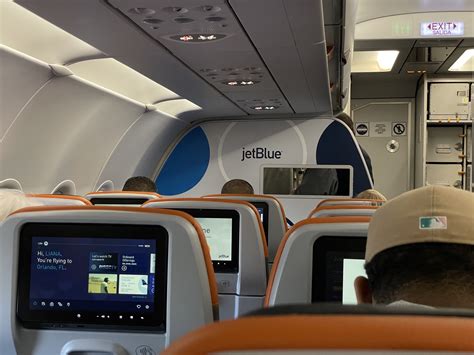
Every seat is equipped with power outlets, high-definition entertainment screens, and enhanced Wi-Fi connectivity, giving passengers the best of JetBlue’s Mint and Core experiences in a smaller jet body. The cabin ambiance also includes LED lighting and noise-canceling design, making even short-haul flights more enjoyable.
Farewell Flight B61900: The End of an Era
The final flight of the Embraer E190 will be more than a routine hop between two Northeastern cities. Flight B61900 is expected to draw aviation enthusiasts, longtime employees, and loyal JetBlue passengers eager to say goodbye to an aircraft that helped build the airline’s early success.
While the flight will not be part of the regular daily schedule, it will stand as a symbolic event, encapsulating JetBlue’s evolution over the past two decades. After September 4, 2025, no further JetBlue flights will feature the E190, marking a full transition to Airbus aircraft for its regional operations.
What’s Next: The Long-Term Fleet Vision
JetBlue’s long-term strategy continues to focus on fleet simplification, fuel efficiency, and service differentiation. By concentrating regional operations on the Airbus A220-300 and mid-to-long-haul flights on the Airbus A320neo family, the airline aims to minimize training, maintenance, and logistics costs while maximizing operational consistency.
The complete removal of the Embraer E190 also allows the airline to optimize crew scheduling and enhance technical reliability. Combined with its A321LR and A321XLR fleet for transatlantic services, JetBlue is creating a streamlined, efficient fleet tailored for flexibility, profitability, and sustainability.
As aviation regulators and global climate initiatives continue to push for greener operations, JetBlue’s early investment in next-generation aircraft like the A220 sets it apart in the low-cost market. By offering competitive fares, premium-level comfort, and eco-conscious travel, the airline is preparing to stay ahead in a highly competitive, fast-changing industry.
Conclusion: A Bold Move Toward a Sustainable Future
The farewell to the Embraer E190 is not just the end of a chapter—it is a bold statement about JetBlue’s future. The airline is embracing next-gen aviation through the Airbus A220-300, aligning cost-efficiency with environmental responsibility and a superior passenger experience. As JetBlue expands its fleet of A220s and retires aging aircraft, it strengthens its position as an industry leader in sustainable, high-quality air travel.
For frequent flyers, aviation watchers, and loyal JetBlue customers, September 4, 2025, will be a day to remember. And while the E190 takes its final bow, its legacy will live on in the blueprint it helped create—one that JetBlue now refines through innovation, performance, and vision.