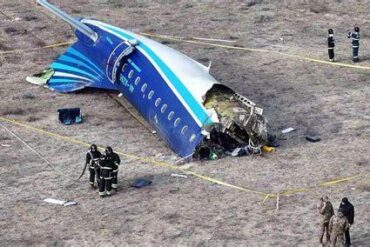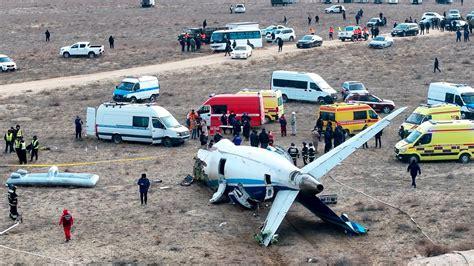
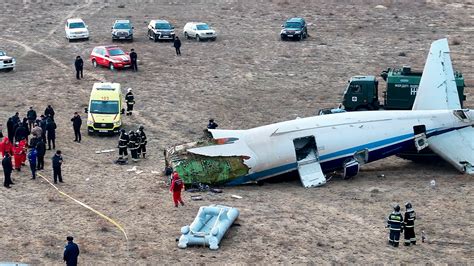
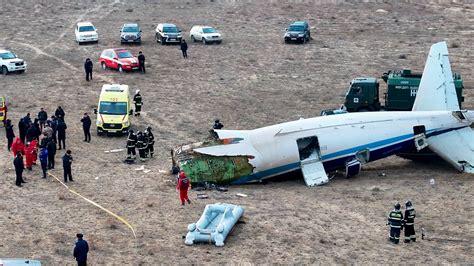
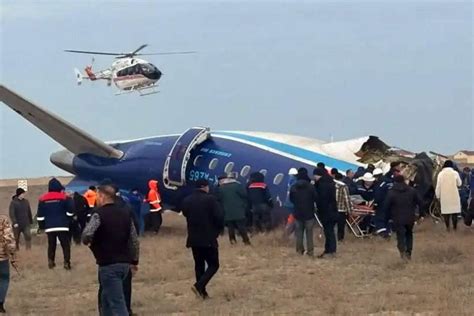
On December 25, 2024, tragedy struck in the skies over Central Asia when Azerbaijan Airlines Flight 8243, an Embraer 190 aircraft, plunged from the air near Aktau International Airport in Kazakhstan. The aircraft, registered 4K-AZ65, was en route from Baku to Grozny when it encountered a catastrophic failure after allegedly being struck by a Russian Pantsir-S1 missile system. The crash resulted in the death of 38 people, with 29 survivors suffering varying degrees of injuries.
Mounting Evidence Points to Russian Missile Strike
The flight had entered southern Russian airspace, an area reportedly under high military alert due to ongoing Ukrainian drone activity. It was during this critical segment of the route that the Embraer jet reportedly sustained multiple strikes from foreign metal objects, consistent with surface-to-air missile fragments. Azerbaijani authorities assert that the source of these objects was a Russian-operated Pantsir-S1 air defense system.
As the plane began losing hydraulic control and structural integrity mid-flight, the crew attempted an emergency diversion to Aktau, but failed to maintain flight stability. Investigators later confirmed that the aircraft lost most of its flight control capabilities due to severe internal system damage caused by shrapnel. Despite the flight crew’s heroic efforts, the aircraft went down just short of the runway perimeter.
Azerbaijan’s President Demands Justice and Accountability
In a bold and unprecedented diplomatic move, President Ilham Aliyev announced that Azerbaijan is preparing a formal lawsuit against the Russian Federation in international courts. In his own words, “We won’t forget. Now we are preparing a dossier for submission to international courts in this matter. We understand that it may take time… we’re ready to wait ten years, but justice must prevail.”
Aliyev emphasized that Azerbaijan would not allow the matter to vanish into diplomatic obscurity. The lack of an official apology or acknowledgment from the Russian government has deepened tensions between the two nations. He stressed that accountability is not just a political formality, but a moral obligation owed to the families of the deceased, the injured survivors, and the nation’s integrity.
Russia’s Silence: A Diplomatic Vacuum
Since the incident, Azerbaijan’s Prosecutor General’s Office has submitted repeated formal inquiries to Russia’s Investigative Committee. The response has been uniformly dismissive: “the investigation continues.” To date, no definitive explanation, acknowledgment, or apology has been offered by Moscow.
Speaking at the Global Media Forum in Khankendi, President Aliyev did not mince words: “We know exactly what happened — and we can prove it. Moreover, we are confident that Russian officials also know what happened…The real question is: why didn’t they do what any responsible neighbor should do?”
Aliyev outlined clear expectations:
- Formal acknowledgment from Russia regarding its role in the incident.
- Compensation for the families of the victims and for injured survivors.
- Restitution for the loss of the Embraer E190 aircraft.
- Identification and prosecution of the responsible military personnel.
These demands, he insisted, fall well within the framework of international law and neighborly diplomacy.
The Ghost of MH17: A Precedent for Protracted Legal Battles
The legal and political road ahead will be long and fraught. However, Baku is drawing strength and strategy from the MH17 tragedy, where a Malaysian Airlines Boeing 777 was shot down over eastern Ukraine in 2014. That case, which resulted in the deaths of 298 civilians, also involved Russian-made surface-to-air missiles launched from separatist-held territory.
A joint investigation by international prosecutors eventually led to a Dutch court convicting three individuals of murder in absentia. Just this year, the European Court of Human Rights declared Russia responsible for the MH17 tragedy. President Aliyev has repeatedly referenced MH17 as a template for Azerbaijan’s own pursuit of justice.
The Legal Path Ahead: International Courts and Diplomatic Isolation
The preparation of Azerbaijan’s lawsuit will involve a comprehensive dossier of forensic evidence, air traffic control records, radar imaging, survivor testimonies, and weapon systems analysis. This effort is reportedly being overseen by a legal team with experience in international aviation law and state liability litigation.
International courts such as the International Court of Justice (ICJ) and European Court of Human Rights (ECHR) could potentially hear the case. Although Russia has a history of rejecting international court rulings, the political cost of refusing cooperation may be significantly higher in the context of worsening relations with several former Soviet republics.
Azerbaijan’s approach is not aimed solely at punitive measures. Officials in Baku have signaled their desire for transparency, truth, and closure. But if justice requires the full machinery of international law, Azerbaijan appears willing to sustain the effort over many years.
Victims and Survivors: Human Cost of Geopolitical Tensions
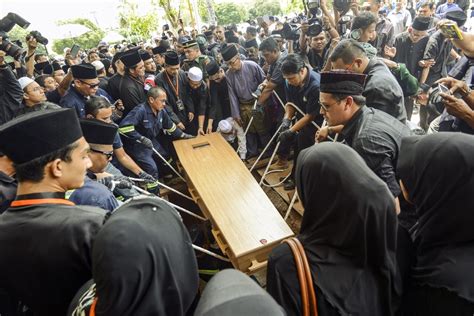
Among the 67 people aboard Flight 8243, 38 lost their lives — a mix of Azerbaijani nationals, international business travelers, and a small number of Chechen citizens traveling to Grozny. The 29 survivors, many of whom sustained severe spinal, head, and burn injuries, have provided crucial eyewitness accounts corroborating the mid-air explosion and subsequent loss of control.
The families of the victims have received symbolic compensation from Azerbaijan Airlines, but await justice. For them, closure will not come through money alone, but through an international affirmation of wrongdoing. Legal experts suggest that if Azerbaijan wins the case, Russia could be compelled to pay tens of millions of dollars in damages.
Military Misjudgment or Strategic Ambiguity?
The question remains: Was Flight 8243 deliberately targeted, or was it a tragic misidentification amid high-alert military protocols? Experts suggest that the region’s proximity to active conflict zones, combined with automated target-acquisition systems like Pantsir-S1, raises the probability of friendly fire or mistaken engagement.
Analysts note that Pantsir-S1 systems can engage multiple targets simultaneously, using radar and infrared guidance. If the aircraft had emitted a radar signature similar to that of an incoming UAV, or if airspace command-and-control systems failed to coordinate with civilian radar, the missile strike could have been the result of a cascade of miscommunications. However, Azerbaijan rejects the notion of accident, instead labeling it an avoidable act of aggression.
Political Fallout: Deteriorating Russia-Azerbaijan Relations
The consequences of the incident extend well beyond aviation safety and legal boundaries. Once considered regional allies with overlapping energy interests and shared history, Baku and Moscow now face a period of strained, if not frozen, diplomatic ties.
Russia’s refusal to even partially admit liability has cast a long shadow over its influence in the South Caucasus. Azerbaijan, increasingly looking westward, may now seek stronger alliances through NATO partnerships and EU legal frameworks, further isolating Moscow’s regional reach.
The Road to Justice: A Test of International Norms
As Flight 8243 becomes more than just a number — a symbol of state accountability in a world of shifting alliances and opaque warfare — the pressure mounts on global institutions to act. The outcome of this case will serve as a bellwether for how the international community enforces accountability when civilian lives are lost due to military negligence or indifference.
For Azerbaijan, this is more than a diplomatic dispute. It is a national trauma, an unspeakable loss, and a righteous cause. Whether it takes months or a decade, Baku is resolved to bring Flight 8243’s truth before the world.

Conclusion: A Nation’s Determination to Hold Power Accountable
The crash of Azerbaijan Airlines Flight 8243 is no longer merely a headline or an aviation statistic. It has evolved into a pivotal moment in the geopolitical and legal chronicles of Eurasia. By invoking international legal channels, demanding truth, and refusing silence, Azerbaijan has placed its faith in law over lethargy, and justice over geopolitics.
This legal case could reshape how the world interprets air defense liabilities in contested airspace. In doing so, it may offer justice not only for the 67 passengers on that ill-fated Embraer jet but for every civilian who steps onto a plane expecting to arrive, not to disappear.