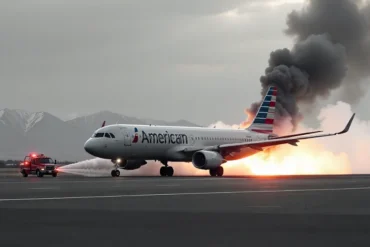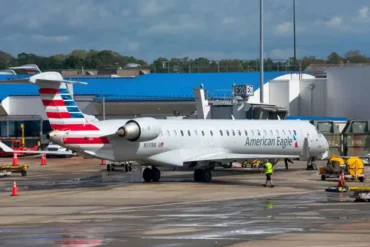
A routine departure from Denver International Airport (DEN) turned into a serious security incident when a live bullet was discovered inside the cabin of United Airlines Flight 1302, prompting all 184 passengers and crew members to leave the aircraft before it could continue to San Diego. The discovery was made after boarding on the Boeing 737-900, creating an immediate security concern even though there was no indication that anyone had been injured or that the aircraft itself had been deliberately targeted.
The United Airlines flight was scheduled to operate from Denver to San Diego International Airport (SAN), but the unexpected discovery brought normal pre-departure preparations to a halt. According to the reference report, cabin crew members found the stray round during routine checks of the aircraft. The flight deck subsequently informed passengers that there had been a security breach and instructed everyone to disembark while the situation was investigated.
For passengers, the sudden evacuation was particularly unsettling because everything had appeared normal moments earlier. Jena Neuman, who was aboard Flight 1302, described the atmosphere changing abruptly as the aircraft was being prepared for departure. The cabin reportedly became unusually quiet as passengers realized something serious had happened, illustrating how quickly a seemingly ordinary boarding process can turn into a security investigation.
United Airlines Flight 1302 Delayed After Bullet Discovery
Once the live bullet was discovered, security personnel treated the aircraft as a potential security scene rather than simply removing the object and allowing the flight to depart. The Boeing 737-900 was cleared of passengers so the cabin and other areas of the aircraft could be inspected. Although the specific details of the search were not publicly disclosed, the response reflects the cautious approach normally taken when ammunition or other potentially dangerous items are discovered aboard a commercial aircraft.
The investigation ultimately allowed Flight 1302 to continue its journey. According to FlightAware information cited in the report, the aircraft departed Denver at approximately 3:41 p.m., around an hour and a half behind schedule. The delay was inconvenient for travelers, but the larger issue was determining how a live round had entered the aircraft in the first place.
That question is important because ammunition should not ordinarily be loose inside an airliner cabin. A single bullet does not necessarily represent an immediate threat comparable to a firearm, but its presence can indicate a breakdown somewhere in the airport or aviation security process. Authorities therefore have to consider whether the ammunition was accidentally dropped, overlooked during screening, carried onto the aircraft unintentionally, or connected to another security failure.
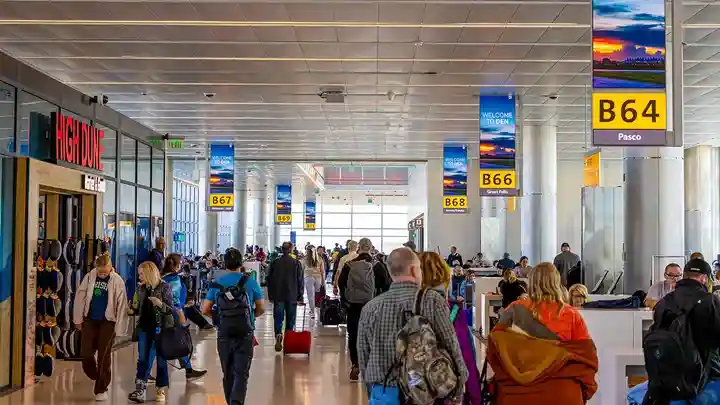
A Second United Airlines Ammunition Incident
The Denver discovery is especially notable because it was not an isolated event involving United Airlines. Earlier this year, a live bullet was reportedly found inside an overhead bin on United Airlines Flight 1511 at Newark Liberty International Airport (EWR). That incident similarly resulted in the aircraft being treated as a security scene while authorities investigated the discovery.
In Newark, police, Transportation Security Administration personnel, Department of Homeland Security officials and K-9 units responded to the aircraft. The Boeing 737 involved was temporarily grounded while investigators examined the situation. The similarities between the two incidents raise an uncomfortable question about how loose ammunition can reach commercial aircraft despite multiple layers of screening and security.
Why Loose Ammunition Represents a Serious Aviation Security Concern
The broader concern extends beyond United Airlines. Other American carriers have experienced comparable incidents involving ammunition, firearm components or loaded magazines. In November 2025, a passenger aboard a Frontier Airlines Airbus A320 at Hartsfield-Jackson Atlanta International Airport (ATL) reportedly discovered a loaded handgun magazine. The magazine was ultimately linked to an FBI agent who had misplaced it.
Another incident occurred on May 10, when a loaded ammunition magazine was found aboard Frontier Airlines Flight 4765, which was preparing to fly from Denver to Phoenix Sky Harbor International Airport (PHX). These cases remain relatively uncommon, but their consequences can be significant because commercial aviation depends on an exceptionally high level of security discipline.
The issue becomes even more sensitive when ammunition is associated with authorized law-enforcement personnel. Federal Air Marshals and other qualified officers may carry weapons under strict rules, training requirements and federal procedures. However, losing ammunition remains a serious failure, regardless of whether the individual carrying it is authorized to possess a firearm.
Security Procedures Matter Even When Nobody Is Hurt
The most reassuring aspect of the United Airlines incident is that the security process worked before Flight 1302 departed. The bullet was discovered, passengers were removed from the aircraft, authorities investigated the situation, and the aircraft was eventually cleared to continue. No injuries were reported, and there was no indication in the supplied material that the discovery represented an attempted attack.
Nevertheless, incidents like this demonstrate why aviation security cannot depend solely on detecting obvious threats. A loose round may seem insignificant compared with a firearm, but it can expose weaknesses in handling, screening, cabin inspections or personnel procedures.
For passengers, the lesson is straightforward: even a delayed departure can be preferable to an unanswered security question. Flight 1302 ultimately reached the point where it could depart safely, but the incident serves as another reminder that aviation security depends on vigilance at every stage of the journey. When a live bullet appears where it should never be, stopping the aircraft and investigating first is not an overreaction—it is precisely what passengers should expect.