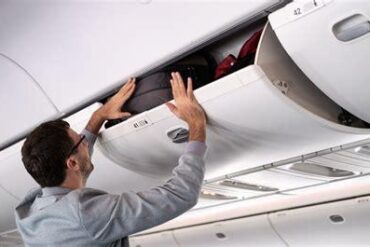
A routine afternoon departure from Newark Liberty International Airport turned into a tense security investigation when a single bullet was discovered inside an overhead compartment aboard a United Airlines Boeing 737-900ER. What was scheduled to be a straightforward flight to Miami instead became a three-hour delay after authorities temporarily declared the aircraft a crime scene, triggering a full security sweep before passengers could depart.
United Flight 1511 was preparing to leave Gate C at Newark (EWR) on February 17, 2026, bound for Miami International Airport (MIA). Boarding had either just concluded or was nearing completion when the unexpected discovery was made: live ammunition sitting inside an overhead bin. The presence of even a solitary bullet immediately escalated the situation. Under Transportation Security Administration regulations, no passenger is permitted to carry ammunition or firearms into the cabin. The possibility—however remote—of a firearm onboard required immediate action.
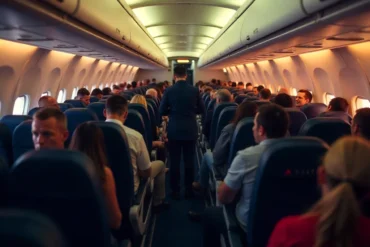
Security personnel boarded the aircraft, and the departure process halted. What followed was methodical and deliberate. The plane was isolated, passengers were kept waiting, and law enforcement conducted a full inspection to ensure no additional ammunition or weapons were present. In aviation security, there is no such thing as “probably safe.” The aircraft remained grounded until every corner of the cabin had been examined and cleared.
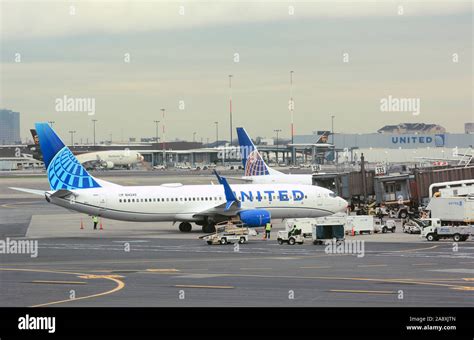
Security Sweep Grounds United Flight 1511 for Three Hours
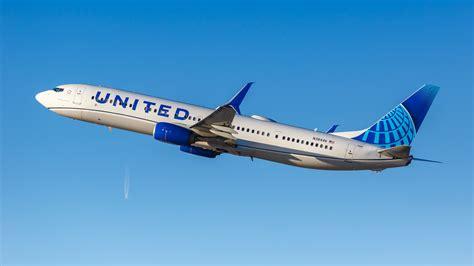
The aircraft involved, a Boeing 737-900ER registered as N37456, had arrived earlier that day from Houston’s George Bush Intercontinental Airport (IAH). According to flight tracking data, the jet landed in Newark before being scheduled for its onward journey to Florida. What should have been a routine aircraft turnaround instead became an extended security operation.
Originally slated to depart at 2:07 PM, Flight 1511 ultimately pushed back at 5:05 PM after authorities gave the all-clear. United Airlines later confirmed that the security sweep was completed without additional findings and that the aircraft was cleared for safe operation.
Declaring an aircraft a crime scene is not a symbolic gesture. It activates formal investigative procedures. Law enforcement must secure and document evidence, determine potential ownership of the item, and rule out broader threats. In this case, even though only a single bullet was found, the assumption had to be that it could indicate the presence of a firearm elsewhere on board. Aviation security protocol leaves no room for improvisation.
How Could Live Ammunition End Up in an Overhead Compartment?
The most plausible explanation is surprisingly mundane: the bullet may have been inadvertently left behind by a passenger on the previous flight from Houston. Texas has relatively permissive firearm laws, and passengers may legally transport guns and ammunition if they comply strictly with federal requirements for checked baggage. That means firearms must be unloaded, placed in a hard-sided locked case, declared to the airline, and transported in the cargo hold. Ammunition must also be properly secured.
The cabin, however, is strictly off-limits.
A single loose round in an overhead bin suggests either accidental negligence or a failure to detect the item during screening. Another possibility is involvement by a law enforcement officer authorized to travel armed under specific federal protocols. In rare past incidents across the industry, officers have inadvertently left behind ammunition.
Regardless of origin, the discovery inevitably raises questions about screening effectiveness—either at Newark or at the aircraft’s prior departure point. TSA checkpoints intercept thousands of prohibited items annually, including loaded firearms. The fact that a single bullet made it through, whether by oversight or simple human error, underscores the complexity of airport security systems.
TSA Rules and the High Stakes of Cabin Security
Under TSA regulations, passengers face significant penalties for attempting to bring weapons or ammunition through security checkpoints. Consequences range from substantial civil fines to criminal charges and possible imprisonment, depending on intent and severity. The harshest penalties are typically reserved for loaded firearms, which present an immediate and direct threat to passengers and crew.
Even so, one round of ammunition—by itself—cannot discharge without a firearm. It does not pose the same immediate danger as a loaded weapon. Yet aviation security operates on prevention rather than probability. The mere possibility that a gun might accompany that bullet is enough to justify grounding an aircraft.
Recent years have seen repeated high-profile cases reinforcing this zero-tolerance posture. In 2025, a passenger at Chicago O’Hare was arrested after retrieving a bag containing a loaded Glock 9mm from a TSA checkpoint area and proceeding toward a gate. In Houston, officers once discovered a shotgun concealed within a golf bag. Each incident illustrates how small lapses or deliberate attempts can rapidly escalate into significant security events.
The Broader Implications for Airline Operations
For passengers aboard Flight 1511, the three-hour delay was inconvenient. For aviation authorities, it was necessary. Modern air travel relies on layered security systems: passenger screening, baggage inspection, crew protocols, and post-incident investigation. When one layer appears compromised—even slightly—every other layer activates.
Declaring a United Boeing 737 a crime scene is a powerful reminder that aviation security remains uncompromising. A single overlooked item can halt operations at one of the busiest airports in the United States. The aircraft ultimately departed safely for Miami, but the episode serves as a case study in how seriously the industry treats even the smallest anomaly.
In commercial aviation, there is no such thing as a minor security finding. A lone bullet in an overhead bin is not just an object—it is a trigger for scrutiny, procedure, and accountability. The system’s willingness to stop everything for one small piece of metal is precisely what keeps millions of passengers moving safely every day.