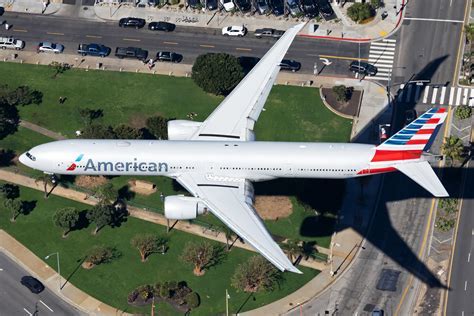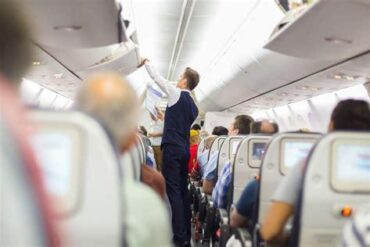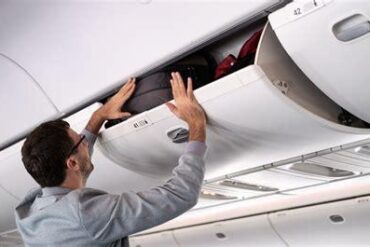
A tense incident aboard American Airlines Flight AA106 from New York JFK to London Heathrow has ignited a fresh wave of scrutiny for the carrier, as a passenger was forcibly removed after touching a crew member’s bag stored in an overhead bin. The passenger, JT Genter, a well-known travel writer, was removed from the Boeing 777 following a disagreement with flight attendants over baggage placement in a premium economy overhead compartment.
Premium Economy Baggage Standoff Escalates
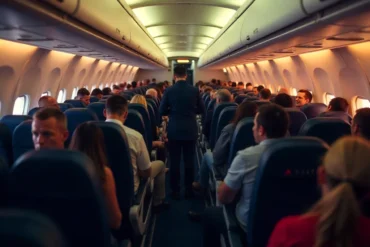
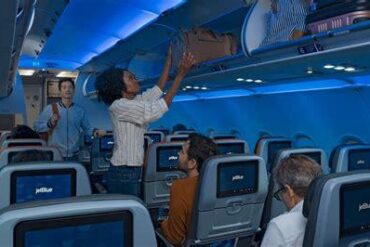
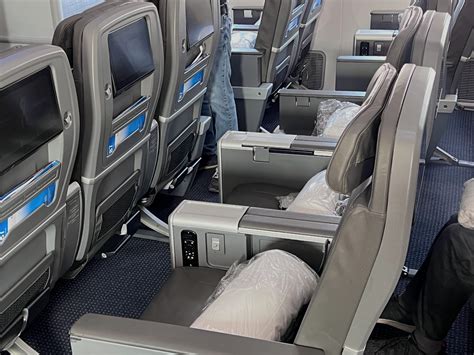
According to Genter’s detailed account on AwardWallet, the conflict began when he boarded and found the overhead bin above his premium economy seat already filled. He identified that the space, clearly labeled as “Reserved for Premium Economy,” had been occupied by someone else’s suitcase. Seeking to resolve the issue himself, he simply moved the suitcase one row back to a standard economy bin. However, shortly after, he was confronted by a flight attendant who claimed the bag was hers.
The confrontation quickly escalated. Despite Genter’s explanation and the visual signage indicating the bin’s purpose, the flight crew’s reaction was swift and absolute. The purser, joined by two other attendants, reportedly told Genter he had violated crew instructions. According to statements obtained by aviation blog View From The Wing, one crew member insisted:
“The real reason he was removed was because he indicated that he did not have to comply with crew member instructions, basically defying me and 3 other flight attendants.”
This alleged defiance — not the movement of the bag alone — was cited as the key justification for his removal.
Caution or Overreaction? Airline Staff on Edge After Prior Incidents
In recent months, air rage incidents and crew assaults have become more common, leading airlines to adopt stricter protocols for passenger behavior. In May, a shocking episode saw an American Airlines flight attendant physically attacked by a disruptive passenger. In another case in April, a flight from São Paulo to JFK was delayed over two hours after a first-class passenger attempted to breach the cockpit.
These events have heightened sensitivities among airline staff. However, observers argue that in Genter’s case, the risk posed by the situation seemed disproportionate to the reaction. Genter did not use threatening language, make physical contact, or refuse to leave when asked. Instead, he allegedly stood his ground over a minor procedural matter involving bag placement — a daily issue on flights across the globe.
The Removal: A Supervisor’s Attempt at De-Escalation
Genter’s version of the story paints a picture of confusion and miscommunication. After the initial confrontation, a supervisor intervened, speaking to Genter and reportedly telling him he had done nothing wrong. According to Genter, the supervisor even appeared sympathetic and sought a resolution that would allow him to remain on board. However, the situation took a dramatic turn when the flight crew allegedly refused to work the flight unless Genter was removed.
Under pressure, the supervisor reluctantly removed Genter and his wife from the aircraft. While the action may have prevented a standoff between crew and management, it also raised critical questions about how disputes between staff and passengers are handled — particularly when they stem from such routine interactions.
Customer Treatment and Industry Standards
Though Genter was rebooked on a later flight to London, he expressed concern about the handling of his checked luggage. Upon arrival, he discovered that his bag had not been retagged or inspected according to the International Civil Aviation Organization (ICAO)’s Annex 17 Standard 4.5.3, which stipulates that “commercial air transport operators do not transport the baggage of persons who are not on board” unless it has been specifically identified.
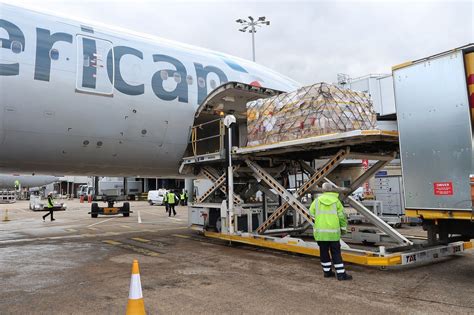
Photos shared by Genter show the bag arriving unaltered, highlighting what he believes is a breach of protocol and a sign of inconsistent enforcement of airline safety standards. In his own words, the oversight further underscored the perceived overreaction by the crew earlier in the flight.
Public Apology and Lack of Transparency
Following public backlash and media attention, American Airlines issued a formal apology to Genter. Yet the airline has not made a public comment on the specifics of the incident and declined to respond to press inquiries. Genter, meanwhile, has not released audio recordings of the interaction, though he claims to possess them. The absence of this crucial evidence leaves parts of the narrative in dispute.
What is evident, however, is that the event has sparked a broader discussion around how airlines — especially legacy carriers like American — manage customer relations, onboard authority, and conflict de-escalation.
A Symbolic Clash: Policy vs. Discretion
At the heart of the matter lies a deeper question: When does enforcement of policy override common sense? Genter’s removal for a seemingly minor infraction suggests a zero-tolerance culture that may favor the crew’s perception over factual nuance. While maintaining respect for crew authority is vital, passengers have begun to question whether some employees now wield that authority in a way that suppresses legitimate, respectful dissent.
Furthermore, the inconsistency in American Airlines’ handling of Genter’s baggage undermines their credibility. If he posed a security concern serious enough to warrant removal, then allowing his luggage to travel without inspection defies logic — and policy.
Industry Implications and Passenger Rights
This latest flashpoint adds to a growing list of customer service controversies facing American Airlines and other U.S. carriers. From seat assignments to gate policies and now overhead bins, passengers frequently report feeling alienated or targeted in situations that seem solvable with empathy and transparency.
The airline’s refusal to comment only further fuels public skepticism. Transparency in conflict resolution, especially when passengers are removed from flights, is essential in maintaining trust. Genter’s case serves as a cautionary tale — not just for travelers, but for the airline industry at large.
As air travel rebounds post-pandemic, carriers must revisit the balance between asserting authority and ensuring dignified treatment of customers. The FAA gives cabin crew the final say onboard for a reason, but with great power comes the need for equally great discretion.
Conclusion: A Necessary Apology, But Questions Remain
JT Genter’s ejection from AA106 will likely become another high-profile entry in the chronicles of controversial airline decisions. While American Airlines eventually apologized, the optics of the case — paired with the absence of detailed explanation — have drawn concern from travel experts and frequent flyers alike.
This wasn’t a case of passenger violence or drunkenness. It was a case of a traveler touching a bag in a marked bin and being confronted not with dialogue, but with dismissal. Whether this was justified or not, the lack of transparency, inconsistency in baggage handling, and silence from American Airlines ensures this story will echo far beyond a single transatlantic flight.