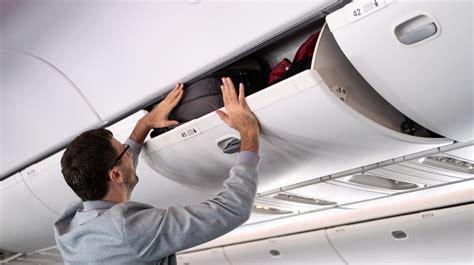
Air travel has always contained a quiet hierarchy. Once upon a time, it was about legroom, champagne flutes, and who got to board first. In 2026, the hierarchy has flattened into something more primal and more visible: overhead bin space. The modern boarding ritual no longer feels like a polite procession down a jet bridge. It feels like a calculated land grab. The prize is a rectangular metal compartment above your row. The penalty for losing is surrendering your carry-on at the aircraft door and watching it disappear into the belly of the plane.
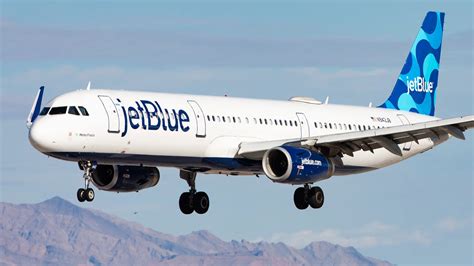
What happened at Fort Lauderdale-Hollywood International Airport (FLL) recently was not simply an isolated security scare. It was the most explosive expression yet of a brewing industry-wide conflict. A JetBlue passenger, frustrated by a lack of storage space, escalated a baggage dispute into a bomb threat. The aircraft was evacuated. K-9 units swept the cabin. Passengers reboarded hours later, their itineraries fractured by a single sentence no one should ever utter at 30,000 feet.
This is not just a story about one man’s catastrophic judgment. It is a story about scarcity engineered into the passenger experience, about policies that reward maximum carry-on volume while offering finite storage capacity. Airlines have spent years nudging travelers away from checked luggage, then expressing surprise when the cabin becomes a battlefield.
JetBlue’s Fort Lauderdale Incident: When Bin Rage Crossed the Line
According to court affidavits and reporting by The Independent, 76-year-old Robert Albanese was arrested after arguing with JetBlue staff over his inability to find space in an overhead bin. Witnesses reported that during the dispute he declared, “I have a bomb in my bag,” while gesturing toward his carry-on inside the cabin. That statement triggered an immediate evacuation.
There was no bomb. There was, however, disruption measured in thousands of dollars and hours of cascading operational impact. Prosecutors charged Albanese with making a false bomb report and criminal mischief. He was held without bail at the Broward County Jail.
Strip away the legal consequences and what remains is the underlying design flaw. Airlines incentivize passengers to bring more onboard while offering no guarantee of where it will go. That mismatch generates friction. Friction becomes confrontation. Confrontation, in rare but dramatic cases, metastasizes into something far worse.
The aviation system is exquisitely sensitive to delay. A single gate hold ripples outward, affecting crews, aircraft rotations, and connecting passengers across multiple cities. When the catalyst is an overhead bin dispute, the absurdity becomes almost theatrical. A metal compartment becomes the fulcrum on which an entire schedule pivots.
The Economics Behind the Cabin Storage Crisis
The overhead bin is not merely a storage compartment. It is the last unpriced asset in an otherwise monetized cabin. Airlines charge for checked bags, priority boarding, extra legroom, seat selection, lounge access, and sometimes even carry-on privileges. The bin itself remains largely first-come, first-served.
That creates a predictable behavioral outcome. Travelers optimize for certainty. Checked luggage introduces risk: lost bags, missed connections, extended waits at baggage claim. Carry-ons feel safer and faster. As cabins densified over the last decade—more seats per aircraft, tighter turn times between flights—the ratio of bags to bin volume drifted out of balance.
Aircraft manufacturers have introduced larger pivot bins on newer models like the Boeing 737 MAX and Airbus A321neo, increasing theoretical capacity. But theoretical capacity assumes compliance with size limits and cooperative distribution of bags throughout the cabin. Real-world boarding is less orderly. Passengers stash coats, backpacks, duty-free purchases, and roller bags wherever a gap appears.
The result is a microeconomy governed by urgency and perceived entitlement. When assigned seating entered the equation more aggressively—most notably with Southwest Airlines transitioning away from its historic open-seating model—the psychology intensified. A seat number feels like ownership. Many passengers logically but incorrectly assume the space above that seat is also theirs.
Industry-Wide Flashpoints: A Pattern of Escalation
The JetBlue episode is the loudest recent example, but it fits into a pattern.
Southwest saw a confrontation when a passenger assigned to a rear seat attempted to place luggage in front-row bins, blocking boarding. American Airlines removed a traveler after he moved a crew member’s suitcase to make room for his own. Delta arrested a passenger accused of assaulting employees during a storage dispute. Another American Airlines incident involved a traveler refusing to share “his” overhead space and threatening to call police.
These cases vary in severity, but they share a core trigger: perceived loss of control in a constrained environment. Aircraft cabins compress personal space, time, and autonomy. When passengers feel they are losing the last remaining sliver of control—where their belongings will reside—they react disproportionately.
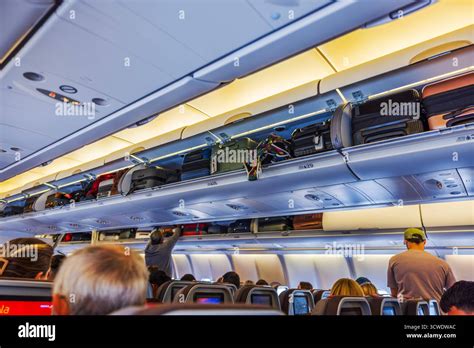
Assigned seating, intended to create order, has in some cases intensified expectations. If a traveler pays extra for a premium seat, the intuitive assumption is that adjacent storage comes with it. When boarding order allows others to fill those bins first, frustration becomes almost inevitable. The physics of the aircraft do not change simply because the fare class does.
Scarcity, Entitlement, and the Psychology of Boarding
Human behavior under scarcity is well documented. When resources appear limited, competition sharpens. Behavioral economists describe this as a “scarcity mindset,” a cognitive narrowing that amplifies perceived threats to access.
Boarding is uniquely susceptible. Passengers queue in tight corridors, aware that space is finite. They observe others carrying oversized bags. They know that once bins are full, gate-checking is mandatory. The threat is immediate and visible. Each bag placed overhead reduces the available supply for everyone behind.
Add tight connection times and the desire to exit quickly upon arrival, and the incentive to keep luggage close becomes even stronger. No one wants to wait at baggage claim when they have ten minutes to make a regional connection across the terminal.
The cabin becomes a stage where status, fairness, and personal strategy collide. One traveler’s efficiency is another traveler’s obstruction. When enforcement is inconsistent—when some oversized bags slip through while others are tagged at the gate—resentment compounds.
The aviation industry often frames these moments as isolated behavioral failures. That framing overlooks the structural incentives shaping the behavior. Systems produce outcomes. When the system encourages maximum carry-on volume without guaranteeing space, conflict is not an anomaly. It is a predictable output.
Engineering Solutions: Can Airlines Defuse the Bin Wars?
Airlines are not oblivious to the tension. Several strategies are emerging, each attempting to inject predictability into the boarding equation.
Stricter carry-on enforcement is the blunt instrument. Gate agents increasingly measure bags with standardized sizers and gate-check items that exceed limits. Low-cost carriers such as Ryanair have institutionalized aggressive enforcement, reducing ambiguity before passengers reach the aircraft door. The logic is simple: conflict is easier to manage at the gate than in the aisle.
Expanded overhead capacity is the hardware solution. Southwest has announced plans to retrofit aircraft with larger bins capable of holding roughly 50 percent more luggage. Larger bins do not eliminate competition, but they reduce the frequency with which flights reach the tipping point where every additional bag becomes a negotiation.
Boarding sequence technology addresses another vector: line-cutting. American Airlines has expanded a system that audibly alerts gate agents when passengers attempt to board out of sequence. By protecting paid boarding privileges, airlines hope to reduce the perception that savvy travelers can game the process to secure bin space.
A more radical solution treats storage as part of the seat product itself. Clearly designating bins for specific rows, particularly in premium cabins, aligns expectation with policy. Enforcement becomes visible and consistent. When passengers know in advance that space above Row 4 belongs to Rows 1–4, ambiguity fades.
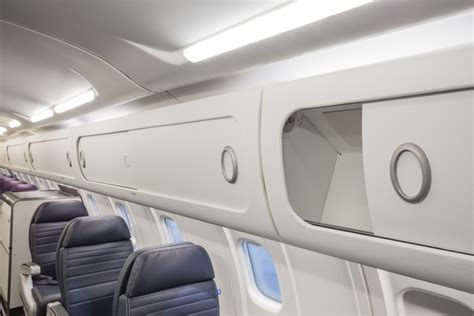
None of these solutions are magical. Overpacking remains a cultural norm, and travel anxiety is not easily engineered away. Yet incremental predictability reduces the emotional volatility of boarding.
The Operational Cost of Cabin Chaos
Beyond passenger frustration lies a financial calculus. A single delay triggered by a bin dispute can cascade through an airline’s network. Crews time out under federal duty regulations. Aircraft miss departure slots. Connections are lost. Compensation costs mount.
Security responses amplify the impact. In the JetBlue case, evacuation procedures, canine sweeps, and law enforcement involvement transformed a routine departure into a costly interruption. Even when threats prove false, the protocol cannot be relaxed. Aviation security operates on zero tolerance.
The irony is stark. Airlines have optimized every aspect of aircraft utilization to squeeze additional minutes of productivity from each rotation. Yet the unstructured competition for bin space can erase those gains in a single boarding cycle.
Operational resilience depends on friction reduction. The overhead bin, trivial in appearance, has become a systemic vulnerability.
Reframing the Cabin Storage Debate
The cabin storage crisis is not fundamentally about luggage. It is about trust. Passengers need confidence that the rules are clear and applied consistently. When policies appear arbitrary or unevenly enforced, suspicion fills the gaps.
Airlines face a strategic choice. They can continue treating overhead space as a communal afterthought, relying on etiquette to manage scarcity. Or they can integrate storage into the product architecture—pricing, seat design, boarding order, and physical capacity—so that expectation matches reality.
Scarcity does not inherently produce chaos. Managed scarcity, with transparent rules, can function smoothly. Unmanaged scarcity, especially in a pressurized aluminum tube hurtling through the sky, invites confrontation.
The events at Fort Lauderdale were extreme, but they were not inexplicable. They were the logical endpoint of years of incremental policy decisions that nudged passengers toward maximum carry-on dependency. When the margin for error narrows, small disputes grow teeth.
Air travel will always involve compromise. The miracle is not that passengers argue over bins; it is that millions board daily with minimal conflict. Yet the rising frequency of confrontations suggests the balance is shifting.
Overhead bins are no longer background fixtures. They are strategic assets in the economics of flying. Until airlines align incentives, capacity, and communication, the cabin will remain a theater where scarcity and entitlement collide—sometimes with consequences far beyond a delayed departure.
In 2026, the status symbol is not champagne in a flute or inches of legroom. It is the quiet click of a bin door closing above your seat, your bag safely stowed, and no argument required.