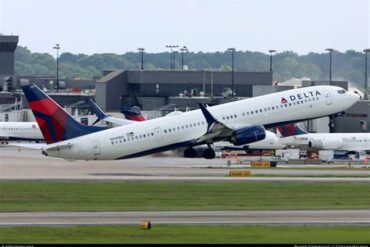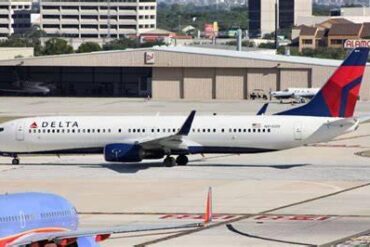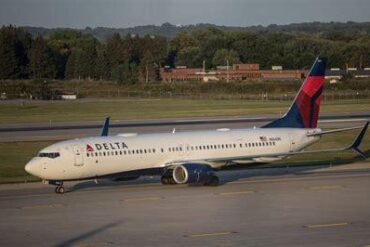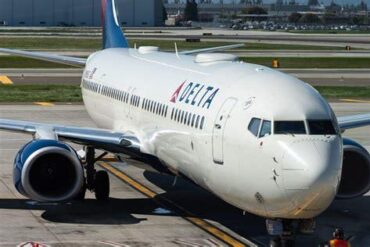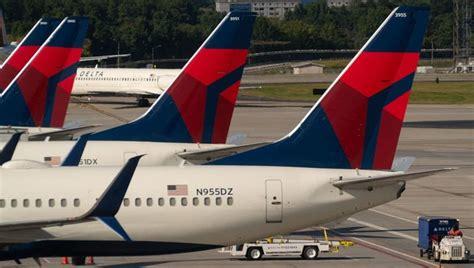
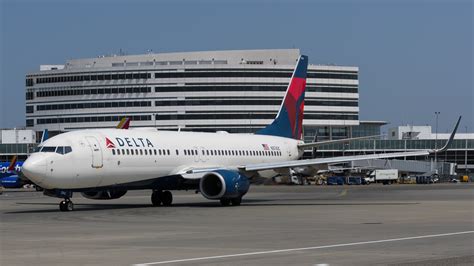
On December 30, a routine Delta Air Lines flight from Miami International Airport (MIA) to Minneapolis-St. Paul International Airport (MSP) faced an unexpected midair disruption when an unusual odor was detected onboard. Operating as Flight DL2150, the Boeing 737-900ER, carrying 111 passengers and six crew members, was diverted to Atlanta Hartsfield-Jackson International Airport (ATL) following safety protocols. The odor, initially identified by cabin crew, triggered a sequence of procedural responses to ensure the safety and comfort of everyone onboard.
Crew Response and Safety Measures in Mid-Flight
According to Delta Air Lines, it was the flight attendants who first detected the odor during the flight, prompting them to notify the cockpit. In adherence to Delta’s safety protocol, the pilots donned oxygen masks in the flight deck. However, the situation did not escalate to the extent that required deployment of passenger oxygen masks. The aircraft, after cruising at 35,000 feet for approximately one hour and thirteen minutes, initiated the diversion to Atlanta.
Delta’s official statement emphasized that “Delta’s flight crew followed their extensive training to safely divert to Atlanta after an odor was detected onboard. We apologize to our customers for the experience and the delay in their travels.”
Flight Timeline and Passenger Impact
Initially scheduled for a 6:25 am departure, DL2150 experienced a significant delay, not pushing back from Miami until 1:26 pm. After the odor detection and subsequent diversion, the aircraft landed safely in Atlanta, where passengers were promptly rebooked onto an alternative aircraft. Flightradar24 identified the replacement aircraft as another Boeing 737-900ER, registered N827DN (serial number 31938).
The re-accommodated flight departed ATL at 5:17 pm and finally touched down in Minneapolis at 6:45 pm, nearly nine and a half hours later than the original scheduled arrival time of 9:20 am. Despite the extended delay, Delta staff worked diligently to minimize further disruption for passengers.
The Aircraft at the Center of the Diversion
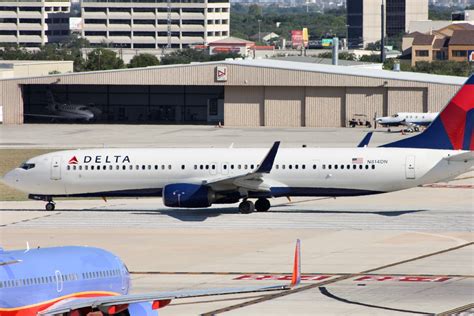
The Boeing 737-932ER involved in the incident was registration N801DZ (serial number 31912), a 12-year-old aircraft delivered new to Delta in September 2013. Its standard three-class configuration includes:
- 20 Delta First seats
- 27 Delta Comfort+ seats
- 133 Main Cabin Economy seats
Following the diversion, the aircraft remained grounded overnight on the Atlanta apron, undergoing thorough inspection by Delta maintenance teams. By the following day, December 31, the plane resumed service as DL8802 from Atlanta to Louis Armstrong New Orleans International Airport (MSY) without any reported mechanical issues, suggesting that the odor did not originate from a critical failure.
Understanding In-Flight Odor Events
While the presence of an odor might seem trivial to some, in the aviation industry, any unidentified smell in the cabin or cockpit is treated with utmost seriousness. Odors can be symptomatic of potential fume events, which involve the leakage of oil or hydraulic fluids into the pressurized cabin air via the aircraft’s bleed air system. These situations pose significant health and safety risks, potentially indicating system or engine malfunctions.
However, not all odors stem from mechanical faults. Less critical sources, such as spoiled catering food, cleaning agents, or airborne allergens, may also trigger alerts. Regardless of the source, standard operating procedures dictate that the aircraft be grounded immediately for a comprehensive investigation to rule out hazardous conditions. Cabin odors can lead to dizziness, nausea, or worse in extreme cases, especially for those with respiratory sensitivities.
In this case, the captain made a proactive decision to divert the flight to Delta’s largest operational base in Atlanta. Doing so ensured access to the airline’s most comprehensive technical and maintenance facilities, allowing a faster and more accurate assessment of the aircraft’s air systems.
Reputation and Operational Impact for Delta
Delta Air Lines is widely recognized for maintaining high standards in operational safety and customer service, and this incident showcased the strength of its crew training and response protocols. Though the passengers experienced an extended delay, the priority placed on safety over schedule adherence reinforces Delta’s commitment to passenger well-being.
This diversion is not an isolated incident. Similar cases have emerged across the industry, particularly as aircraft age and complex systems mature, increasing the probability of air filtration or component degradation. The quick turnaround and continued operation of N801DZ the next day suggests Delta’s maintenance team swiftly addressed or ruled out any lingering issues.
Broader Context: Aviation Safety and Cabin Environment Challenges
In-flight odors remain one of the more elusive safety triggers in commercial aviation. Their non-visual, non-tactile nature makes them hard to diagnose immediately, yet they can carry indicators of serious underlying malfunctions. Industry regulators like the Federal Aviation Administration (FAA) and European Union Aviation Safety Agency (EASA) continue to examine cabin air quality, and airlines are under increasing pressure to adopt real-time air quality monitoring systems.
Delta’s response in this case is illustrative of how leading carriers manage such ambiguities. Rapid crew decisions, transparency with the public, and efficient ground operations help restore confidence. Given that Flight 2150’s passengers were safely delivered to their final destination later that same day is a testament to both crew professionalism and robust airline logistics.
In a statement of best practices, aviation experts recommend that:
- All odors or smoke incidents be logged in maintenance reports.
- Affected crew and passengers be monitored for health symptoms.
- Aircraft be held until a full inspection of air and ventilation systems is completed.
Such protocols aim not just to fix immediate issues, but also to build data libraries that improve predictive maintenance and reduce recurrence rates.
Conclusion: A Safe Ending to a Compromised Journey
While no passengers on Delta Flight 2150 suffered injury or required medical attention, the diversion underscores the fragile balance between convenience and safety in aviation. The decision to reroute a flight mid-journey is never taken lightly, but in this instance, it proved both precautionary and effective. The aircraft involved has since returned to normal operation, and passengers, while delayed, reached their destination safely.
In a modern aviation environment where safety is paramount, the swift and coordinated handling of such incidents will continue to distinguish airlines that value transparency, technical integrity, and customer care. Delta Air Lines’ actions serve as a clear example of airborne professionalism meeting unexpected challenges with agility and confidence.