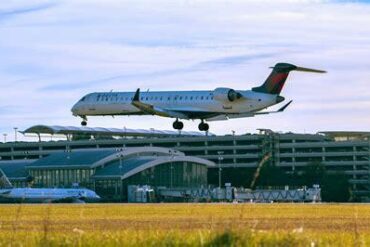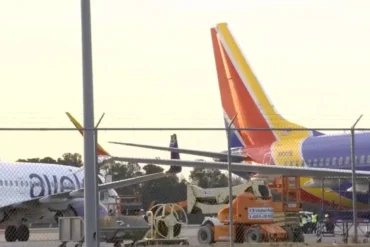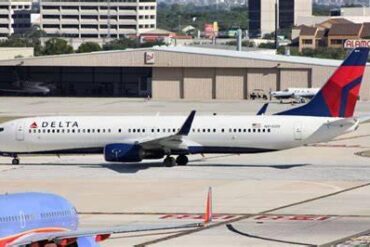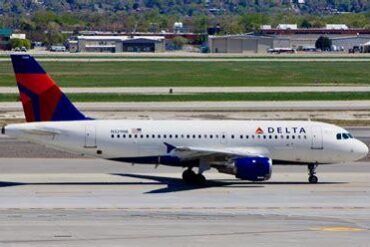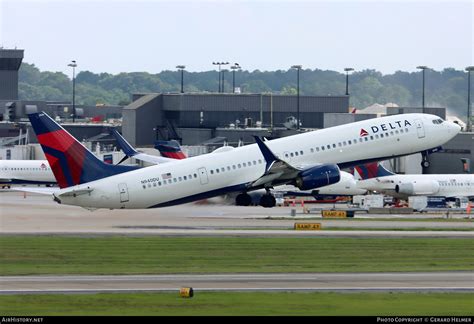
On July 2, 2025, Delta Air Lines Flight DL3247, a routine service from Atlanta Hartsfield-Jackson International Airport to Raleigh-Durham International Airport (RDU), experienced a potentially hazardous mechanical issue when a section of its left-wing trailing edge flap detached mid-flight. The incident, involving a Boeing 737-900ER (registration N940DU), has triggered a full investigation by both the Federal Aviation Administration (FAA) and Delta’s internal safety team.
Mid-Air Incident: Flap Detachment Raises Safety Concerns
The seriousness of the occurrence became apparent when a homeowner in Raleigh, North Carolina found a large metallic object obstructing their driveway in the early hours of the morning following the flight. Emergency services were contacted immediately, and investigators later confirmed the object as a detached segment of a Boeing 737’s flap—a crucial control surface used to maintain lift during landing.
Flight tracking data from Flightradar24 showed that DL3247 landed safely at 00:24 AM local time, contradicting Delta’s initial report of a 01:15 AM arrival. Despite the detachment of an essential aerodynamic component, the aircraft made a stable approach and successful landing without incident. There were no reported injuries to passengers or crew, and all 173 passengers disembarked without complications.
The aircraft, part of a subfleet within Delta’s operation, retained its original cabin layout of 12 First Class seats and 161 Economy seats, differing from newer configurations used on the same route. The specific aircraft involved, N940DU, is now grounded at RDU for a comprehensive mechanical review.
Delta Responds Swiftly: Grounding and Coordination with Authorities
Delta Airlines immediately grounded the aircraft upon confirmation of the detached component. The fallen flap segment was removed from the homeowner’s property around 12:30 PM the same day, and the airline began cooperating with investigators to determine the cause.
Delta has also announced that it will inspect other aircraft in the 737-900ER fleet, especially those sharing components or maintenance history with N940DU. Although this flap loss incident did not result in immediate danger, it signals a potentially deeper issue, either with mechanical fatigue, installation error, or material failure.
What helps expedite the diagnostic process is that Delta operates its own maintenance facility at Raleigh-Durham International Airport. This strategic advantage means that a detailed internal inspection and subsequent repairs can be executed on-site without ferrying the aircraft to another hub, saving time and logistics. Despite tentative scheduling data indicating a return to service by July 3, this remains unconfirmed pending thorough analysis.
FAA Launches Comprehensive Investigation into Mid-Flight Structural Failure
The Federal Aviation Administration (FAA) is taking this incident seriously due to the critical nature of the part that failed. The flap system is essential during takeoff and landing, where aircraft speed is lower and lift must be precisely managed. Any malfunction in these surfaces could jeopardize flight stability.
FAA officials have begun examining both the recovered debris and the grounded aircraft. Their inquiry will involve reviewing maintenance logs, aircraft modification records, and real-time flight data, including airspeed, flap extension angles, and vibration readings prior to the detachment.
Delta’s maintenance records will play a pivotal role in determining whether the failure was:
- A result of wear-and-tear or fatigue cracks overlooked during routine inspections,
- Linked to improper repair work or installation,
- Or part of a larger systemic issue with the 737-900ER design or its specific subfleet.

The FAA is also consulting with Boeing engineers to determine if other 737-900ERs may be susceptible to similar issues. Should any design flaws be uncovered, it could result in a wider Airworthiness Directive (AD) requiring fleet-wide inspections.
Pattern of Unusual Mechanical Failures in Commercial Aviation
This Delta flap incident comes on the heels of several high-profile mechanical anomalies in the U.S. commercial aviation sector. In March 2024, a United Airlines Boeing 777 lost a wheel during takeoff from San Francisco International Airport. Later, a Boeing 757-200 operated by American Airlines experienced a similar wheel detachment while departing from LAX. Although these cases differed in mechanical systems and aircraft types, all were resolved without casualties.
What they have in common, however, is the demonstration of how modern aviation safety systems and pilot training can compensate for component failures, ensuring passenger safety. Investigators in both wheel loss cases concluded that there were no systemic safety threats, though additional monitoring and inspection procedures were introduced afterward.
The Delta 737-900ER’s in-flight flap detachment appears to align with this pattern: a rare mechanical failure, significant in terms of maintenance auditing but non-catastrophic in its final impact. Still, given the vital role of flaps during final approach, aviation authorities are expected to take no shortcuts in understanding the root cause.
The Aircraft: Delta’s 737-900ER Subfleet Under Scrutiny
Delta operates over 130 Boeing 737-900ERs, one of the most modern narrow-body jets in its fleet. However, not all aircraft are identical. The N940DU involved in this event belongs to an older configuration that may use original flap systems, differing slightly in materials or fastening mechanisms compared to retrofitted units.
This particular subfleet is deployed frequently on high-frequency domestic routes like ATL–RDU, ATL–MCO, and ATL–DTW. These short hops result in high cycles, increasing wear on control surfaces, joints, and hydraulic components. Maintenance scheduling for high-cycle aircraft is already more aggressive, but an incident like this may lead Delta to accelerate inspections or introduce supplementary checks on flap-related hardware.
Passenger Safety and Public Confidence
Despite the unnerving nature of losing a key aerodynamic part mid-flight, passengers were kept unaware of the issue until after landing. Delta’s flight crew executed the approach without incident, which underscores the resilience of aircraft design and redundancy in control systems.
From a public confidence standpoint, Delta has proactively communicated its cooperation with regulators, underscoring its commitment to safety. Airline industry analysts suggest that the transparency and speed of Delta’s response could help preserve its reputation, especially given that no injuries, no property damage, and no mid-flight emergency declaration were involved.
Nevertheless, it raises a question about how much mechanical degradation might go undetected during standard overnight maintenance cycles. Industry voices are calling for a renewed emphasis on pre-flight control surface inspections, especially for aircraft operating at the edge of design life or cycle limits.
Implications for Boeing and the Broader Industry
While Boeing is not directly implicated in maintenance execution, the incident places additional spotlight on the manufacturer’s 737 series. The 737-900ER, while distinct from the 737 MAX, shares several components across generations. Boeing has been involved in assisting FAA investigators in past maintenance-related events, and it is likely to issue technical guidance to all operators as findings emerge from the DL3247 investigation.
Aviation experts note that if the detached flap showed signs of manufacturing defect or design weakness, Boeing could face additional scrutiny. However, most historical incidents involving flap separations were linked to foreign object damage, hydraulic pressure spikes, or metal fatigue, rather than core design flaws.
Should the investigation uncover procedural gaps, this could prompt not only updates to Boeing’s maintenance manuals, but also new compliance obligations for all operators using the 737-900ER platform.
Conclusion: A Wake-Up Call for Preventive Maintenance Standards
The flap detachment on Delta Flight DL3247 serves as a powerful reminder that even the most routine domestic flights are vulnerable to rare but impactful mechanical failures. That no injuries occurred speaks to the resilience of flight crews, aircraft design, and emergency planning. Yet the aviation community cannot afford complacency.
With the FAA’s investigation underway, and Delta’s maintenance teams conducting exhaustive inspections, it is expected that a detailed root cause report will be issued within the coming weeks. Until then, the affected aircraft will remain grounded, and the industry will await recommendations aimed at preventing future flap separation events.
While passengers may be unnerved by the idea of falling aircraft parts, they can take solace in the fact that modern aviation safety infrastructure—from flight monitoring to rapid-response investigations—works effectively to contain and resolve such events before tragedy strikes.