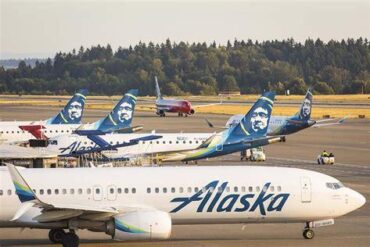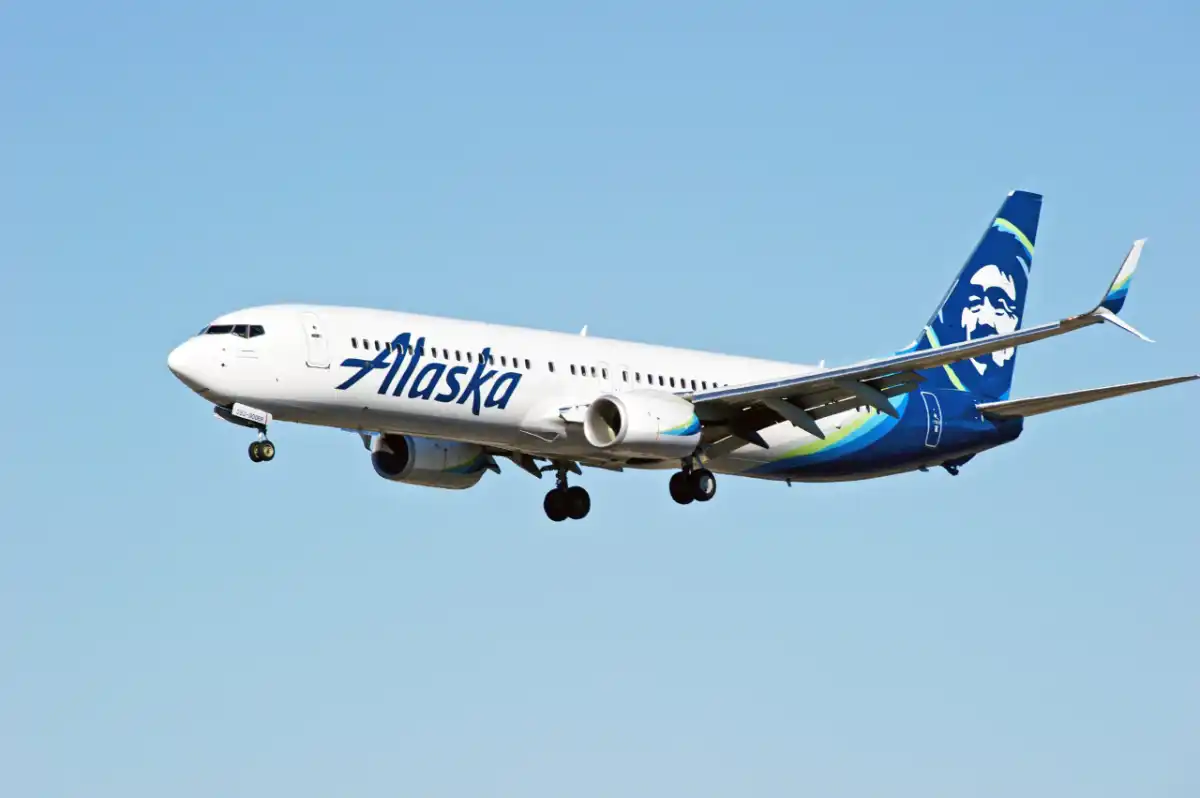
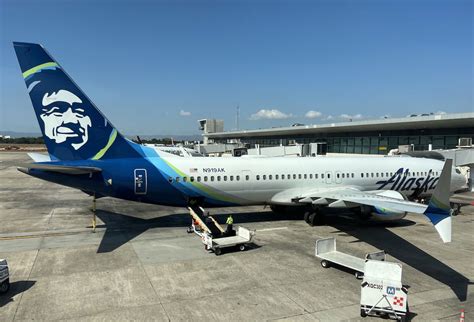
Alaska Airlines Flight 305 was forced to abandon its departure from Miami International Airport (MIA) after cabin crew reported that multiple passengers had made threats to take over the aircraft. The incident involved a Boeing 737-800 scheduled to fly from Miami to Seattle-Tacoma International Airport (SEA), but the aircraft never left the ground. Instead, the pilots requested law enforcement assistance, shut down the engines, and placed the aircraft into a cockpit lockdown protocol.
The incident unfolded on Sunday while the Boeing 737 was still at Miami. According to audio shared by Andy Slater on X, the pilots told air traffic control that flight attendants had reported threats from customers aboard the aircraft. The seriousness of the report prompted the crew to immediately treat the situation as a potential security emergency rather than an ordinary passenger disturbance.
The pilots subsequently contacted the airport tower and requested law enforcement support. They also informed controllers that they intended to enter a lockdown protocol, a security procedure designed to protect the flight deck when there is a potential threat from inside the cabin. The aircraft’s engines were shut down and its parking brake was set while the pilots secured themselves inside the reinforced cockpit.
The transmission provides a clear picture of the crew’s response. The pilots reported that there was a customer disturbance involving threats, confirmed that the parking brake had been set, and stated that they were shutting down the engine before entering lockdown. Because Flight 305 was still on the ramp, the crew could safely secure the aircraft without having to manage the additional risks associated with an airborne emergency.
What Cockpit Lockdown Means on a Commercial Aircraft
A cockpit lockdown is one of the most important security measures available to commercial flight crews. Reinforced flight deck doors became a defining feature of modern airline security after the September 11, 2001 terrorist attacks. The objective is straightforward: prevent an unauthorized person from entering the flight deck and potentially gaining control of the aircraft.
On aircraft such as the Boeing 737-800, the flight deck door is heavily reinforced and designed to resist forced entry. Once the pilots determine that a security threat exists, they can secure the door and maintain control of the aircraft. Under a genuine lockdown situation, the crew treats unauthorized access to the cockpit as an unacceptable risk.
The procedure is particularly important because an aircraft can become extremely vulnerable if an individual gains access to the flight deck. Even a verbal threat may therefore be treated seriously when it raises questions about passenger intentions or crew safety. In Flight 305’s case, the pilots had the advantage of being on the ground, allowing them to stop the aircraft and request authorities before continuing the flight.
Miami-Dade Deputies Investigate Alaska Airlines Flight 305
Every passenger aboard Flight 305 was eventually deplaned for investigation by deputies from the Miami-Dade Sheriff’s Office Airport District. The aircraft was not permitted to continue its scheduled journey to Seattle, and FlightAware records showed that the flight was ultimately cancelled.
The investigation reportedly determined that there was no credible threat. Two disruptive passengers were removed from Flight 305 and were subsequently booked onto another flight. Because local authorities did not press criminal charges, the passengers were legally free to continue traveling.
That outcome does not necessarily mean the incident has no consequences. Airlines have broad authority to protect their operations and can refuse transportation to passengers whose conduct creates a safety or security concern. Although it was not confirmed that the two individuals were permanently banned from Alaska Airlines, such a restriction would be possible. Depending on the carrier’s policies, an airline ban could potentially affect travel on affiliated carriers as well.
Why Passenger Threats Can Trigger Major Consequences
The incident illustrates how quickly disruptive passenger behavior can become an aviation security matter. Airline crews are trained to respond conservatively when a passenger makes threats involving the aircraft, particularly when those threats are reported by multiple members of the cabin crew.
Even when investigators ultimately determine that a threat was not credible, the operational consequences can be substantial. A flight may have to be stopped, passengers removed, law enforcement called, and an aircraft taken out of service while authorities establish what happened. Those steps can create delays, cancellations, crew scheduling problems, aircraft repositioning requirements, and additional costs for the airline.
There can also be financial and legal consequences for disruptive passengers. Federal aviation authorities can impose substantial civil penalties for interfering with flight crew members or engaging in prohibited conduct. More serious cases involving physical interference or other violations can potentially be referred to federal authorities, where interference with an aircraft crew can carry severe criminal penalties.
However, the available information surrounding Flight 305 points toward a situation that ended without criminal prosecution. Since local law enforcement reportedly found no credible threat and did not file charges, the two passengers are unlikely to face the most severe consequences associated with aircraft hijacking or violent interference.
Flight 305 Shows Why Crew Security Procedures Matter
The Alaska Airlines incident ultimately demonstrates why flight crews cannot afford to dismiss threatening behavior, even when a situation later proves less serious than initially feared. From the cockpit’s perspective, the priority is to protect the flight deck, secure the aircraft, and involve law enforcement before the situation can escalate.
Flight 305 never reached Seattle, but the decision to stop the Boeing 737 on the ground prevented a potentially dangerous situation from developing in the air. The cancellation was disruptive for passengers and Alaska Airlines, yet the crew’s response followed the fundamental principle of commercial aviation security: when credible information suggests that someone may attempt to seize control of an aircraft, caution comes first.
The incident also serves as a reminder that words spoken inside an aircraft can have consequences far beyond an uncomfortable confrontation. A passenger disturbance that might appear relatively minor elsewhere can become a serious operational event when it involves threats against a commercial aircraft. For Flight 305, those threats were enough to trigger a full cockpit lockdown, bring law enforcement to the aircraft, and end the scheduled flight before takeoff.