Delta Air Lines passengers will see a baggage experience in 2026 that is less about dramatic rule changes and more about a major shift in how bags are priced, tracked, and managed. The airline is keeping many familiar benefits, including free carry-on allowances for all passengers, but it is placing greater emphasis on digital tracking, faster claims, and operational efficiency.
For travelers, the biggest changes involve three areas: checked baggage costs, shorter deadlines for baggage compensation requests, and new technology designed to improve bag reliability. Understanding these updates can help passengers avoid unexpected fees and make better decisions before arriving at the airport.
Delta’s baggage strategy reflects a broader transformation across commercial aviation. Airlines are increasingly using technology to reduce operational problems while connecting baggage policies with loyalty programs, premium fares, and customer retention. In 2026, knowing the details of Delta’s baggage rules will matter more than ever.
Delta Air Lines Carry-On Baggage Rules Remain Unchanged in 2026
One of the most passenger-friendly aspects of Delta’s baggage policy remains the ability for travelers to bring a full-size carry-on bag without paying an additional fee. Unlike some low-cost carriers that charge for larger cabin bags, Delta continues allowing Basic Economy passengers to bring one carry-on bag and one personal item for free.
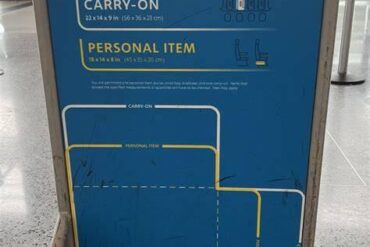
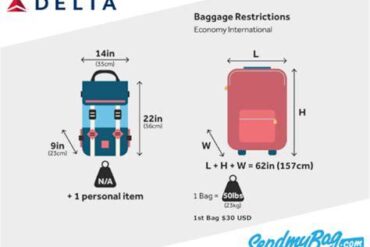
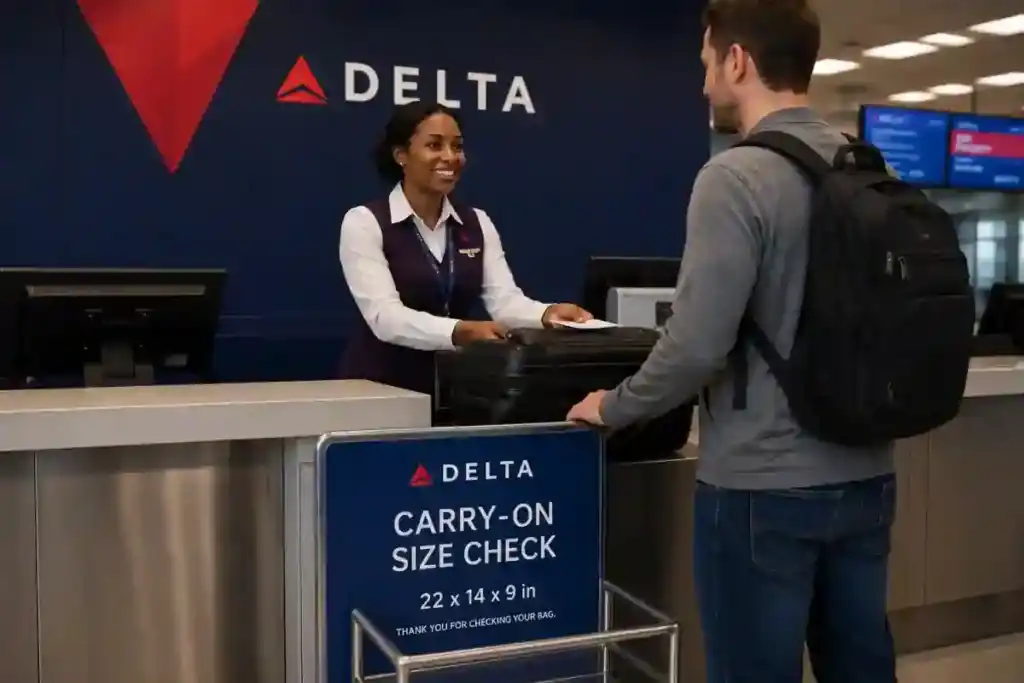
The standard carry-on size limit remains 22 x 14 x 9 inches (56 x 35 x 23 cm), which matches the typical maximum dimensions used by many major U.S. airlines. A personal item, such as a backpack, purse, or laptop bag, must fit underneath the seat in front of the passenger.
However, while the official carry-on allowance has not changed, the real-world experience can be different for travelers booking cheaper fares. Basic Economy passengers usually board later than other customers, which creates a higher chance that overhead compartments will already be full.
When this happens, passengers may be required to gate-check their carry-on bags. Although Delta generally handles these bags without additional charges, the inconvenience can still affect travelers who planned to access important items during the flight or wanted to avoid waiting at baggage claim.
This means the value of a free carry-on depends not only on the baggage rules but also on boarding priority. In 2026, passengers who want guaranteed overhead space may need to consider upgrading their fare, joining Delta’s loyalty program, or using eligible credit card benefits.
Delta Checked Bag Fees Increase for Many Domestic Travelers
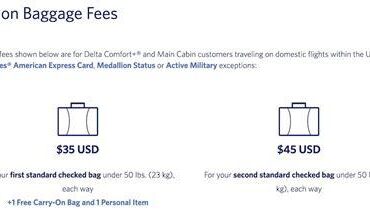
The biggest financial change passengers should understand in 2026 involves checked baggage pricing. For many domestic Delta flights, the standard checked bag fee is now $35 for the first checked bag and $45 for the second checked bag.
These prices represent an increase from older fee structures that many travelers may still remember. For passengers who rarely fly or do not have Delta status, baggage costs can significantly increase the final price of a trip.
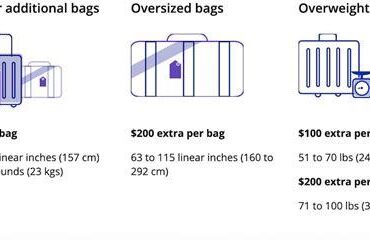
The standard weight allowance remains unchanged. Most Delta economy passengers are limited to 50 pounds (23 kilograms) per checked bag, while customers traveling in premium cabins receive higher limits.
Delta One and domestic first-class passengers generally receive a 70-pound (32-kilogram) checked baggage allowance, providing additional flexibility for travelers carrying heavier items.
The airline continues to provide baggage benefits for selected customer groups. Medallion members, eligible premium passengers, and holders of certain Delta co-branded credit cards can still receive free checked bags depending on their status and ticket conditions.
This creates an important difference between passengers. A frequent Delta traveler may experience little impact from baggage fees, while occasional travelers purchasing standard economy tickets may need to include baggage costs when comparing flight prices.
Delta’s 20-Minute Baggage Guarantee Now Requires Faster Action
One of the most important procedural changes for Delta passengers in 2026 involves the airline’s 20-minute baggage guarantee.
The program itself remains available. If an eligible domestic checked bag does not arrive at the baggage carousel within 20 minutes after the aircraft reaches the gate, passengers can still receive 2,500 SkyMiles as compensation.
However, the process has become much more time-sensitive. Passengers now have only two hours after arrival to submit their request.
This shorter claim window changes how travelers need to approach baggage delays. In the past, passengers who noticed a delay later in their journey may have still had time to request compensation. Under the updated process, waiting too long could mean losing the benefit entirely.
The change does not remove the guarantee, but it requires passengers to understand the rules and act immediately. After landing, travelers should monitor baggage delivery times, check their eligibility, and submit requests quickly if the conditions are met.
For Delta, this approach creates a balance between customer service and operational control. The airline continues offering compensation while ensuring claims are closely connected to real-time baggage events.
RFID Tracking and AI Baggage Technology Transform Delta’s Operations
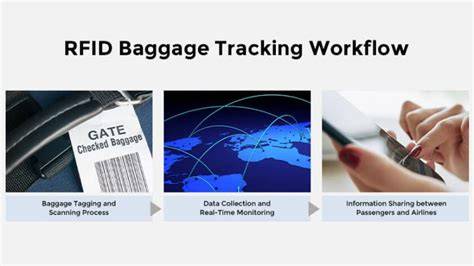
Behind the passenger-facing changes, Delta is investing heavily in technology designed to improve baggage reliability. The airline continues expanding its RFID baggage tracking system, which allows customers to monitor checked luggage through the Fly Delta app.
This technology provides passengers with more visibility than traditional baggage systems. Instead of simply waiting at the carousel, travelers can receive updates about where their bags are located throughout the journey.
For connecting passengers, this information is particularly valuable. Tight connections have always created anxiety because travelers often wonder whether their luggage successfully transferred between aircraft. Real-time tracking reduces uncertainty by showing whether a bag has been loaded, transferred, or delivered.
Delta is also increasing its use of AI-powered baggage management tools. These systems are designed to improve how bags move through airports by analyzing operational conditions, traffic levels, weather disruptions, and aircraft schedules.
AI can help determine how ramp vehicles are assigned, where baggage resources are needed, and how potential delays should be handled. Instead of relying only on manual decisions, Delta’s systems can process large amounts of operational information and provide faster recommendations.
How Delta’s AI Baggage System Could Improve Passenger Experience
Baggage handling is one of the most complicated parts of airline operations. Every checked bag must move through multiple stages, including airport check-in, security screening, sorting facilities, ramp transportation, aircraft loading, and final delivery.
A small disruption at any stage can cause significant delays. Weather events, gate changes, aircraft swaps, and airport congestion can quickly create baggage problems.
Delta’s AI systems are designed to reduce these challenges by improving decision-making speed. The technology can help identify bottlenecks, adjust baggage priorities, and reduce unnecessary movements by airport vehicles.
The goal is not simply faster baggage handling. It is more predictable baggage handling.
For passengers, the benefit is straightforward: fewer missing bags, fewer delayed connections, and better information when problems occur.
For Delta, improving baggage efficiency also reduces costs associated with customer compensation, manual intervention, and operational disruptions.
The airline industry has increasingly moved toward using artificial intelligence for behind-the-scenes operations. While passengers may not directly see these systems working, they are becoming a major part of how airlines manage complex networks.
Delta Baggage Policies Reflect the Airline’s Loyalty Strategy
Delta’s baggage rules in 2026 are also closely connected to its broader business strategy. The airline uses baggage benefits as part of its loyalty ecosystem, encouraging passengers to choose Delta products and maintain relationships with the company.
Free checked bags remain one of the most valuable benefits offered through airline status programs and co-branded credit cards. For frequent travelers, avoiding baggage fees can represent significant savings throughout the year.
Delta’s relationship with credit card partners also makes baggage benefits an important customer acquisition tool. A traveler who receives free checked bags may be more likely to choose Delta over competitors, even when ticket prices are similar.
This approach creates a clear division between different types of customers. Premium travelers and loyal customers receive more benefits, while occasional travelers are more likely to experience standard fees.
The strategy is common throughout the airline industry, where baggage policies have evolved from simple transportation rules into important parts of airline revenue management.
What Delta Passengers Should Do Before Flying in 2026
Travelers can avoid most baggage problems by preparing before arriving at the airport. The most important step is understanding which baggage benefits apply to their specific ticket.
Passengers should check whether they qualify for free checked bags through Medallion status, credit card benefits, or cabin class. They should also confirm current baggage fees before packing, especially when traveling with multiple checked bags.
For carry-on travelers, arriving early can make a significant difference. Even though Delta allows Basic Economy passengers to bring carry-on luggage, late boarding increases the risk of losing overhead bin availability.
Passengers checking bags should also enable baggage notifications in the Fly Delta app. Digital tracking information can make connections easier and provide immediate updates if a bag experiences a delay.
Most importantly, travelers should remember the new two-hour deadline for baggage guarantee claims. A delayed bag may qualify for compensation, but only if passengers submit the request within the required timeframe.
The Future of Delta Air Lines Baggage Management
Delta’s 2026 baggage changes show how airlines are balancing customer expectations with financial and operational pressures. The airline is not removing major baggage benefits, but it is making the system more technology-driven and more dependent on passenger awareness.
Free carry-ons remain a major advantage, but checked baggage is becoming more expensive for travelers without status or qualifying benefits. At the same time, improved tracking and AI-powered systems could make baggage problems less frequent.
The result is a baggage experience that combines convenience with stricter procedures. Passengers who understand the rules will benefit from better technology and available perks, while those who overlook the details may face higher costs or missed opportunities for compensation.
For Delta travelers in 2026, the key is preparation. Knowing the fees, understanding the deadlines, and using available digital tools can make the difference between a smooth journey and a frustrating airport experience.