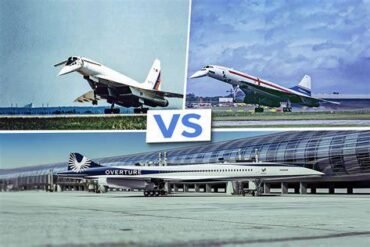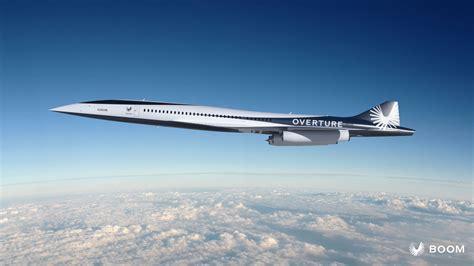
For more than two decades, commercial supersonic travel has existed only as a memory of the Concorde era. The aircraft was a symbol of engineering ambition, carrying passengers across the Atlantic at twice the speed of sound. Yet behind its legendary status was a difficult reality: high operating costs, limited routes, environmental concerns, and a business model that never became sustainable.
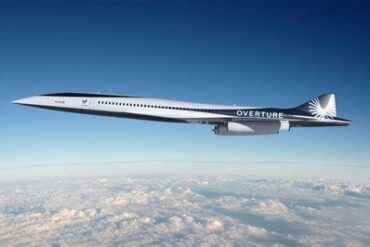
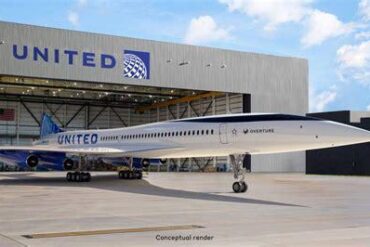
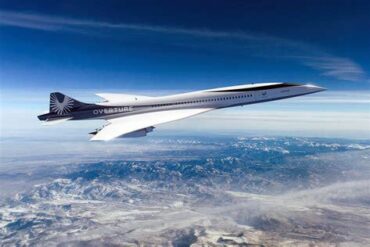
Now, Boom Supersonic’s Overture is attempting to revive that forgotten category of aviation. Unlike Concorde, which was largely driven by government prestige and national competition, Boom is approaching supersonic flight as a private commercial venture. The company’s goal is not simply to build the fastest passenger aircraft but to create a supersonic airliner that airlines can actually operate profitably.
The ambition is enormous. Boom must transform the lessons of Concorde into a completely different aircraft philosophy, one focused on efficiency, sustainability, and commercial practicality. The company has already moved beyond early concept stages with the successful development of the XB-1 demonstrator, proving that a startup can design and fly a modern supersonic aircraft. However, the leap from a small technology demonstrator to a certified passenger aircraft capable of carrying 64 to 80 travelers represents one of the most challenging tasks in modern aerospace.
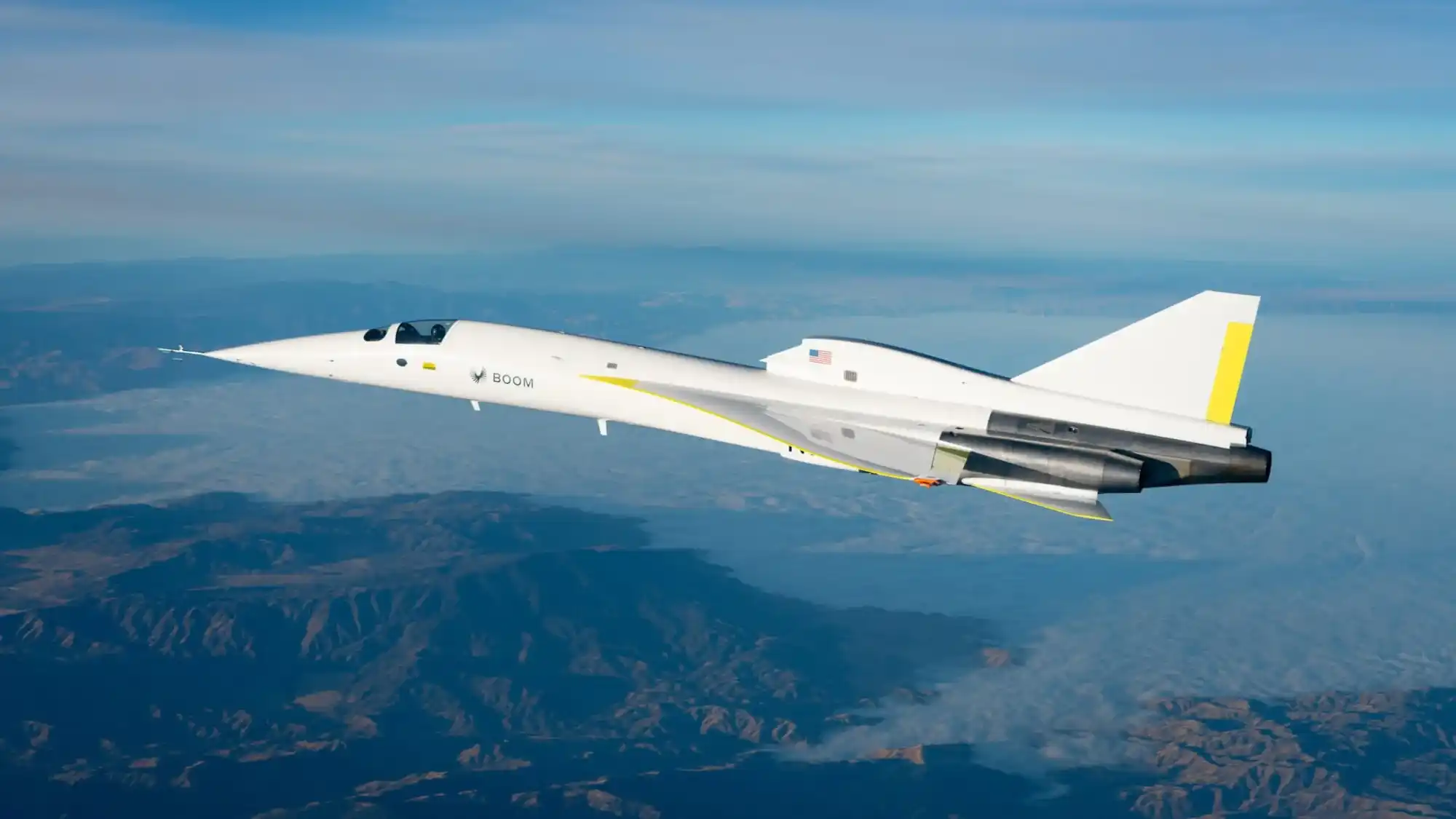
The question surrounding the Boom Overture aircraft is not whether supersonic flight is physically possible. Aviation history already answered that decades ago. The real question is whether a startup can overcome the economic, regulatory, manufacturing, and environmental challenges that prevented previous supersonic programs from becoming mainstream transportation solutions.
From Concorde’s Failure to Boom’s New Supersonic Strategy
The Concorde remains one of aviation’s greatest technological achievements, but it also represents one of the industry’s most important business lessons. The aircraft could cross the Atlantic in roughly three and a half hours, dramatically reducing travel times between major cities. However, its operating economics were extremely difficult.
Fuel consumption was high, maintenance was complex, and the passenger market was limited to travelers willing to pay premium prices. When fuel costs increased and environmental concerns became stronger, Concorde’s commercial justification weakened. The aircraft eventually retired in 2003, leaving supersonic passenger travel without a successor.
Boom Supersonic is attempting to solve the exact problems that limited Concorde. Instead of building a large four-engine aircraft designed around national prestige, Boom is creating a smaller, more targeted aircraft designed around premium business travelers who value time above everything else.
The Overture supersonic jet is expected to carry between 64 and 80 passengers, allowing airlines to focus on high-value routes rather than attempting to replace traditional widebody aircraft. Routes connecting financial centers such as New York, London, Tokyo, and Dubai could potentially become the core market for the aircraft.
The strategy is based on a simple idea: many business travelers do not want a larger aircraft; they want less time spent traveling. For executives, entrepreneurs, and global professionals, reducing a seven-hour flight into a three-and-a-half-hour journey could represent a major productivity advantage.
However, speed alone does not guarantee success. Aviation history has repeatedly shown that passengers and airlines judge aircraft based on economics, reliability, and convenience, not just technological achievement.
The Engineering Challenge Behind the Boom Overture
Designing a supersonic aircraft is already difficult. Building one as a startup company is significantly harder.
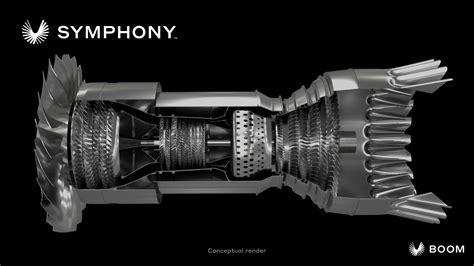
Boom faces a challenge that even established aerospace giants rarely attempt: developing a completely new aircraft while also creating a new engine technology at the same time. The company’s Symphony engine is central to the Overture program because propulsion efficiency will determine whether the aircraft can achieve commercial viability.
Historically, aircraft manufacturers often rely on proven engine families developed by companies with decades of experience. Boeing, Airbus, and major engine manufacturers benefit from enormous databases of operational information, established testing facilities, and mature supply chains.
Boom does not have that advantage.
The company must prove that Symphony can deliver the required thrust while remaining reliable, efficient, and maintainable. Certification authorities will require thousands of hours of testing before approving the engine for passenger operations. Any major delay in engine development could delay the entire aircraft program.
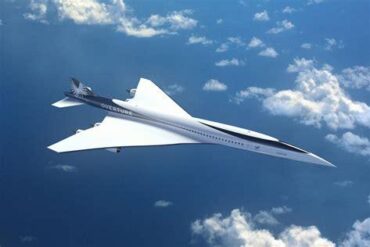
The airframe itself presents another challenge. The Overture must survive the extreme aerodynamic conditions of supersonic flight while remaining efficient during takeoff, landing, and slower cruise phases.
At Mach 1 or above, aircraft experience dramatically different aerodynamic forces compared with conventional commercial jets. The aircraft must manage heat, structural stress, stability, and fuel efficiency simultaneously.
Boom’s XB-1 program demonstrated that modern technology can overcome many of these issues. However, scaling that technology into a commercial aircraft capable of carrying passengers across oceans requires far greater levels of reliability and certification.
Why Flying Faster Is Not Enough for Airline Success
The biggest misunderstanding about supersonic aviation is that speed automatically creates value. For passengers, faster travel sounds revolutionary. For airlines, however, every aircraft must justify its place in a fleet.
An airline does not purchase an aircraft simply because it is impressive. It evaluates:
- operating costs,
- fuel efficiency,
- maintenance requirements,
- airport compatibility,
- passenger demand,
- revenue potential.
The Overture must prove that its speed advantage outweighs the disadvantages of operating a smaller, specialized aircraft.
Modern subsonic aircraft have improved dramatically. Aircraft such as the Boeing 787 Dreamliner and Airbus A350 have transformed long-haul travel by offering quieter cabins, better fuel efficiency, and premium passenger experiences.
For many travelers, a 10-hour flight is no longer considered unbearable. Modern business-class cabins provide lie-flat beds, private suites, high-quality dining, and office-like environments. The journey itself has become part of the premium experience.
The Overture offers something different. It is not designed to become a flying hotel. Its primary luxury is time.
A passenger may sacrifice cabin space and amenities in exchange for arriving several hours earlier. This creates an interesting divide in the premium travel market. Some travelers value comfort and relaxation, while others value reaching their destination as quickly as possible.
Boom’s challenge is identifying enough customers in the second category to support a profitable fleet.
The Sustainability Question Facing Supersonic Travel
Environmental concerns represent one of the largest obstacles for the return of commercial supersonic flight.
Modern aviation is under increasing pressure to reduce emissions. Airlines, regulators, and passengers are demanding cleaner technology, making fuel efficiency more important than ever.
Boom has positioned the Overture around the use of 100% sustainable aviation fuel (SAF). The company believes that sustainable fuels can allow supersonic travel to operate within future environmental standards.
However, SAF availability remains a major challenge. Current production levels are far below what would be required for widespread aviation use. Even if the Overture is technically capable of using SAF, the global supply chain must expand significantly.
Noise is another important issue.
Supersonic aircraft create sonic booms when traveling faster than sound. These shock waves have historically limited overland supersonic operations because of noise concerns. Concorde was restricted mainly to ocean routes for this reason.
The future of the Overture depends partly on regulatory changes that may allow quieter supersonic aircraft to operate over land. Advances in aerodynamic design could reduce sonic boom intensity, but public acceptance will remain critical.
Even if regulators approve operations, individual airports may impose their own restrictions based on local noise concerns.
Airline Interest Shows Promise, But Also Caution
Boom has attracted significant attention from major airlines, including United Airlines, American Airlines, and Japan Airlines.
These carriers have expressed interest through conditional agreements and pre-orders, signaling that the aviation industry sees potential value in returning to supersonic travel.
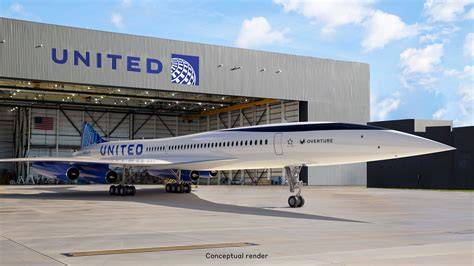
However, these commitments should not be mistaken for guaranteed fleet introductions. Airlines often place early orders to secure future options while limiting financial risk.
The aviation industry has seen many ambitious aircraft programs experience delays, cost increases, or market changes before entering service. Airlines understand this reality and typically avoid depending on unproven technology until certification and operational performance are confirmed.
For Boom, the relationship with airlines represents both opportunity and pressure. The company must demonstrate that the Overture is more than an exciting concept. It must prove that airlines can operate it profitably year after year.
Can Boom Build an Aircraft Manufacturing System From Scratch?
Creating an aircraft is only the beginning. Successful commercial aviation requires an entire ecosystem.
Large manufacturers such as Boeing and Airbus have decades of experience supporting aircraft after delivery. Their global networks include maintenance facilities, spare parts systems, training programs, and supplier relationships.
Boom must build much of this infrastructure itself.
The company’s long-term production goal requires manufacturing dozens of aircraft annually. Achieving that level of production would require a highly reliable supply chain and efficient factory operations.
The aerospace industry is currently facing widespread production challenges. Even established manufacturers have struggled with supplier shortages, quality issues, and delivery delays.
For a startup, these difficulties are amplified.
A technologically impressive aircraft can fail commercially if airlines cannot easily maintain it or obtain replacement parts. The aircraft must become part of the global aviation ecosystem rather than exist as a specialized engineering project.
This was one of the challenges faced by the Airbus A380. The aircraft was a remarkable achievement, but its size required unique airport infrastructure and specialized operating conditions. When airline strategies changed, the aircraft became difficult for many operators to justify.
Boom must ensure that the Overture does not become another highly specialized aircraft with limited practical use.
The Real Competition: Premium Subsonic Travel
The Overture’s biggest competitor may not be another supersonic aircraft. It may be the increasingly luxurious world of premium subsonic aviation.
Airlines have invested heavily in first-class suites, private cabins, and advanced business-class products. For wealthy travelers, the question is no longer simply “How fast can we arrive?” but “How enjoyable is the journey?”
A modern long-haul business-class passenger can work, sleep, dine, and relax in a highly comfortable environment.
The Overture must convince customers that saving several hours is worth giving up some of that comfort.
This creates a unique market position. The aircraft is unlikely to replace traditional widebody jets. Instead, it may operate alongside them as an ultra-premium transportation option.
The future of supersonic aviation may not involve everyone flying faster. It may involve a smaller group of passengers paying significantly more for the ability to reclaim valuable time.
The Road Ahead for Boom Overture
The Boom Overture project represents one of the most ambitious attempts to reshape commercial aviation in decades. The company has already achieved something remarkable by proving that a private startup can design and fly a modern supersonic aircraft.
However, the hardest chapters are still ahead.
Certification, engine development, manufacturing, sustainability, and airline economics will determine whether the Overture becomes a genuine aviation breakthrough or another example of technology that arrived before the market was ready.
The key factor will not be the aircraft’s maximum speed. Aviation history is filled with fast aircraft that failed commercially. The determining factor will be whether Boom can create a complete business system around supersonic travel.
If the company succeeds, the Overture could redefine premium air travel and prove that supersonic passenger aviation still has a place in the modern world.
If it fails, the project will still provide valuable lessons about the future of aerospace innovation.
The return of supersonic travel is no longer a question of whether humans can fly faster than sound. That has already been proven. The real challenge is whether faster-than-sound travel can finally become practical, sustainable, and profitable.