Ultra-long nonstop flights sit at the edge of what commercial aviation can realistically do. They are where physics, physiology, finance, and passenger psychology collide at 40,000 feet for 14, 16, or even 18 hours straight. On paper, these routes look hostile to profitability: fuel burn is enormous, crews are expensive, schedules are brittle, and a single delay can cascade across an entire long-haul network. Yet airlines keep launching them, refining them, and in some cases quietly expanding them. That persistence is not optimism. It is strategy.
The profit logic of ultra-long nonstop routes does not resemble traditional airline economics. These flights are not built to chase volume or undercut competitors on price. They are designed to monetize time, certainty, and network power. When executed with discipline, they can anchor premium demand, lock in corporate contracts, and reshape competitive geography in ways that shorter routes simply cannot.
The question is not whether ultra-long flights are expensive. They are. The real question is how airlines structure revenue, aircraft, and networks so that those costs translate into defensible, long-term value rather than chronic losses.
The Extreme Economics of Ultra-Long Nonstop Flying
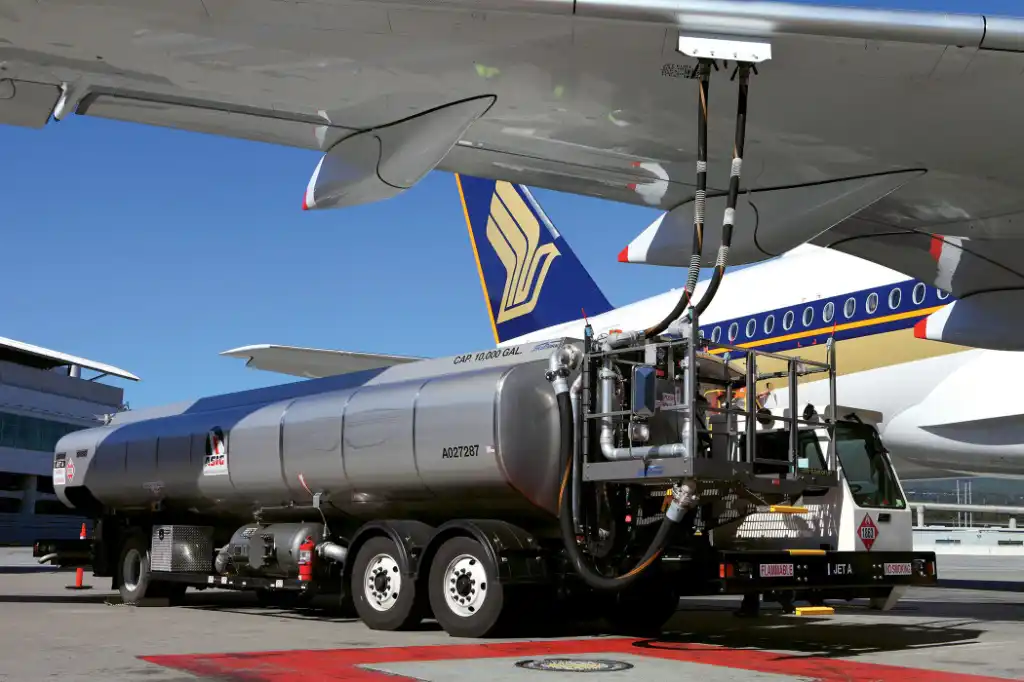
Ultra-long routes compress an airline’s entire cost structure into a single, high-stakes departure. Fuel dominates immediately. Aircraft often depart close to maximum takeoff weight, leaving little room to absorb headwinds, rerouting, or weather deviations without burning extra fuel or sacrificing payload. The longer the flight, the more sensitive profitability becomes to fuel price volatility and operational inefficiencies.
Crew costs escalate sharply. Regulations require augmented flight decks and additional cabin crew to manage duty-time limits and rest requirements. That means more salaries per flight, more hotel nights at outstations, and more complexity in crew rostering. Maintenance exposure also rises. Long sectors accelerate engine cycles and component wear, while offering fewer opportunities for intermediate inspections or quick fixes.
What makes these routes particularly unforgiving is the lack of margin for error. A minor delay on a 90-minute flight is an annoyance. On an 18-hour flight, it can disrupt crew legality, break onward connections, and knock an aircraft out of position for days. Airlines flying ultra-long routes accept that fragility because the upside is not measured purely in per-seat cost, but in strategic leverage.
Why Airlines Chase Ultra-Long Routes Despite the Risk
The strategic value of ultra-long nonstop routes lies in their ability to collapse geography. A nonstop link between distant global cities removes the friction of connections entirely. For passengers, especially those traveling on tight schedules or representing high economic value, that friction reduction has a price tag attached to it.
Time savings are the most obvious benefit. Cutting two to four hours of travel time, eliminating layovers, and reducing the probability of missed connections changes how a journey feels and functions. For airlines, that translates into pricing power. Nonstop flights do not have to be cheaper than one-stop alternatives. They have to be better in a way that matters to the right customers.
There is also a network effect. Offering the only nonstop link between two major markets forces competitors into indirect routings, often through less convenient hubs. That asymmetry matters in corporate travel negotiations, alliance dynamics, and brand positioning. Even if margins are thin initially, the route can defend market share and protect revenue streams elsewhere in the network.
Qantas’ nonstop services from Perth to London and Paris are a textbook example. These flights were never designed to beat Middle Eastern or Asian carriers on price. They were designed to offer something structurally different: a single-flight connection between Australia and Europe that appealed to travelers who value predictability and time over absolute cost. The route’s strategic weight extended beyond its standalone profitability, reinforcing Qantas’ relevance in a fiercely competitive long-haul market.
Pricing Ultra-Long Flights for Yield, Not Volume
Pricing strategy on ultra-long routes is intentionally conservative. Airlines care far more about revenue per passenger than total passengers carried. Load factor, a traditional airline obsession, becomes a secondary metric. An ultra-long flight can be commercially viable with empty seats if the occupied ones are sold at the right price.
Revenue management systems reflect this reality. Early in the booking cycle, airlines release a controlled amount of lower-fare inventory to stimulate baseline demand, particularly among leisure travelers planning months ahead. As departure approaches, the emphasis shifts sharply toward yield protection. Seats are withheld for late-booking passengers, who statistically skew toward business travelers and high-value premium leisure customers.
Unlike short-haul markets, there is little incentive to dump inventory at the last minute. Discounting close to departure risks diluting the very pricing power that makes the route viable. Airlines would rather fly with spare capacity than train customers to expect cheap fares on a product built around exclusivity and convenience.
This discipline marks a broader shift in airline economics. Profitability increasingly depends on extracting maximum value from a smaller, more targeted group of passengers, rather than filling every seat at any price. Ultra-long routes simply make that logic impossible to ignore.
Premium Cabins as the Economic Backbone
On the world’s longest nonstop flights, premium cabins are not a luxury add-on. They are the core revenue engine. Business class and premium economy occupy a minority of seats, yet they routinely generate a majority of total route revenue.
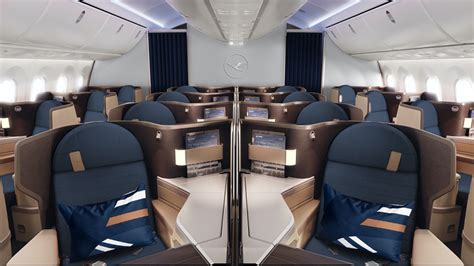
The reason is straightforward. Passengers willing to pay for comfort, privacy, and flexibility are also the passengers most sensitive to time and reliability. Ultra-long flights amplify those preferences. Spending 16 hours in the air makes seat width, lie-flat beds, cabin quiet, and service consistency matter far more than on shorter sectors.
Premium economy has emerged as a particularly powerful tool. It captures travelers who find business class too expensive but are unwilling to endure standard economy for half a day or more. The yield gap between premium economy and economy is significant, while the incremental cost to the airline is relatively modest.
Aircraft assigned to ultra-long routes reflect this reality. Configurations typically feature fewer total seats, reduced economy density, and expanded premium sections. Airlines accept lower absolute capacity because the revenue per departure is higher and more predictable.
United Airlines’ longest Pacific routes illustrate this approach. Rather than maximizing seat count, the airline emphasizes premium cabin availability and product quality on flights linking North America with distant Asia-Pacific markets. The objective is to attract corporate travelers and alliance traffic that values nonstop access, not to chase price-sensitive leisure demand.
Designing the Product Around Business Travelers
Business travelers make up a minority of passengers on long-haul flights, but they account for a disproportionate share of revenue. On ultra-long nonstop routes, their importance increases further. These flights are often designed explicitly around corporate needs rather than mass-market appeal.
For companies, nonstop travel changes the economics of time. Arriving earlier, avoiding overnight layovers, and reducing disruption risk has tangible value, especially for senior executives, specialist teams, and government or institutional travelers. Airlines monetize that value through higher fares, flexible ticket rules, and premium-heavy cabin layouts.
Scheduling reflects this focus. Departure and arrival times are optimized for business-day utility rather than peak leisure demand. Frequencies are limited to protect pricing power, and operational reliability is treated as a commercial priority, not just an operational one.
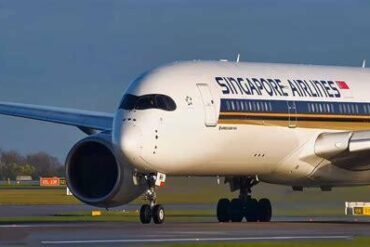
Singapore Airlines’ nonstop services between Singapore and North America embody this philosophy. Routes such as Singapore–New York were launched with aircraft configured almost entirely around business and premium economy seating. The airline openly positioned these flights toward finance, technology, and government traffic moving between global commercial centers, rather than attempting to compete for bargain-seeking leisure travelers.
Qantas applies a similar logic on its ultra-long European services from Perth. The target market is not backpackers or seasonal tourists, but business, government, and resource-sector travelers for whom reducing travel time and complexity is worth paying for. In these cases, the route’s success is measured as much by its impact on corporate contracts as by its standalone profit margin.
Ancillary Revenue That Fits the Long-Haul Mindset
Ancillary revenue is not the primary profit driver on ultra-long nonstop routes, but it plays a meaningful supporting role when aligned with passenger psychology. The key difference from short-haul flying is that ancillaries on ultra-long routes focus on comfort, control, and continuity rather than bare necessities.
Passengers spending 15 hours or more onboard are more willing to pay for anything that improves the experience or reduces stress. Preferred seating, extra-legroom rows, and forward-zone economy seats become more valuable as flight duration increases. Onboard connectivity is another major lever. Long flights create sustained demand for Wi-Fi among both business travelers and premium leisure passengers who want to work, communicate, or stream content continuously.
Upgrade mechanisms are particularly effective. Cash or mileage-based upgrade offers allow airlines to fill premium seats without publicly discounting fares. Bid-based systems protect fare integrity while capturing incremental revenue from passengers willing to pay for a better experience closer to departure.
Even traditionally full-service airlines have selectively unbundled these elements. The goal is not to nickel-and-dime passengers, but to allow high-value customers to tailor their experience while preserving strong headline pricing. On ultra-long routes, ancillaries are about extracting additional value from passengers already inclined to spend, not stimulating demand through low prices.

Aircraft Choice as a Commercial Decision
Aircraft selection is central to the viability of ultra-long nonstop routes. Earlier generations of widebody aircraft could technically fly these distances, but often with payload penalties that undermined economics. New-generation aircraft changed that equation.
The Airbus A350 and Boeing 787 combine range, fuel efficiency, and reliability in a way that makes ultra-long missions commercially realistic. Lower fuel burn reduces exposure to price volatility, while advanced systems improve dispatch reliability on flights where delays are particularly costly.
However, aircraft capability alone is not enough. Airlines must align configuration, utilization, and maintenance planning with the demands of ultra-long flying. These aircraft need to earn their keep across the week, not just on a single showcase route. Ground time, rotation design, and scheduling discipline matter as much as cabin layout.
Crew integration is equally critical. Ultra-long flights require augmented crews and carefully managed duty cycles. Airlines that struggle often do so because these flights create inefficiencies elsewhere in the network. Those that succeed integrate ultra-long services cleanly into existing crew bases and planning frameworks, preventing cost leakage beyond the route itself.
Network Integration and Defensive Value
Ultra-long nonstop routes rarely stand alone. Their real power emerges when they are integrated into a broader network strategy. A nonstop link between two distant hubs can anchor alliance flows, support feeder traffic, and strengthen an airline’s negotiating position with corporate customers.
From a defensive perspective, these routes can be as valuable as they are profitable. Offering a unique nonstop service forces competitors into indirect routings, often increasing their costs or weakening their appeal to premium travelers. That competitive asymmetry can protect market share even if the route itself operates on modest margins.
This is why airlines sometimes tolerate weaker early performance on ultra-long routes than they would on short-haul services. The route’s contribution to brand strength, corporate loyalty, and network relevance can justify the investment over a longer horizon.
The Thin Line Between Success and Failure
Ultra-long nonstop routes magnify both strengths and weaknesses. When pricing discipline slips, when premium demand softens, or when costs creep upward, profitability can erode quickly. These flights do not forgive strategic ambiguity. They either align tightly with an airline’s commercial logic, or they become expensive liabilities.
The airlines that succeed treat ultra-long routes not as stunts or marketing exercises, but as precision tools. They match aircraft to demand, price for yield rather than volume, and design the product around passengers who value time above all else. They accept that not every market can sustain such a strategy, and they exit quietly when conditions change.
In the end, ultra-long nonstop routes are not about flying farther for its own sake. They are about redefining what distance means in a global economy where time is often more valuable than money. When airlines understand that trade-off, and build their operations accordingly, even the longest flights on Earth can make commercial sense.