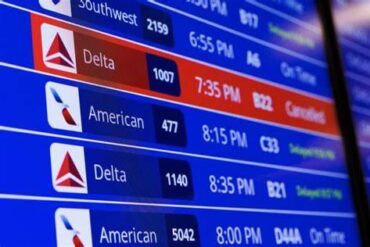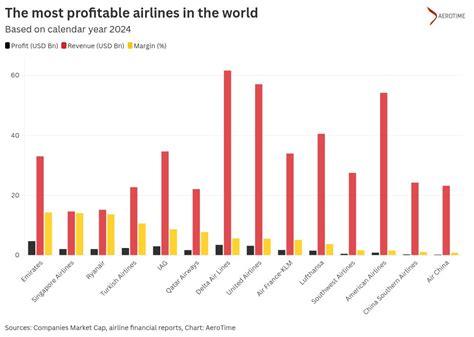
The first half of 2026 has exposed a sharp divide in US airline profitability. Higher fuel costs, tougher operating conditions, and changing passenger demand have squeezed most major carriers for airlines and investors alike, yet the results also show that scale alone does not determine how effectively an airline converts revenue into operating profit.
For this ranking, operating margin is the most useful measure. It compares operating profit with revenue, showing how much of every dollar earned from flying remains as operating profit before interest and taxes. That makes it more informative than simply listing the airlines with the largest dollar profits, because a giant network can generate enormous revenue while producing a relatively thin margin.
The figures also reveal an interesting contrast between the biggest US airlines and smaller specialists. Delta Air Lines and United Airlines produced roughly $2 billion each in operating profit, but Allegiant Air achieved the highest operating margin among the qualifying carriers. The ranking excludes SkyWest Airlines because it primarily operates flights under other airlines’ brands rather than selling passenger service under its own network identity.
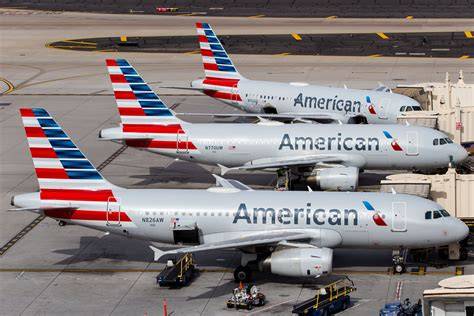
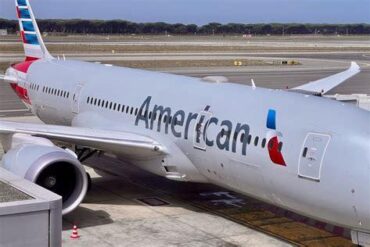
5. American Airlines: 1.3% Operating Margin
American Airlines recorded a 1.3% operating margin in the first half of 2026, down from 3.2% during the same period in 2025. The Fort Worth-based carrier generated about $405 million in operating profit from more than $30 billion in revenue. The numbers underline the challenge facing American: even a very large revenue base can translate into a relatively small operating return when costs and network complexity absorb much of the money generated by passengers.
American’s response has centered on improving the quality of its revenue rather than simply chasing more passengers. The airline is rebuilding relationships with travel agencies and corporate customers while continuing a broad premiumization strategy. Premium passenger revenue increased 13.4% in the second quarter, providing a meaningful source of higher-yielding revenue as American attempts to narrow the profitability gap separating it from Delta and United.
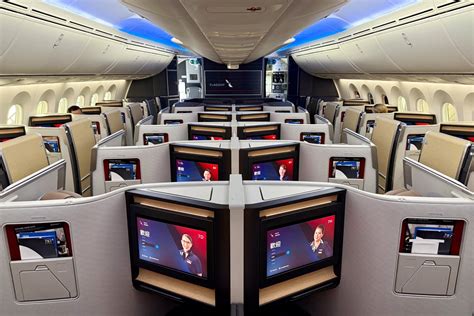
That strategy is visible in the aircraft entering the fleet. American plans to increase premium seating on narrowbody departures from 25% to 40% over the coming years, while its long-haul fleet is already receiving more premium-heavy configurations. New Boeing 787s and Airbus A321XLRs feature Flagship Suite seating with privacy doors, and Boeing 777 aircraft are being retrofitted with the new product. The objective is to increase the proportion of revenue generated by travelers willing to pay more for space, privacy, and service.
Network changes are another part of the equation. At Dallas/Fort Worth International Airport, American has reorganized arrival and departure banks to improve connections through its largest hub. Philadelphia is being optimized to strengthen transatlantic connectivity, while Miami remains a critical gateway for Latin American traffic.
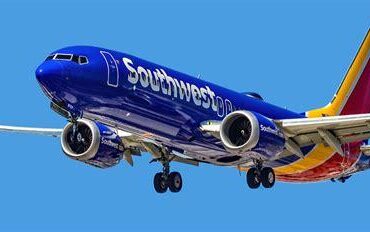
4. Southwest Airlines: 3.9% Operating Margin
Southwest Airlines produced a 3.9% operating margin in the first half of 2026, a substantial improvement over the previous year’s operating result of only $2 million. Revenue reached $15.7 billion, while operating profit climbed to approximately $615 million. The improvement is notable because Southwest is undertaking one of the most extensive transformations in its modern history.
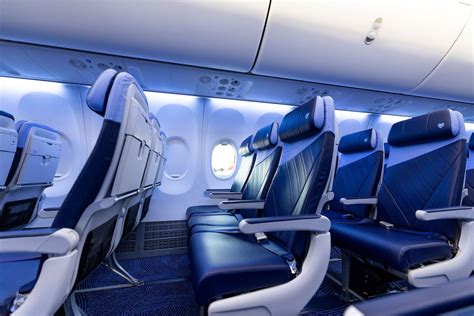
For decades, Southwest was built around a relatively simple proposition: a largely uniform product, free checked bags, and open seating. That model is being reshaped. Beginning in 2026, the airline moved toward assigned seating and introduced an extra-legroom product, while changes to fares and baggage charges were designed to generate additional revenue from customers who value particular products or services.
The shift matters because Southwest is trying to capture more revenue from business travelers and less price-sensitive customers. Aircraft are being retrofitted with improved seats and Starlink WiFi, while the company plans to introduce airport lounges beginning in 2027. Southwest is also changing its loyalty strategy and expanding international connectivity through code-share partnerships.
These moves represent a broader attempt to create several new revenue streams without abandoning the carrier’s historically strong domestic network.
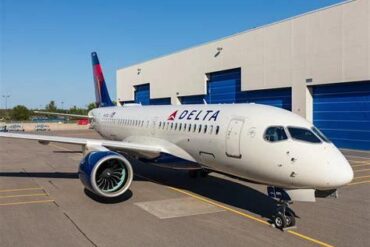
3. Delta Air Lines: 6.4% Operating Margin
Delta Air Lines generated a 6.4% operating margin from its core airline operations in the first half of 2026, excluding its refinery results. The carrier produced more than $2 billion in operating profit on $31.9 billion in airline revenue. That was below the approximately 9.4% margin recorded during the same period a year earlier, illustrating how substantially the operating environment had changed.
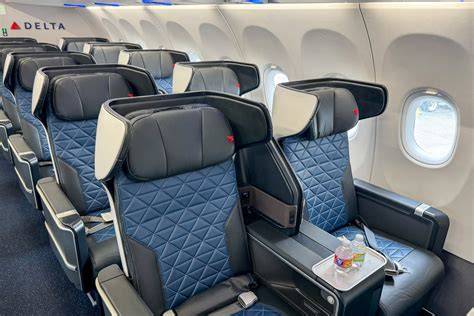
Even with the decline, Delta’s revenue mix remained heavily influenced by premium customers and loyalty activity. Premium ticket revenue increased 16% to $12.3 billion, slightly surpassing economy-class revenue. That is an important structural feature of Delta’s business model because it demonstrates how the airline can generate significant revenue without relying exclusively on filling the largest possible number of economy seats.
2. United Airlines: 6.5% Operating Margin
United Airlines narrowly exceeded Delta on the operating-margin measure, recording a 6.5% margin in the first half of 2026. The Chicago-based carrier generated $32.3 billion in revenue and almost $2.1 billion in operating profit, compared with a 6.8% margin a year earlier. However, United’s reported operating profit was helped by special items, including gains connected with aircraft sale-leaseback transactions, so the headline figure requires some context.
United’s international network is central to its profitability strategy. The airline has spent years expanding beyond traditional European gateways, using Newark Liberty International Airport and Washington Dulles International Airport to connect customers with a wider range of destinations. Alongside established markets such as London, Frankfurt, and Paris, United has developed a broad network of secondary international destinations.
The carrier is also increasing its exposure to premium international travel. Premium revenue continued to grow during the second quarter, while contracted business-traveler revenue also increased. United’s approach combines a large international network with enough premium capacity to monetize customers who place a higher value on nonstop service, schedules, space, and onboard amenities.
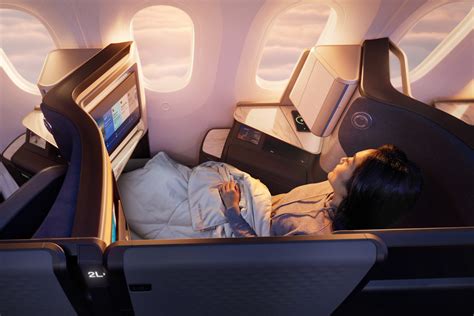
That philosophy is visible in the incoming fleet. United is introducing a premium-heavy Boeing 787-9 configuration with 99 premium seats, including Polaris Studio suites and 56 regular Polaris business-class seats. Its first Airbus A321XLR is also expected to enter service later in 2026, giving United another tool for serving thinner long-haul markets with Polaris and Premium Plus cabins.
1. Allegiant Air: 7.4% Operating Margin
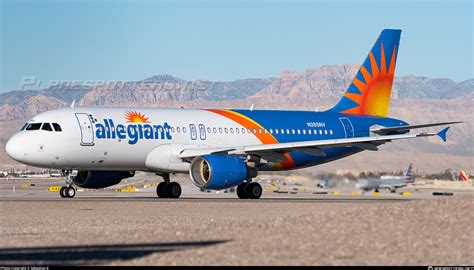
Allegiant Air recorded the highest operating margin among the US passenger airlines included in this ranking, reaching 7.4% during the first half of 2026. The Las Vegas-based carrier generated approximately $1.5 billion in revenue and around $111 million in operating profit. Its dollar profit was far smaller than the results posted by Delta and United, but its smaller revenue base makes the margin substantially more revealing.
Allegiant’s business model is built around serving smaller and midsized communities with nonstop flights to leisure destinations. Rather than concentrating on the giant connecting hubs that define the network strategies of the largest US airlines, Allegiant has historically sought markets where it can stimulate leisure demand without consistently entering direct competition with the largest carriers.
The airline also has considerable flexibility in adjusting capacity. It can add frequencies when leisure demand is strong and reduce flying when demand is weaker. In the second quarter of 2026, Allegiant reduced capacity by 6.8% while unit revenue increased 24.6% year over year. That combination illustrates how disciplined capacity management can support profitability even when an airline is not expanding its schedule.
Allegiant’s acquisition of Sun Country Airlines adds another major dimension to the business. The combined group is expected to have roughly 195 aircraft, more than 650 routes, and approximately 22 million annual passengers. Sun Country adds a strong Minneapolis-St. Paul presence and access to leisure markets in Mexico, Central America, Canada, and the Caribbean, while also bringing cargo operations for Amazon Prime Air and an established charter business serving casinos, sports teams, and the US government.
For now, Sun Country continues operating separately under common ownership, with Allegiant expecting the carriers eventually to transition to a single operating certificate. The transaction creates opportunities to diversify beyond Allegiant’s traditional scheduled leisure model while broadening its revenue base across a broader overall footprint.
What the First-Half 2026 Airline Profit Rankings Reveal
The five airlines show that profitability is not simply a matter of size. American generated more than $30 billion in revenue but converted only 1.3% into operating profit, while Allegiant generated roughly $1.5 billion and achieved a 7.4% margin. The difference reflects business models, network structures, passenger mix, capacity decisions, and the ability to generate revenue beyond basic economy fares.
The results also highlight a common theme among the carriers with stronger margins: higher-yielding revenue has become increasingly important. Delta, United, American, and Southwest are all investing in premium products or restructuring their offerings to capture more money from customers willing to pay for extra space, privacy, flexibility, connectivity, or other services.
At the same time, the first half of 2026 demonstrates why headline profit numbers should be interpreted carefully. United’s result included gains from aircraft transactions, while Delta’s margin excludes refinery operations for the purpose of evaluating its core airline business. Operating margin provides a useful framework, but it is still only one measure of financial performance.
Ultimately, the first six months of 2026 produced a clear picture of an industry under pressure but rapidly adapting. Allegiant led the qualifying group by operating margin, Southwest showed a major improvement, and Delta and United remained capable of producing operating profits of around $2 billion despite weaker margins than a year earlier. American, meanwhile, is investing heavily in premium seating, aircraft, and network efficiency as it works to improve its financial performance.