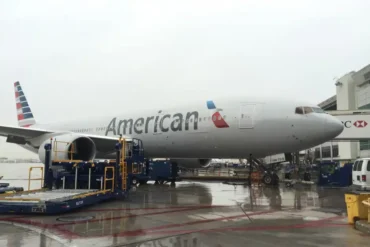
American Airlines has confirmed that it will launch its first-ever nonstop service between Miami International Airport (MIA) and Barcelona José Antonio Anzoátegui International Airport (BLA), giving Venezuela’s eastern industrial heartland a direct, scheduled air bridge to the United States for the very first time. The inaugural flight will depart on January 15, 2027, and tickets go on sale on October 19, positioning the carrier to lock in bookings and corporate contracts months before any rival can file a competing schedule. For a country that spent nearly seven years without a single scheduled US airline service, the announcement is less a routine route addition than a statement of intent: American is not merely returning to Venezuela, it is rebuilding it market by market.
The timing matters enormously. When Barcelona becomes American’s third Venezuelan destination, joining Caracas and Maracaibo, the airline will operate 24 weekly departures into the country from its Miami hub, a degree of penetration no other US carrier currently matches or can realistically match at short notice. That breadth is the real story behind the route: American is converting first-mover advantage into structural dominance, using a regional jet that carries just 76 seats to test a market that a narrowbody would overwhelm on day one.
Three Weekly E175 Frequencies Built Around Business-Day Demand
The new service will operate three times weekly — on Mondays, Wednesdays and Fridays — a pattern chosen to capture weekday corporate travel while still allowing weekend leisure demand from the Caribbean coastline. The southbound flight leaves Miami at 10:15 AM and touches down in Barcelona at 2:52 PM, an approximately three-and-a-half-hour sector that lands early enough in the afternoon to allow onward road transfers across Anzoátegui and into neighbouring Sucre state. The return service departs Venezuela at 3:32 PM and arrives back in Miami at 6:19 PM, a schedule that leaves a comfortable connection window into American’s evening bank of departures across North America.
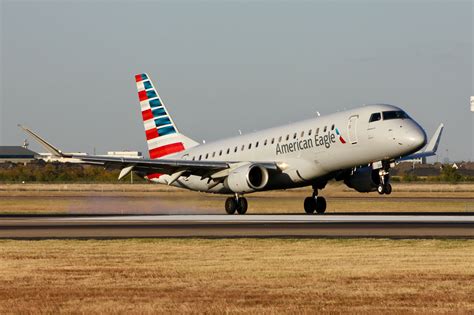
The aircraft assignment is unusually revealing. The route will be flown by Embraer E175 regional jets configured for 76 passengers, offering First Class, Main Cabin Extra, Wi-Fi and in-seat power — a full premium-product suite normally associated with mainline equipment. That the E175 is being deployed on an international sector of this length, with a genuine first-class cabin, signals how carefully American has calibrated the launch. It allows the carrier to open a brand-new market with substantially less capacity than a Boeing 737 would commit, sharply limiting the commercial risk of a route whose demand curve is, at best, unproven.
Barcelona and Puerto La Cruz Anchor a Region Built on Oil, Refining and Coastline
Barcelona, the capital of Anzoátegui state, is far more than a secondary airport on a map. Together with neighbouring Puerto La Cruz, the city sits at the centre of one of Venezuela’s most important industrial corridors, supporting large-scale oil production and refining activity and the corporate travel, engineering rotations and technical supply chains that accompany it. Those flows are precisely the kind of high-yield, schedule-sensitive demand that a three-times-weekly regional service is designed to serve, and they are conventionally routed through Caracas today at considerable cost in time and ground transfer.
Beyond industry, the surrounding Caribbean coastline gives the route a genuine leisure dimension. Beaches along the Anzoátegui and Sucre littorals, island excursions and the region’s tourism infrastructure give American a second, seasonally complementary demand stream that can help fill seats on Fridays and weekends when oil-sector travel softens. Crucially, the new link plugs eastern Venezuela directly into a hub that offers onward access to more than 100 North American destinations, meaning a passenger from Barcelona can reach not just Miami but dozens of connecting points on a single itinerary — something no overland-plus-Caracas alternative can replicate.
From April Comeback to a 24-Weekly-Departure Network
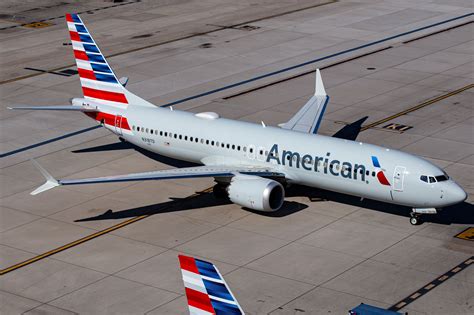
The Barcelona launch completes a comeback executed with unusual speed. American restored Miami–Caracas flights on April 30, 2026, ending almost seven years without scheduled US airline service to Venezuela. It followed with daily Maracaibo service from July 14, and from October 15 it added a second daily Caracas frequency, pairing a 172-seat Boeing 737-800 with a 76-seat E175 to create a morning-and-afternoon pattern. Once Barcelona begins operating, the combined Venezuelan network will offer 24 weekly departures and roughly 2,500 seats in each direction every week.
American’s history in the market is the foundation for all of this. The carrier first entered Venezuela in 1987, when Caracas became its inaugural South American destination — a fact that gives the airline a claim on the country’s aviation identity that no competitor can credibly assert. Before suspending operations in March 2019, American was comfortably the country’s largest US carrier, offering approximately 362,000 two-way seats in 2018, according to OAG Schedules Analyzer, equal to 58% of total nonstop US–Venezuela capacity. Its planned January 2027 network would provide about 259,600 annualised two-way seats — roughly 72% of its 2018 capacity — assuming the schedule operates unchanged for a full year.
“American is proud of the robust service we’re providing to Venezuela, and prouder still that we are the only US airline serving Venezuela. We have a more than 30-year history connecting Venezuela to the US, and we are delighted to renew that incredible relationship.”
— Stephen Neuman, American’s senior vice president of government affairs
Rebuilding Through Crisis: Earthquakes, Relief Flights and a September Restart
The rebuilding has not followed a tidy script. On June 24, two devastating earthquakes struck Venezuela, severely damaging Caracas’ main international airport and interrupting American’s operations for more than two months. The airline flew a relief flight carrying over 9,000 pounds of essential supplies before resuming scheduled Caracas service on September 3, a sequence that illustrates both the fragility of the country’s infrastructure and the airline’s willingness to absorb disruption its competitors have not yet had to face. Every one of those weeks was a reminder that Venezuela’s recovery is not linear, and that operating there requires patience as much as ambition.
United, JetBlue and Delta Close In as American Defends Its Head Start
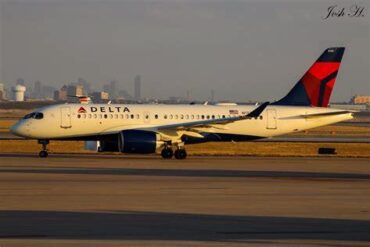
American’s early advantage will be tested in 2027, but the competitive timelines tell their own story. United Airlines has been trying to restore Houston Intercontinental (IAH)–Caracas service — a market it served for more than two decades before withdrawing in June 2017 — and originally announced a daily 737 MAX 8 flight for August 11. The earthquakes forced repeated postponements, with January 12 now the earliest bookable date. JetBlue is preparing its first Venezuelan entry, with Fort Lauderdale–Hollywood (FLL)–Caracas filings showing daily Airbus A320 flights from February 4, still subject to confirmation and approvals. Delta Air Lines has confirmed it is developing plans to return, most plausibly on Atlanta–Caracas, after ending that route in 2017.
| Operator | Route | Weekly Departures | Status |
|---|---|---|---|
| American Airlines | Miami – Caracas | 14 | Operating |
| American Airlines | Miami – Maracaibo | 7 | Operating |
| American Airlines | Miami – Barcelona | 3 | Launching January 15, 2027 |
| United Airlines | Houston – Caracas | 7 | Delayed; earliest January 12, 2027 |
| JetBlue Airways | Fort Lauderdale – Caracas | 7 | Proposed; tentative February 4, 2027 |
| Delta Air Lines | Atlanta – Caracas (likely) | TBD | Considering a return |
Market Reality: 71,200 Passengers Against 2018’s 602,000
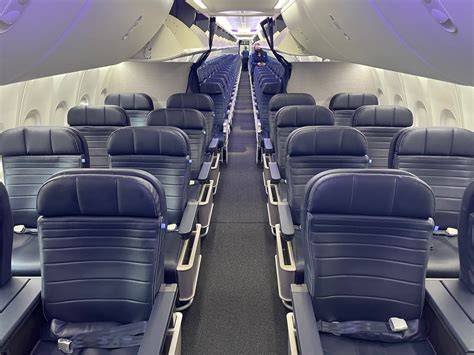
Renewed airline interest should not be mistaken for a recovered market. Sabre Market Intelligence, cited by Aviation Week, estimates that roughly 71,200 two-way origin-and-destination passengers flew between the United States and Venezuela in the twelve months ending August 2026, against nearly 602,000 in 2018 — an 88% decline, though the most recent period includes several months before scheduled services resumed. The regulatory picture has improved substantially since the US suspended all flights between the countries in May 2019, yet the US State Department still classifies Venezuela as a Level 3 destination and advises travellers to reconsider visiting. American is therefore building in a market that is simultaneously the most open it has been in seven years and still a fraction of its former self — which is exactly why a 76-seat regional jet, rather than a 172-seat narrowbody, is flying the new Barcelona sector.
That restraint is the strategic insight worth noting. American is not betting on a full restoration; it is buying optionality cheaply, establishing a presence in a second eastern city before anyone else, and leaving room to upgauge to larger aircraft if the oil economy and passenger demand recover faster than expected. Barcelona’s launch on January 15, 2027 is therefore best understood as an option being exercised — a disciplined, low-capacity entry into an industrial region where American’s Miami hub, its 30-year history and its willingness to fly when others hesitated combine into an advantage that will be difficult for United, JetBlue or Delta to displace.