Emirates has finally secured the regulatory breakthrough needed to launch flights between Dubai and Berlin, ending a 22-year campaign to gain access to Germany’s capital. The United Arab Emirates and Germany have agreed to expand the bilateral traffic-rights arrangement, allowing a UAE carrier to serve a fifth German destination with up to seven weekly flights. Although Emirates has not yet announced an official launch date, the agreement removes the central obstacle that has kept Berlin outside its German network since the airline first sought access in 2004.
The decision represents a major change in Germany’s aviation policy toward Gulf carriers. Emirates has already established a substantial presence at Frankfurt, Munich, Düsseldorf and Hamburg, but the previous bilateral agreement limited it to four German destinations. Those four designations were already occupied, leaving Berlin effectively inaccessible unless Emirates was willing to abandon one of its existing markets. After more than two decades of lobbying, Germany has now created the additional capacity needed for the airline to add Berlin without sacrificing another city.
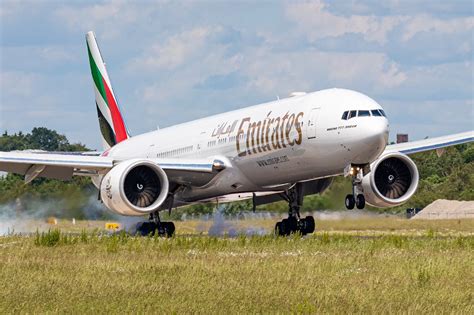
Germany Finally Opens a Fifth Destination for Emirates
The revised arrangement permits a UAE carrier to operate to a fifth German destination, with the additional operation capped at seven weekly frequencies. The agreement does not explicitly name Berlin in the bilateral declaration, but reporting following the announcement confirmed that Emirates has been cleared to pursue the Berlin-Dubai route. Berlin authorities have also welcomed the agreement, stating that the new framework enables daily long-haul flights from Berlin Brandenburg Airport.
For Emirates, the significance goes far beyond adding another European destination. Berlin is one of the most prominent gaps in a network that already covers major capitals and economic centers across Europe. The city has long been an obvious target because of its population, business community, tourism demand and role as Germany’s political capital. Yet the regulatory structure prevented Emirates from simply adding another daily service.
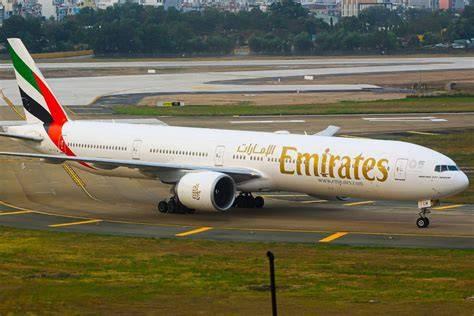
The airline’s frustration became particularly visible in June during the opening of the Berlin Air Show, when Emirates President Sir Tim Clark said the carrier had already secured slots at Berlin Brandenburg Airport but still lacked regulatory permission. Clark argued that Emirates was prepared to launch daily Boeing 777-300ER services and criticized Lufthansa’s opposition to greater Gulf-carrier access.
He said Emirates was ready to invest more than €100 million annually in operating costs, including staffing, airport charges, fuel and related expenses for Berlin and Stuttgart. Clark also emphasized the cargo opportunity, estimating that each daily service would provide more than 280 tons of weekly cargo capacity. That argument reflected Emirates’ broader position that the two cities represent genuine commercial opportunities rather than simply desirable additions to its global route map.
Why Berlin Took Emirates 22 Years to Reach
The roots of the dispute go back to the 1994 Germany-UAE air services agreement, which restricted UAE carriers to four German destinations. Emirates eventually filled those available positions with Frankfurt, Munich, Düsseldorf and Hamburg.
Frankfurt became Emirates’ first German destination in July 1987, establishing a relationship with the country that has grown considerably over nearly four decades. Munich followed in 1999, Düsseldorf in 2001 and Hamburg in 2006. By the time Berlin became a major target, the four available designations were already in use.
Technically, Emirates could have transferred one of those rights to Berlin. In practical terms, however, that would have meant abandoning an established market to enter another one. Emirates repeatedly declined to make that trade-off, leaving Berlin in an unusual position: a major European capital without a nonstop Emirates connection to Dubai.
The new agreement changes that equation. Instead of forcing Emirates to choose between Berlin and an existing German city, the revised rules create an additional destination. That is why the breakthrough is particularly important from a regulatory perspective.
The timing is also closely connected with a broader strengthening of Germany-UAE economic relations. During UAE President Sheikh Mohamed bin Zayed Al Nahyan’s state visit to Germany, the two countries announced a €40 billion investment package, while companies signed 29 agreements worth more than €9.35 billion. Aviation formed part of the wider economic relationship, giving the Emirates breakthrough a much broader diplomatic and commercial context.
Berlin Mayor Kai Wegner described daily Emirates service as a way to strengthen the capital’s international connectivity and create opportunities for investment, businesses and employment in eastern Germany. For Berlin, the route is therefore being presented not simply as another airline service but as a potential economic link with the UAE and the wider markets connected through Dubai.
Why Lufthansa Has Opposed More Emirates Flights
The long-running dispute has never been solely about Berlin. At its center is a much larger disagreement over the role of Dubai International Airport (DXB) in global aviation.
Lufthansa Group has argued that additional Emirates capacity does not necessarily create new long-haul markets from Germany because many passengers use Dubai as a connecting point. Rather than flying nonstop between Germany and an intercontinental destination, travelers can fly Emirates to Dubai and continue to Asia, Africa or Australasia.
From Lufthansa’s perspective, that can divert passengers, revenue, economic activity and jobs away from European hubs such as Frankfurt and Munich. The German group has also raised concerns about differences in labor, regulatory and environmental conditions between European airlines and Gulf carriers.
Emirates counters that connecting passengers should not automatically be regarded as traffic stolen from Lufthansa. Its own figures show that it carried approximately 2.36 million passengers to and from Germany in 2025, with 40% traveling locally between Germany and Dubai and 60% connecting beyond Dubai.
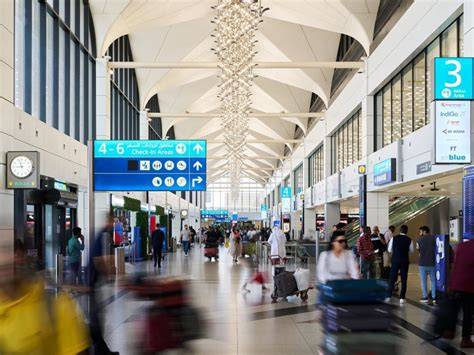
The onward markets are important to Emirates’ argument. Australia, Indonesia, Sri Lanka and Vietnam were among its leading connecting destinations from Germany, while Emirates says its Dubai hub provides access to roughly 50 destinations across Africa, the Middle East, Southeast Asia and Australasia that are not served nonstop by a German airline.
That distinction matters because the debate is ultimately about what constitutes competition. Lufthansa’s concern focuses on passengers who might otherwise connect through European hubs. Emirates emphasizes destinations where nonstop German service does not exist. Both perspectives help explain why the Berlin decision has taken so long to emerge.
Emirates Already Has a Major German Network
Berlin would not be Emirates’ first German operation. The airline already has one of its most established European networks in the country, with 63 weekly passenger flights across four cities.
Frankfurt currently receives 21 weekly Emirates flights, while Munich, Düsseldorf and Hamburg each receive 14. That means Emirates already operates an average of nine daily passenger departures from Germany before Berlin is added.
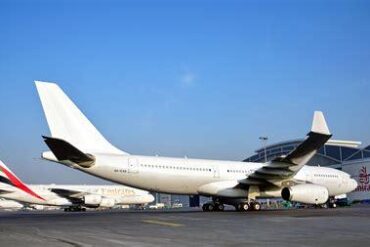
The fleet deployment also demonstrates the importance of the German market. Frankfurt can see the Airbus A350, Airbus A380 and Boeing 777, while Munich is served by the A380 and 777. Hamburg receives the A350 and 777, and Düsseldorf primarily receives the 777.
| German city | Weekly Emirates flights | Daily frequency | Aircraft |
|---|---|---|---|
| Frankfurt | 21 | 3 | A350 / A380 / 777 |
| Munich | 14 | 2 | A380 / 777 |
| Düsseldorf | 14 | 2 | 777 |
| Hamburg | 14 | 2 | A350 / 777 |
| Current total | 63 | 9 | — |
| Berlin | Up to 7 | Up to 1 | 777 proposed |
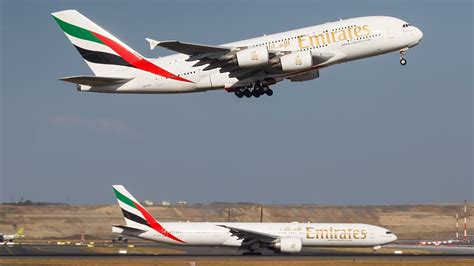
Adding seven weekly Berlin flights would increase Emirates’ German schedule from 63 to as many as 70 weekly departures. It would also give the carrier a much stronger presence in Germany’s capital at a time when the airline is expanding its fleet flexibility through the A350 while continuing to deploy its large A380 and 777 fleets across key markets.
Berlin-Dubai Competition Is Already Intensifying
Emirates will not enter an empty market. The Berlin-Dubai corridor is becoming increasingly competitive even before the Gulf carrier announces its schedule.
Condor is selling daily BER-DXB flights with Airbus A321neo aircraft from October 25, while Eurowings is scheduled to begin daily A320neo service from November 1. Lufthansa is also planning to resume Dubai services from Frankfurt and Munich during the winter season.
That means Emirates’ arrival could create a substantial increase in capacity between Berlin and Dubai. If all seven newly authorized Emirates frequencies are used, Berlin could eventually have up to three daily flights to Dubai when combined with the other planned services.
The resulting market could add more than 20,000 monthly seats between Berlin and Dubai, depending on aircraft and schedules. For passengers, that should mean greater choice. For airlines, however, it creates a more demanding competitive environment, particularly because Emirates would bring a globally connected hub at DXB and the ability to sell onward journeys throughout its extensive international network.
What Happens Next for Emirates Berlin
The regulatory barrier has now been removed, but the route is not operational yet. Emirates still needs to translate its newly secured traffic rights and existing airport slots into an announced schedule.
The most obvious aircraft candidate is the Boeing 777-300ER, which Clark previously identified for the planned Berlin service. The type fits Emirates’ established strategy of using large widebody aircraft on markets where passenger and cargo demand can support substantial capacity.
The Berlin breakthrough also gives Emirates a strategic advantage that has been unavailable for more than two decades. Rather than replacing an existing German destination, it can now expand its network while preserving Frankfurt, Munich, Düsseldorf and Hamburg.
After 22 years of lobbying, the central question is no longer whether Emirates can legally serve Berlin. Germany has opened the door. The next step is for Emirates to decide exactly when it wants to walk through it—and how aggressively it wants to compete in a Berlin-Dubai market that is already preparing for a major increase in capacity.