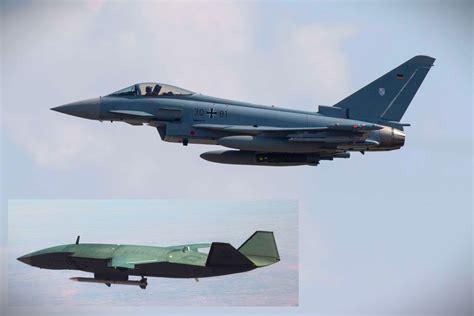
Germany’s decision to expand its Eurofighter Typhoon fleet while simultaneously purchasing more F-35A Lightning II stealth fighters may appear contradictory at first glance. One aircraft represents Europe’s most advanced homegrown fighter program, while the other comes from the United States and introduces fifth-generation stealth technology into the German Air Force. However, the strategy reflects a carefully calculated approach to modern warfare, NATO commitments, industrial policy, and the changing security environment in Europe.
Rather than replacing one fighter with another, Germany is creating a mixed fleet designed to handle different missions. The F-35A will take over the nuclear-sharing mission previously performed by the Panavia Tornado, while the Eurofighter Typhoon will remain the backbone of Germany’s conventional airpower, responsible for air defense, air policing, electronic warfare, and precision strike operations.
The decision highlights a broader transformation of European military aviation. As Russia continues to modernize its armed forces and NATO places renewed emphasis on deterrence, Germany has concluded that a single fighter type cannot provide all the capabilities required for future conflicts.
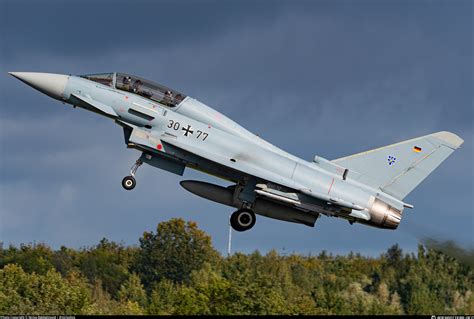
Why Germany Is Buying More F-35A Lightning II Fighters
The most visible part of Germany’s fighter modernization program is its acquisition of the Lockheed Martin F-35A Lightning II. Berlin originally announced the purchase of 35 aircraft in 2022, with deliveries expected to begin in 2027. The order was valued at approximately $8.4 billion and represented one of the largest changes in German airpower planning in decades.
The primary reason behind the purchase was not simply replacing aging aircraft. The F-35A was selected because Germany needed a reliable platform capable of continuing its role in NATO’s nuclear-sharing arrangement.
For decades, Germany’s Panavia Tornado fleet has provided the capability to deliver US-built B61 nuclear bombs stored in Europe under NATO agreements. However, the Tornado is reaching the end of its operational life. Maintaining this capability required a replacement aircraft that could meet NATO certification requirements within a realistic timeframe.
The Eurofighter Typhoon was considered for the mission, but adapting the aircraft for nuclear weapons certification would likely have required years of additional development, testing, and approval. Germany ultimately determined that the F-35A was the only practical solution capable of ensuring a seamless transition.
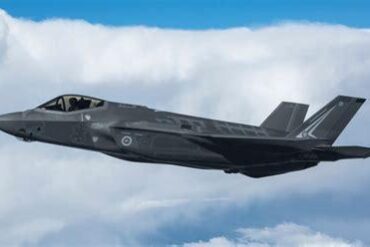
The F-35A brings several advantages for this mission. Its low-observable stealth design, advanced sensors, electronic warfare capabilities, and internal weapons bays allow it to operate more effectively in heavily defended airspace compared with older fourth-generation aircraft.
For NATO planners, this capability is increasingly important. A future conflict involving a technologically advanced opponent would likely involve dense networks of surface-to-air missiles, radar systems, and electronic warfare capabilities. Aircraft performing strategic missions would need a higher level of survivability.
NATO Nuclear Deterrence and Germany’s Changing Security Environment
Germany’s decision cannot be separated from the broader changes taking place across Europe. NATO’s nuclear deterrence posture has gained renewed attention following Russia’s invasion of Ukraine and Moscow’s increasingly aggressive military signaling.
During the Cold War, NATO maintained thousands of US nuclear weapons across Europe. After the collapse of the Soviet Union, the alliance significantly reduced these deployments as geopolitical tensions declined. Today, NATO’s forward-deployed nuclear capability is much smaller, but it remains a critical part of collective defense planning.
Approximately 100 US B61 and B61-12 gravity bombs are believed to remain stored at European bases, including locations in Belgium, Germany, Italy, and the Netherlands. These weapons are designed to provide NATO with a visible deterrence capability by ensuring that multiple allied nations can contribute aircraft and infrastructure.
Russia’s deployment of nuclear-capable systems, including Iskander-M missiles in Kaliningrad, as well as its decision to station nuclear weapons in Belarus, has increased concerns among NATO members. Germany’s F-35 purchase is therefore not only an aircraft procurement decision but also a statement about maintaining credibility within the alliance.
The expansion of Germany’s F-35 fleet reflects this reality. Reports have indicated that Berlin is considering purchasing an additional 15 aircraft, potentially increasing the fleet from 35 to 50 fighters. Such an expansion would provide greater flexibility, improve operational availability, and strengthen Germany’s contribution to NATO missions.
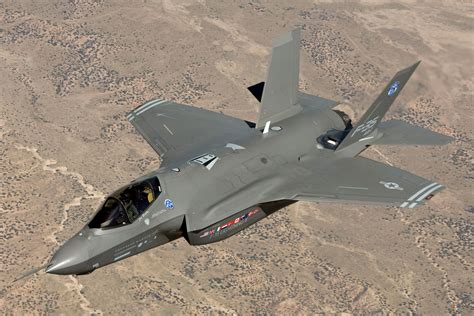
Why Germany Is Still Investing in the Eurofighter Typhoon
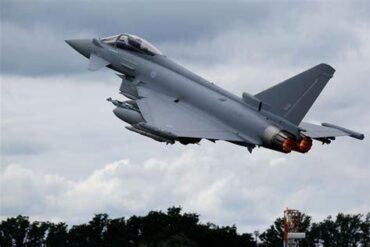
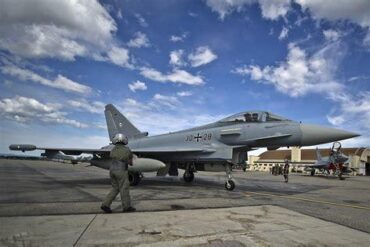
While the F-35 represents Germany’s entry into fifth-generation fighter technology, the Eurofighter Typhoon remains central to the future of the Luftwaffe.
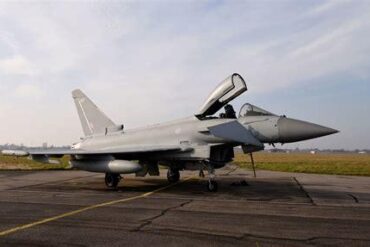
Germany has confirmed plans to purchase an additional 20 Eurofighters, bringing its total commitment to more than 160 aircraft. These new aircraft, known as Tranche 5 Eurofighters, are expected to enter service between 2031 and 2034.
The decision demonstrates that Berlin does not view the F-35 as a replacement for the Eurofighter. Instead, both aircraft will perform different roles.
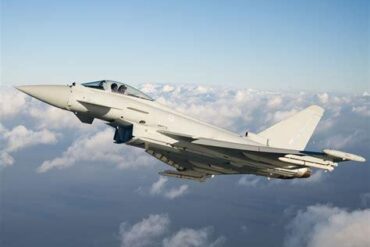
The Eurofighter Typhoon is exceptionally suited for missions requiring speed, agility, endurance, and rapid response. It was designed primarily as an air-superiority fighter but has evolved into a highly capable multirole aircraft capable of conducting air defense, ground attack, reconnaissance, and electronic warfare missions.
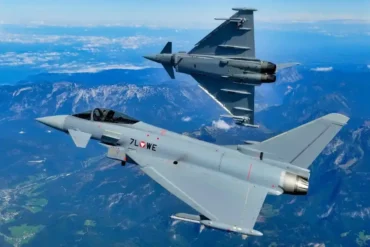
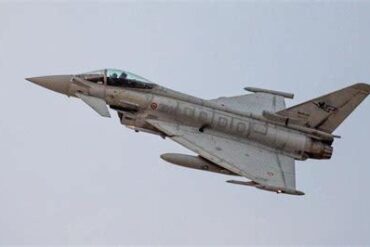
One of its most important responsibilities is NATO’s Quick Reaction Alert (QRA) mission. Eurofighters operated by Germany and other European nations remain on standby to intercept unidentified aircraft approaching NATO airspace.
This role has become increasingly important as Russian military aircraft regularly operate near European airspace, particularly around the Baltic Sea, North Sea, and NATO’s eastern borders. The Eurofighter provides a visible and immediate response capability that does not require the deployment of expensive stealth aircraft for every interception mission.
The aircraft also supports European defense independence. Unlike the F-35, which is built around a US-led ecosystem, the Eurofighter program maintains critical aerospace expertise within Europe.
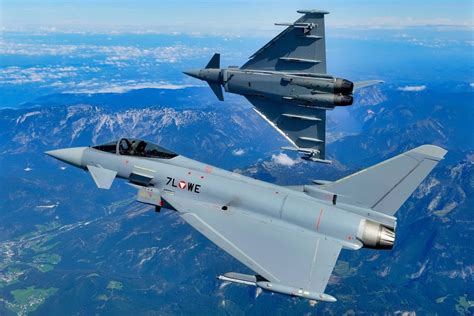
The Industrial Importance of the Eurofighter Program
Beyond military capability, the Eurofighter Typhoon represents a major industrial investment for Germany and Europe.
The aircraft is produced through a multinational partnership involving Germany, the United Kingdom, Italy, and Spain. In Germany, Airbus assembles Eurofighters at its facility in Manching, near Munich, supporting thousands of skilled aerospace jobs.
Maintaining Eurofighter production allows Germany to preserve expertise in fighter design, manufacturing, and advanced military technology. This industrial capability is considered strategically important as Europe develops future combat aircraft programs.
The Eurofighter also provides a bridge toward the next generation of European airpower. Germany, France, and Spain are working on the Future Combat Air System (FCAS) program, which aims to develop a sixth-generation combat aircraft ecosystem combining crewed fighters, unmanned systems, and advanced networks.
However, FCAS is still years away from operational service. Until then, Germany needs capable aircraft that can protect European airspace and support NATO operations. The Eurofighter provides that capability while keeping European aerospace industries active.
A Two-Fighter Strategy for Future Air Combat
Germany’s decision to operate both the F-35A and Eurofighter Typhoon reflects how modern air warfare has changed. No single aircraft can efficiently perform every mission.
The F-35A provides capabilities that fourth-generation aircraft cannot easily replicate. Its stealth characteristics, sensor fusion, and ability to operate inside contested environments make it valuable for high-risk missions.
The Eurofighter, meanwhile, offers advantages in speed, maneuverability, operational flexibility, and cost-effective daily operations. It is better suited for routine air defense missions, patrols, and many conventional combat roles.
Together, the two aircraft create a layered capability. The F-35 can penetrate advanced air defenses and gather intelligence, while the Eurofighter can provide large-scale air protection and maintain persistent combat readiness.
This approach mirrors strategies adopted by other European nations. Countries such as Italy and the United Kingdom already operate both aircraft types, recognizing that fifth-generation stealth fighters and advanced fourth-generation fighters can complement each other.
Germany’s Fighter Fleet Expansion Could Shape Europe’s Military Future
Germany’s choice to expand both the Eurofighter Typhoon and F-35A Lightning II fleets reflects the country’s changing role in European security.
For many years after the Cold War, Germany maintained a relatively restrained defense posture. However, the security environment after Russia’s invasion of Ukraine has accelerated military modernization efforts. Berlin is now seeking to rebuild capabilities that had gradually declined.
The combination of F-35 and Eurofighter fleets gives Germany a more balanced force structure. It allows the Luftwaffe to maintain NATO nuclear commitments, strengthen conventional air defense, support allied operations, and prepare for future conflicts.
The decision also sends a message to European partners. Modern defense requires cooperation between advanced technologies, industrial capacity, and alliance commitments. Germany is not choosing between European and American aviation technology; it is combining both to create a more capable force.
The future of European airpower will likely depend on this type of balanced approach. Stealth fighters, advanced sensors, traditional fighter capabilities, and next-generation systems will all have roles to play.
Germany’s expanding fighter fleet is therefore not simply about buying more aircraft. It represents a broader transformation in how Europe prepares for an uncertain security future. By operating both the F-35A Lightning II and Eurofighter Typhoon, Germany is building a flexible air force designed to meet today’s threats while preparing for tomorrow’s battles.