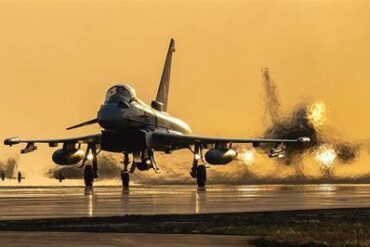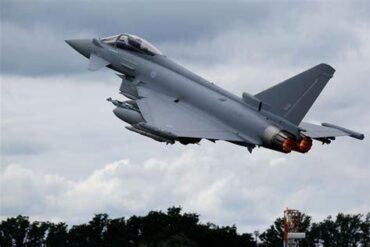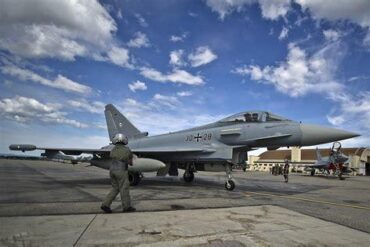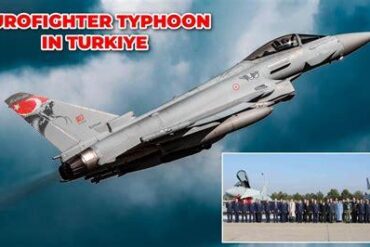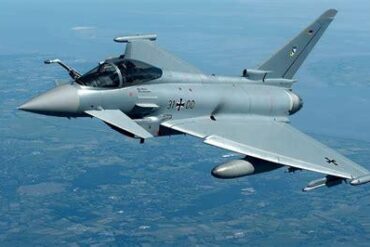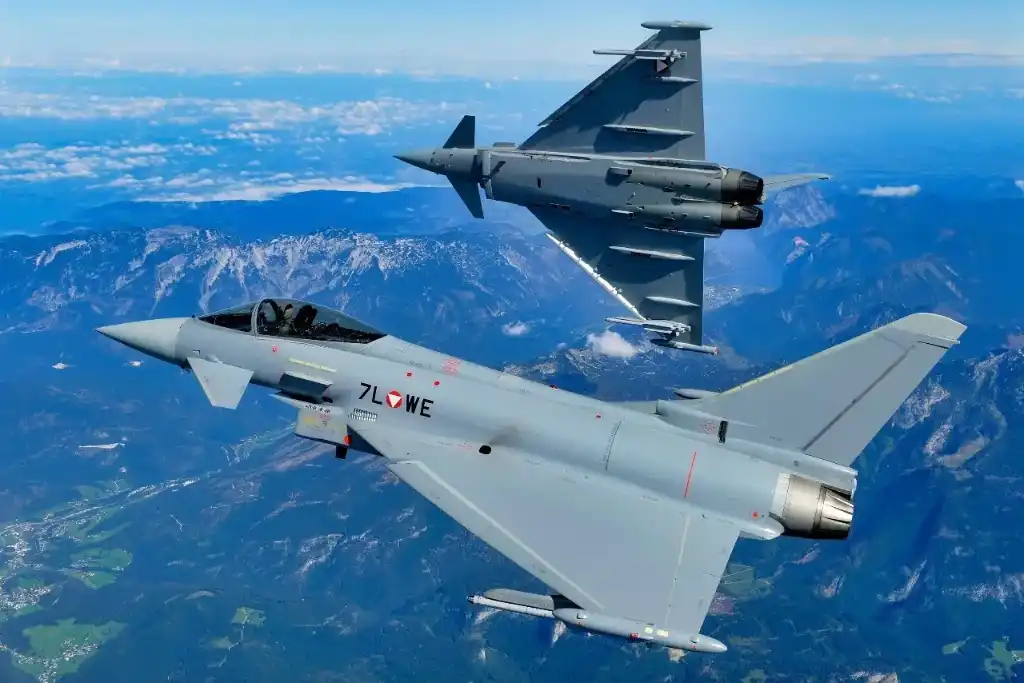
In a landmark decision underscoring Germany’s growing commitment to European defense modernization, the German Bundestag Budget Committee has officially approved the procurement of 20 new Eurofighter Typhoon Tranche 5 combat aircraft. Valued at €3.75 billion ($4.36 billion), this investment represents a decisive step in enhancing the Luftwaffe’s air combat and electronic warfare capabilities, ensuring that Germany remains at the forefront of NATO’s integrated defense strategy for decades to come.
Germany Greenlights the Next Generation Eurofighter
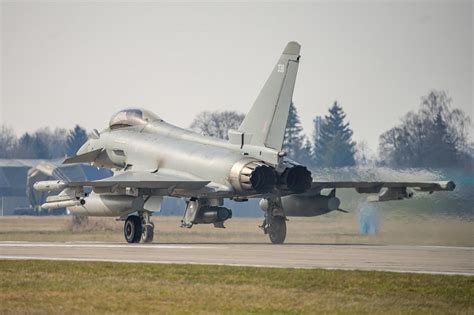
The newly approved Tranche 5 Eurofighters mark the latest evolution of Europe’s premier multirole fighter jet. According to the German Ministry of Defense (MoD), these aircraft will be equipped with cutting-edge E-scan active electronically scanned array (AESA) radars, ensuring superior target detection, tracking, and engagement in increasingly complex electronic environments. Deliveries are expected to take place between 2031 and 2034, providing a long-term strategic uplift to Germany’s air power infrastructure.
The MoD emphasized that the Eurofighter remains the cornerstone of Germany’s combat air fleet, and that the Tranche 5 variant will allow the Bundeswehr to gradually retire the aging Tornado fighter jets, especially those serving in Electronic Combat and Reconnaissance (ECR) roles. By doing so, Berlin ensures continuity in its SEAD (Suppression of Enemy Air Defenses) and DEAD (Destruction of Enemy Air Defenses) missions, which are crucial to NATO’s operational effectiveness.
A Strategic Complement to Project Quadriga
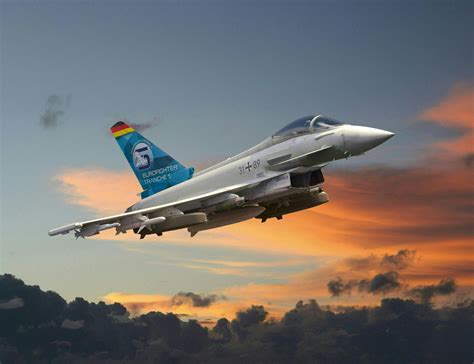
This approval builds upon Germany’s earlier Project Quadriga program, under which 38 Eurofighter Tranche 4 aircraft were ordered from Airbus in 2020. While the Quadriga deal replaced the older Tranche 1 models, the Tranche 5 acquisition expands operational capabilities, particularly in electronic warfare, networked combat, and survivability. The combination of both projects reflects a comprehensive renewal of the Luftwaffe’s tactical aviation wing.
Notably, the Eurofighter consortium, comprised of Germany, the United Kingdom, Italy, and Spain, continues to represent one of Europe’s most successful defense industrial collaborations. The new order secures thousands of high-skilled jobs across Airbus facilities in Manching, Getafe, and Warton, and reinforces Europe’s defense autonomy amid global geopolitical uncertainty.
Elevating Electronic Warfare: The AREXIS Integration
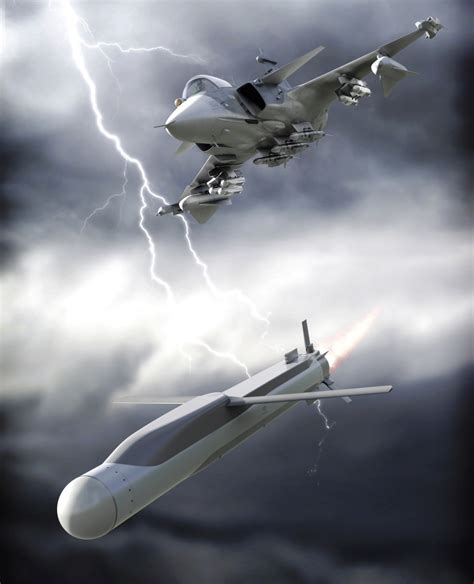
One of the most significant aspects of the Tranche 5 order is the integration of the AREXIS electronic warfare suite, developed by Sweden’s Saab Group. This advanced system enhances self-protection, jamming, and radar deception capabilities, making the Typhoon not only a superior air superiority fighter but also a formidable electronic attack platform. Saab’s sales director for fighter electronic warfare, Mikael Corp, confirmed earlier that deliveries of the AREXIS EW sensor to Airbus have already commenced in preparation for installation on German aircraft.
The AREXIS suite, already operational on Sweden’s Gripen E/F jets, includes digital radio frequency memory (DRFM) technology and advanced threat emitter libraries, enabling the Eurofighter to operate effectively in dense radar threat environments. Coupled with AGM-88E Advanced Anti-Radiation Guided Missiles (AARGM), the Tranche 5 Eurofighter will take over the Tornado’s legacy SEAD/DEAD missions, ensuring that Germany retains independent strike and electronic dominance capabilities.
Expanding Combat Readiness Through Training and Simulation
To support the expanded Typhoon fleet, the Budget Committee also approved €412 million in funding for new Eurofighter simulators. These state-of-the-art simulators will provide immersive, high-fidelity training environments for Luftwaffe pilots, allowing them to rehearse mission profiles, electronic attack tactics, and cooperative engagements with NATO partners. The German MoD highlighted that the enhanced simulator network will “improve the simulation environment while preparing for the development of new functions for the Eurofighter weapons system.”
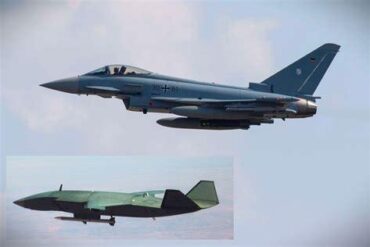
These investments also form part of a broader modernization framework under which Germany seeks to optimize pilot readiness for future combat scenarios involving manned-unmanned teaming (MUM-T) and next-generation data links connecting Eurofighters with drones and future combat aircraft under the FCAS (Future Combat Air System) initiative.
The Eurofighter Typhoon Tranche 5: A Leap in Capability
The Tranche 5 Typhoon represents a significant leap forward in both hardware and software evolution. Each aircraft will feature:
- ECRS Mk 1 AESA radar with enhanced range, target tracking, and jamming resistance.
- Digital backbone architecture allowing modular upgrades for future sensors and weapons.
- AREXIS EW suite integrated for both defensive and offensive electronic warfare operations.
- Enhanced mission computers and open software systems supporting faster data processing.
- Compatibility with next-generation precision weapons, including air-to-ground and stand-off munitions.
The integration of these systems will make the Tranche 5 Typhoon one of the most advanced multirole fighters in NATO’s arsenal, capable of seamlessly transitioning between air superiority, strike, reconnaissance, and electronic warfare missions.
Replacing the Tornado: A Strategic Imperative
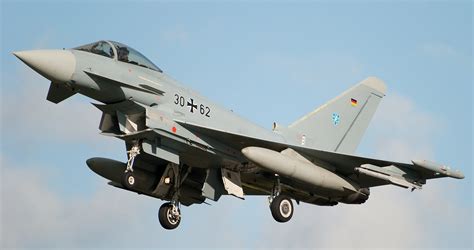
Germany’s Tornado IDS and ECR variants, introduced in the 1980s, have served as the backbone of NATO’s air operations for over four decades. However, their aging airframes, obsolete avionics, and rising maintenance costs have made replacement unavoidable. The Tranche 5 Eurofighter, with its dual-role capability, will assume most of the Tornado’s remaining missions by the early 2030s.
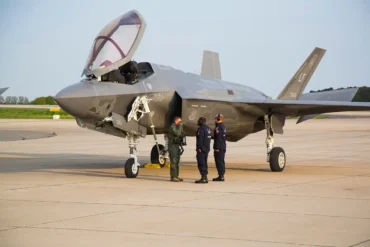
Berlin’s long-term plan is to phase out the Tornado fleet entirely by 2035, with Eurofighter and F-35A Lightning II aircraft jointly covering all air combat roles. The F-35A will primarily handle Germany’s nuclear sharing obligations under NATO, while the Eurofighter will dominate the electronic and conventional strike domains.
Broader Defense Context: A New Era of German Military Spending
The Typhoon order is part of a larger defense modernization wave driven by Germany’s €100 billion special defense fund, announced by Chancellor Olaf Scholz in the wake of the Ukraine conflict. This historic investment aims to address decades of underfunding and reposition Germany as Europe’s central military power. Alongside the Eurofighter deal, the Budget Committee approved contracts for armor-piercing ammunition, medium-range boats for naval special forces, and minehunting sonar systems for the Class 332 vessels.
These moves demonstrate a fundamental policy shift from strategic restraint toward proactive capability development, ensuring that Germany can meet its NATO defense commitments and act as a reliable contributor to European security.
International Implications and Industrial Cooperation
The Tranche 5 order not only strengthens Germany’s air power but also reinforces European defense industrial cooperation. The Eurofighter program involves major aerospace companies including Airbus Defence and Space (Germany and Spain), BAE Systems (UK), and Leonardo (Italy). Each partner nation contributes specific components—from radar and avionics to fuselage assemblies—ensuring that production remains distributed and economically beneficial across Europe.
This model of shared industrial responsibility and technology transfer has long been cited as a blueprint for future European defense initiatives, including the FCAS program, which seeks to develop a sixth-generation stealth fighter by 2040. The sustained investment in the Typhoon ensures that critical engineering and manufacturing skills remain active until the FCAS platform becomes operational.
Future Outlook: Ensuring NATO’s Technological Edge
By 2034, when the last Tranche 5 aircraft are delivered, the Luftwaffe will field one of the most technologically sophisticated combat fleets in Europe. With advanced electronic attack, air-to-air, and strike capabilities, the Eurofighter will serve as a bridge between fourth- and fifth-generation combat technologies.
Moreover, ongoing upgrades to its mission systems, radar software, and sensor fusion capabilities mean the platform will remain viable well into the 2040s. The aircraft’s adaptability—designed through open architecture systems—ensures that it can integrate future missile types, AI-assisted targeting systems, and drone swarm coordination tools.
As global military competition intensifies, Germany’s investment in the Tranche 5 Eurofighter signals its determination to maintain a credible deterrence capability within NATO’s European theater. It underscores Berlin’s recognition that air superiority, electronic warfare, and joint interoperability are the pillars of 21st-century defense.
Conclusion: A Defining Moment for German Air Power
The approval of €3.75 billion for 20 Eurofighter Typhoon Tranche 5 aircraft represents more than just a procurement decision—it marks a strategic renewal of Germany’s military identity. By investing in an advanced, European-built fighter optimized for electronic combat and precision warfare, Berlin not only enhances its own defense capabilities but also fortifies the collective strength of NATO.
From the Tornado’s legacy to the Typhoon’s future, Germany’s skies are entering a new era—one defined by technological excellence, allied cooperation, and unwavering commitment to security and deterrence.