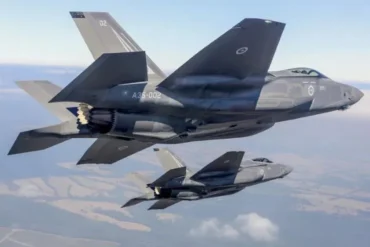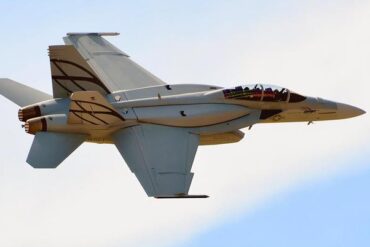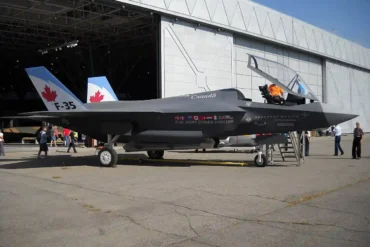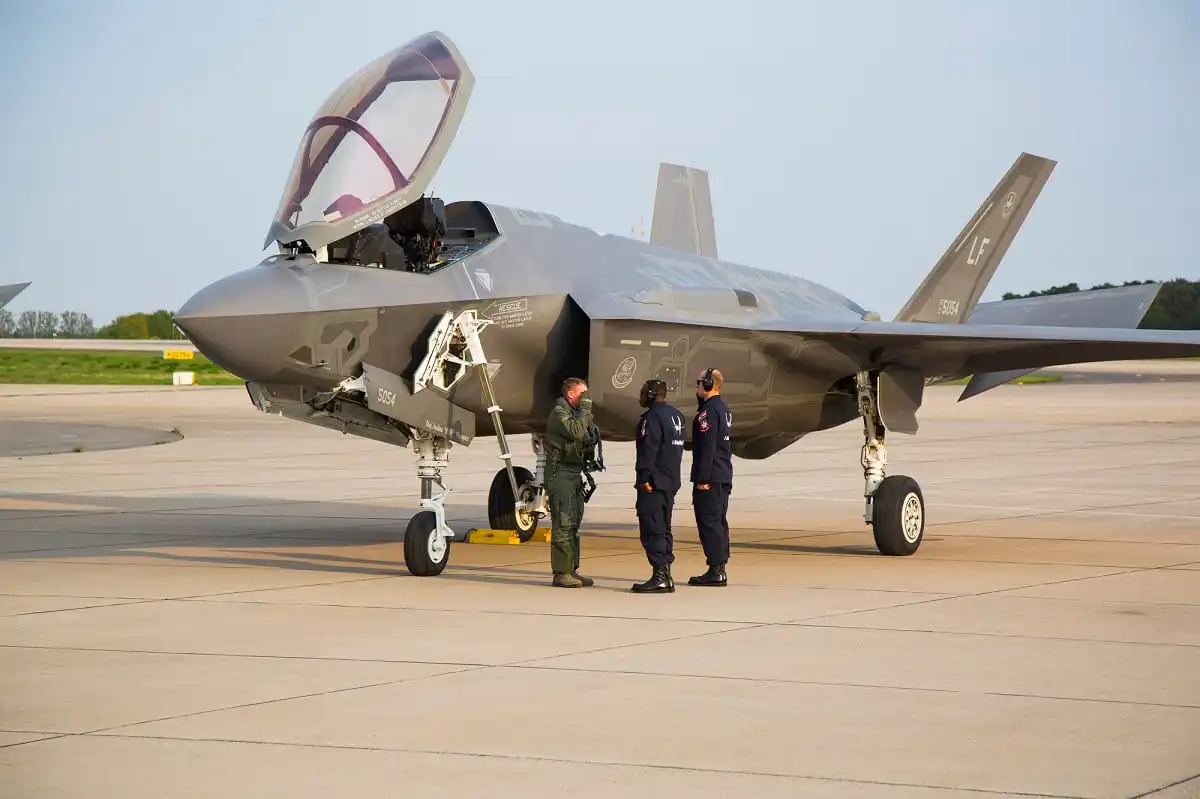
In 2022, Germany made a pivotal defense decision: the procurement of 35 F-35A Lightning II fighter jets to replace its aging fleet of Tornado multirole aircraft, marking a significant reorientation of its military strategy. This initiative, budgeted initially at €8.3 billion and later raised to $9 billion, was not merely a defense acquisition but a manifestation of Berlin’s evolving geopolitical priorities—deepening military alignment with the United States and reinforcing NATO’s nuclear-sharing strategy. As the first deliveries are slated for 2026, the F-35 program has stirred heated debate across military, political, and public spheres in Germany and Europe at large.
Strategic Context: The Russia Factor and NATO Obligations
Germany’s decision to acquire the F-35 was catalyzed by the Russian invasion of Ukraine in 2022, which sent shockwaves across Europe and prompted a swift recalibration of defense postures. Chancellor Olaf Scholz’s announcement of a €100 billion special defense fund shortly thereafter underscored a paradigm shift: Berlin would no longer postpone critical modernization of its armed forces.
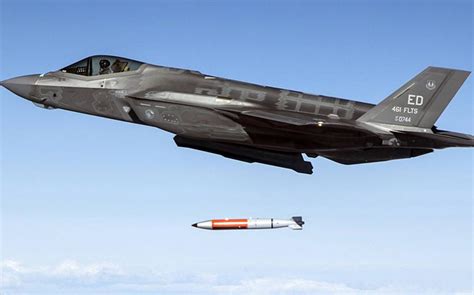
At the heart of this transformation lies the NATO nuclear-sharing policy, whereby Germany maintains American B61 tactical nuclear bombs at the Büchel Air Base. The F-35 is currently the only Western fighter certified to carry these nuclear payloads, rendering it a strategic necessity. Legacy aircraft like the Tornado are no longer viable platforms, both technically and politically. Therefore, the F-35 is not simply a next-generation fighter—it is the cornerstone of Germany’s nuclear deterrence credibility within the NATO framework.
Technical Advantages of the F-35A: A Quantum Leap
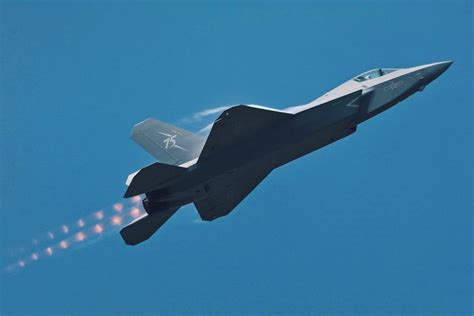
The Lockheed Martin F-35A is arguably the most advanced multirole fighter in operation today. Designed as a fifth-generation stealth platform, it integrates low observability, sensor fusion, network-centric warfare capabilities, and electronic warfare tools into a single airframe. For Germany, this translates into a formidable leap in capability from the Cold War-era Tornado.
Key technical advantages include:
- Stealth and survivability: The F-35’s radar-absorbing skin and internal weapons bays reduce radar cross-section, allowing deep penetration into contested airspace.
- Sensor fusion: Advanced avionics combine data from radar, infrared sensors, and other sources into a unified battlespace picture, increasing situational awareness.
- Interoperability: Fully integrated into NATO command and control infrastructure, the F-35 enables seamless data exchange with allied platforms, including U.S. and other European forces.
- Precision strike: Certified to carry precision-guided munitions and nuclear bombs, the F-35 fulfills both conventional and strategic deterrent roles.
Despite these features, the F-35’s benefits come with significant caveats, particularly in the realm of technological dependence.
The Hidden Cost: U.S. Control and the “Kill Switch” Controversy
In early 2025, German media and defense analysts raised a critical alarm: the F-35 might be susceptible to remote deactivation by the United States. While Lockheed Martin officially denies the existence of a so-called “kill switch,” the reality of technical dependency is far more nuanced and, arguably, more constraining.
The F-35 relies on several U.S.-controlled systems and mechanisms:
Core Component Monopoly
Essential parts of the F-35—such as the Pratt & Whitney F135 engine, stealth coatings, and mission systems—are proprietary and cannot be maintained or replaced without U.S. involvement. This monopoly on maintenance and parts severely limits Germany’s capacity for autonomous operations.
ALIS and ODIN Logistics Systems
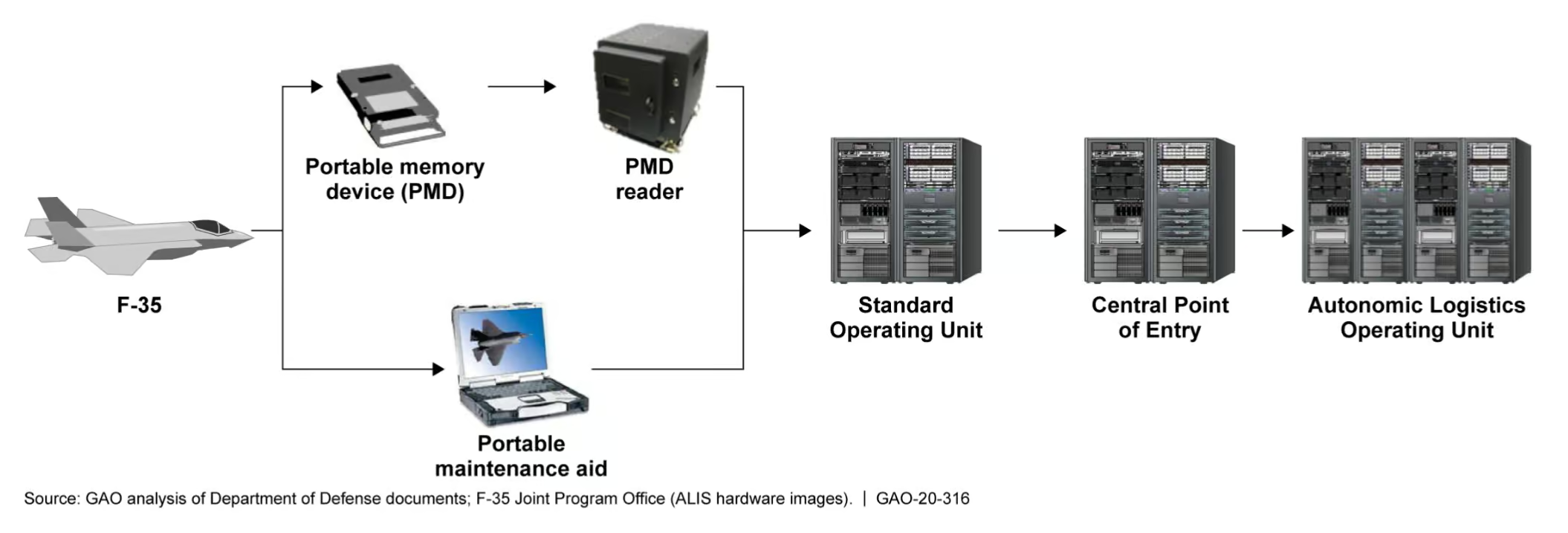
The F-35’s original logistics backbone, Autonomic Logistics Information System (ALIS), and its successor ODIN (Operational Data Integrated Network), transmit real-time operational data to U.S. servers. This means every German flight sortie, maintenance log, and tactical operation is potentially visible to American military analysts.
Cryptographic Licensing
Much like the case of South Korea, whose F-35s must regularly receive encrypted keys from U.S. authorities to remain operational, Germany may face similar constraints. Failure to renew these cryptographic licenses could render entire squadrons non-functional.
In essence, while there may be no “off switch,” the logistical, cryptographic, and software infrastructure provides Washington with the ability to limit or suspend combat functionality, raising profound concerns over national sovereignty.
Economic and Industrial Trade-Offs: Participation Without Ownership
Germany has attempted to mitigate dependence by integrating local industry into the F-35 program. Rheinmetall, a key defense contractor, has partnered with Lockheed Martin to construct a production line for mid-fuselage sections of the F-35 in Weeze, North Rhine-Westphalia, aimed at supplying up to 400 components.
However, while this represents a symbolic industrial participation, the core technologies remain U.S.-controlled. The economic benefits—though helpful for regional development—do not translate into technology transfer or strategic autonomy.
Moreover, by opting for an American platform, Germany has sidelined the Franco-German Future Combat Air System (FCAS) project, a proposed sixth-generation fighter with greater European ownership. This decision has strained defense cooperation with France, undermining the long-term goal of a sovereign European defense policy.
Political Backlash and Public Skepticism
Domestically, the F-35 purchase has triggered significant controversy. Former diplomats, business leaders, and defense experts have raised alarms about Berlin’s increasing reliance on U.S. military technology. Some critics argue that this erodes Germany’s strategic sovereignty and places critical national defense decisions in Washington’s hands.
Public sentiment reflects similar concerns. Media reports questioning the independence of the F-35 system have fueled debate over whether Germany’s military policies should prioritize national autonomy over alliance dependence. In response, German officials have issued repeated reassurances that the aircraft will remain fully operable without external interference—claims that many analysts view with skepticism.

Lack of Viable Alternatives: Europe’s Capability Gap
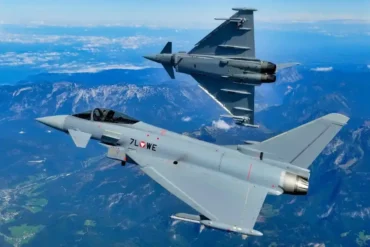
Despite the criticism, the reality remains that Germany has few viable alternatives. European fourth-generation fighters, such as the Eurofighter Typhoon, do not possess the required nuclear certification or stealth features needed for high-intensity conflict scenarios.
The FCAS project, while promising, remains in its conceptual stage and is unlikely to yield operational aircraft before the 2040s. This leaves Germany with a strategic gap that the F-35 fills—however uncomfortably.
In this context, the F-35 becomes not merely a defense acquisition but a stopgap solution—essential for short-term deterrence yet problematic for long-term sovereignty.
Future Risks: Delays and Technological Entrapment
Even the operational timeline of the F-35 is not without challenges. While initial deliveries are targeted for 2026, delays in U.S. assembly lines—particularly those outside Italy’s Cameri facility—may push deployment to 2027 or beyond. Cost overruns are also probable, given the complexity of integrating U.S. platforms into German command structures and air bases.
Additionally, while the European Union pushes for space-based surveillance and cybersecurity autonomy, efforts to technically decouple from U.S. defense systems remain aspirational. The structural entanglement of American digital infrastructure within the F-35 architecture will be exceedingly difficult to reverse.
Conclusion: A Strategic Asset with Sovereignty Compromises
Germany’s acquisition of the F-35 fighter is a calculated decision born of necessity, constrained by technological gaps, geopolitical urgency, and alliance commitments. It brings formidable airpower capabilities, reinforces NATO’s nuclear strategy, and aligns Germany more closely with U.S. military doctrine.
Yet, it also exposes the fragility of European defense autonomy, the risks of digital dependency, and the costs of industrial subordination. As Berlin navigates a new era of global tension, its challenge will be to leverage U.S. partnership without surrendering its strategic agency—a tightrope walk that defines the future of both Germany’s defense identity and Europe’s security architecture.
Frequently Asked Questions
Why did Germany choose the F-35 instead of a European fighter jet?
Germany selected the F-35A Lightning II primarily to fulfill its NATO nuclear-sharing obligations, as it is currently the only fighter certified to carry B61 tactical nuclear bombs. European fighters like the Eurofighter Typhoon lack this certification and stealth capabilities, making them unsuitable for this mission.
Can the United States remotely disable Germany’s F-35s?
While Lockheed Martin denies a direct “kill switch,” experts confirm that the F-35’s functionality is deeply tied to U.S.-controlled systems, such as the ALIS/ODIN logistics network and encrypted communication keys. These dependencies allow the U.S. to restrict operational capabilities without physical interference.
Will the F-35 delay impact Germany’s defense readiness?
There is a significant risk of delivery delays, especially if U.S. assembly lines experience bottlenecks. A potential shift to non-European production could further increase costs and political friction, possibly affecting Germany’s short-term readiness until full deployment occurs, now likely post-2026.