Charles André Joseph Marie de Gaulle, born in 1890 in Lille, France, stands as a monumental figure in 20th-century history. A soldier, philosopher, and statesman, de Gaulle’s profound influence shaped not only France’s military resilience during World War II but also its post-war political identity. His unmatched intellect, unwavering patriotism, and visionary leadership allowed him to bridge eras of conflict and reconstruction, transforming the destiny of a fractured nation into a sovereign republic.
From early life in a devout Catholic household to founding the Fifth Republic, de Gaulle’s legacy is a profound study in resolve and reinvention. His journey, marked by ideological resistance, military defiance, and constitutional innovation, reveals the making of a statesman who refused surrender in both war and politics.
Early Years and Formation of a Military Mind
De Gaulle’s intellectual foundations were forged in a deeply traditional and educated household. His father, a professor of philosophy and literature, instilled a love of history and critical thought. This academic inclination was further nurtured by his historian uncle and his voracious reading of military strategy. By the time he entered Collège Stanislas and later Saint-Cyr Military Academy, de Gaulle was already immersed in the classical principles of leadership and warfare.
Graduating 13th in his class at Saint-Cyr, he joined the 33rd Infantry Regiment under the command of the soon-to-be-famous Colonel Philippe Pétain. Though their relationship would later fracture over the direction of France, Pétain initially served as a mentor, encouraging de Gaulle’s early career.
The Crucible of World War I
World War I tested de Gaulle’s resilience and fortified his identity as a soldier. Wounded twice, at Dinant in 1914 and Champagne in 1915, he was eventually captured at the Battle of Verdun in 1916 and remained a prisoner of war for over 32 months in Germany.
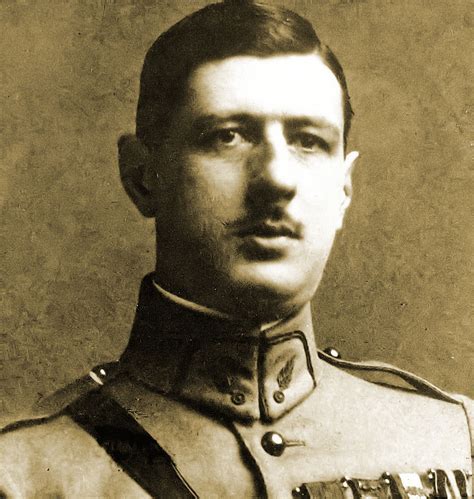
During captivity, de Gaulle earned the nickname “Le Connétable” among fellow prisoners for his aristocratic bearing and intellectual leadership. Rather than succumbing to despair, he lectured his comrades, studied German military doctrine, and wrote his first manuscript, The Enemy’s House Divided, later published in 1924. This early work foreshadowed his analytical style and commitment to national sovereignty.
Between Wars: Shaping Strategic Thought
After the war, de Gaulle served as a military instructor in Poland (1919–1921), helping to build the fledgling Polish army amid the Soviet threat. He returned to France to teach at Saint-Cyr and enrolled at the École de Guerre (1922–1924). These years were formative, deepening his disillusionment with static defense strategies and his belief in armored mobility.
De Gaulle published a series of provocative essays, including The Edge of the Sword (1932) and Towards a Professional Army (1934). These works emphasized elite mechanized divisions and national service by a professional military class, challenging France’s reliance on the Maginot Line and outdated trench doctrines.
Though ignored by military orthodoxy, his ideas caught the attention of reformists like Paul Reynaud and Defense Minister Daladier. De Gaulle’s writings articulated a France prepared for modern warfare—not shackled by past glories but adapted for future realities.
Rise Through the Ranks and the Tank Commander Era
Promoted to full colonel in 1937, de Gaulle took command of the 507th Tank Regiment in Metz. His leadership extended beyond the battlefield to public imagination, earning him the nickname “Colonel Motors” for orchestrating dramatic tank parades and promoting armored warfare in public forums.
His book France and Her Army (1938) further expanded his critique of the French military establishment. It painted a narrative of lost valor and missed opportunities, cementing de Gaulle as both a patriot and an iconoclast.
World War II: Voice of Free France
The fall of France in 1940 was both a national tragedy and a personal crucible. Refusing to accept the Vichy regime led by his former mentor Pétain, de Gaulle fled to London, where he made his historic BBC broadcast on June 18, 1940, urging the French to resist Nazi occupation. This speech marked the birth of the Free French Forces.
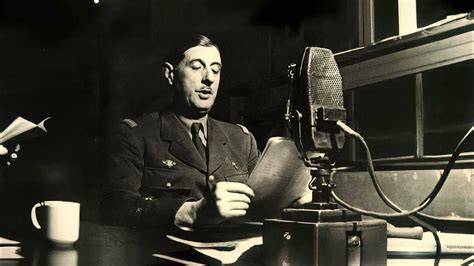
From exile, de Gaulle led military operations in North Africa and coordinated resistance movements across Europe. As head of the French National Committee (1940–1944) and later the Provisional Government (1944–1946), he presided over the liberation of Paris and worked tirelessly to restore France’s position among the Allied powers.
Despite frequent clashes with Churchill and Roosevelt, de Gaulle insisted on an independent France, refusing to let it become a puppet of post-war Allied restructuring. His presence at the signing of the German Instrument of Surrender in 1945 was a symbolic affirmation of France’s restored sovereignty.
Founding of the Fifth Republic
Disillusioned with the instability of the Fourth Republic, de Gaulle retired from politics in 1946 but returned during the Algerian Crisis of 1958. His appointment as Prime Minister marked the beginning of a dramatic constitutional overhaul. De Gaulle drafted a new constitution that granted sweeping powers to the presidency, effectively establishing the Fifth Republic.
Elected as President of France in 1959, de Gaulle embarked on a transformative decade of governance. He pursued an independent foreign policy, withdrew from NATO’s command structure, and navigated the complex decolonization of Algeria. His domestic policies focused on economic modernization and national unity.
Legacy and Death
After surviving an assassination attempt by the OAS and enduring civil unrest during May 1968, de Gaulle resigned in 1969 following a failed constitutional referendum. He died in 1970, leaving behind a France vastly different from the one he inherited.
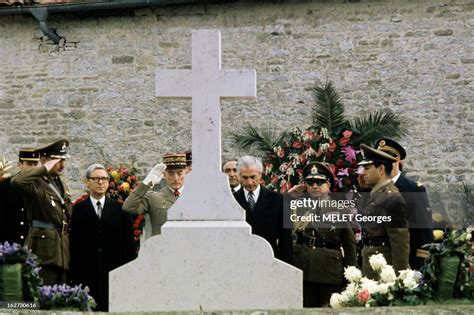
His vision of “a certain idea of France”—strong, sovereign, and proud—remains a cornerstone of French political identity. From defying Nazi tyranny to restructuring the French Republic, de Gaulle carved a unique legacy of dignity through defiance.
Conclusion: The Enduring Relevance of de Gaulle
Charles de Gaulle’s life was a continual confrontation with decline—of military doctrine, national sovereignty, and constitutional legitimacy. In every instance, he offered a bold alternative, not merely as resistance but as reinvention.
Today, as modern France grapples with global pressures, cultural identity, and institutional trust, de Gaulle’s principles of independence, unity, and statecraft endure. His speeches remain touchstones of rhetorical brilliance. His military thought continues to be studied across academies. And his presidency offers a model of leadership in times of existential crisis.
De Gaulle was not just a soldier or a president. He was the embodiment of the French Republic’s resilience—a nation’s will personified through a single, towering figure.