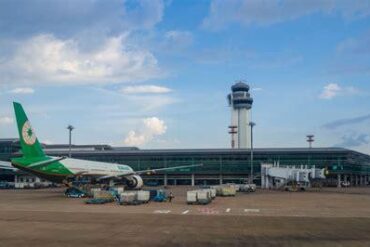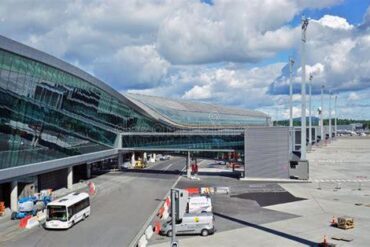
Charles de Gaulle Airport (CDG), located in Roissy-en-France, stands as France’s largest and most significant international gateway, a monumental achievement in modern aviation infrastructure. Opened on 8 March 1974, CDG is not only the beating heart of French air travel but a critical nexus in European and global air networks. Its significance is underscored by its handling of 70.3 million passengers in 2024, placing it ninth globally and third in Europe, as well as being Europe’s leading airport for cargo traffic.
The airport is named after President Charles de Gaulle, reflecting its national symbolism and strategic importance. Today, it functions as the primary hub for Air France, a base for low-cost and long-haul operators like easyJet and Norse Atlantic, and a bustling port for more than 105 international airlines.
Strategic Location and Oversight
Spanning an area of 32.38 square kilometers, CDG was intentionally situated 23 kilometers northeast of Paris, across three départements and six communes, to allow for long-term expansion and modular design. Its administration lies with Groupe ADP (Aéroports de Paris), which also oversees Orly and Le Bourget airports. This broad geographic footprint supports intermodal connectivity, long-haul operations, and a variety of commercial, logistics, and service activities.
Visionary Beginnings and Architectural Identity
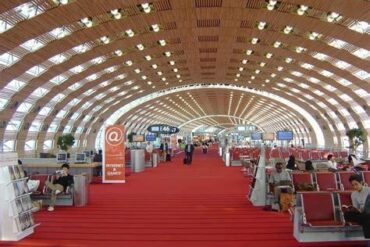
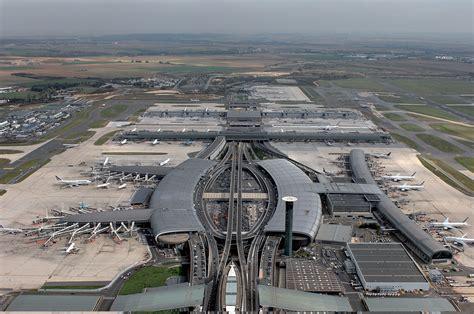
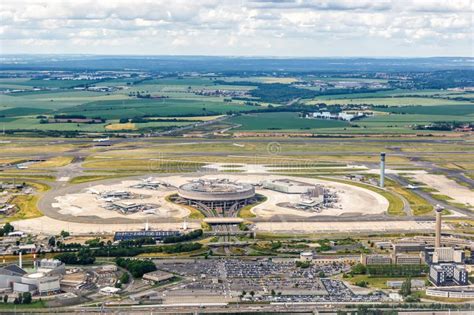
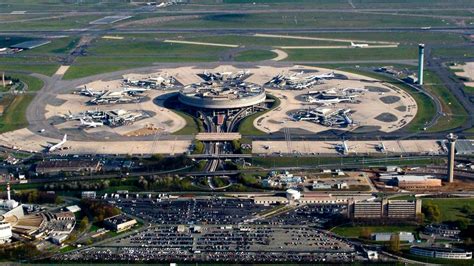
The conception of CDG dates back to 1966, originally named Paris North Airport. It was envisioned not just as an airfield but as a symbol of France’s modernity and global presence. The inaugural Terminal 1, designed by Paul Andreu, opened in 1974 as an avant-garde “octopus” structure, with a central circular core and extending boarding satellites—a bold and futuristic design that still defines its character.
Over the years, the airport expanded significantly. Starting in 1981, Terminal 2 emerged and evolved into a network of seven linear halls—2A through 2G—each tailored to specific airline operations. This terminal became the core for Air France and SkyTeam operations and experienced significant modernizations including the addition of S3 and S4 halls, purpose-built for handling Airbus A380 aircraft.
Terminal 3, by contrast, is a compact, single-building facility optimized for low-cost and charter airlines, with bus transfers to aircraft stands. It was notably voted 2024’s best low-cost terminal, a nod to its efficient functionality.
Rebranding and Public Identity
CDG’s visual and auditory identity has also evolved. Since 1975, the airport signage has used the Frutiger typeface, a modernist touch that adds visual cohesion across facilities. The once-familiar “Indicatif Roissy” chime, played across PA systems, was replaced in 2016 by the updated “Indicatif ADP”, marking a new phase under the Paris Aéroport brand, consolidating CDG’s status as a flagship of the French travel experience.
Terminal Developments and Safety Milestones
Each terminal has its own story of growth and resilience. Terminal 1 underwent a major refurbishment between 2020 and 2023, reconnecting its satellite arms through a newly constructed junction. Terminal 2 has weathered engineering failures and triumphs—most notably the collapse of Terminal 2E in 2004, which tragically resulted in four fatalities. This section was rebuilt in 2008, reinforcing safety standards and architectural confidence.
The regional satellite 2G, isolated from the core 2A–2F cluster, is designed for short-haul operations. The 2E satellite’s S3 and S4 halls provide large gate lounges, retail zones, and security facilities catering to long-haul, high-capacity aircraft.
Operational Resilience During the COVID-19 Crisis
Like most major global hubs, Charles de Gaulle Airport was severely impacted by the COVID-19 pandemic. In March 2020, Terminals 1 and 3 were temporarily shut down, with operations consolidated into select areas of Terminal 2. Flights were rerouted based on alliance affiliations, helping to optimize resource use and minimize health risks. Terminal reopenings were phased through 2021 and 2022, involving stringent hygiene protocols and revised passenger flows.
Despite traffic disruptions, CDG preserved its operational integrity and emerged more streamlined, with improved health infrastructure, passenger processing systems, and automated services—a testament to its resilience and commitment to future-readiness.
The Cancelled Terminal 4: A Lesson in Sustainability
One of the most ambitious infrastructure plans for CDG was the proposed Terminal 4, a €9 billion mega-project slated for completion in 2025. However, the project was cancelled in 2021, reflecting shifting priorities in post-pandemic aviation and growing environmental scrutiny. Authorities cited climate commitments and traffic uncertainty as key reasons for halting expansion, symbolizing a broader industry move toward carbon accountability and smart growth.
Roissypôle: The Airport City
Adjacent to CDG lies Roissypôle, a sprawling mixed-use development that embodies the concept of an aerotropolis. It includes Air France’s global headquarters, multiple business hotels, office complexes, commercial centers, and transportation hubs.
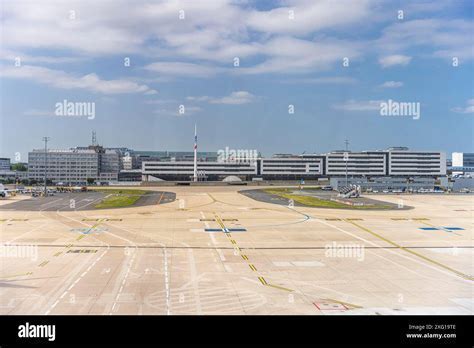
At its heart is the Gare Aéroport Charles de Gaulle 2 TGV, a major intermodal transit hub linking RER B suburban trains, high-speed TGV lines (including Ouigo and Thalys), and local buses. With direct access to Paris, Brussels, Lyon, and beyond, Roissypôle strengthens CDG’s role as Europe’s multimodal gateway.
Ground Transport and Inter-Airport Connectivity
CDG is supported by a sophisticated transport matrix:
- CDGVAL: A free, automated light-rail system connecting Terminals 1, 2, and 3.
- LISA shuttle: Links Terminal 2E with remote satellite S3/S4 halls.
- RER B: Four trains per hour, both local and express, connecting Paris city center.
- TGV InOui and Ouigo: High-speed trains to domestic and international destinations.
- Roissybus and Magical Shuttle: Direct coach services to Paris and Disneyland.
- RATP, Noctilien: Public and night buses cover regional and late-night travel.
- A1 Motorway: A direct highway link from Paris to the airport.
These systems ensure passenger flow efficiency, linking CDG with not only Paris but the entire European continent.
Competing and Complementary Airports
CDG operates in tandem with Paris’s other airfields:
- Orly Airport, located to the south, handles mostly domestic and short-haul flights.
- Le Bourget, northeast of the city, is reserved for general aviation and VIP charters.
- Beauvais–Tillé and Châlons–Vatry airports, while distant, are promoted for low-cost carriers looking to access the Île-de-France market.
Together, these facilities form a layered air travel ecosystem, with CDG at its apex.
Tragedy and Safety Reforms
CDG has witnessed its share of aviation accidents, each shaping future safety protocols:
- On 6 January 1993, a Lufthansa CityLine Dash 8 crashed during landing due to icing and poor weather, killing four.
- On 25 May 2000, a Streamline Short 360 collided with a bridge after veering off course in fog, resulting in one death.
- Most tragically, on 25 July 2000, Air France Flight 4590, a Concorde jet en route to New York, crashed shortly after takeoff due to a ruptured tire puncturing a fuel tank. The accident claimed 113 lives and ultimately led to the retirement of the Concorde fleet.
These events brought about major reforms in aircraft inspection protocols, runway maintenance, and design standards, reinforcing CDG’s enduring commitment to passenger safety.
Conclusion: A Legacy of Power, Poise, and Progress
Charles de Gaulle Airport is not just a transit point—it is a symbol of French technological ambition, national pride, and European unity. From Paul Andreu’s visionary Terminal 1 to its sophisticated intermodal hub, CDG continues to set benchmarks in airport design, efficiency, and global connectivity.
With the promise of the upcoming CDG Express rail service in 2027, which will offer a direct, high-speed connection from Paris Gare de l’Est to the airport in just 20 minutes, CDG is poised to strengthen its global standing even further.
In a changing world where sustainability, safety, and speed define modern air travel, Charles de Gaulle Airport remains one of the world’s most dynamic and strategically vital aviation centers.