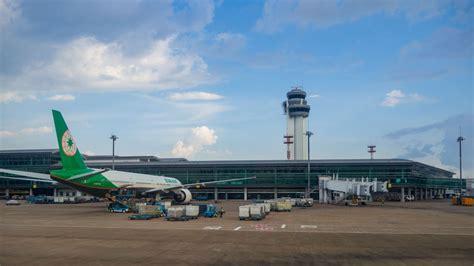
Tan Son Nhat International Airport (IATA: SGN, ICAO: VVTS), located in the bustling Tân Bình district of Ho Chi Minh City, is the beating heart of Vietnam’s aviation infrastructure. As the nation’s busiest airport, it managed nearly 40 million passengers in 2024, with newly inaugurated infrastructure pushing its annual capacity to an impressive 50 million travelers. This growth is a direct response to the surging demand for both domestic and international travel, underscoring the airport’s critical role in connecting Vietnam to the world.
A Legacy Forged Through History
The origins of Tan Son Nhat trace back to the French colonial era in the 1920s, with further expansions in the 1930s and again in 1956, which included a significant 7,200-foot runway extension. Its strategic significance rose exponentially during the Vietnam War when it transformed into a major air base for the U.S. Air Force and the Republic of Vietnam Air Force (RVNAF). Between 1968 and 1974, it ranked among the world’s busiest military airfields, regularly accommodating large aircraft such as the Pan Am Boeing 747s bound for San Francisco and Continental Boeing 707 charters.
After the war, the airport shifted focus toward commercial aviation. United Airlines led the post-war U.S. return in 2004, symbolizing a new era of international cooperation and commerce. Passenger traffic skyrocketed from 7 million in 2005 to a maximum of 20 million by 2013, compelling continual expansion and significant land reallocations to support growing infrastructure needs.
Modern Terminal Infrastructure: T1, T2, and the New T3
Tan Son Nhat operates three terminals, each serving a distinct segment of the airport’s operations:
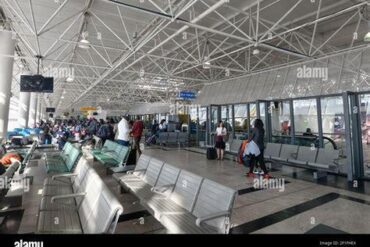
- Terminal 1 (T1 – Domestic): Rooted in pre-1954 architecture, T1 has undergone five major expansions, evolving into a 40,948 m² terminal. It now accommodates 15 million passengers annually through 20 boarding gates and two passenger lounges. Despite its age, its functionality remains central to domestic connectivity.
- Terminal 2 (T2 – International): Completed in 2007 with Japanese ODA funding, T2 initially handled 10 million passengers per year. A significant expansion between 2016 and 2018 increased its footprint to 115,834 m², boosting capacity to 13 million passengers annually across 26 gates and five VIP lounges. This terminal serves as the gateway for the majority of international airlines and long-haul travelers.
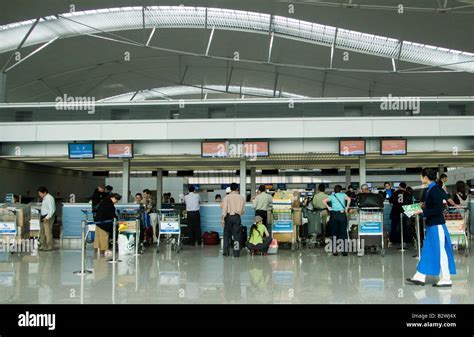
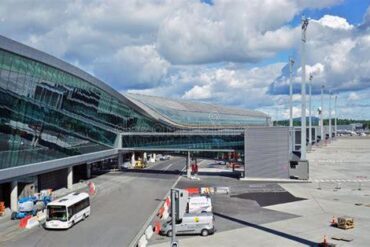
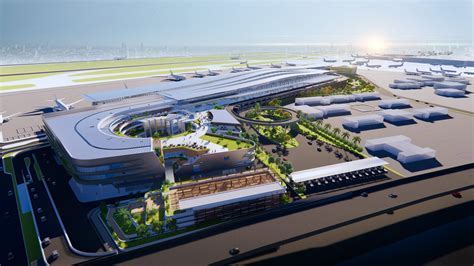
- Terminal 3 (T3 – Domestic Expansion): Groundbreaking began in December 2022, and trial operations commenced in April 2025. Spanning 112,500 m², T3 introduces 27 boarding gates with a build budget of US$467.6 million. Designed to support Vietnam Airlines and VietJet’s domestic operations, T3 is pivotal in relieving congestion and supporting the airport’s rapid passenger growth.
Operational Limitations and Airfield Infrastructure
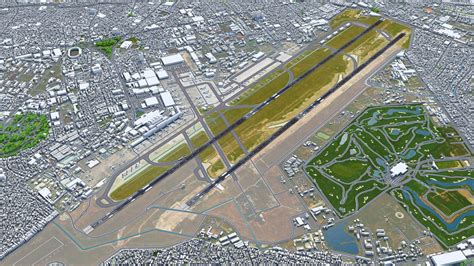
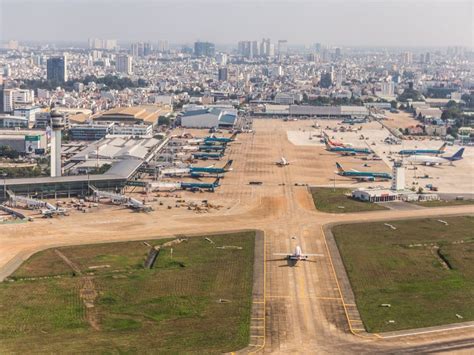
Despite its high volume, Tan Son Nhat’s runway system remains a bottleneck. The airport operates two dependent parallel runways, 07L/25R and 07R/25L, which cap total operations at 44–48 movements per hour. This limitation necessitates meticulous scheduling, particularly during peak hours.
A towering symbol of air traffic control modernization, the 70-meter-tall control tower, constructed in 2013, oversees flight operations. It complements the older 1949 tower, which was rebuilt in 1969 and still stands as a relic of the airport’s historic military significance.
Cargo Handling: Strategic Trade Hub
Tan Son Nhat’s cargo capacity is equally impressive. Home to three cargo terminals, operated primarily by TCS and SCSC, the airport can handle up to 700,000 tons annually. These terminals play a critical role in Vietnam’s manufacturing and export industries, supporting seamless logistics for electronics, textiles, and seafood products destined for markets across Asia, Europe, and North America.
Airlines and Global Connectivity
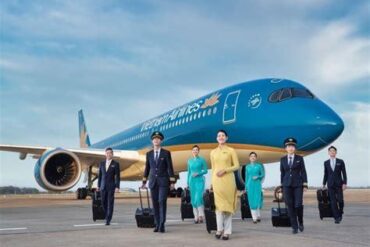
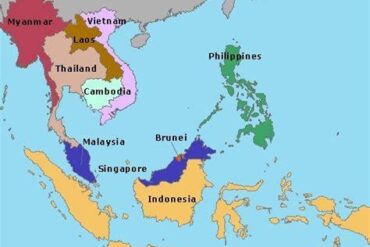
As a central aviation hub, Tan Son Nhat connects Vietnam with major cities across Asia, Europe, and North America. Key domestic airlines include Vietnam Airlines, VietJet Air, and Bamboo Airways. On the international front, airlines from Singapore, Thailand, South Korea, Malaysia, and Taiwan maintain frequent service.
The airport’s busiest international routes are:
- Singapore (Changi)
- Bangkok (Suvarnabhumi)
- Seoul (Incheon)
- Kuala Lumpur (KLIA)
- Taipei (Taoyuan)
Domestically, the Ho Chi Minh City – Hanoi route stands out. In 2023, it catered to 11 million passengers, making it Southeast Asia’s most-trafficked air route and the fourth busiest worldwide.
Ground Transportation: Seamless City Access
Ground connectivity to and from Tan Son Nhat is robust and constantly improving. Several bus lines—109, 152, 119—and a dedicated airport shuttle (Route 49) provide public transit options to various parts of Ho Chi Minh City. Private transportation is also abundant, with Vinasun and Mai Linh taxis offering traditional metered services and Grab providing app-based ride hailing.
The completion of Phạm Văn Đồng Boulevard in 2016 greatly improved vehicular access, reducing congestion around the airport. Additionally, a newly built Terminal 3 connector road further enhances traffic flow. In the future, the much-anticipated Metro Line 4B promises to integrate the airport more efficiently into Ho Chi Minh City’s rapid transit network.
Historical Accidents and Security Incidents
Tan Son Nhat’s long operational history includes a few notable incidents:
- In 1975, a C-5A Galaxy crashed during an Operation Babylift mission, resulting in 155 fatalities.
- A Tu-134 experienced a hard landing in 1991, causing aircraft damage but no fatalities.
- In 1992, an Airbus A310 was hijacked, an event resolved with no casualties.
- A blackout of air traffic control systems in 2014 temporarily disrupted operations.
- In 2017, attempted petrol bomb attacks were thwarted by Vietnamese security forces.
These events, while rare, have prompted enhancements in aviation safety and crisis response protocols, reinforcing the airport’s resilience.
Future Outlook: Expansion and Long Thanh Coordination
Tan Son Nhat is slated to evolve significantly in the coming decades. As Vietnam builds its new Long Thanh International Airport 40 kilometers east of Ho Chi Minh City, Tan Son Nhat will pivot towards becoming a hub for low-cost carriers, short-haul international flights, and domestic routes. Long Thanh, in contrast, is designed for higher-capacity long-haul travel, ultimately expected to handle 100 million passengers annually after 2035.
In the meantime, phased expansions at Tan Son Nhat are underway to raise its operational ceiling to 51–80 million passengers per year. Plans include:
- Full activation of Terminal 3
- Potential Terminal 4 development
- New rapid exit taxiways to ease runway throughput
- Feasibility studies for a third runway, contingent on land availability
Such developments aim to optimize airport efficiency, reinforce Tan Son Nhat’s role in Vietnam’s domestic air network, and support its strategic coexistence with Long Thanh in the future.
Conclusion
Tan Son Nhat International Airport is more than just a transportation hub—it is a living chronicle of Vietnam’s aviation heritage, economic evolution, and global integration. From its colonial-era origins and war-time turbulence to its current status as a regional powerhouse, Tan Son Nhat continues to rise to meet the demands of a rapidly developing nation. As new terminals, infrastructure, and partnerships emerge, this airport will remain a cornerstone of Southeast Asia’s air travel ecosystem for decades to come.