Ethiopian Airlines has embarked on a monumental journey to reshape the aviation landscape of Africa by investing over $150 million in state-of-the-art Maintenance, Repair, and Overhaul (MRO) facilities in Addis Ababa. This strategic initiative, which officially commenced operations on July 22, 2025, marks a significant step forward not only for Ethiopian Airlines but for the entire African aviation industry. With the unveiling of these advanced facilities, the airline aims to position Addis Ababa as the leading aviation hub in Africa, creating a ripple effect that will enhance connectivity and economic growth across the continent.
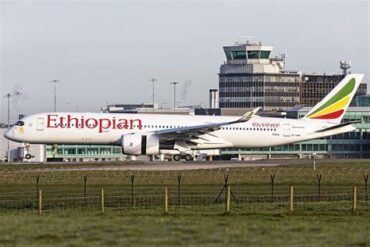
The new MRO facilities are equipped with cutting-edge technology, featuring modern aircraft hangars, a fully furnished Aircraft Component Shop, and a high-capacity Aircraft Parts Store. Designed to accommodate the latest generation of aircraft, these facilities are pivotal in supporting Ethiopian Airlines’ expanding fleet, which includes sophisticated models from Boeing and Airbus. The investment is a cornerstone of Ethiopian Airlines’ Vision 2035, a strategic roadmap aimed at transforming the carrier into a world-class pan-African airline.
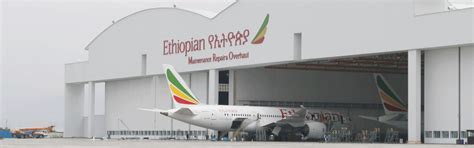
Built within a remarkably short time frame of less than two years, the new aviation facilities are tailored to handle the increasing flow of domestic and international air traffic. The two twin hangars, outfitted with the latest automation systems, promise to significantly reduce turnaround times for aircraft maintenance, thereby optimizing operational efficiency. Ethiopian Airlines emphasized that this initiative will not only enhance their internal capabilities but will also enable them to offer MRO services to other airlines across Africa and beyond.
During the launch event held at Ethiopian Airlines’ headquarters, industry leaders and government officials hailed this development as a historic milestone for Ethiopia and the continent. Mesfin Tasew, CEO of Ethiopian Airlines Group, described the investment as a “game-changing step” that signifies a paradigm shift in the African airline industry. He noted that the ultimate goal is to facilitate technology transfer, promote skills development, and foster sustainable economic growth through job creation and modern infrastructure.
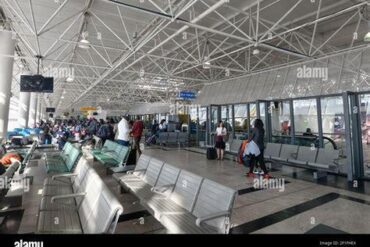
The Vision 2035 initiative is ambitious, aiming to double the airline’s passenger and cargo destinations while strategically enhancing the domestic market. This plan is designed to create opportunities for profitable new routes and position Addis Ababa Bole International Airport as a major hub that adheres to ICAO standards and industry best practices.
In a significant boost to human capital development, Ethiopian Airlines is also expanding its training programs through the Ethiopian Aviation Academy. The academy is set to train thousands of technicians, engineers, and airline professionals over the next decade. This focus on workforce empowerment is crucial in an industry grappling with a global shortage of maintenance personnel and aircraft engineers. By investing in education and training, Ethiopian Airlines is ensuring that it has a skilled labor pool capable of sustaining its technical operations long into the future.
Furthermore, the new MRO facility will alleviate the burden of dependence on foreign MRO partners, positioning Ethiopian Airlines as a self-sufficient entity capable of servicing its own fleet and that of other airlines. This development is particularly significant given the challenges faced by many African airlines, including under-investment and reliance on external maintenance solutions. The establishment of in-house capacity for maintenance and repair signifies a commitment to enhancing aviation sovereignty across the continent.
The new maintenance center not only serves Ethiopian Airlines’ growing fleet but also opens its doors to other African and international airlines flying to Addis Ababa. This collaborative approach is expected to invigorate the Ethiopian economy by attracting regional airlines seeking high-quality MRO solutions at competitive prices. By positioning Addis Ababa as an economically viable destination for aviation businesses, Ethiopian Airlines is contributing to the broader economic development of the region.
Moreover, the investment aligns closely with Ethiopia’s national development aspirations, particularly in the sectors of aviation, logistics, and industrial capacity building. It dovetails with the African Union’s broader goals of facilitating intra-African connectivity and achieving industrial self-sufficiency. The successful establishment of these facilities represents a key step towards unlocking the potential of Africa’s aviation sector, ultimately benefiting the entire continent.
In summary, Ethiopian Airlines’ substantial investment in MRO facilities is not just a leap forward for the airline itself; it is a transformative initiative that promises to enhance the aviation infrastructure across Africa. As the airline continues to expand its capabilities and develop its workforce, it is poised to play a pivotal role in shaping the future of aviation on the continent. The MRO facilities in Addis Ababa are set to become a benchmark for excellence in the African aviation industry, paving the way for increased connectivity, economic growth, and regional collaboration.