Africa’s aviation map is being redrawn, and the lines are converging on Ethiopia. Ethiopian Airlines has begun construction on a $12.5 billion mega-airport designed not merely to relieve congestion, but to redefine how air travel flows across Africa and between continents. Planned to open its first phase in 2030, the project signals a structural shift in global aviation geography, positioning East Africa as a central node rather than a peripheral connector.
For decades, African carriers have relied on hubs outside the continent for long-haul connectivity, surrendering both revenue and strategic leverage. Ethiopian Airlines is openly challenging that model. By financing and shaping its own airport infrastructure, the carrier is aligning physical capacity with its aggressive network growth, fleet expansion, and alliance ambitions. This is not an airport added to an airline’s story; it is an airport written into the airline’s future.
The decision is also rooted in hard capacity limits. Addis Ababa Bole International Airport (ADD), the airline’s current hub, handles roughly 25 million passengers annually and is approaching saturation. Incremental expansions can no longer keep pace with demand driven by Ethiopian Airlines’ rapid rise as Africa’s most globally connected carrier. The Bishoftu project is the answer to a problem that cannot be solved with temporary fixes.
Africa’s Largest Airport Takes Shape in Bishoftu
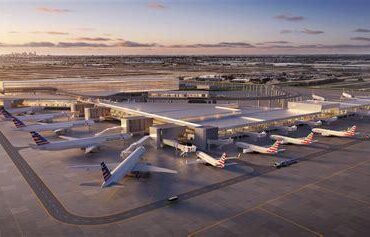
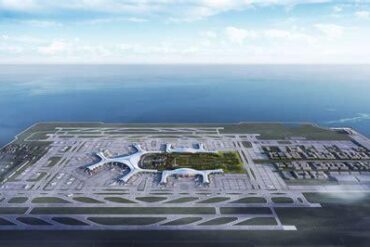
Located in Bishoftu, southeast of Addis Ababa, the new airport is planned as the largest aviation infrastructure project in Africa’s history. When fully completed, it will feature four runways, terminal capacity for up to 110 million passengers per year, and parking stands for approximately 270 aircraft. Those numbers place it in the same league as the world’s most powerful hubs, from Atlanta to Dubai.
Financing reflects the project’s scale and international importance. Ethiopian Airlines is contributing roughly 30% of the funding, with the remainder provided by a consortium that includes the African Development Bank and lenders from the Middle East, Europe, China, and the United States. This diversified backing reduces financial risk while signaling global confidence in Ethiopia’s long-term aviation strategy.
The airport’s design prioritizes throughput and resilience. Multiple runways allow simultaneous operations even during maintenance or adverse weather, while expansive apron space supports rapid aircraft turnaround. This is infrastructure designed for volume without fragility, a critical distinction for a hub that aims to handle dense banks of arrivals and departures across continents.
Phase One: A 2030 Launch With Immediate Scale
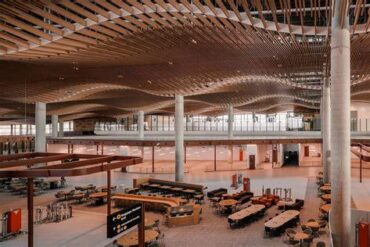
The first operational phase, scheduled for 2030, is anything but modest. Phase One alone includes two parallel runways, two passenger terminals, a dedicated cargo terminal, and an airport hotel. Earthworks, funded with an initial $610 million allocation, are expected to take roughly a year, laying the foundation for vertical construction to follow at pace.
Once operational, Phase One will be capable of handling 60 million passengers annually, more than double the capacity of Ethiopia’s current main airport. Cargo operations will reach 1.5 million tonnes per year, reinforcing Ethiopian Airlines’ already formidable position in African air freight. At this stage, the airport will be able to accommodate 180 aircraft, ensuring sufficient room for both current operations and near-term fleet growth.
This phased approach allows the airport to generate revenue and operational experience early, while future expansions push capacity toward the 110 million passenger mark. Unlike many mega-projects that struggle to align timelines with demand, Bishoftu is structured to scale in step with Ethiopian Airlines’ trajectory.
Seamless Connectivity Beyond the Runway
A mega-hub fails if it is difficult to reach. Recognizing this, the project integrates modern highway links to Addis Ababa and a high-speed rail connection operating at 120 to 200 km/h. This dramatically expands the airport’s catchment area, pulling passengers from across central Ethiopia into a single, efficient gateway.
The rail link is particularly strategic. It shortens transfer times, reduces road congestion, and makes early-morning and late-night bank structures more viable. For a hub airline, ground access is not a convenience feature; it is a force multiplier that directly affects load factors and network efficiency.
Ethiopian Airlines: An Airline Building Its Own Future
Ethiopian Airlines enters this project from a position of strength. Operating 167 aircraft, it maintains the youngest fleet in Africa, dominated by modern Boeing widebodies and narrowbodies, complemented by Airbus A350s and Bombardier Q400s for regional connectivity. An additional 64 aircraft on order, including Boeing 777-9s and 787-9s, signal sustained long-haul growth.
This fleet expansion makes the new airport not just logical, but inevitable. More aircraft mean more routes, higher frequencies, and denser wave structures—none of which are feasible without sufficient ground infrastructure. By directly shaping the airport environment, Ethiopian Airlines can optimize passenger flow, minimize connection times, and craft a hub experience aligned with its brand and Star Alliance ambitions.
The Bishoftu mega-hub is ultimately about control. Control over capacity, over customer experience, and over Africa’s role in global aviation. When the first flights depart in 2030, they will not simply take off from a new runway. They will lift from a strategic statement: Africa no longer needs to route its future through someone else’s airport.