
Ethiopian Airlines has inaugurated a new direct service from Addis Ababa to Hyderabad, marking a major strategic milestone in its ongoing efforts to dominate the India-Africa aviation corridor. The inaugural flight departed from Addis Ababa Bole International Airport on June 16, 2025, officially placing Hyderabad as the fifth Indian city in the airline’s growing global network. This expansion not only reflects the airline’s ambition to broaden its international reach but also reinforces its position as a vital player in transcontinental travel between Africa and Asia.
The introduction of the Hyderabad route comes at a time when India is experiencing an explosive boom in aviation growth, with international connectivity playing a critical role in its global economic footprint. Ethiopian Airlines is leveraging this momentum to solidify its position as the preferred carrier for India-Africa travel, tapping into a market that remains underserved by African airlines.

Hyderabad: A Smart Choice for Network Expansion
Hyderabad, one of India’s most rapidly developing urban centers, is a key hub for technology, pharmaceuticals, medical tourism, and education. The city’s vibrant economic and academic scene makes it a prime destination for African professionals, students, and medical travelers. By adding Hyderabad to its roster, Ethiopian Airlines strategically opens doors to new passenger segments eager to travel between East Africa and southern India.
Unlike Delhi or Mumbai, which serve as crowded aviation mega-hubs, Hyderabad offers a faster, more streamlined alternative with fewer logistical constraints. Ethiopian’s move positions the airline to capture untapped demand from Tier-1.5 and Tier-2 cities, creating new inroads for cross-continental movement that avoids the congestion and saturation found in India’s traditional international gateways.
Moreover, Hyderabad’s Rajiv Gandhi International Airport, ranked among the best in South Asia for passenger service, offers an efficient operational base with robust cargo capabilities. This bodes well not only for passenger traffic but for freight and logistics services, which are increasingly crucial in pharmaceutical exports and e-commerce trade between Africa and India.
The Hyderabad Route: Timings, Aircraft, and Frequencies
The new service between Addis Ababa and Hyderabad is being operated three times weekly, with flights scheduled on Tuesdays, Thursdays, and Saturdays. Ethiopian Airlines has deployed the Boeing 737 MAX 8 on this route—an aircraft praised for its fuel efficiency, lower emissions, and optimal seating layout for regional operations.
The 737 MAX 8 accommodates 160 passengers across two cabins: Business Class and Economy. This configuration allows Ethiopian to strike a balance between comfort, operating economics, and frequency, essential for maintaining competitiveness in a market heavily served by major Gulf carriers.

Flight timings are designed for maximum connectivity via Addis Ababa, the carrier’s hub, which allows seamless onward travel to more than 60 African cities—a unique advantage that Gulf carriers cannot offer without additional layovers. With layover times optimized, Indian travelers flying to Nairobi, Johannesburg, Lagos, Accra, Lusaka, and Kigali will benefit from faster, single-stop access to cities that otherwise require complex itineraries.
Beating the Gulf Giants: Ethiopian’s Edge in the India-Africa Corridor
The air corridor between India and Africa has traditionally been dominated by Middle Eastern carriers such as Emirates, Qatar Airways, and Etihad, who collectively handle over 65% of the passenger volume via their luxury hubs. These airlines have the advantage of brand recognition and an expansive global footprint. Yet, Ethiopian Airlines is carving out its niche with something increasingly rare in the aviation sector: reliability and direct regional connectivity.
Ethiopian’s 90% load factor on existing Indian routes is a testament to its strong performance. While Gulf carriers continue to channel traffic through hubs in Dubai or Doha, Ethiopian offers travelers a direct alternative with minimal backtracking, especially valuable for time-sensitive business and medical trips.
This focus on operational efficiency and punctuality has earned Ethiopian Airlines loyalty among frequent fliers in both regions. The airline has also maintained a competitive price point, often undercutting Gulf airlines on certain segments, without compromising on key service standards like inflight meals, baggage allowance, or seating comfort.

Strategic Timing: Aligning with Growing Indo-African Synergies
The Hyderabad route launch comes at a time when both India and Africa are deepening bilateral ties. Trade between India and African nations has crossed $100 billion, and new agreements in education, defense cooperation, pharmaceuticals, renewable energy, and digital infrastructure are boosting people-to-people interactions.
Ethiopian Airlines, with its deep African roots and expansive global footprint, is ideally placed to act as the aviation bridge for this growing partnership. By offering direct, dependable routes, the airline helps facilitate these exchanges, allowing students to attend universities, medical tourists to seek treatment, and business professionals to explore emerging opportunities across borders.
Additionally, the airline is supporting pan-African tourism growth. More Indian travelers are exploring safaris, beach holidays, and cultural tours in destinations like Kenya, Tanzania, South Africa, and Ghana—and Ethiopian Airlines’ new route makes these experiences far more accessible.
Addis Ababa: The Emerging Super Hub for Africa
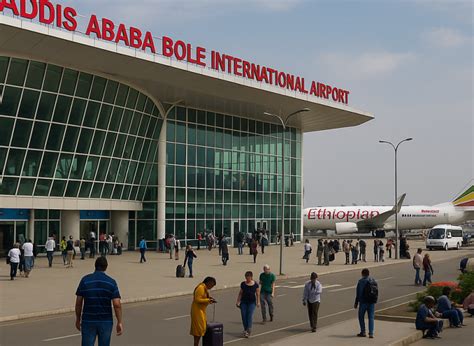
Addis Ababa is not just the capital of Ethiopia—it is the aviation gateway of Africa. Ethiopian Airlines has spent over a decade building this city into a centralized transit hub, investing in infrastructure, lounges, terminal expansion, and advanced flight management systems.
From Hyderabad, passengers can connect via Addis Ababa to over 130 international destinations, including New York, London, Frankfurt, Cairo, Cape Town, and Kinshasa. This makes the carrier an attractive option for not just intra-Africa travel, but also for long-haul passengers looking for competitive pricing and smooth connections.
As newer African economies rise and cities like Lagos, Nairobi, and Abidjan become investment magnets, the strategic placement of Addis Ababa as a connective hub ensures Ethiopian Airlines can funnel global traffic to underserved markets with minimal friction.
Implications for the Indian Aviation Sector
Ethiopian’s expansion into Hyderabad may also serve as a wake-up call for Indian carriers, many of whom have struggled to develop a sustainable international network to Africa. While Air India has historically served East Africa, the sector remains largely underpenetrated by Indian operators.
The success of Ethiopian’s fifth Indian route will likely influence aviation policymakers, private carriers, and infrastructure planners to reevaluate their approach to Africa—a continent that is no longer emerging, but firmly ascending in global relevance.
Hyderabad’s inclusion in Ethiopian’s network is a clear signal to India’s aviation industry: there is demand beyond the Gulf, and forward-looking carriers will be the ones to tap it.
Looking Ahead: Ethiopian’s Vision for a Global Role
This latest expansion is not just about a single route; it is part of Ethiopian Airlines’ broader vision to be Africa’s first truly global airline. With a fleet of over 140 aircraft, alliances with Star Alliance, and a multi-continent network, the airline is cementing its status among the elite of global aviation.
The move also aligns with Ethiopia’s national aviation roadmap, which seeks to turn the country into a central logistics, tourism, and transport hub connecting continents. With routes like Hyderabad, Ethiopian Airlines is not just connecting cities—it is weaving together continents through aviation.
The Hyderabad route is a powerful symbol of connectivity—bringing together two ancient civilizations, emerging economies, and dynamic regions with a shared vision of progress. As more travelers discover this route, they are likely to find that Ethiopian Airlines doesn’t just offer a flight—it offers a smarter, faster, and more thoughtful way to navigate the new world map.