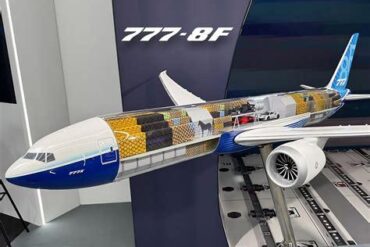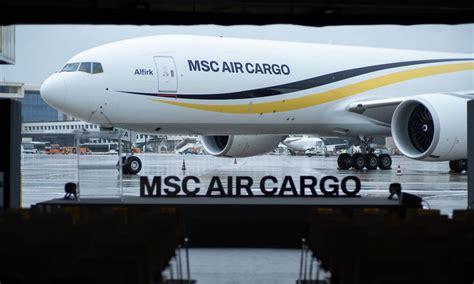
The Boeing 777-8F backlog has officially crossed the 80-aircraft milestone, marking a major vote of confidence in Boeing’s next-generation cargo aircraft. The milestone became even more significant when the newest customer was revealed to be MSC Air Cargo, the aviation division of one of the world’s largest container shipping companies rather than a traditional airline.
MSC’s decision to purchase five Boeing 777-8 Freighters represents a major shift in how global logistics companies view air cargo. Instead of simply operating ships and relying on external aviation partners, companies such as MSC are building integrated transportation networks that combine ocean, air, rail, and road services. The order shows that the future of freight transportation is becoming increasingly interconnected.
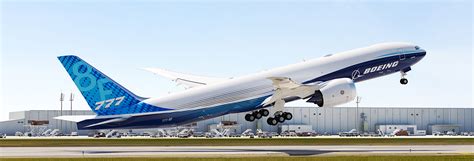
The Boeing 777-8F has not yet entered commercial service, but demand for the aircraft continues to grow. The program has attracted major cargo operators because it offers a combination of higher payload capacity, improved fuel efficiency, lower emissions, and long-term regulatory compliance. As older freighters approach retirement due to stricter environmental standards, airlines and logistics companies are preparing early for the next generation of widebody cargo aircraft.
MSC’s arrival as the latest customer strengthens Boeing’s position in the large freighter market and confirms that the 777-8F is becoming the industry’s preferred successor to aging aircraft such as the Boeing 747-400F and eventually the current-generation 777 Freighter.
MSC Air Cargo Reveals Boeing’s Mystery 777-8F Customer
For months, Boeing’s order book listed an unidentified customer for five 777-8 Freighters. The mystery was finally solved when MSC Air Cargo announced its purchase during the 2026 Farnborough International Airshow.
The order represents MSC’s first commitment to the Boeing 777X family and makes the company one of the earliest adopters of Boeing’s newest cargo aircraft. The purchase also increases the firm Boeing 777-8F backlog to more than 80 aircraft, despite the aircraft still being in development and awaiting its first flight.
MSC becomes the third European operator to select the aircraft, joining major cargo carriers such as Lufthansa Cargo and Cargolux. Other confirmed customers include Qatar Airways Cargo, Silk Way West Airlines, China Airlines, China Southern Airlines, and Korean Air.
The decision is particularly interesting because MSC is better known for moving containers across oceans than flying aircraft across continents. However, the company’s investment demonstrates that the boundaries between shipping companies and airlines are becoming increasingly blurred.
MSC is not simply buying airplanes. It is purchasing access to future cargo capacity and strengthening its ability to control more parts of the global supply chain.
Why MSC Is Investing in an Aircraft That Has Not Flown Yet
Ordering a new aircraft before it enters service always carries risk. However, MSC’s decision reflects a long-term strategy rather than short-term fleet expansion.
The Boeing 777-8F is designed specifically for the future cargo market. Boeing developed the aircraft after recognizing that existing large freighters would eventually face regulatory challenges. International emissions rules scheduled for the late 2020s will make it increasingly difficult to continue producing older aircraft designs without significant changes.
The current 777 Freighter, despite being one of the most successful cargo aircraft ever built, is based on technology from the original 777 family. Production is expected to end as stricter emissions requirements take effect.
The 777-8F provides a clean-sheet solution. Boeing expects the aircraft to deliver approximately 30% better fuel efficiency and lower carbon emissions per payload tonne compared with older large freighters such as the 747-400F.
For MSC, securing early production slots is another important factor. Aircraft manufacturers often have long backlogs, especially for popular widebody models. By committing now, MSC ensures access to future capacity before demand accelerates.
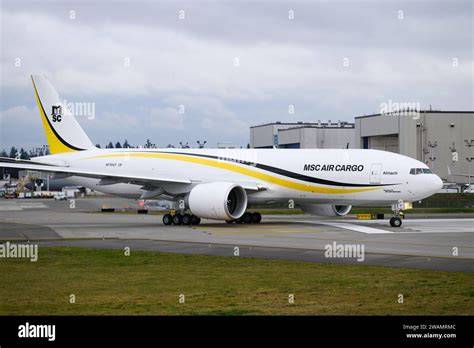
MSC Air Cargo CEO Jannie Davel described the purchase as an investment in the company’s long-term future and the customers it serves. The message behind the order is clear: MSC expects global trade to continue requiring flexible and reliable transportation options across multiple modes.
MSC’s Transformation From Shipping Giant to Integrated Logistics Company
To understand why MSC is buying Boeing 777-8Fs, it is necessary to look beyond aviation.
Founded in 1970, MSC has grown into one of the world’s largest container shipping companies. Its maritime business operates hundreds of vessels connecting major ports around the globe. However, in recent years, the company has expanded beyond traditional ocean freight.
The goal is to become a complete logistics provider capable of moving cargo from origin to destination regardless of transportation method.
Ocean shipping remains the foundation of MSC’s business, but air cargo provides a critical advantage. Some shipments cannot wait weeks for a container vessel. Pharmaceuticals, electronics, high-value components, and urgent industrial goods often require faster transportation.
By operating aircraft alongside ships, MSC can offer customers a broader range of solutions.
The strategy follows a wider industry trend. Other major shipping companies have also entered aviation. Maersk expanded its air freight operations, while CMA CGM launched its own cargo airline.
The move reflects a simple reality: global supply chains have become more complex. Companies increasingly want greater control over transportation networks rather than depending entirely on third-party providers.
How MSC Air Cargo Built Its Aviation Business
MSC Air Cargo did not immediately attempt to create a massive airline from scratch. Instead, it adopted a lower-risk approach by combining leased aircraft operations with its own aviation capabilities.
When MSC Air Cargo launched operations in 2022, it began flying Boeing 777 Freighters through an ACMI agreement with Atlas Air. Under this arrangement, Atlas Air provides aircraft, crews, maintenance, and insurance, allowing MSC to enter the air cargo market quickly.
This approach reduced startup costs while allowing MSC to develop operational experience.
At the same time, MSC strengthened its position by acquiring Italian cargo carrier AlisCargo, giving it access to its own European Air Operator Certificate.
The result is a flexible operating structure. MSC can use different regulatory approvals and operational partnerships depending on the market it wants to serve.
Today, MSC Air Cargo operates Boeing 777 Freighters connecting major cargo hubs across Europe, Asia, and North America. The future arrival of five 777-8Fs will provide additional capacity and allow the company to expand its network.
Boeing 777-8F Specifications Make It Ideal for Global Cargo Growth
The Boeing 777-8F is designed around efficiency rather than simply maximum range. For cargo operators, carrying more freight on every flight is often more valuable than flying extreme distances.
The aircraft will be powered by the General Electric GE9X engine, the same engine family developed for the passenger version of the 777X.
The freighter will feature:
- A maximum structural payload of approximately 118 tonnes
- A usable revenue payload of around 110 to 112 tonnes
- Capacity for 31 main-deck cargo pallets
- Cargo volume of approximately 27,051 cubic feet
- A range of roughly 4,410 to 5,000 nautical miles depending on payload
Compared with today’s 777 Freighter, the new aircraft sacrifices some range but gains significant cargo capability.
The current 777 Freighter can carry around 102 tonnes, while the 777-8F increases that figure to nearly 118 tonnes. For operators moving thousands of tonnes of freight every month, that additional capacity can create major economic benefits.
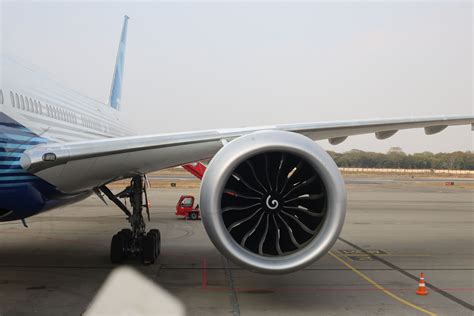
The aircraft’s efficiency improvements are especially important as fuel prices, emissions regulations, and sustainability requirements become increasingly important factors in airline decision-making.
The Boeing 777-8F Replaces an Aging Freighter Generation
The global cargo industry is entering a major fleet transition.
For decades, aircraft such as the Boeing 747-400 Freighter dominated long-distance cargo operations. Its enormous capacity and unique nose-loading capability made it essential for heavy freight missions.
However, the four-engine aircraft became increasingly expensive to operate. Rising fuel costs and stricter environmental standards accelerated its retirement.
The Boeing 777 Freighter became the natural successor because it offered similar long-range capability with two engines and better efficiency.
Now, the 777-8F is positioned as the next step.
The aircraft arrives at a time when cargo operators need replacement options. The 767 Freighter remains important for shorter routes, but larger international networks require bigger and more efficient aircraft.
Boeing’s strategy is to create a complete next-generation freighter lineup, with the 777-8F serving the large widebody market and future aircraft potentially replacing smaller freighters.
MSC’s Order Shows the Future of Cargo Is Multimodal
The significance of MSC’s Boeing 777-8F order goes beyond five aircraft.
It demonstrates how logistics companies are changing their business models. Transportation is no longer separated into isolated industries. Shipping companies, airlines, technology providers, and freight operators are increasingly competing across the entire supply chain.
MSC’s investment provides several advantages:
- Greater control over time-sensitive shipments
- Reduced dependence on external cargo providers
- Additional revenue opportunities
- More flexible responses to market disruptions
The COVID-19 pandemic highlighted the weaknesses of global supply chains. Ocean freight rates experienced extreme volatility, and companies discovered the importance of transportation flexibility.
MSC responded by investing in physical assets rather than simply relying on market conditions.
The Boeing 777-8F fits perfectly into this philosophy. It is not just a cargo aircraft; it is a strategic tool that allows MSC to connect maritime and aviation networks.
Boeing’s 777-8F Backlog Signals Strong Cargo Market Confidence
Crossing the 80-aircraft backlog milestone is a major achievement for Boeing’s newest freighter program.
The aircraft has attracted traditional cargo airlines, national carriers, and now a global logistics company. That diversity shows strong confidence in the design.
Although the 777-8F will not enter service until the end of the decade, customers are already planning for the aircraft’s arrival. Fleet decisions made today will shape cargo operations for decades.
MSC’s order proves that the demand for efficient long-range freighters remains strong. As global trade evolves, companies will need faster, cleaner, and more flexible transportation solutions.
The Boeing 777-8F is emerging as one of the most important aircraft programs in the future of commercial aviation, and its growing backlog suggests that the cargo industry is ready for the next generation.