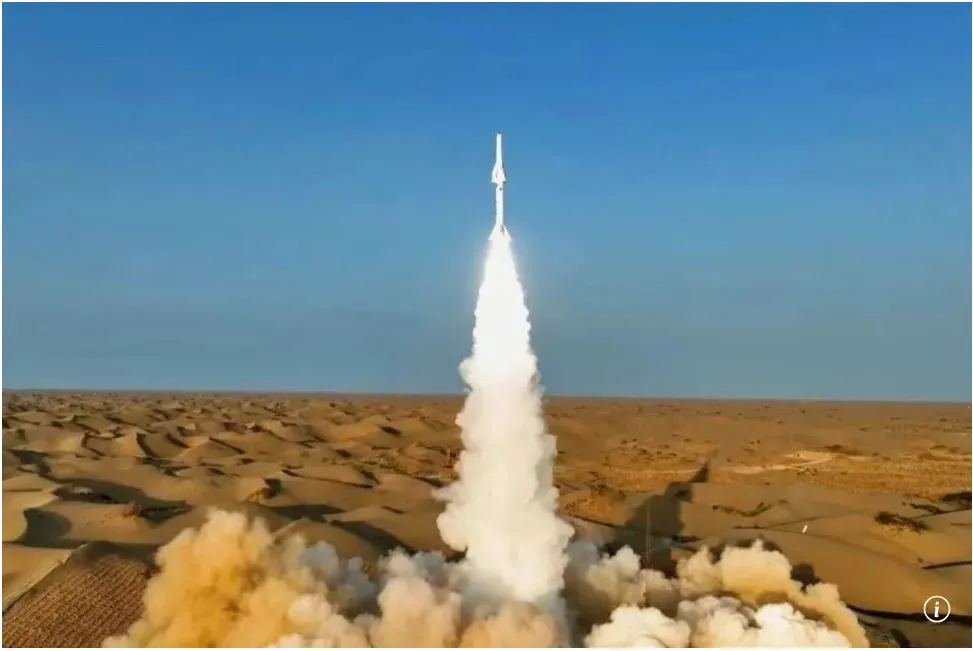
China has taken a bold leap forward in hypersonic technology, stunning global defense communities with the successful flight test of the Feitian-2 hypersonic vehicle, powered by a rocket-based combined cycle (RBCC) engine. This test, conducted by the Northwestern Polytechnical University (NPU) at a site in northwestern China, represents a major milestone not just in propulsion technology but in strategic military capability.
Unlike previous hypersonic systems that rely solely on traditional rocket propulsion or ramjet technology, the Feitian-2 incorporates a hybrid engine system capable of transitioning seamlessly between different propulsion modes. The RBCC engine, fueled by a unique kerosene-hydrogen peroxide mixture, offers substantial operational flexibility, improved fuel efficiency, and reduced onboard oxidizer weight—traits critical for both long-range military applications and future civilian hypersonic platforms.
RBCC: The New Frontier in Hypersonic Propulsion
At the heart of this advancement is the RBCC engine—a complex propulsion system that integrates multiple engine cycles into a single configuration. The Feitian-2 begins its journey using rocket propulsion in the ejector mode, transitioning into ramjet mode as it accelerates through the atmosphere. This evolution allows the vehicle to breathe atmospheric oxygen during mid-flight, reducing dependence on internal oxidizers and optimizing performance.
Key features demonstrated in this flight include:
- Variable-geometry intake operation – The engine dynamically adjusts internal airflow pathways to suit varying flight speeds and atmospheric pressures.
- Thrust-varying acceleration – A pivotal factor in modulating speed while maintaining vehicle stability.
- Autonomous flight with variable angle of attack – Enables real-time adjustments in orientation for mission-specific performance and aerodynamic efficiency.
These features together confirm not just propulsion success, but high-level advancements in aerodynamic control and autonomous guidance systems, long considered essential but elusive components in hypersonic vehicle design.
Strategic Edge: From Feitian-1 to Feitian-2
The Feitian-2 builds on lessons learned from its predecessor, the Feitian-1, which was flight-tested in July 2022. That prototype validated the foundational principles of combined-cycle propulsion. However, Feitian-2 goes further, showcasing not only operational stability across multiple flight regimes but also incorporating significant structural design upgrades:
- Addition of forward wings near the vehicle’s nose
- Larger, elongated tail fins for improved flight stability
These aerodynamic improvements help maintain control at hypersonic speeds and in high-altitude, thin-air environments, where traditional control surfaces can become ineffective.
This refinement proves crucial. Hypersonic platforms must often operate at the edge of the atmosphere or even in near-space environments, where there is little air for maneuvering and where onboard oxidizers must compensate for the absence of atmospheric oxygen.
Fuel Breakthrough: Kerosene-Hydrogen Peroxide Mix
One of the most striking aspects of this test is the unconventional propellant pairing—kerosene and hydrogen peroxide. While traditional systems rely on liquid oxygen and kerosene or liquid hydrogen, these propellants require complex and costly cryogenic storage systems.
Hydrogen peroxide, in contrast, is a hypergolic oxidizer that decomposes readily and generates high temperatures when catalyzed. When paired with kerosene, it produces a reliable and efficient combustion profile suitable for varied atmospheric conditions. The use of this propellant pair eliminates the logistical overhead associated with liquid oxygen or hydrogen, significantly enhancing operational flexibility.
China’s Expanding Hypersonic Arsenal
This development is not an isolated breakthrough. China has already fielded several hypersonic weapons systems:
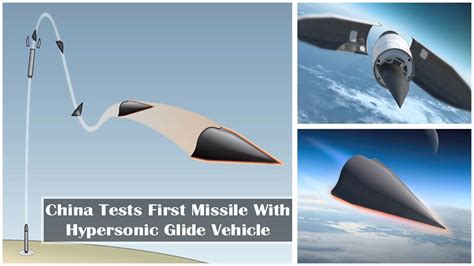
- DF-ZF: A hypersonic glide vehicle deployed with the DF-17 ballistic missile
- YJ-21: An anti-ship hypersonic missile designed for rapid, evasive terminal maneuvers
- DF-100 and Starry Sky-2: Dual-capable cruise missiles with hypersonic velocities
- FOBS-tested DF-41: Equipped with HGVs for near-orbital bombardment capability
These systems underscore a larger strategic narrative: Beijing’s intention to establish global supremacy in next-generation missile technologies, both in offensive capabilities and deterrence posture.
Dual-Use Technology: Civilian & Military Applications
While defense implications dominate headlines, the dual-use potential of RBCC technology is equally compelling. With further refinements, vehicles like the Feitian-2 could serve in multiple roles:
- Hypersonic reconnaissance platforms, enabling rapid global surveillance
- Reusable military drones capable of high-speed penetration into contested airspace
- Next-generation civilian transport, making transcontinental travel possible in under two hours
Such prospects bring China a step closer to mastering reusable hypersonic flight, a feat that currently remains elusive even for leading Western aerospace programs.
Feitian-2: A Systemic Leap, Not an Isolated Event
The Feitian-2 project represents a collaborative effort between NPU and the Shaanxi Province Aerospace and Astronautics Propulsion Research Institute, signifying strong institutional and regional support behind hypersonic R&D in China.
This ecosystem is geared not only towards iterative engineering but also towards creating reusable, sustainable test platforms. The long-term objective is to transition from testbed to deployable systems, integrating autonomous guidance, high-altitude operability, and scalable manufacturing.
This strategic and scientific ecosystem is unmatched in its pace and ambition, contrasting with the more segmented, slower-moving hypersonic initiatives currently underway in the U.S.
U.S. Lags Behind: Wake-Up Call for Western Powers
In contrast, U.S. hypersonic programs remain largely experimental, with key systems like the Hypersonic Air-breathing Weapon Concept (HAWC) or AGM-183 ARRW still undergoing delayed tests and facing budgetary and technical hurdles.
While the U.S. possesses the technological base and industrial scale to eventually catch up, Beijing’s demonstration of working RBCC propulsion, with real-flight autonomous maneuvering, marks a first-of-its-kind operational benchmark. It sends a clear signal: China has matured from merely testing hypersonic concepts to fielding multi-mode, near-operational prototypes.
Conclusion: The Feitian-2 and the Future of Warfare and Flight
The successful test of Feitian-2 signifies more than just a technical achievement—it marks a geostrategic paradigm shift. With a functioning RBCC engine that transitions smoothly across propulsion modes, Beijing has unlocked a critical capability that could redefine not only military conflict but also aerospace mobility and international logistics.
As the global race for hypersonic supremacy intensifies, the Feitian-2 will likely be remembered as the tipping point when China surged ahead, not just in concepts, but in tangible hypersonic performance. Whether the world is ready for this shift remains to be seen—but the technology is already flying above us, faster than ever imagined.