Hypersonic flight—defined as travel at speeds exceeding Mach 5 (3,800 mph)—is rapidly transforming from speculative ambition into a near-future reality. The quest to slash intercontinental travel times from hours to minutes, once the domain of aerospace daydreams, is now being propelled forward by extraordinary advances in materials science, engine technology, and computational design. What once seemed like science fiction—New York to London in under an hour—is now actively being tested in flight labs across the globe.
The modern hypersonic era began not with commercial aviation, but with experimental military and space programs. In 1961, the U.S. Air Force’s X-15 became the first piloted vehicle to cross the hypersonic threshold. But it wasn’t until the 2020s that the dream of Mach 5 passenger travel reentered serious conversation. Today, a handful of trailblazing aerospace startups are resurrecting the dream, aiming to engineer the next great leap in global mobility.
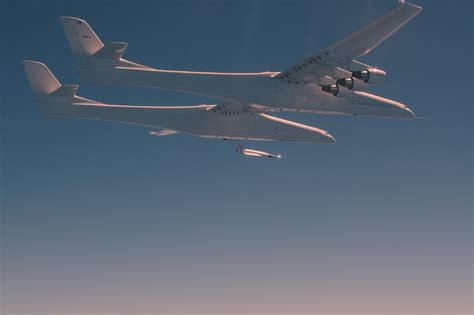
Among the frontrunners is Stratolaunch, a California-based company known for building the Roc, the largest aircraft by wingspan. From Roc’s mid-air launch platform, Stratolaunch drops its Talon-A, a rocket-powered demonstrator that has already approached Mach 5 in flight tests.
Unlike past projects fixated on brute speed alone, today’s hypersonic prototypes prioritize thermal durability, engine efficiency, and cost-effective reusability. Innovations in thermal shielding, materials engineering, and hybrid propulsion systems have drastically improved the feasibility of routine hypersonic travel.
Next-Generation Aircraft: Hermeus, Hypersonix, and Venus Aerospace
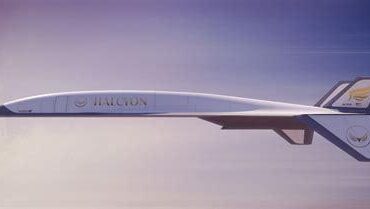
One of the most anticipated entrants is Hermeus, an Atlanta-based startup that’s developed the Halcyon, a 20-seat hypersonic jet slated for commercial and government use. Featuring a dual-mode propulsion system that transitions from turbojet to ramjet, the Halcyon is engineered to cruise above Mach 5, using advanced titanium and nickel-chromium alloys to withstand extreme heat. These alloys can endure temperatures up to 1,800°F without compromising structural integrity.
Hermeus’s proprietary hybrid turbine-ramjet engine exemplifies the next phase of propulsion. Initially functioning as a turbine engine, it seamlessly switches to ramjet mode once sufficient velocity is achieved. This flexibility not only simplifies design but also expands operational ranges.
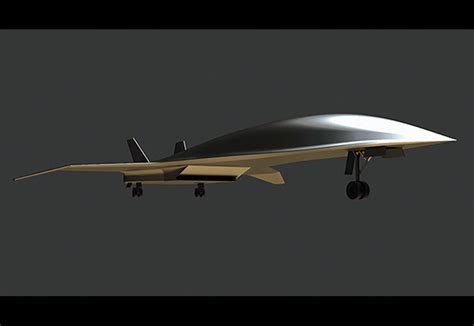
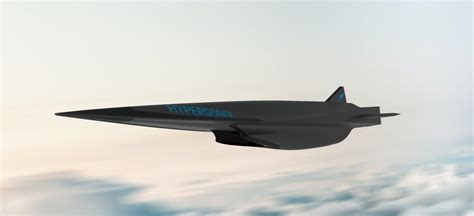
Meanwhile, Australia’s Hypersonix has taken a more modular approach. Its Dart AE demonstrator is a single-use, hydrogen-fueled test vehicle powered by the Spartan scramjet, which is manufactured entirely using 3D-printing techniques. Spartan is optimized to perform beyond Mach 5 and is currently slated for launch with assistance from Rocket Lab at NASA’s Wallops Flight Facility.
Then there’s Venus Aerospace, a Houston-based firm that brings unique propulsion chemistry into the game. Its 12-seat Stargazer employs a cutting-edge rotational-detonation engine that kicks into high gear after passing Mach 1, transitioning to a ramjet configuration. This engine type—long theorized but only recently realized—is prized for its superior energy efficiency and minimal moving parts.
“We’ve reached the tipping point where the theoretical has become testable,” notes Andrew Duggleby, Venus Aerospace CTO. “Combustion breakthroughs and heat-tolerant materials have changed everything.”
Engineering Around Extreme Heat and Drag
One of the central obstacles in hypersonic flight is not propulsion—but frictional heating. At speeds above Mach 5, air compresses violently around an aircraft, causing surface temperatures to skyrocket. Traditional aluminum or steel fuselages would melt under such conditions. That’s why modern designs incorporate exotic composites, carbon-carbon matrices, and thermal tile arrays akin to those used on the Space Shuttle.
In parallel, aircraft geometries have become more streamlined and heat-efficient. Most hypersonic prototypes now favor delta wings, which distribute pressure more evenly and minimize shockwave buildup. These wing shapes also improve maneuverability at high altitudes where atmospheric density is lower.
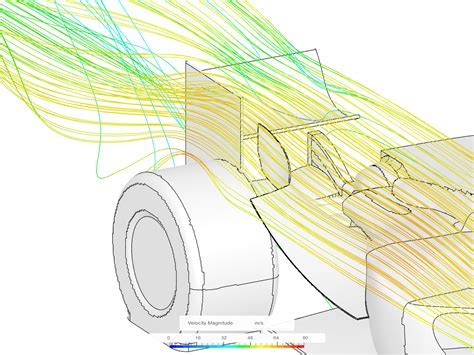
Wind tunnel simulations and computational fluid dynamics (CFD) modeling have further accelerated progress, allowing engineers to iteratively test and refine aerodynamic profiles before real-world trials begin. The goal is simple: maximize lift-to-drag ratios while maintaining surface temperatures within survivable thresholds.
Propulsion: Rocket, Ramjet, or Scramjet?
A critical part of hypersonic flight is choosing the right engine type, and the decision varies depending on use case:
- Rocket Engines: Carry both fuel and oxidizer, making them ideal for space. However, they are heavy and inefficient within the atmosphere.
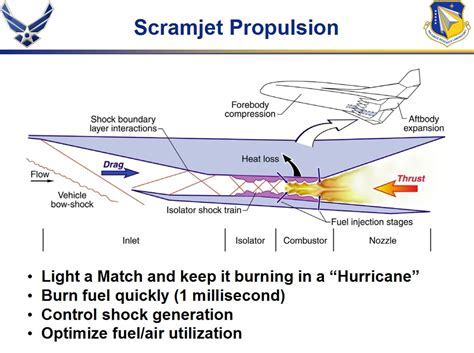
- Ramjets: Simpler and lighter, these engines compress incoming air via shockwaves, then ignite hydrogen fuel. Effective between Mach 2 and Mach 4.
- Scramjets: A supersonic variant of the ramjet, capable of operating well above Mach 5, though requiring an initial booster to reach operational speeds.
Hermeus’s dual-mode system cleverly combines turbine and ramjet capabilities, while Hypersonix’s Spartan aims to bypass rocket stages altogether using pure scramjet propulsion. Meanwhile, Venus Aerospace’s rotational-detonation engine, while still maturing, could become a disruptive wildcard in this triad.
The Commercial Roadblock: Funding, Timelines, and Risk
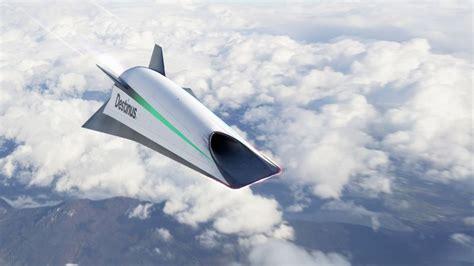
Despite rapid technological gains, commercial hypersonic flight remains firmly in the prototype phase. The largest hurdle is funding. Startups like Switzerland’s Destinus, once promising consumer launches by 2030, have pivoted away from civilian projects toward defense contracting due to lack of capital.
“The tech is mature. The money isn’t,” admits CEO Mikhail Kokorich. Without billions in backing, no hypersonic company can shoulder the astronomical costs of testing, certification, and fleet scaling. And while military partnerships provide lifelines, they also delay commercial timelines.
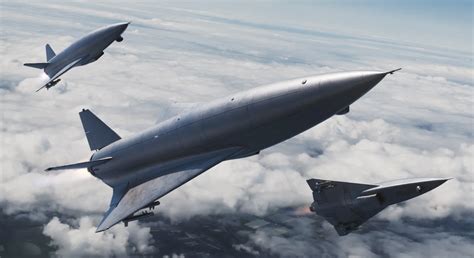
According to insiders, we won’t see hypersonic business jets until the early-to-mid 2030s, and only if current momentum is sustained. Many startups are banking on dual-use technology, with early profits coming from defense and space sectors. But the long-term goal remains: safe, fast, high-frequency hypersonic passenger transport.
Global Implications: Redrawing the Map of Human Mobility
The implications of viable hypersonic transport are staggering. A Mach 5 aircraft could turn a 10-hour flight into a 90-minute commute. Global commerce, international diplomacy, disaster response, and even space tourism would all be reshaped.
However, regulations, airspace coordination, and environmental considerations loom large. Sonic booms, high-altitude emissions, and emergency rerouting protocols must be addressed before any major airline can integrate such aircraft into its fleet.
Yet industry leaders remain optimistic. As Zachary Krevor of Stratolaunch put it, “We’ve made more progress in the past five years than in the previous fifty. The cadence just needs to continue.”
Conclusion: The Supersonic Past, the Hypersonic Future
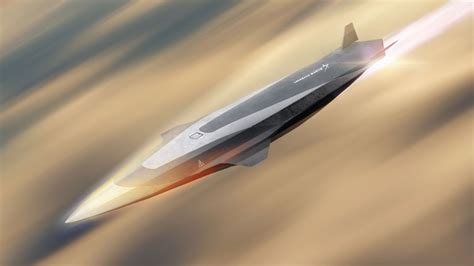
We are on the cusp of a transportation renaissance—one that redefines time, distance, and the very notion of connectivity. From the battered fuselage of the X-15 to the streamlined edge of the Halcyon, hypersonic flight has come a long way. But its greatest test lies ahead: scaling at speed, cost, and safety for all.
In the race for the skies, the future doesn’t just move faster—it moves at Mach 5 and beyond.