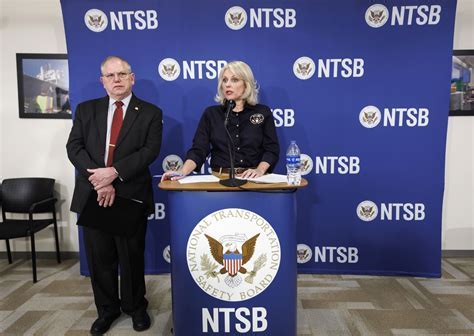
The National Transportation Safety Board (NTSB) stands as a cornerstone institution within the United States, entrusted with the vital mission of investigating civil transportation accidents across multiple domains, including aviation, highways, marine, pipelines, railroads, and hazardous materials releases. Established on April 1, 1967, the NTSB operates as an independent federal agency headquartered in Washington, D.C., with regional offices strategically placed in Anchorage, Aurora, and Federal Way. With a dedicated staff of approximately 437 employees and an operational budget of $145 million (as of 2024), the NTSB’s role is indispensable in uncovering the causes of accidents, formulating safety recommendations, and shaping policies that enhance transportation safety nationwide.
Rooted deeply in a rich historical lineage dating back to the Air Commerce Act of 1926 and early aviation safety boards of the late 1930s, the NTSB evolved through several phases of organizational shifts—transitioning from the Civil Aeronautics Authority to the Civil Aeronautics Board before its formal creation alongside the Department of Transportation in 1967. By 1975, under the Independent Safety Board Act, the NTSB was granted full autonomy, ensuring its investigations remain impartial and focused solely on safety without regulatory conflicts. Since inception, the NTSB has conducted thorough investigations into over 140,000 aviation incidents and thousands of surface transportation accidents, continually contributing to the safer operation of U.S. transportation networks.
Organizational Structure and Governance of the NTSB
The NTSB is governed by a five-member Board appointed by the President and confirmed by the Senate, each serving staggered five-year terms to maintain continuity and institutional knowledge. Importantly, no more than three members can belong to the same political party, ensuring bipartisan oversight. The Board is led by a Chair and a Vice-Chair, with the Chair appointed for a three-year term. As of May 5, 2025, Jennifer Homendy serves as Chair, with Vice-Chair currently vacant, and members include Michael Graham, Thomas B. Chapman, and J. Todd Inman.
This Board is empowered under Title 49 U.S.C. § 1101 et seq. to conduct investigations and issue safety recommendations, though it lacks enforcement authority. Its influence arises from its expert credibility, comprehensive investigative methods, and ability to prompt regulatory agencies like the Federal Aviation Administration (FAA), Department of Transportation, and others to adopt its recommendations. The agency’s budget and staffing enable deployment of highly specialized multidisciplinary teams—“go teams”—composed of 3 to 12 experts who rapidly respond to major transportation incidents with forensic precision.
Comprehensive Investigative Scope and Methodologies
The NTSB’s jurisdiction spans the full spectrum of civil transportation incidents. In aviation, it investigates all U.S. civil accidents and sometimes collaborates with military or commercial space authorities when incidents involve crossover factors. For surface transportation, the Board handles significant highway crashes—including grade crossing collisions—and major rail incidents involving fatalities, injuries, or substantial damage. Marine investigations are conducted in partnership with the U.S. Coast Guard, as stipulated by memoranda of understanding, ensuring efficient resource sharing and expertise exchange. Additionally, the Board investigates pipeline failures that result in fatalities, significant damage, or environmental harm.
When criminal elements are suspected in an accident, the NTSB defers primary investigation responsibility to the FBI but continues to provide critical technical support. This was evident in landmark cases such as the PSA Flight 1771 sabotage and the 9/11 terrorist attacks. Internationally, the NTSB often assists foreign authorities investigating U.S.-registered or manufactured aircraft, though such cooperation is bounded by confidentiality and legal restrictions.
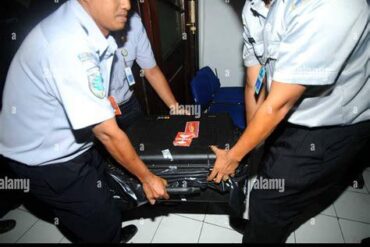
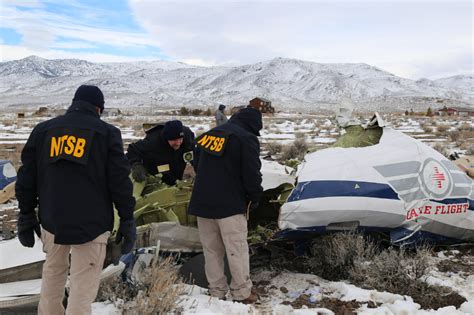
The agency’s investigative process is methodical and exhaustive. Upon notification of a major accident, a go team is dispatched immediately to secure the site, collect evidence, interview witnesses, and coordinate with local authorities. The team rigorously reconstructs the events leading to the accident, examining flight data recorders, vehicle black boxes, structural integrity, human factors, environmental conditions, and compliance with operational protocols. Survivability analyses focus on structural integrity and forces endured, using a threshold of 5 G’s to evaluate whether occupants could have survived.
Public hearings often follow initial fact-finding to clarify complex technical details and allow stakeholders—including victims’ families, industry representatives, and regulatory officials—to participate. Final investigative reports provide detailed narratives, causation analysis, and actionable safety recommendations aimed at preventing future tragedies.
The NTSB Party System: Collaborative Yet Controversial
Integral to the NTSB’s investigative methodology is the “party system,” wherein the Board invites participation from industry experts, labor representatives, and manufacturers under strict supervision. This system enables the Board to leverage specialized technical knowledge from those familiar with the equipment and operations involved. However, it explicitly excludes attorneys and insurance companies to prevent conflicts of interest.
While this approach has generally enhanced investigation quality, it has faced criticism for potential bias and information withholding. A notable controversy arose following the TWA Flight 800 accident investigation, where Boeing withheld a critical fuel tank safety study. A 2000 RAND Corporation review recognized the system’s value but recommended minimizing reliance on parties to reduce conflict risks. Despite these calls, most recommendations have remained unimplemented, reflecting ongoing challenges in balancing collaboration with independent inquiry.
Pivotal Safety Recommendations and Their Lasting Impact
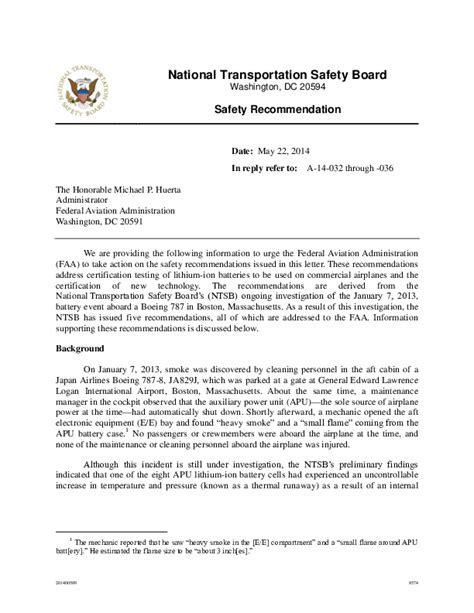
Since its formation, the NTSB has issued approximately 14,000 safety recommendations, with an impressive adoption rate of around 73%. The agency’s “Most Wanted List” highlights priority issues to focus regulatory and industry efforts on critical safety improvements.
In aviation, landmark achievements include mandating collision avoidance systems, ground proximity warning systems (GPWS), wind shear alert technology, smoke detectors in lavatories, and fuel tank inerting systems—all contributing to a measurable reduction in fatal crashes and onboard fires. Highway safety improvements championed by the NTSB encompass graduated driver licensing, raising the minimum legal drinking age to 21, smart airbag implementation, and enhanced commercial driver licensing standards. Rail safety advances driven by the Board include positive train control systems, improved emergency exits, and innovative double-shelf couplers to prevent derailments.
Marine safety has seen adoption of stricter boating regulations, fire suppression systems on cruise ships, and lifesaving equipment for fishing vessels, while pipeline safety initiatives focus on excavation damage prevention, corrosion control, and automated shut-off valves. The NTSB also promotes multimodal policies such as comprehensive drug and alcohol testing regimes across transportation sectors to improve operator fitness and safety.
The NTSB’s Additional Roles: Adjudication and Training
Beyond investigation and recommendation, the NTSB serves an appellate function, reviewing administrative law judge decisions in FAA and Coast Guard license suspension cases. This quasi-judicial role ensures due process and consistency in disciplinary actions involving transportation personnel.
Historically, the agency maintained a National Training Academy in Ashburn, Virginia, which provided specialized courses in accident investigation techniques and safety management. This facility housed a full-scale 90-foot reconstruction of the TWA 800 Boeing 747, serving as a practical training asset. Although decommissioned in 2021 in favor of advanced 3D scanning technologies, the training academy underscored the NTSB’s commitment to advancing investigator expertise and embracing cutting-edge tools.
Conclusion: The Indispensable Role of the NTSB in U.S. Transportation Safety
The National Transportation Safety Board remains the preeminent federal entity dedicated to investigating and improving the safety of America’s transportation infrastructure. Its unwavering commitment to impartial, comprehensive investigations and influential safety recommendations has saved countless lives and reshaped national safety standards. While challenges persist, particularly regarding collaborative investigation models and enforcement authority, the NTSB’s legacy of meticulous research, transparency, and advocacy endures.
Its role as an independent watchdog and expert advisor ensures that lessons learned from tragic accidents translate into meaningful actions, making transportation safer for millions of Americans every day. As transportation technologies evolve—including unmanned aerial systems, commercial spaceflight, and autonomous vehicles—the NTSB’s expertise and adaptability will continue to be vital in addressing emerging safety challenges.