Florida’s education system stands at the cusp of a technological revolution in school safety, as a groundbreaking new initiative—Campus Guardian Angel—aims to deploy drones to enhance emergency response times and situational awareness during school threats. With Leon County Schools emerging as a potential test site, this state-funded pilot program represents a bold step toward transforming how school security operates across the Sunshine State.
At the heart of this innovation is the integration of drone technology into existing school safety protocols, allowing law enforcement and school security teams to respond to threats with real-time intelligence, speed, and precision. With a state allocation of $557,000, the program has begun to attract widespread attention across Florida’s educational and law enforcement communities.
Eyes in the Sky: How the Program Works
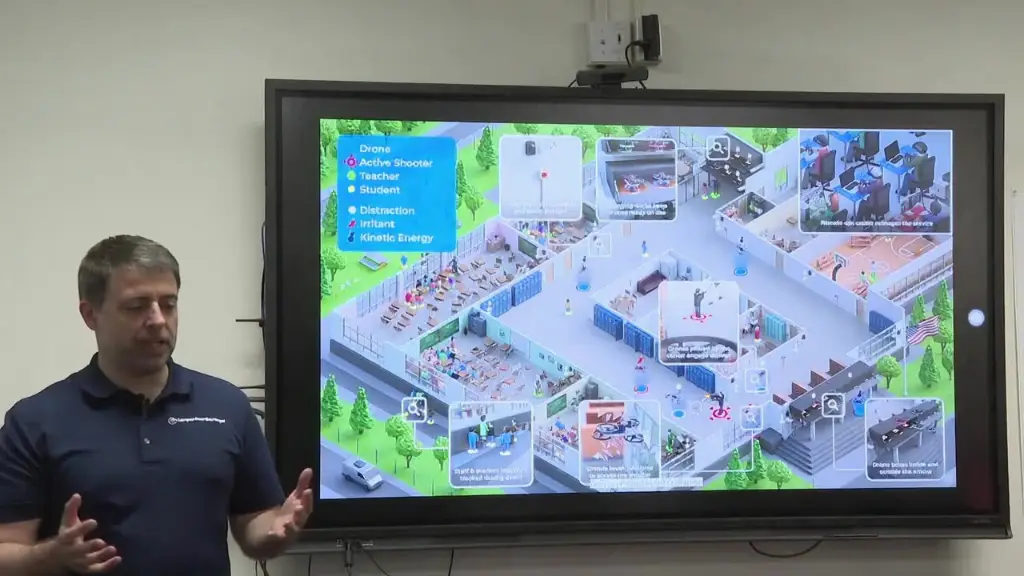
The Campus Guardian Angel system is designed for immediate drone deployment in response to emergency situations. These unmanned aerial vehicles (UAVs) are stationed nearby and can be airborne within seconds of a distress signal. Once deployed, they provide live-streamed video to law enforcement, giving officers an aerial overview of the situation even before they arrive on the scene.
During a live demonstration at the Leon County Schools District Security Center, drones were seen executing launch protocols, streaming real-time video feeds, and simulating coordinated law enforcement responses. The demonstration underscored how such drones can offer crucial situational intelligence—including suspect location, crowd behavior, and environmental obstacles—far more efficiently than traditional surveillance systems.
In addition to surveillance, the drones are equipped to deploy non-lethal deterrents that can temporarily delay or distract threats, buying precious time for responders and potentially saving lives. These deterrents could include disorienting lights, sirens, or even audio communication to direct individuals during chaotic moments.
Law Enforcement Endorsement and Community Support
Leon County Superintendent Rocky Hanna attended the demonstration and emphasized the importance of evaluating return on investment when integrating new technologies into school safety infrastructure. “We have security monitors in all our schools, AI-powered camera systems, and even weapons-detection K-9 units. All of this comes at a cost,” Hanna stated. “Drones add another layer, and with tight budgets, we must consider where we get the biggest bang for our buck.”
Jimmy Williams, Chief of Safety, Security, and Emergency Management for the district, echoed the sentiment but added a critical point: no matter how advanced the tools become, community engagement remains the strongest defense. “Our number one resource for school safety and security is our community. If you see something, you hear something, please say something,” Williams stressed, reaffirming the human element behind all security measures.

The Numbers Behind the Concern
Florida’s motivation for innovation isn’t arbitrary. According to the K–12 School Shooting Database, the state has recorded over 60 school shooting incidents since 2018, placing it among the most affected states in the nation. These alarming statistics have intensified calls for both preventative and responsive measures.
The Campus Guardian Angel initiative fits squarely into that response strategy. By offering near-instant visual access to unfolding threats, drones can help prevent the kind of tactical blind spots that have historically complicated response efforts.
While the pilot program currently covers only three school districts, Leon County is being seriously considered. With its prior investment in AI software and canine security patrols, the district already demonstrates a forward-thinking approach to campus protection, making it a natural candidate for the trial.
The Budget Dilemma: Innovation vs. Affordability
Though $557,000 has been secured to fund the pilot phase, full implementation across an entire district could cost more than $1 million, a figure that raises real concerns amid ongoing state budget cuts. The dilemma is clear: while the need for upgraded security systems is urgent, the financial realities pose significant challenges.
Superintendent Hanna notes that each added safety measure—from AI camera networks to school resource officers—comes with a cumulative price tag. Deciding whether to scale up the drone initiative depends on a broader cost-benefit analysis that evaluates both financial feasibility and measurable impact on safety.
Technology Meets Protocol: Drones as a Safety Tool, Not a Replacement
Despite the excitement surrounding drone capabilities, school officials caution against viewing them as a silver bullet. Instead, these aerial systems are seen as augmentative tools that can enhance existing procedures. Drones will not replace school resource officers, emergency drills, or the role of vigilant staff members. Rather, they provide an extra dimension of security, particularly in unpredictable, fast-moving scenarios.
One of the key advantages is early intervention. With a drone’s bird’s-eye view, decision-makers can more accurately determine whether a lockdown is necessary, what evacuation routes are safest, and where first responders should concentrate their efforts. This dramatically reduces the margin for error in critical moments when every second matters.
Privacy, Policy, and the Public Debate
Any time surveillance expands, questions of privacy and oversight inevitably follow. Some parents and advocacy groups have expressed concern over the potential for drone misuse or mission creep—where technology introduced for safety eventually expands into less acceptable forms of monitoring.
Program leaders are working to address these concerns proactively. Clear policies are being drafted to define when and how drones can be used, who has access to the data, and how long footage is stored. Stakeholder meetings with parents, students, and civil rights organizations will be essential in shaping a transparent, community-approved framework.
Statewide Implications and Long-Term Potential
If the pilot proves successful, the Campus Guardian Angel program could become a model for other states looking to modernize school safety. Florida, with its diverse school populations and varied district sizes, presents an ideal testing ground. A rollout in Leon County would provide useful metrics on drone response times, false alarms, operational reliability, and cost-efficiency.
Long-term, the system could integrate with AI threat detection platforms, enabling drones to launch autonomously based on real-time data from surveillance feeds. Schools might also employ them in other scenarios—like natural disaster response, missing student alerts, or large event crowd control.
Conclusion: A New Era of School Safety?
The Campus Guardian Angel program signals a decisive shift toward embracing technology in education—not just for learning, but for life-saving preparedness. With the rising frequency of threats to school campuses, solutions that offer speed, precision, and proactive capability are no longer futuristic concepts but present-day necessities.
Leon County’s consideration for this pilot puts it at the forefront of a potentially nationwide transformation. If the program delivers on its promise of faster response times and better situational intelligence without infringing on student rights, it could redefine what safety looks like in the American school system.
Whether this vision becomes reality will depend not only on the performance of drones in real-world scenarios, but also on the public’s willingness to fund, regulate, and trust them as part of the broader school safety ecosystem.