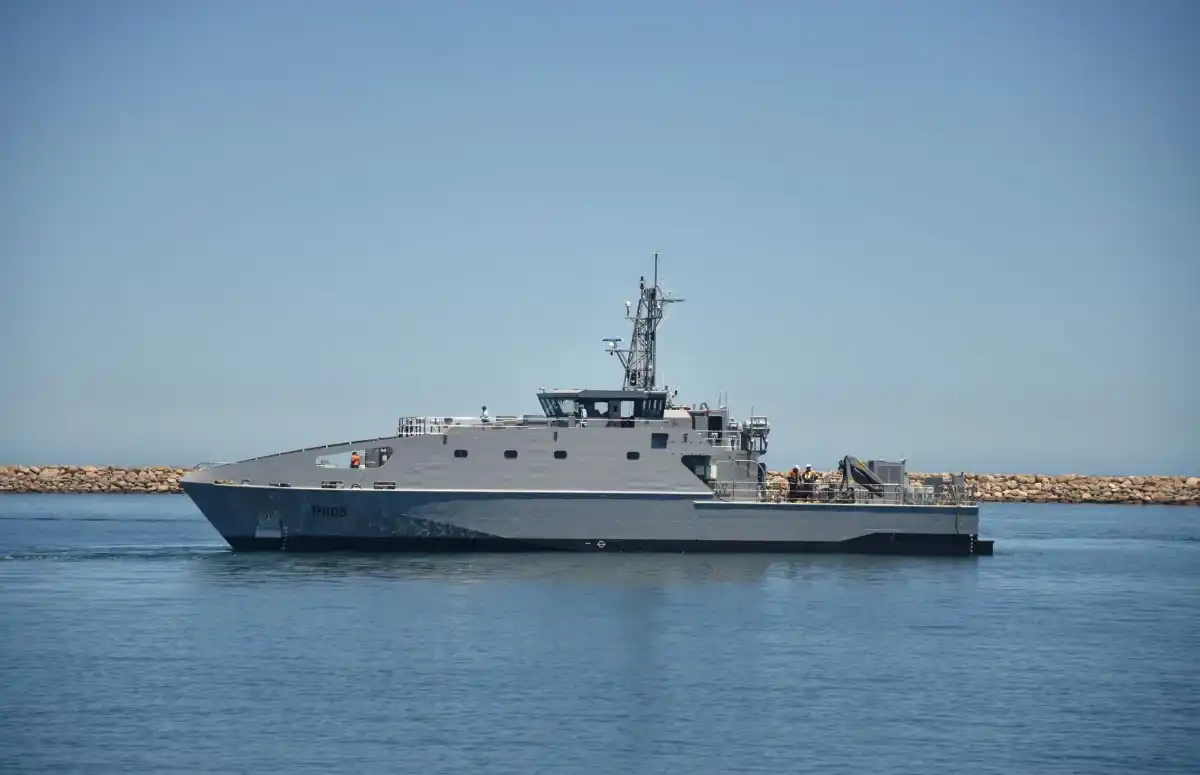
Australia has formally completed one of its most consequential regional defense initiatives with the launch of the final Guardian-class Patrol Boat, closing the SEA3036-1 Pacific Patrol Boat Replacement Project. The program’s conclusion in January 2026 represents far more than the delivery of a vessel. It signals the culmination of a long-term strategy designed to reinforce Pacific maritime governance, deter illegal activity at sea, and anchor Australia’s strategic influence across a vast and increasingly contested oceanic region.
For Pacific island nations whose economic lifelines depend on the integrity of their exclusive economic zones, maritime control is not an abstract security concept. Fisheries protection, counter-smuggling operations, humanitarian response, and sovereignty enforcement all hinge on persistent patrol capability. The Guardian-class was conceived to meet exactly these needs, translating Australian shipbuilding expertise into durable, partner-focused maritime power.
Australia’s decision to invest heavily in this program reflects a clear-eyed understanding of regional realities. The South Pacific spans millions of square kilometers, yet many island states operate with minimal naval assets and limited surveillance coverage. By supplying modern, interoperable patrol vessels alongside training and sustainment support, Canberra has sought to close this gap in a way that aligns security assistance with long-term regional stability.
Strategic Completion of the SEA3036-1 Program
The final vessel, designated Hull 544, was launched by Australian shipbuilder Austal, marking the delivery of all 24 Guardian-class patrol boats envisioned under SEA3036-1. Of these, 22 were transferred to Pacific island nations and Timor-Leste, while two were retained by Australia for training, testing, and ongoing regional support roles. This structure ensured operational continuity while embedding Australian oversight into the broader fleet ecosystem.
From its inception in 2014, the program was designed as a replacement for the aging Pacific-class patrol boats introduced in the late Cold War era. Those vessels, while historically important, were increasingly unsuited to modern maritime challenges. The Guardian-class was engineered as a clean-sheet solution, optimized for endurance, reliability, and simplicity rather than high-end combat complexity.
The delivery timeline, stretching from first steel cut in 2017 to final launch in 2026, also reflects the program’s industrial ambition. Austal transitioned its Henderson shipyard into a high-rate steel ship production facility, a shift that has since strengthened Australia’s broader naval manufacturing base.
Guardian-Class Design Tailored for the Pacific
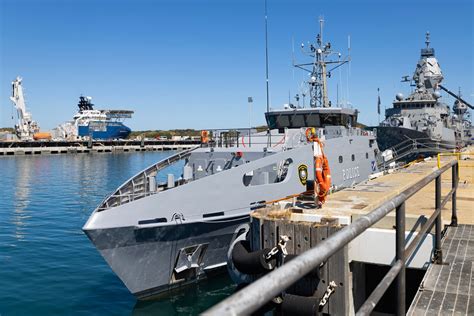
At 39.5 meters in length and displacing roughly 240 tons, the Guardian-class patrol boat strikes a deliberate balance between size, capability, and maintainability. The steel hull provides robustness for long-duration operations in open ocean conditions, while the vessel’s relatively modest displacement keeps lifecycle costs within reach for smaller navies.
Propulsion is provided by twin diesel engines driving fixed-pitch propellers, enabling a top speed of approximately 20 knots and an operational range exceeding 3,000 nautical miles. This range is critical in the Pacific, where patrol areas are vast and logistical support points are sparse. With an endurance of up to 20 days, the Guardian-class allows sustained presence operations rather than short, symbolic patrols.
Onboard systems are equally pragmatic. A modern navigation radar suite, secure communications, and electro-optical sensors enable day-night surveillance and coordinated operations with regional and Australian forces. Armament centers on a stabilized 30 mm cannon, supported by heavy and medium machine guns, offering credible enforcement capability without escalating the vessels into offensive warship roles.
A stern launch ramp for rigid-hulled inflatable boats significantly enhances boarding, search and rescue, and law enforcement missions, particularly in rough sea states common across the South Pacific.
Maritime Governance as Strategic Influence
The Guardian-class program sits squarely at the intersection of security assistance and geopolitical competition. As China’s presence in the Pacific has expanded through infrastructure investment, policing agreements, and port access, maritime security has emerged as a subtle but decisive arena of influence. Control over fisheries and sea lanes directly affects national revenue and political autonomy for island states.
By delivering patrol boats designed specifically for local operational realities, Australia has reinforced a rules-based maritime order without resorting to overt military signaling. The vessels empower partner nations to police their own waters, reducing reliance on external actors while strengthening interoperability with Australian-led regional frameworks.
Unlike larger offshore patrol vessels operated by major navies, the Guardian-class avoids technical overreach. Its systems are maintainable with limited shore infrastructure, and training pipelines were built into the program from the outset. This approach has helped ensure that vessels remain operational rather than becoming pier-side liabilities.
Industrial and Regional Legacy
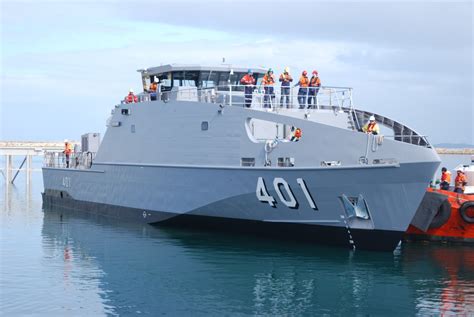
Beyond regional security outcomes, SEA3036-1 has left a lasting industrial footprint. Austal’s experience in serial steel ship production has reshaped its manufacturing processes, workforce skills, and supply chain resilience. These gains now inform other Australian naval programs and position the company more competitively in the global patrol vessel market.
For Australia, the completion of the Guardian-class fleet closes a chapter in which defense diplomacy was executed through consistency rather than spectacle. Each patrol boat represents not only steel and machinery, but also training exchanges, maintenance partnerships, and enduring strategic relationships.
As Hull 544 enters service, the Guardian-class stands as a quiet but powerful instrument of maritime control. In a region defined by distance, dependence on the sea, and growing strategic pressure, Australia’s investment has fundamentally reshaped how Pacific nations protect their waters and, by extension, their sovereignty.