Canada and Portugal have deepened their defense cooperation with a $39 million government-to-government agreement to upgrade five Portuguese Air Force P-3C Orion maritime patrol aircraft, strengthening NATO’s surveillance and anti-submarine warfare capabilities across the Atlantic Ocean. The modernization program will introduce new communications systems, advanced mission electronics, and improved data management architecture, ensuring the aircraft remain operationally relevant for years to come.
The contract, signed on March 9, 2026, will be implemented through the Canadian Commercial Corporation (CCC) and carried out by General Dynamics Mission Systems–Canada, a major defense technology provider based in Ottawa. The upgrade program aims to extend the operational life of Portugal’s Orion fleet while enhancing its ability to conduct complex maritime missions such as submarine detection, intelligence gathering, and long-range surveillance across the vast North Atlantic.
Beyond its military significance, the project also reinforces industrial cooperation between the two NATO allies. The modernization effort is expected to support approximately 50 highly skilled jobs in Canada’s defense and aerospace sector, while simultaneously ensuring that Portugal maintains a credible long-range maritime patrol capability in support of NATO operations and Atlantic security.
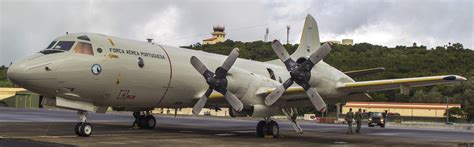
Canada–Portugal Defense Partnership Expands Through Orion Modernization
The newly announced contract builds on a longstanding pattern of defense collaboration between Canada and Portugal, reflecting broader strategic cooperation within NATO. By leveraging Canadian aerospace expertise and Portugal’s operational requirements, the modernization initiative creates a mutually beneficial arrangement that enhances both countries’ defense capabilities.
General Dynamics Mission Systems–Canada will lead the technical work, integrating updated mission systems designed to replace aging avionics and communication equipment on the aircraft. These upgrades are expected to significantly improve sensor integration, real-time data processing, and mission coordination, all critical elements in modern maritime patrol operations.
The modernization package also includes the installation of the Airborne Data Management System (ADMS), a Canadian-developed digital architecture designed to process large volumes of operational data gathered during surveillance missions. This system allows the aircraft’s onboard sensors, communications equipment, and mission management software to operate in a unified environment, giving crews greater situational awareness while conducting maritime patrols.
Importantly, the same system architecture has already been proven through its integration on Canada’s CP-140 Aurora Block IV long-range patrol aircraft, a modernized variant of the Orion platform operated by the Royal Canadian Air Force. By adapting the technology to Portugal’s aircraft, engineers can streamline installation and ensure compatibility with NATO communication networks.
Halifax Facilities Play Central Role in Aircraft Upgrades
A significant portion of the modernization work will take place at IMP Aerospace & Defence facilities in Halifax, Nova Scotia, one of Canada’s most experienced aircraft maintenance and modification centers. The company has previously handled extensive modernization programs for maritime patrol aircraft and military transport platforms.
The partnership between General Dynamics Mission Systems–Canada, IMP Aerospace & Defence, and the Canadian Commercial Corporation forms the backbone of the upgrade program. While General Dynamics provides the mission systems and technical expertise, IMP Aerospace will handle installation, structural integration, and flight testing to ensure the systems perform reliably in operational conditions.
Portugal’s modernization effort is not entirely new. In fact, the current project follows an earlier phase of upgrades that began in 2022, when Portugal initiated a broader plan to sustain and enhance its Orion fleet. The first aircraft involved in that earlier program entered modification in October 2023, marking the beginning of a multi-year modernization process.
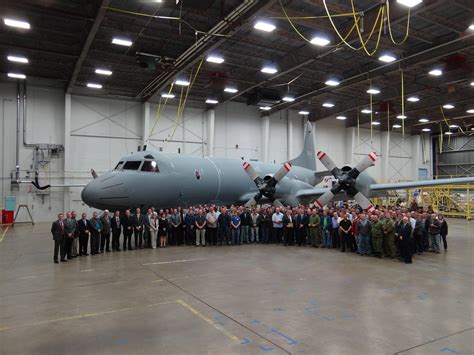
The continued investment in these aircraft reflects Portugal’s determination to maintain an effective maritime patrol capability without immediately replacing the platform. By updating avionics and mission electronics, the aircraft can continue performing their core roles despite the platform’s Cold War origins.
Portugal’s P-3C Fleet and Its Role in Atlantic Security
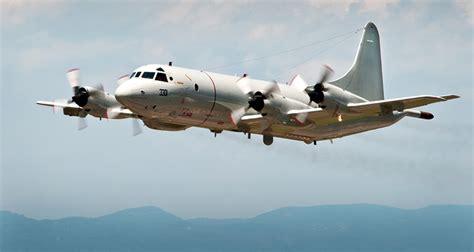
Portugal operates its Orion fleet through 601 Squadron “Lobos”, based at Beja Air Base in southern Portugal. The unit serves as the country’s primary provider of long-range maritime patrol operations, monitoring a vast area that includes Portuguese territorial waters, the Azores archipelago, and large sections of the Atlantic Ocean.
Portugal’s current fleet structure traces back to a series of acquisitions over several decades. Initially, the country operated P-3P aircraft converted from former Royal Australian Air Force P-3B models acquired during the late 1980s. These aircraft served Portugal for more than two decades before their final operational flight on October 13, 2011.
The modern fleet was established in 2006, when Portugal acquired five P-3C Orion aircraft from the Royal Netherlands Navy. The transfer included three P-3C Update II.5 aircraft and two P-3C CUP CG variants, which were subsequently upgraded between 2008 and 2010 to the P-3C CUP+ configuration. These earlier modifications added improved surveillance sensors and defensive systems such as missile warning and laser detection equipment.
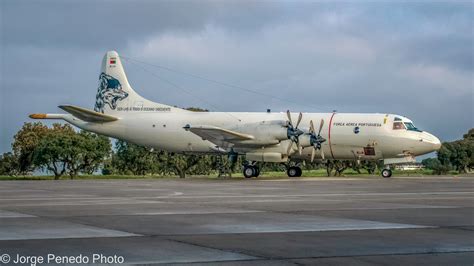
To sustain the fleet long-term, Portugal later acquired six additional P-3C airframes from Germany, along with spare parts, support equipment, and flight simulators. These additional aircraft are not necessarily all operational; instead, they provide structural reserves and components that help maintain the primary patrol aircraft in active service.
This layered fleet strategy allows Portugal to maintain several operational aircraft while ensuring spare structures and training systems remain available, extending the fleet’s overall lifespan.
The Enduring Legacy of the P-3 Orion Maritime Patrol Aircraft
The Lockheed P-3 Orion remains one of the most recognizable maritime patrol aircraft ever produced. Developed in the United States during the Cold War, the aircraft was derived from the Lockheed L-188 Electra turboprop airliner and designed specifically for long-range anti-submarine warfare missions.
The prototype Orion conducted its first flight in November 1959, and by August 1962 it had entered operational service with the United States Navy, replacing the older Lockheed P2V Neptune. The new aircraft combined the efficiency of a turboprop airliner with specialized military features tailored for maritime warfare.
Structural modifications distinguished the Orion from its civilian predecessor. The aircraft incorporated an internal bomb bay for anti-submarine weapons, additional sensor stations for mission operators, and a distinctive magnetic anomaly detector (MAD) housed in a long tail boom used to identify the magnetic signature of submerged submarines.
Production of the Orion family continued from 1961 until 1990, ultimately reaching 757 aircraft built by Lockheed in the United States and Kawasaki in Japan under license. Over the decades, the aircraft has served with numerous air forces and naval aviation units worldwide, becoming a cornerstone of maritime patrol operations.
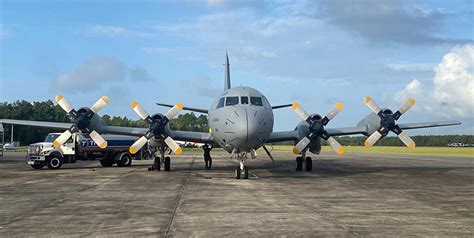
Performance and Technical Characteristics of the P-3C Orion
The P-3C Orion variant operated by Portugal represents one of the most capable versions of the aircraft. It is powered by four Allison T56-A-14 turboprop engines, each delivering approximately 4,910 shaft horsepower. These engines drive large Hamilton Standard 54H60-77 propellers measuring over four meters in diameter, providing the thrust needed for long-endurance patrol flights.
The aircraft measures 35.61 meters in length, with a wingspan of 30.38 meters and a height of 10.27 meters. Depending on configuration, the maximum takeoff weight can reach 64,410 kilograms, allowing the aircraft to carry large fuel loads and mission equipment for extended operations.
One of the Orion’s greatest strengths lies in its remarkable endurance. With a ferry range approaching 8,950 kilometers and patrol endurance often exceeding 12 hours, the aircraft can monitor vast ocean regions during a single mission. Under certain operational profiles, missions lasting more than 17 hours are possible, making the Orion exceptionally suited for maritime surveillance.
Advanced Sensors and Anti-Submarine Warfare Capabilities
A typical P-3C Orion crew consists of approximately 11 personnel, including pilots, naval flight officers, engineers, sensor operators, and technical specialists. This large crew reflects the aircraft’s role as a flying command center capable of managing complex maritime operations.
The aircraft integrates a diverse set of detection and surveillance systems designed to locate surface ships and submarines. Among its primary sensors is the Raytheon AN/APS-115 maritime surveillance radar, capable of scanning wide ocean areas for ships and other surface targets. Complementing this system is the AN/APS-137 inverse synthetic aperture radar, which allows operators to generate high-resolution radar images for target identification.
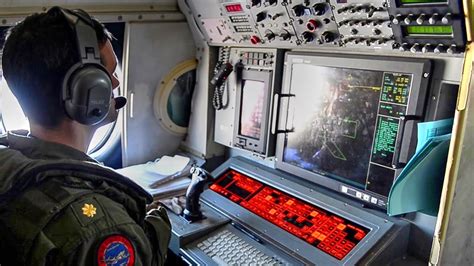
Acoustic detection systems play a critical role in anti-submarine warfare missions. The Orion can deploy sonobuoys—small acoustic sensors dropped into the ocean—to detect submarine noise across wide areas. Data from these sensors is processed onboard to track underwater targets.
Additional surveillance tools include electronic support measures (ESM) that monitor radar emissions, as well as electro-optical and infrared imaging systems that provide visual confirmation of detected contacts. When the aircraft flies low over suspected submarine positions, the magnetic anomaly detector in the tail boom can identify disturbances in the Earth’s magnetic field caused by large metal objects beneath the water.
Weapon Systems and Mission Flexibility
The Orion’s internal weapons bay and external hardpoints allow it to carry a wide range of maritime warfare ordnance. Anti-submarine missions typically involve torpedoes such as the Mk46, Mk50, and Mk54, capable of engaging underwater targets after being released from the aircraft.
For surface warfare missions, the aircraft can carry AGM-84 Harpoon anti-ship missiles, enabling it to strike hostile vessels from stand-off range. Additional weapon options include AGM-65 Maverick missiles, naval mines, rockets, and depth charges, allowing commanders to tailor the aircraft’s loadout depending on the mission.
These weapons, combined with the Orion’s powerful sensors and long endurance, have ensured the platform remains relevant even decades after its introduction. Through modernization programs like the Canada-Portugal upgrade initiative, the aircraft continues evolving to meet modern maritime security demands.
As NATO increasingly prioritizes Atlantic maritime surveillance and submarine tracking, maintaining capable patrol aircraft is becoming more important than ever. The modernization of Portugal’s Orion fleet not only extends the life of a proven platform but also strengthens NATO’s collective ability to monitor and protect one of the world’s most strategically vital ocean regions.