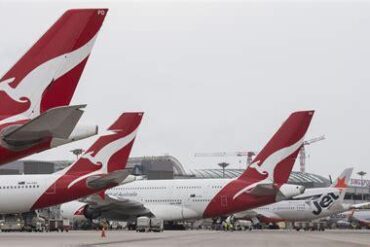
Qantas has officially re-entered the European air freight market with a landmark three-year partnership with Global GSA Group, a major player in international cargo sales and logistics. This move comes amid rising global e-commerce demand and the need for enhanced freight capacity between Europe and Oceania. The agreement positions Qantas Freight to maximize the reach and efficiency of its cargo operations from two major European airports—Rome Fiumicino and Paris Charles de Gaulle—directly into Australia.

Strategic Alliance to Expand Qantas’ Cargo Footprint in Europe
This collaboration is more than just a commercial arrangement—it is a strategic infrastructure decision aimed at solidifying Qantas’ logistics pipeline across Europe. Under the terms of the deal, Global GSA Group will take the reins as the general sales agent (GSA) for Qantas Freight across mainland Europe, providing full cargo management services for flights departing from Paris and Rome.
According to Igor Kwiatkowski, Qantas Freight’s Executive Manager, this partnership marks a pivotal step in the airline’s plan to streamline and scale its European cargo operations. “We are thrilled to partner with an experienced GSA like Global GSA Group to offer our customers more efficient and flexible air freight services from Europe,” said Kwiatkowski. “This strategic partnership allows us to make the most of cargo network in the region and make it easier for freight forwarders to access our capacity from Europe to Australia.”
Enhanced Capacity with Boeing 787-9 Operations
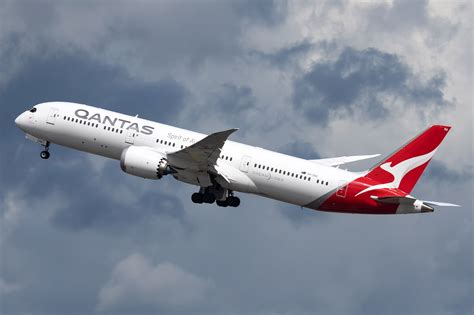
The operational foundation of this partnership rests on Qantas’ fleet of Boeing 787-9 aircraft, which provide robust cargo capacity. Qantas currently operates three weekly seasonal flights from Rome’s Fiumicino Airport, with service tailored to coincide with the European summer surge in air cargo. These services allow Qantas to tap into a traditionally high-volume period with efficient widebody aircraft.
In addition to the seasonal Rome route, Qantas also provides year-round service from Paris Charles de Gaulle, with three weekly 787-9 flights that offer a weekly cargo uplift of approximately 45 tonnes. These operations offer substantial capacity for e-commerce, perishables, and high-value goods destined for Australia and further into Oceania.
Global GSA Group: A European Freight Powerhouse
Global GSA Group, with its headquarters in Europe and commercial presence in 25 European countries, is uniquely positioned to support Qantas’ ambitious cargo growth plan. The group is known for its strong interline agreements and digital freight technologies, offering integrated solutions for airlines looking to maximize their load factors and optimize their global reach.
CEO Aytekin Saray highlighted the synergies between the two organizations during the signing ceremony. “As the only Australian carrier providing direct services from two European ports to Australia with connections to broader Oceania destinations, Qantas offers a huge network of opportunity for European freight forwarders,” Saray said. “Global GSA Group looks forward to supporting Qantas as it expands its cargo offerings from Europe, leveraging our solid presence on this continent.”
Market Context: Re-entering a Competitive Landscape
Qantas’ re-entry into the European cargo market is not just timely—it’s strategically calculated. The European freight corridor has experienced notable volatility in recent years, with global events such as the COVID-19 pandemic, Brexit-related customs restructuring, and geopolitical tensions in Eastern Europe affecting supply chains. Yet, demand for reliable air freight capacity continues to grow, driven primarily by e-commerce logistics, pharmaceutical shipments, and high-value manufacturing.
In this competitive environment, Qantas’ offering—direct belly cargo services to Australia, managed by a seasoned GSA—becomes a highly attractive proposition for freight forwarders and shippers seeking both reliability and speed.
E-Commerce Demand Fuels Cross-Continental Cargo Routes
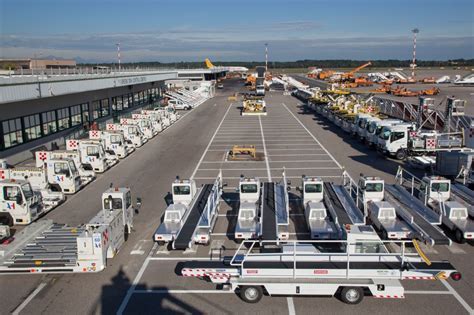
One of the main drivers behind Qantas’ decision to scale its European cargo services is the sustained growth in global e-commerce. The shift in consumer behavior toward fast, international delivery—accelerated by the pandemic—has not abated. Europe-to-Oceania freight volumes are heavily influenced by consumer electronics, fashion, and health products, many of which demand timely delivery and end-to-end tracking.
With the Boeing 787-9’s significant cargo hold capacity and the support of Global GSA Group’s sales and operational infrastructure, Qantas is now positioned to become a preferred cargo partner for businesses shipping from Europe to Australia and New Zealand.
Benefits for Freight Forwarders and Regional Logistics
For European freight forwarders, the new agreement introduces several tangible benefits:
- Direct access to Qantas’ widebody cargo capacity from two central European hubs.
- Reduced transit times to Oceania destinations due to non-stop or single-stop routing.
- Centralized cargo booking and support services via Global GSA Group’s unified platform.
- Integrated customs and compliance support, enhancing the speed of cargo clearance.
These advantages are not just theoretical. With the seasonal and year-round services available and clearly defined freight capacities, forwarders can plan more efficiently, mitigating risk and responding more rapidly to client needs.
Qantas: The Only Australian Carrier Flying Direct from Europe
A point that distinguishes Qantas from competitors is its unique position as the only Australian airline offering direct flights from both Rome and Paris to Australia. This exclusive capability means Qantas can avoid the delays and complexities of third-country transfers, providing faster, more reliable service that is particularly critical for temperature-sensitive or high-priority cargo.
Moreover, the connectivity that Qantas offers from Australia to domestic and regional ports in Oceania—including key destinations in New Zealand, Papua New Guinea, and Pacific Island nations—extends the value of its freight network far beyond Australia’s major cities.
Future Outlook: Building a Scalable Cargo Ecosystem
The three-year agreement with Global GSA Group is only the first phase of a broader vision for Qantas Freight. With global freight dynamics shifting rapidly due to climate considerations, supply chain digitalization, and increased pressure on emission reductions, Qantas aims to develop a scalable and sustainable cargo ecosystem.
In this context, the partnership also opens avenues for enhanced data sharing, digital booking platforms, and predictive load management, all of which are becoming standard in modern air cargo operations. By aligning with Global GSA, Qantas is not just adding European flights—it’s laying the groundwork for a next-generation cargo strategy.
A Milestone for Qantas Freight’s Global Strategy
The signing of this agreement by Mallory Logan, Qantas Freight’s Head of Global Sales, alongside Global GSA Group’s CEO Aytekin Saray, marks a clear milestone for the airline’s international logistics roadmap. For Qantas, this is not a return to Europe—it is a calculated advance, aimed at seizing a larger share of the cross-continental cargo market.
As Qantas builds out its air cargo capabilities through strategic partnerships, advanced aircraft utilization, and regional alliances, it is clear that freight is no longer the side business it once was. Instead, it has become a central pillar of profitability and resilience for airlines in a post-pandemic economy.
With the support of Global GSA and a firm operational presence in Europe, Qantas Freight is poised to offer faster, smarter, and more connected cargo services that meet the demands of modern global commerce. The coming years will determine how successfully this collaboration can scale—but if the infrastructure and strategic alignment are any indicators, Qantas’ European air cargo ambitions are well on their way to cruising altitude.