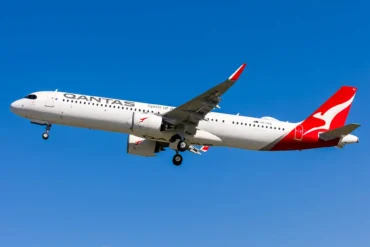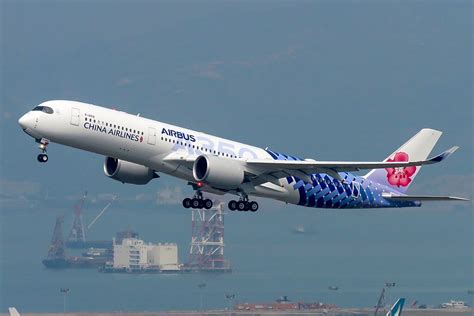
China Airlines has taken a decisive step in expanding its long-term fleet strategy with a landmark $2 billion agreement with Airbus, signaling intensified efforts to strengthen its foothold in the Asia-Pacific aviation market. The deal, unveiled shortly after the 2025 Paris Air Show, involves the acquisition of 13 cutting-edge aircraft, including five Airbus A350-900 widebody jets and eight A321neo narrowbody aircraft, with five of the latter sourced through leasing giant Air Lease Corporation (ALC). This announcement underscores China Airlines’ strategic shift amid resurgent travel demand and supply chain uncertainties that have impacted rival aircraft manufacturer Boeing.
A Strategic Leap Amid Rising Travel Demand
The timing of the deal is no coincidence. With international air travel in Asia-Pacific rebounding robustly, China Airlines is positioning itself to capture a larger share of the passenger surge. Regional economies are reopening, leisure and business travel is climbing, and airlines are racing to secure aircraft that align with modern operational demands. The newly ordered A350-900s and A321neo jets are central to China Airlines’ growth blueprint — aircraft known for fuel efficiency, enhanced passenger comfort, and lower maintenance costs.
The A321neo fleet, already a staple in China Airlines’ short-to-medium haul network, will be bolstered significantly. Of the eight A321neo units in this new tranche, five will arrive via lease, a move that reduces upfront capital expenditure while enabling flexibility in deployment. The other three aircraft are still under negotiation, but their addition will further streamline domestic and regional routes, where demand for high-frequency, point-to-point services is expected to rise.
Meanwhile, the five A350-900 widebody jets offer greater range and capacity, reinforcing China Airlines’ capability on intercontinental routes to Europe, North America, and Oceania. These aircraft are capable of reducing fuel consumption by nearly 25% compared to older long-haul models, aligning perfectly with the carrier’s sustainability goals and efforts to reduce its carbon footprint.
Airbus Emerges as a Trusted Partner Amid Boeing Delays
This strategic pivot toward Airbus follows ongoing delays in the Boeing 787 Dreamliner program. China Airlines had previously committed to 24 Dreamliner aircraft — 18 of the 787-9 variant and six of the longer-range 787-10. However, persistent production setbacks and delivery delays have eroded confidence in Boeing’s timeline, compelling China Airlines to defer the retirement of its older aircraft and seek interim solutions.
The decision to fast-track Airbus orders is more than just damage control; it reflects long-standing confidence in Airbus’s reliability and delivery capabilities. The addition of the A350-900s complements the airline’s January 2025 order of ten A350-1000 aircraft, reinforcing the airline’s long-haul fleet modernization and its preference for the A350 family as the backbone of its future operations.
Southeast Asia’s Growing Preference for the A350 Family
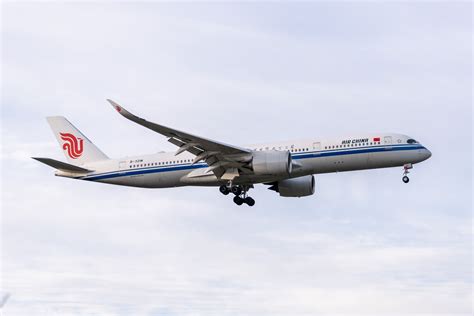
China Airlines is not alone in its affinity for Airbus. Starlux Airlines, another Taiwanese carrier, recently ordered ten A350-1000 aircraft at the same Paris Air Show. This illustrates a broader regional trend where Southeast Asian carriers are embracing the A350 platform as a core component of their long-haul strategy. The aircraft’s appeal lies in its versatility, efficiency, and passenger-centric cabin design, making it an ideal solution for the region’s increasingly competitive aviation landscape.
The Asia-Pacific region is rapidly emerging as the global epicenter of commercial aviation growth. Factors such as an expanding middle class, a surge in tourism, and increasing cross-border commerce are driving a sharp uptick in both short-haul regional flights and intercontinental journeys. In this context, airlines need aircraft that can deliver maximum range, minimal emissions, and low per-seat operating costs — benchmarks the A350 consistently achieves.
Inside China Airlines’ Current Fleet Composition
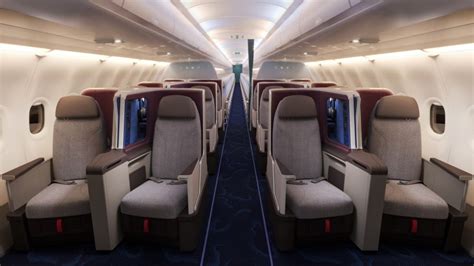
China Airlines’ latest procurement enhances what is already a diverse and evolving fleet. The airline currently operates 17 Airbus A321neo aircraft, of which 13 are in active service. These aircraft are among the youngest in its fleet, averaging just 2.1 years of age, and configured for optimal capacity: 12 business class seats and 168 economy seats. Their compact range and efficiency make them ideal for high-frequency routes across East Asia.
On the widebody side, China Airlines maintains a fleet of 15 Airbus A350-900 aircraft, each averaging 7.8 years. These are configured in two seating layouts:
- 32 business / 31 premium economy / 243 economy, and
- 40 business / 32 premium economy / 228 economy.
The addition of five more A350-900 units will not only boost capacity but allow the airline to deploy newer aircraft on high-revenue routes while gradually retiring less fuel-efficient planes.
Financial Implications and Leasing Dynamics
Though the $2 billion headline figure is significant, the actual financial outlay may vary. For example, China Airlines is considering leasing some of the A350-900 aircraft — a strategy that would defer capital expenses and maintain balance sheet flexibility. The five A321neo jets sourced from Air Lease Corporation come at an estimated $240 million, showcasing a hybrid approach of direct purchase and leasing.
This blended acquisition model underscores the nuanced complexities of modern fleet planning. Airlines must weigh delivery timelines, financing costs, maintenance profiles, and residual aircraft values. China Airlines’ decision to diversify its procurement channels suggests a well-calibrated strategy to adapt to both market conditions and internal operating goals.
Boosting Regional Competitiveness and Global Connectivity
With the Asia-Pacific region expected to account for more than 40% of global passenger traffic by 2040, the ability to scale operations rapidly and efficiently is critical. China Airlines’ latest Airbus agreement provides the flexibility and capacity required to compete aggressively with other major players in the region, including Cathay Pacific, Singapore Airlines, ANA, and EVA Air.
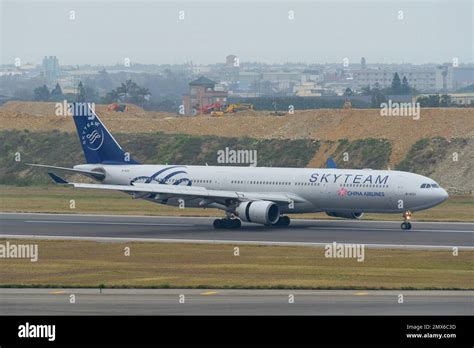
Furthermore, the addition of new widebody jets like the A350-900 and A350-1000 allows China Airlines to enhance its connectivity to key transpacific and trans-Eurasian markets, opening up greater frequencies and potentially new city pairs. Combined with its membership in the SkyTeam alliance, the airline stands to benefit from expanded code-share agreements, increased transfer traffic, and a more seamless global passenger experience.
Conclusion: Preparing for the Future of Aviation
The $2 billion agreement between China Airlines and Airbus is more than just a fleet upgrade — it is a strategic investment in the airline’s future, its passengers, and its role in the global aviation ecosystem. As the aviation sector continues its post-pandemic rebound, especially across Asia-Pacific, this move places China Airlines in a prime position to scale operations, deepen partnerships, and offer a next-generation travel experience.
By embracing the A350 family’s technological superiority and the A321neo’s unmatched efficiency in its class, China Airlines is future-proofing its operations against rising fuel costs, environmental regulations, and evolving passenger expectations. The result is a bold signal to the world: China Airlines is not just playing catch-up — it’s charting a course for leadership in the skies of tomorrow.