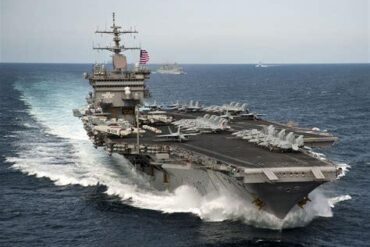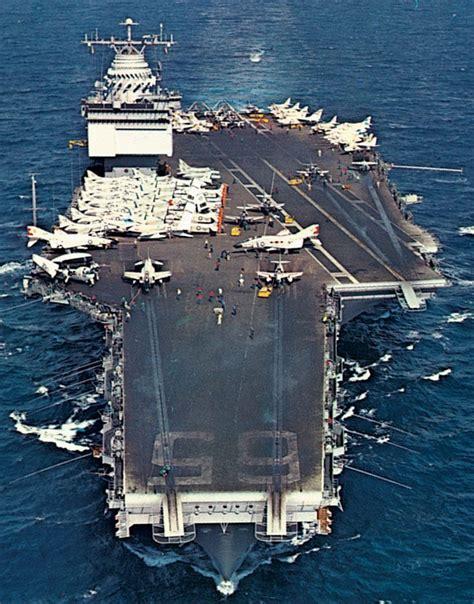
The U.S. Navy has taken a major step toward the final chapter of one of its most iconic warships by awarding a $418.5 million contract to dismantle the USS Enterprise (CVN-65). The historic aircraft carrier, known as the world’s first nuclear-powered aircraft carrier, will be scrapped after decades of service that shaped modern naval aviation and American military history.
Commissioned in 1961, USS Enterprise represented a technological breakthrough that transformed naval operations. Unlike conventional carriers that depended on fossil fuels, CVN-65 used nuclear propulsion to support longer missions with fewer fuel limitations. The carrier carried the proud Enterprise name, continuing a long U.S. Navy tradition that dates back through multiple ships bearing the legendary title.
Throughout its service life, the USS Enterprise CVN-65 became one of the most recognized warships in the world. The 95,000-ton carrier participated in major conflicts and operations, including the Vietnam War, Operation Desert Storm, Operation Iraqi Freedom, and Operation Enduring Freedom. Its presence across decades of global deployments made it a symbol of American naval power and engineering achievement.
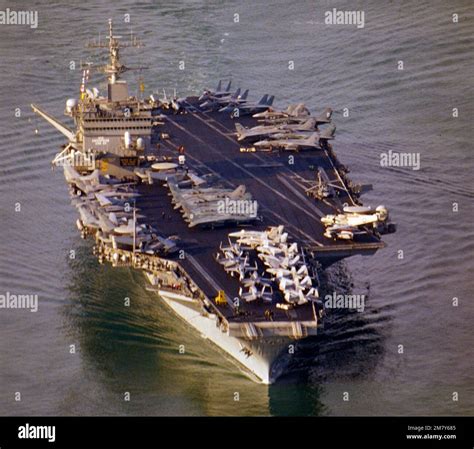
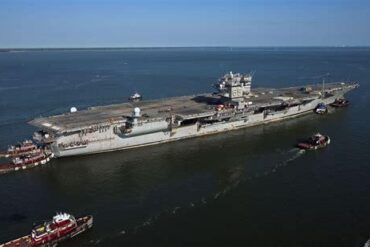
After being deactivated in December 2012, USS Enterprise was officially decommissioned and removed from the Naval Vessel Register on February 3, 2017. The carrier was moved to the Newport News shipyard in Virginia, where it remained while the Navy studied the complicated challenge of safely disposing of a retired nuclear-powered vessel.
The contract was awarded on July 15, 2026, to NorthStar Maritime Dismantlement Services LLC, which will oversee the massive recycling project. The dismantling process is expected to continue until September 2030, reflecting the extraordinary difficulty involved in breaking apart a vessel of this size and complexity.
Why Scrapping a Nuclear Aircraft Carrier Is a Complex Process
Destroying an ordinary ship is already a demanding industrial task, but dismantling a nuclear aircraft carrier requires strict environmental controls and specialized procedures. Before NorthStar received the contract, the Navy spent years preparing the vessel, including removing its nuclear fuel. However, the carrier’s empty reactor compartments remain a significant challenge.
The disposal process involves carefully separating thousands of components, including steel structures, electrical systems, piping networks, and machinery. Workers must also manage radioactive materials left behind from decades of nuclear operation. These safety requirements explain why the project carries such a high price and why the Navy spent nearly a decade evaluating disposal options.
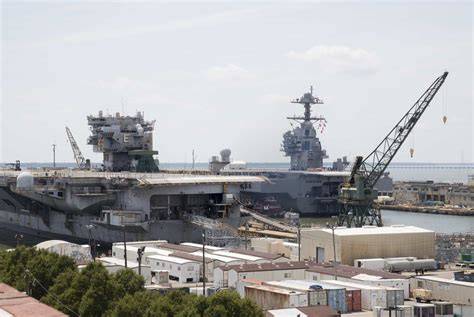
Although some retired Navy ships have become museum attractions, preserving USS Enterprise was considered impractical because of its nuclear reactors. The carrier’s size, construction complexity, and radioactive components created challenges beyond those faced by traditional museum ships.
USS Enterprise Legacy Will Continue Through Future Generations
While the original USS Enterprise will disappear as a complete vessel, parts of its legacy will continue. Approximately 35,000 pounds of steel from CVN-65 are expected to be reused in the construction of the next USS Enterprise (CVN-80), a Gerald R. Ford-class aircraft carrier currently being developed by the Navy.
This symbolic connection links two generations of American naval technology. The original Enterprise introduced the world to nuclear-powered carrier operations, while the new Enterprise represents the next stage of carrier innovation.
The dismantling of CVN-65 marks the end of an era, but it also demonstrates the Navy’s commitment to responsible management of its retired nuclear fleet. After nearly six decades of service, the first nuclear aircraft carrier will transition from a warship into recycled material, preserving its contribution to American naval history in a different form.