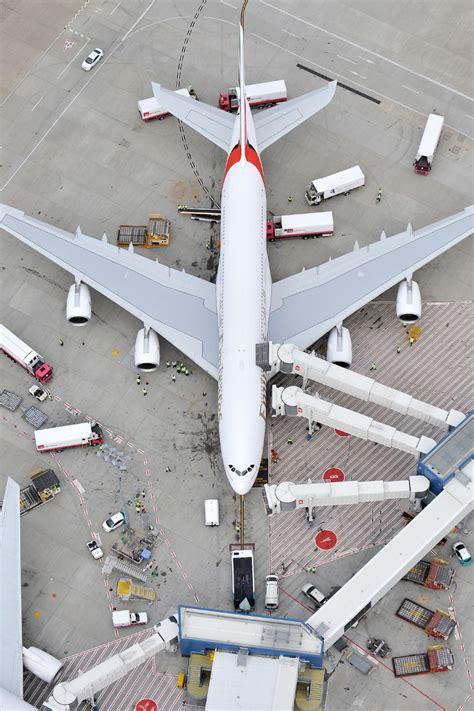
The Airbus A380 was once the ultimate symbol of modern aviation ambition. Built to dominate the world’s busiest airports and redefine long-haul luxury, the double-decker superjumbo entered service carrying expectations as enormous as its wingspan. Airlines showcased it as a flying flagship, passengers adored its quiet cabins and spacious interiors, and Airbus believed the aircraft would shape the future of international travel for decades.
Instead, by 2020, the world’s largest passenger aircraft suffered one of the most dramatic collapses in commercial aviation value ever seen. At the peak of the COVID-19 crisis, analysts estimated that some A380 airframes were worth so little that their landing gear alone could exceed the value of the remaining aircraft. For a jet that once carried a list price of $445.6 million, the fall was staggering.
The story of the A380 is not simply about a failed airplane. It is about shifting airline economics, changing passenger behavior, technological timing, and an industry brought to its knees by a global pandemic.
The superjumbo did not fail because people disliked it. Quite the opposite happened. Travelers loved flying on the A380. Airlines, however, struggled to justify operating it in a rapidly evolving aviation market that increasingly favored efficiency over size.
By the time the pandemic arrived, the A380 was already fighting for survival. COVID-19 merely accelerated a crisis that had been building for years.
The Airbus A380 Was Built For A Different Future
When Airbus officially launched the A380 program in the 1990s, aviation planners believed the future of air travel would revolve around massive hub airports. The expectation was simple: global passenger demand would grow so rapidly that airlines would need larger aircraft capable of transporting more people between major international gateways.
Airbus envisioned the A380 as the heir to the Boeing 747. The aircraft would connect megahubs like London Heathrow, Singapore Changi, Dubai International, and Los Angeles International with unprecedented passenger capacity.
The numbers were extraordinary.
The A380 stretched more than 238 feet long, carried a wingspan wider than a football field, and could transport as many as 853 passengers in an all-economy configuration. In standard airline layouts, it usually accommodated around 500 to 550 passengers across multiple classes.
Its sheer size transformed it into a marketing tool. Airlines installed onboard lounges, shower spas, bars, premium suites, and some of the most luxurious first-class cabins ever built.
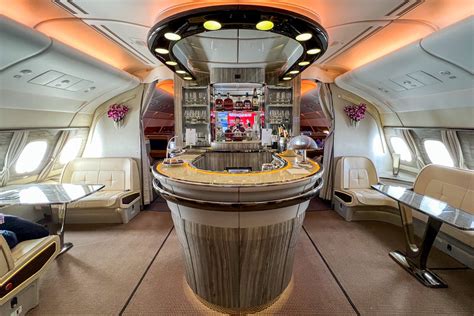
Passengers frequently described the aircraft as quieter, smoother, and more comfortable than any other commercial jet. The upper deck became iconic, especially on carriers such as Emirates, Singapore Airlines, and Qatar Airways.
But while passengers embraced the A380 experience, the economics underneath the glamour were becoming increasingly problematic.
Boeing Quietly Changed The Market Before The A380 Arrived
One of the greatest problems facing the A380 was timing.
The aircraft first entered commercial service in 2007 after years of costly delays. During that same period, Boeing fundamentally shifted the direction of the airline industry.
Rather than focusing on ultra-large aircraft, Boeing invested heavily in efficient twin-engine jets such as the 777 and later the 787 Dreamliner. These aircraft offered airlines something the A380 could never fully provide: flexibility.
Instead of transporting 500 passengers between giant hubs, airlines discovered they could profitably operate smaller aircraft on more direct routes. Travelers increasingly preferred nonstop flights instead of connecting through crowded megahubs.
This trend transformed long-haul aviation.
A Boeing 787 carrying around 250 passengers suddenly made more financial sense than filling an A380 with more than twice as many travelers. Airlines could launch routes between secondary cities while avoiding the enormous operating costs associated with the superjumbo.
The A380 also suffered from technological disadvantages. Although revolutionary in appearance, much of its engineering reflected an earlier era of aviation design.
Peter Morris, chief economist at aviation consultancy Ascend by Cirium, summarized the problem bluntly when he noted that the A380’s technology was effectively rooted in the 1980s. The aircraft entered service just as the industry began transitioning toward lighter carbon-composite airframes and dramatically more fuel-efficient engines.
The result was a beautiful but increasingly inefficient giant.
Why The Airbus A380 Lost Value So Quickly
Aircraft depreciation is normal in commercial aviation. Airliners lose value over time as maintenance costs rise and newer technologies emerge. However, the A380’s depreciation became unusually severe.
Although Airbus advertised the jet with a list price approaching $445.6 million, airlines rarely paid full price after negotiations and discounts. Industry estimates suggested most carriers actually acquired new A380s for approximately $250 million to $300 million.
Even then, the losses became brutal.
Within roughly twelve years, some A380s were reportedly valued at only $75 million to $100 million. That represented a catastrophic collapse for aircraft that had once symbolized the pinnacle of aviation engineering.
Several factors accelerated the decline.
First, there was extremely limited demand in the secondary market. Few airlines wanted used A380s because operating them required massive infrastructure commitments, including specialized airport gates, maintenance equipment, and trained crews.
Second, the aircraft burned significantly more fuel than newer twin-engine alternatives. Airlines increasingly prioritized lower operating costs, especially after fuel price volatility during the 2010s.
Third, the A380 lacked cargo flexibility. Modern widebody aircraft generate substantial revenue from belly cargo operations, but the A380’s design prioritized passengers over freight efficiency.
Finally, the aircraft could not realistically be converted into a dedicated freighter. That limitation destroyed one of the traditional pathways through which aging passenger aircraft retain residual value.
As airlines began retiring early A380s, buyers became scarce. Leasing companies suddenly found themselves holding assets that were difficult to place with new operators.
The market was weakening even before COVID-19 appeared.
Emirates Was The Only Airline That Truly Made The A380 Work
If one airline kept the A380 alive longer than expected, it was Emirates.
Dubai’s geographic position allowed Emirates to build a global hub-and-spoke network perfectly suited for very large aircraft. By funneling passengers through Dubai from Europe, Asia, Africa, Australia, and North America, Emirates consistently achieved the high load factors needed to justify operating hundreds of seats per flight.
The airline transformed the A380 into its global identity.
Emirates invested heavily in luxurious onboard experiences, including private suites, shower spas, and social lounges that became synonymous with premium long-haul travel.
Without Emirates, the A380 program would likely have ended much earlier.
But even Emirates could not completely save the aircraft. In February 2019, the airline canceled 39 A380 orders, effectively sealing the fate of the production line. Airbus announced soon afterward that A380 manufacturing would end.
The final aircraft was delivered in 2021.
Only 251 Airbus A380s were ever built.
For comparison, Boeing produced more than 1,500 Boeing 747s over the jumbo jet’s lifetime.
COVID-19 Turned The Airbus A380 Into A Liability Overnight
Then came 2020.
The COVID-19 pandemic triggered the greatest collapse in air travel history. Borders closed, lockdowns spread worldwide, and international demand evaporated almost overnight.
The A380 immediately became one of the aviation industry’s biggest casualties.
Airlines suddenly had no need for aircraft capable of carrying more than 500 passengers. Smaller, fuel-efficient jets were easier to operate on reduced schedules, while massive four-engine aircraft became financial burdens.
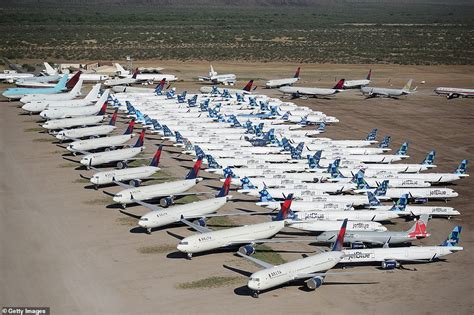
Entire A380 fleets were grounded within weeks.
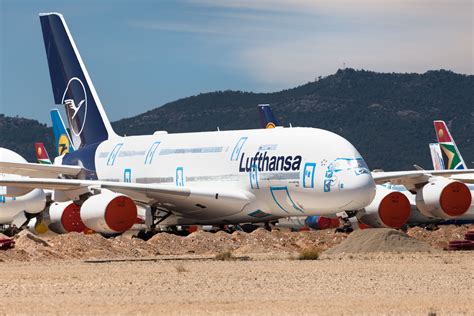
Qantas parked its superjumbos in the California desert. Lufthansa stored aircraft in Spain’s Teruel boneyard. Singapore Airlines grounded nearly all of its A380 fleet. Even Emirates drastically reduced operations.
The market value of the aircraft collapsed to astonishing levels.
Analysts from investment bank Jefferies estimated that some A380 residual values plunged to just $10 million to $15 million during the worst of the crisis.
At that point, many aircraft were worth more as collections of spare parts than as operational jets.
The landing gear alone became enormously valuable because each A380 required highly specialized components supporting one of the heaviest passenger aircraft ever constructed. Replacement parts remained essential for airlines that still planned to operate the jet.
Meanwhile, the airframes themselves had few immediate buyers.
That created the surreal situation where dismantling an A380 for components sometimes appeared financially smarter than keeping the aircraft intact.
The A380’s Design Left Airlines With Few Options
Many retired passenger aircraft eventually find second lives as cargo freighters. The Boeing 747 became legendary partly because of its adaptability as a cargo aircraft after passenger retirement.
The A380 never enjoyed that advantage.
Its full-length double deck complicated cargo loading systems, structural modifications, and weight distribution. Converting the aircraft into an efficient freighter proved economically impractical.
This trapped airlines and leasing companies in a difficult position.
Either they stored the aircraft and hoped demand eventually returned, or they dismantled jets that had cost hundreds of millions of dollars only years earlier.
Doric Nimrod, an investment company tied heavily to leased A380s, reportedly suffered losses exceeding $226 million on just four aircraft during the early pandemic period.
The scale of destruction across the aviation sector was unprecedented.
For a brief moment, the A380 genuinely looked finished.
The Unexpected Revival Nobody Predicted
Aviation history rarely follows predictable paths.
As global travel restrictions eased, passenger demand returned far faster than many airlines expected. By 2024, worldwide air passenger traffic had already surpassed pre-pandemic levels.
At the same time, aircraft manufacturers faced severe supply chain disruptions. Boeing struggled with production delays and certification problems surrounding the 777X, while Airbus battled shortages affecting A350 deliveries.
Suddenly, airlines lacked enough widebody aircraft.
That completely changed the A380’s outlook.
Aircraft once viewed as obsolete became critical capacity tools almost overnight. Airlines that had preserved their A380 fleets found themselves holding valuable assets again.
Lufthansa reversed earlier retirement plans and reactivated stored aircraft. Qantas returned A380s to long-haul routes. British Airways restored extensive A380 operations. Qatar Airways reluctantly brought the aircraft back after initially criticizing its economics.
Even more remarkably, Emirates began purchasing some leased A380s outright as contracts expired.
In 2025, the airline reportedly spent approximately $180 million for four A380 airframes, or about $45 million each.
That represented a dramatic rebound from the near-worthless valuations seen during the depths of the pandemic.
Why Airlines Still Fly The Airbus A380 Today
The A380 remains economically challenging compared with modern twin-engine jets. Fuel burn, maintenance complexity, and airport limitations continue to restrict its appeal.
However, the aircraft still offers unique advantages in certain situations.
At slot-constrained airports like Heathrow, JFK, and Sydney, airlines cannot simply add more frequencies whenever demand rises. Larger aircraft therefore become valuable because they maximize passenger capacity per slot.
The A380 also excels on dense long-haul routes where demand remains consistently strong.
Emirates continues operating the world’s largest A380 fleet because Dubai’s network structure perfectly matches the aircraft’s strengths. British Airways uses the aircraft heavily on transatlantic services. Singapore Airlines deploys it on premium-heavy routes where passenger experience matters.
Passengers still love the airplane.
Cabin quietness, spacious interiors, smoother boarding arrangements, and reduced turbulence create a flying experience many travelers consider unmatched even today.
Ironically, the same aircraft once dismissed as obsolete has become something of a premium attraction.
The Airbus A380 Became A Symbol Of Aviation’s Most Dangerous Gamble
The A380 ultimately represents one of aviation’s boldest strategic bets.
Airbus correctly predicted rising global passenger demand, but it misjudged how airlines would choose to serve that demand. Instead of concentrating travelers onto giant aircraft between megahubs, carriers pursued flexibility, frequency, and efficiency.
The market evolved away from the superjumbo concept.
Yet the aircraft’s story remains more complicated than a simple failure narrative.
The A380 never became commercially dominant, but it succeeded culturally. It captured the public imagination in ways few aircraft ever achieve. Even now, spotting an A380 at an airport still feels like witnessing something extraordinary.
And despite predictions of extinction during the pandemic, the aircraft survived.
That survival says something important about aviation itself. Markets change, technology evolves, and economic assumptions collapse, but extraordinary machines sometimes find ways to endure far beyond expectations.
The Airbus A380 was once worth less than its landing gear.
Today, it remains one of the most recognizable and admired passenger aircraft ever built — a giant that refused to disappear.