The modern long-haul experience is no longer defined solely by range, speed, or fuel efficiency. Instead, passenger wellbeing, spatial perception, and environmental comfort have emerged as decisive factors. At the center of this transformation stands the Airbus A350, an aircraft whose cabin design is not an afterthought but a foundational principle. From its inception, the A350 was engineered with a singular focus: to reshape how passengers feel at 35,000 feet.
Unlike legacy widebodies that evolved incrementally, the A350 represents a clean-sheet approach. Every curve, contour, and component inside the cabin reflects a deliberate effort to optimize the human experience. This is not simply an aircraft interior—it is a carefully orchestrated environment where architecture, engineering, and psychology converge.
The Airspace Philosophy: Designing for Human Comfort
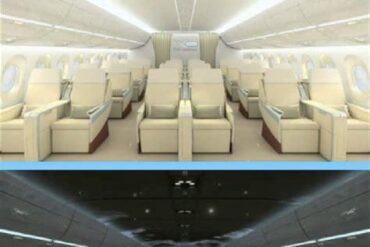
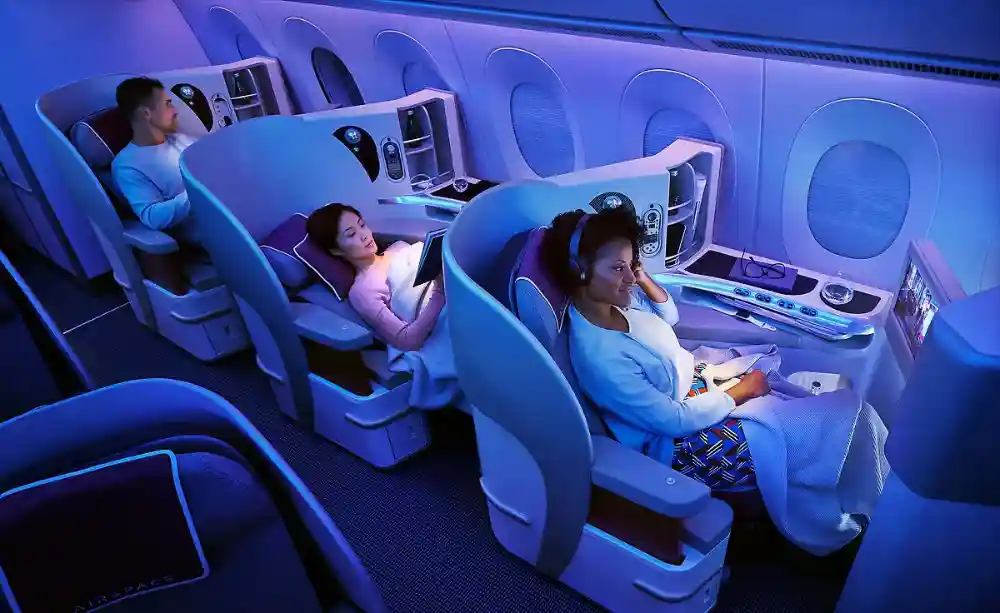
The A350’s cabin is built around Airbus’ signature Airspace design language, a concept that elevates cabin architecture into a strategic differentiator. Rather than treating the interior as a container for seats, Airbus approached the A350 as a holistic living space.
Passengers immediately notice the difference upon boarding. The cabin feels visibly wider, brighter, and calmer. This is achieved through a combination of:
- High ceilings that create vertical openness
- Sculpted sidewalls that maximize shoulder room
- Seamless integration of lighting and paneling
The result is a space that feels less confined and more like a modern lounge than a traditional aircraft cabin.
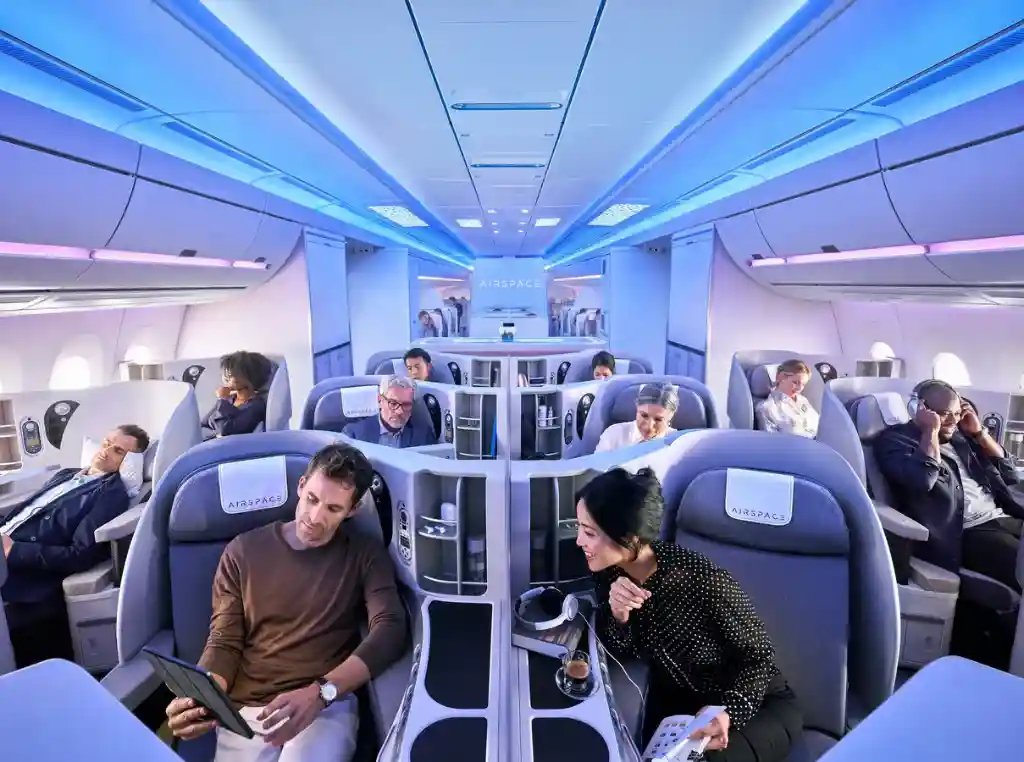
This design philosophy addresses a critical psychological factor: perceived space matters as much as actual space. Even marginal increases in width and height, when combined with intelligent lighting and curvature, dramatically improve how passengers experience the cabin.
A Wider Cross-Section That Changes Everything
At the heart of the A350’s uniqueness lies its eXtra-Wide-Body (XWB) fuselage. Unlike older aircraft that were constrained by legacy dimensions, the A350’s cross-section was engineered to maximize usable cabin width at eye level.
This seemingly subtle shift unlocks significant advantages:
- Wider seats without sacrificing aisle space
- More comfortable armrests and shoulder clearance
- Flexible cabin layouts tailored to airline strategy
For airlines, this means the ability to strike a balance between density and comfort. For passengers, it translates into a noticeably less cramped experience, particularly on long-haul flights where every centimeter counts.
The cabin doesn’t just feel wider—it is functionally more adaptable, enabling everything from high-density economy layouts to ultra-luxurious first-class suites.
Noise Reduction: The Silent Revolution in Flight
One of the most underrated aspects of the A350 cabin is its exceptionally low noise level. While many aircraft focus on visible features, Airbus invested heavily in acoustic engineering.
The combination of:
- Advanced engine design
- Composite fuselage materials
- Optimized airflow management
results in a cabin that is significantly quieter than previous generations.
This reduction in ambient noise has profound effects. Passengers experience:
- Less fatigue over long flights
- Improved sleep quality
- Reduced stress levels
The silence is not absolute, but it is noticeably different—a subtle yet powerful enhancement that frequent flyers immediately recognize.
Advanced Air Management: Breathing at Altitude
Cabin air quality has long been a hidden challenge in aviation. The A350 addresses this with a next-generation air management system that redefines onboard atmosphere.
Traditional aircraft cabins often simulate conditions equivalent to high-altitude environments, contributing to dehydration and fatigue. The A350, however, maintains:
- Higher humidity levels
- Lower effective cabin altitude
- Continuous air filtration and circulation
This creates a cabin environment that feels closer to ground-level comfort, reducing the physical toll of long-haul travel.
Passengers may not consciously notice the difference at first, but over the course of a 10- to 15-hour flight, the impact becomes unmistakable: less dryness, less exhaustion, and faster recovery upon arrival.
Lighting Systems That Combat Jet Lag
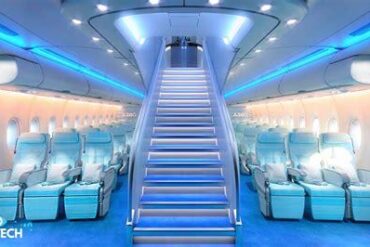
Lighting inside the A350 is far more than illumination—it is a biological tool. Airbus integrated advanced LED systems capable of dynamic color and intensity adjustments throughout the flight.
These lighting sequences are designed to:
- Simulate natural daylight cycles
- Gradually shift passenger circadian rhythms
- Support smoother transitions across time zones
Airlines can tailor these lighting programs to specific routes, creating a customized temporal environment that aligns with destination time zones.
This innovation transforms lighting into a passive wellness feature, helping passengers arrive more refreshed and less disoriented.
Overhead Bins and Spatial Efficiency
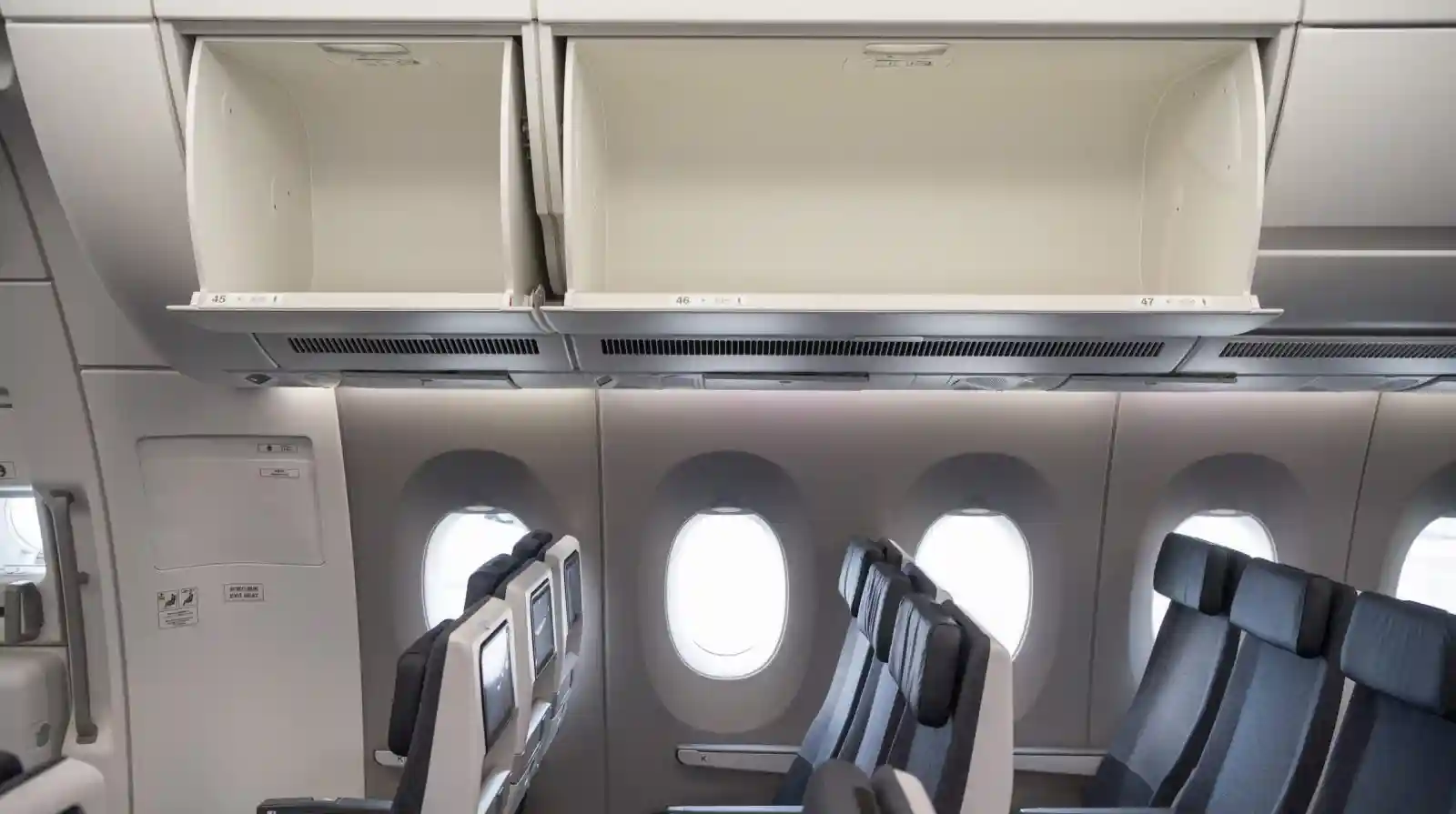
Storage may seem mundane, but in the A350, even overhead bins are reimagined. The aircraft features large, pivoting overhead compartments that are both functional and aesthetically integrated.
These bins offer:
- Increased storage capacity per passenger
- Easier access due to ergonomic positioning
- A cleaner visual profile when closed
By reducing clutter and improving accessibility, the bins contribute to the overall sense of order and openness within the cabin.
The New Production Standard: Subtle but Powerful Enhancements
Airbus continues to refine the A350 through its New Production Standard, an evolutionary upgrade that enhances both performance and cabin usability.
Key improvements include:
- Additional usable cabin width
- Extended cabin length
- Weight reductions for improved efficiency
These refinements allow airlines to introduce:
- Larger galleys and crew rest areas
- Additional seating configurations
- Enhanced premium cabin layouts
Importantly, these changes are implemented without altering the aircraft’s core passenger experience, preserving the signature A350 feel while expanding its capabilities.
Why the A350 Excels in Premium Cabin Design
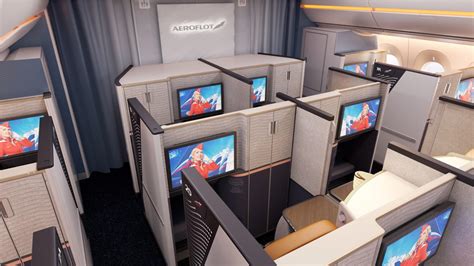
The A350’s geometry makes it uniquely suited for premium travel experiences. Its wide cross-section supports spacious 1-2-1 configurations in business class, ensuring direct aisle access for every passenger.
This layout enables:
- Fully flat beds with generous length
- Large personal storage areas
- Privacy-enhancing suite designs
Airlines are leveraging this flexibility to create increasingly sophisticated cabins, including:
- Door-equipped business class suites
- Expanded premium economy seating
- Ultra-exclusive first-class environments
The cabin becomes not just a means of transport, but a competitive product—a space where airlines differentiate themselves in the high-yield segment.
A Platform for Innovation: Airline Customization
One of the A350’s most powerful attributes is its role as a blank canvas for airline innovation. The aircraft’s flexible architecture allows carriers to experiment with entirely new concepts.
Examples include:
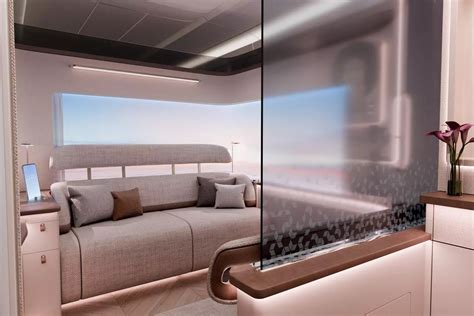
- Wellbeing zones on ultra-long-haul flights
- Four-class configurations with distinct identities
- Hybrid layouts blending leisure and business travel needs
This adaptability ensures that the A350 remains relevant across diverse markets, from high-density regional routes to ultra-long-range flagship services.
Global Adoption: A True Long-Haul Workhorse
The A350 is not a niche aircraft—it is a global standard. Major airlines across continents have embraced it as a cornerstone of their long-haul fleets.
Carriers deploy the aircraft to:
- Replace aging widebodies
- Open new long-haul routes
- Enhance flagship services
Its versatility allows it to operate seamlessly across different mission profiles, from transcontinental flights to ultra-long-haul journeys exceeding 8,000 miles.
This widespread adoption reinforces the A350’s reputation as both an economic and experiential benchmark.
The Role of Materials: Composite Construction and Comfort
The A350’s cabin advantages are deeply tied to its carbon-fiber reinforced plastic fuselage. This material offers not only structural efficiency but also environmental benefits inside the cabin.
Composite construction enables:
- Higher cabin pressure tolerance
- Improved humidity retention
- Reduced structural fatigue
These factors directly contribute to the aircraft’s ability to maintain a more comfortable and stable cabin environment, particularly on long-duration flights.
Future Innovations: The Next Evolution of Cabin Design
The A350 is far from static. Its design continues to evolve as airlines push the boundaries of what is possible inside an aircraft cabin.
Emerging trends include:
- Next-generation premium suites with full enclosures
- Enhanced connectivity and digital integration
- Cabin retrofits that redefine existing fleets
The upcoming freighter variant and corporate jet adaptations further expand the aircraft’s reach, demonstrating its platform versatility beyond passenger travel.
Environmental Efficiency Meets Passenger Experience
Modern aviation demands a balance between sustainability and comfort, and the A350 delivers on both fronts. Its efficient engines and lightweight structure reduce fuel consumption and emissions, while its cabin innovations enhance passenger wellbeing.
This dual advantage positions the A350 as a future-proof solution in an industry facing increasing environmental scrutiny.
Airlines no longer need to choose between operational efficiency and passenger satisfaction—the A350 integrates both into a single platform.
The Psychological Impact of Cabin Design
Beyond physical comfort, the A350 excels in addressing the psychological dimensions of travel. The combination of space, light, and quietness creates an environment that feels less stressful and more controlled.
Passengers experience:
- Reduced anxiety during long flights
- Greater sense of personal space
- Improved overall travel satisfaction
These factors are increasingly important as airlines compete not just on price or schedule, but on how passengers feel during the journey.
Conclusion: Redefining the Long-Haul Experience
The Airbus A350 stands as a transformational milestone in aviation design. Its cabin is not merely an interior—it is a strategic innovation that reshapes expectations of long-haul travel.
Through its combination of:
- Advanced air systems
- Spacious architecture
- Acoustic refinement
- Lighting intelligence
- Design flexibility
the A350 establishes a new benchmark for what a modern aircraft should offer.
For passengers, it delivers a journey that is quieter, healthier, and more comfortable. For airlines, it provides a platform that is adaptable, efficient, and commercially powerful.
In an industry where differentiation is increasingly defined by experience, the Airbus A350 proves that cabin design is no longer secondary—it is central to the future of flight.