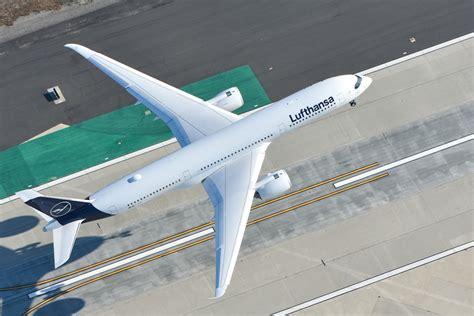
The Airbus A350 did not simply enter the aviation market—it reshaped expectations of what a modern long-haul aircraft should be. While passengers admire its quiet cabin and expansive windows, the real revolution lies outside, in plain sight: its extraordinarily advanced wing design. This is not an incremental upgrade. It is a clean-sheet engineering breakthrough, blending aerodynamics, materials science, and adaptive systems into one of the most efficient wings ever built.
A Clean-Sheet Wing Designed Without Legacy Constraints
Unlike previous programs that evolved from earlier platforms, Airbus approached the A350 with a blank slate. This allowed engineers to discard decades of compromises embedded in older aircraft structures. Instead of modifying existing wings, the design team created a purpose-built wing optimized for 21st-century long-haul aviation.
This clean-sheet philosophy gave Airbus the freedom to rethink every aerodynamic curve, every structural component, and every control surface. The result is a wing that is not just structurally efficient, but intelligently adaptive, capable of responding dynamically to changing flight conditions.
Traditional wings are designed for a balance across all flight phases, often resulting in compromises. The A350’s wing, however, takes a different approach. It is engineered to continuously optimize performance, reducing drag when cruising and maximizing lift during takeoff and landing. This flexibility is central to its efficiency advantage.
By eliminating legacy limitations, Airbus created a wing that represents a forward-looking blueprint for future widebody aircraft, rather than a continuation of past design philosophies.
The Aerodynamic Philosophy Behind the A350’s Wing Shape
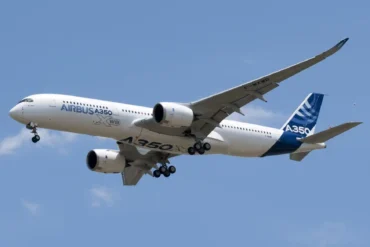
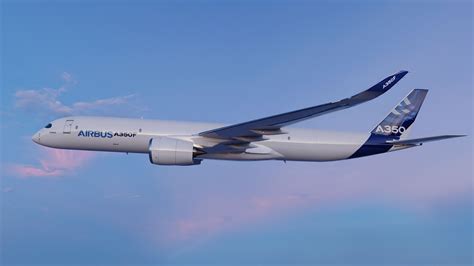
At first glance, the A350’s wing appears sleek and elegant. Look closer, and its sophistication becomes clear. The wing is long, slender, and highly swept, a design tailored specifically for ultra-long-haul missions.
Its geometry is not accidental. Every curve is engineered to reduce drag while maintaining optimal lift. This balance is critical for aircraft flying routes exceeding 8,000 nautical miles, where even minor inefficiencies can translate into significant fuel penalties.
Compared to older widebodies like the Boeing 777-300ER, the A350 achieves around 25% lower fuel consumption. A substantial portion of that improvement comes directly from its wing design.
The secret lies in laminar flow optimization and a carefully tuned wing profile that minimizes turbulence across the surface. By maintaining smoother airflow, the aircraft reduces energy loss, allowing it to cruise more efficiently over vast distances.
The wing’s high aspect ratio—its length relative to its width—further enhances efficiency. Longer wings generate more lift with less drag, making them ideal for long-haul operations where fuel economy is paramount.
Carbon Fiber Construction: A Structural Revolution
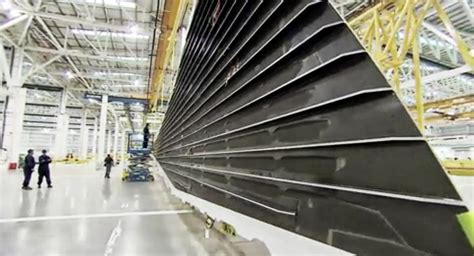
One of the defining features of the A350’s wing is its extensive use of carbon-fiber reinforced polymer (CFRP). More than half of the aircraft’s structure relies on composite materials, marking a significant departure from traditional aluminum construction.
This shift is not merely about weight reduction—though the benefits are substantial. Composites are stronger, lighter, and far more resistant to fatigue and corrosion than metal counterparts.
The wing itself is manufactured as large, integrated sections rather than assembled from numerous smaller parts. This eliminates common structural weak points such as riveted joints and fastener holes, which are prone to stress concentration and corrosion in metallic structures.
The use of CFRP allows the wing to flex significantly without compromising structural integrity. Unlike aluminum, which can develop fatigue cracks over time, composite materials maintain their strength even under repeated stress cycles.
This durability contributes directly to the A350’s impressive operational reliability, which reached 99.5% within just two years of service. It also reduces long-term maintenance costs, making the aircraft more attractive to airlines operating demanding long-haul routes.
Wing Flex: A Feature, Not a Flaw
One of the most visually striking aspects of the A350 is how dramatically its wings bend during flight. To the untrained eye, this may seem concerning. In reality, it is a deliberate and highly beneficial design feature.
As the aircraft generates lift, aerodynamic forces push the wings upward. The A350’s long, flexible wings are designed to absorb and distribute these forces efficiently, reducing stress on the fuselage.
This flexibility offers several advantages:
- It dampens turbulence, resulting in a smoother ride for passengers
- It reduces structural fatigue, extending the aircraft’s lifespan
- It allows the wing to maintain optimal aerodynamic shape under load
Fuel stored within the wings also plays a role. By strategically managing fuel distribution, the aircraft can counterbalance bending forces, enhancing structural stability.
In essence, the A350’s wing behaves less like a rigid structure and more like a living aerodynamic surface, constantly adapting to the forces acting upon it.
Adaptive Wing Technology: Mimicking Nature in Flight
Perhaps the most groundbreaking aspect of the A350’s wing is its ability to adapt in real time, much like a bird adjusting its wings mid-flight.
This is achieved through a system known as variable camber, which allows subtle adjustments to the wing’s shape during different phases of flight. Unlike traditional systems that rely solely on fixed configurations, the A350 can make continuous micro-adjustments to optimize performance.
During takeoff and landing, high-lift devices such as slats and flaps extend to increase surface area and curvature, generating additional lift at lower speeds. Once cruising altitude is reached, these surfaces retract, creating a cleaner aerodynamic profile.
However, the innovation does not stop there. Even during cruise, the wing can fine-tune its shape by a few degrees, redistributing lift and minimizing drag as the aircraft’s weight changes due to fuel burn.
This constant optimization results in measurable efficiency gains over long distances, where small improvements accumulate into significant fuel savings.
Precision Control Surfaces: Engineering Balance in Motion
The A350’s wing is not just about lift—it is also a sophisticated control system. Multiple surfaces work together to ensure precise handling and stability throughout the flight.
Ailerons control roll, allowing the aircraft to bank smoothly into turns. Spoilers manage lift and drag, particularly during descent and landing. Flaps and slats adjust lift characteristics depending on speed and altitude.
What sets the A350 apart is how seamlessly these systems integrate. Rather than operating independently, they function as part of a coordinated aerodynamic network, continuously adjusting to maintain optimal performance.
This integration enables the aircraft to achieve exceptional handling characteristics, even under challenging conditions. Pilots benefit from enhanced control, while passengers experience a smoother, more stable ride.
Wing Size and Range: Built for Ultra-Long-Haul Missions
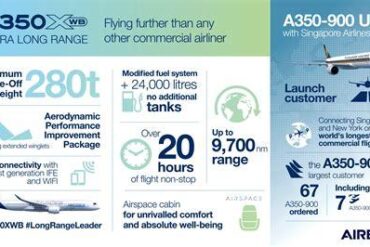
The A350’s wing spans approximately 64.75 meters, a dimension carefully chosen to support its long-range capabilities. This expansive wingspan allows the aircraft to generate sufficient lift while maintaining low drag, even at high altitudes.
The result is an aircraft capable of connecting distant city pairs such as New York and Singapore or Doha and Auckland without refueling. This capability is not just about range—it is about doing so efficiently and economically.
A larger wing reduces the need for excessive thrust, lowering fuel consumption and emissions. Combined with the aircraft’s lightweight structure, this design enables airlines to operate routes that were previously uneconomical.
Compared to legacy aircraft, the A350 can achieve similar or greater range with significantly lower operating costs, making it a cornerstone of modern long-haul fleets.
Lightweight Engineering and Its Impact on Efficiency
Weight is the enemy of efficiency in aviation. Every kilogram requires additional lift, which in turn increases drag and fuel consumption. The A350 addresses this challenge through a combination of advanced materials and intelligent design.
With approximately 70% of its structure made from advanced materials, including composites and titanium alloys, the aircraft achieves a substantial weight reduction compared to older widebodies.
In some configurations, the A350’s operating empty weight is up to 20 tonnes lighter than comparable aircraft. This reduction has a cascading effect:
- Less weight means lower lift requirements
- Lower lift reduces aerodynamic drag
- Reduced drag leads to lower fuel burn
The wing plays a central role in this efficiency loop. Its lightweight construction and optimized shape ensure that every aspect of the aircraft’s performance is aligned toward maximum efficiency and minimal environmental impact.
Durability and Corrosion Resistance in Modern Wings
Traditional aluminum wings are susceptible to corrosion, particularly in harsh operating environments. Moisture, temperature fluctuations, and chemical exposure can all contribute to structural degradation over time.
The A350’s composite wing largely eliminates this concern. Carbon fiber materials are chemically stable and non-corrosive, meaning they do not undergo the electrochemical reactions that affect metals.
Where metal components are necessary, Airbus employs advanced coatings and insulation techniques to prevent galvanic corrosion. This ensures that even mixed-material interfaces remain protected.
The result is a wing that not only performs better but also lasts longer with less maintenance, reducing lifecycle costs for airlines.
A Glimpse Into the Future of Aircraft Design
The A350’s wing is more than a technological achievement—it is a preview of the future of aviation. Its combination of adaptive aerodynamics, lightweight materials, and integrated control systems represents a new standard for widebody aircraft design.
As environmental concerns and operational efficiency become increasingly important, innovations like those seen in the A350 will shape the next generation of aircraft. Future designs will likely build upon these principles, pushing efficiency even further.
What passengers see as a graceful, flexing wing outside their window is, in reality, the culmination of decades of research, engineering, and innovation. It is a reminder that in aviation, the most transformative advancements are often those that operate quietly, delivering performance gains with every mile flown.
The A350’s wing does not just support flight—it redefines what is possible in the skies.