The Boeing 787 Dreamliner represents one of the most significant leaps in modern commercial aviation. When the aircraft entered service in 2011, it did far more than replace aging widebody jets. It fundamentally redefined how airlines approach long-haul travel, fuel consumption, and route planning. Airlines had spent decades balancing aircraft size, passenger demand, and operating costs. The Dreamliner disrupted that equation by introducing an aircraft capable of flying long distances with dramatically lower fuel burn while remaining flexible enough to serve both major hubs and smaller city pairs.
This combination of fuel efficiency, advanced engineering, and operational adaptability allowed the 787 to open routes that were previously impractical or financially risky. Instead of relying solely on massive aircraft funneling passengers through hub airports, airlines could now deploy a mid-sized widebody capable of flying intercontinental routes profitably. The result reshaped airline networks and gave carriers new tools to expand their global reach.
Understanding how the 787 achieved this breakthrough requires exploring its materials, aerodynamics, propulsion systems, system architecture, and strategic design philosophy. Each of these elements contributes to a single overarching goal: moving passengers farther while burning significantly less fuel.
A Revolutionary Shift to Composite Materials
One of the most radical design decisions in the Dreamliner program involved the aircraft’s structure. Traditional commercial jets relied heavily on aluminum, a material that had dominated aircraft construction for decades. Boeing chose a different path by building the 787 largely from carbon fiber reinforced polymer composites, a material known for its strength, durability, and remarkably low weight.
This shift transformed the aircraft’s structural profile. Approximately 50 percent of the 787’s primary structure is made from composite materials, including the fuselage, wings, and tail. These materials provide several advantages over conventional aluminum construction.
First, composites are significantly lighter. Every kilogram removed from an aircraft translates into measurable fuel savings, especially during long-haul operations where aircraft spend many hours cruising at high altitude. Reduced structural weight allows engines to work less, which lowers fuel consumption across every phase of flight.
Second, composites offer superior resistance to fatigue and corrosion. Traditional aluminum structures must be carefully inspected for cracks or corrosion caused by pressurization cycles and environmental exposure. Composite structures experience far less degradation over time, reducing maintenance needs and extending operational longevity.
Third, composite materials enable new structural designs that were difficult or impossible with aluminum. Engineers could optimize load paths, meaning the way forces travel through the aircraft’s structure. By distributing stress more efficiently, Boeing engineers were able to create thinner structural components without compromising strength.
The result is an airframe that contributes directly to the Dreamliner’s well-known claim of up to 25 percent lower fuel consumption compared to the aircraft it replaces, such as the Boeing 767 or early versions of the 777.
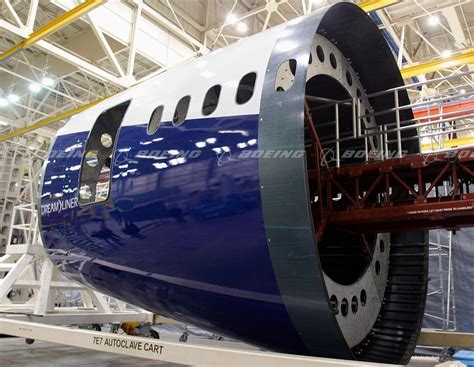
Beyond raw weight savings, the Dreamliner’s composite fuselage also enabled a different manufacturing approach. Instead of assembling numerous aluminum panels with thousands of rivets, Boeing created large one-piece composite fuselage barrels. These massive sections are produced using automated fiber placement technology, which layers carbon fibers in precisely controlled orientations.
Fewer joints and seams reduce structural complexity and eliminate small aerodynamic imperfections along the fuselage. Even tiny surface irregularities can increase drag over long distances. By minimizing these disruptions, the Dreamliner maintains smoother airflow and greater aerodynamic efficiency.
Aerodynamic Design Optimized for Long-Haul Efficiency
Weight savings alone cannot explain the Dreamliner’s performance. The second major pillar of its efficiency lies in its advanced aerodynamic design. Every curve of the aircraft was engineered to reduce drag and maximize efficiency during cruise flight, where long-haul aircraft spend the majority of their time.
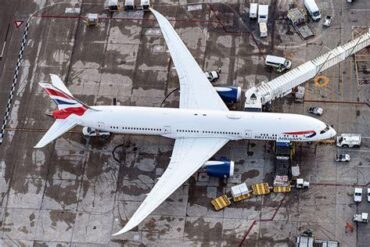
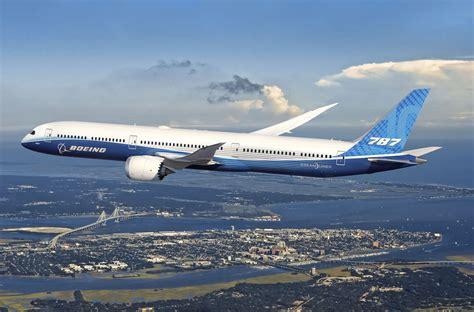
The most visually striking feature of the 787 is its wing. The aircraft uses long, slender wings with a high aspect ratio, meaning the wings are relatively long compared to their width. This design reduces induced drag, the type of drag created when lift is generated.
The Dreamliner’s wings also feature elegant raked wingtips instead of traditional vertical winglets. These extended tips smooth the airflow around the wing edges and improve lift efficiency at high altitudes. The result is a more efficient cruising profile, particularly during long intercontinental flights.
Another distinctive characteristic is the wing’s remarkable flexibility. During flight, the tips of the 787’s wings can flex upward by as much as 25 feet. This flexibility is not a flaw but a carefully engineered feature. Flexible wings absorb aerodynamic loads more efficiently and maintain optimal lift characteristics as conditions change during flight.
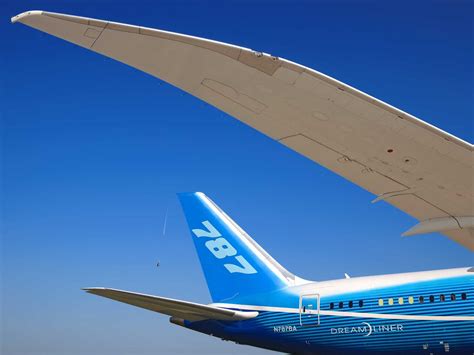
Composite materials again play a key role here. Because carbon fiber structures can be molded into complex shapes, engineers were able to design wings that are both lightweight and aerodynamically refined. Smooth surfaces reduce parasitic drag, the resistance created by airflow over the aircraft’s exterior.
Even small improvements in aerodynamic efficiency become significant during long flights. A reduction of just a few percentage points in drag can translate into thousands of kilograms of fuel saved across an aircraft’s operational life.
Next-Generation Engines Powering the Dreamliner
Aerodynamics determine how efficiently an aircraft moves through the air, but engines determine how efficiently fuel becomes thrust. The Dreamliner introduced two of the most advanced turbofan engines ever developed: the General Electric GEnx and the Rolls-Royce Trent 1000.
Both engines were specifically designed for the 787 program and represent a major leap forward in propulsion technology.
The engines use composite fan blades that are lighter and stronger than traditional metal blades. These blades allow the engines to achieve higher bypass ratios, meaning more air flows around the engine core rather than through it. Higher bypass ratios improve propulsive efficiency and significantly reduce fuel burn.
Another innovation lies in improved compressor and turbine efficiency. Modern materials and advanced cooling techniques allow these engines to operate at higher internal temperatures, which improves thermal efficiency. In simple terms, the engines extract more usable energy from each kilogram of fuel.
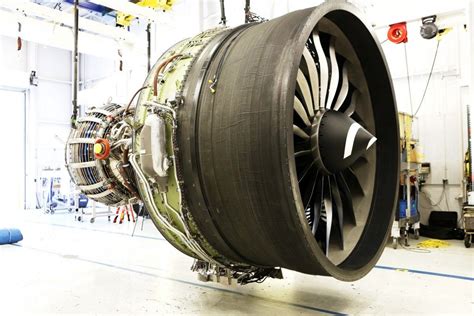
Noise reduction also plays a role in engine design. Chevron-shaped exhaust nozzles smooth the mixing of exhaust gases with surrounding air, reducing turbulence and lowering noise levels. While this primarily benefits airport communities, the smoother airflow also contributes marginally to efficiency improvements.
These engines maintain strong performance across a wide range of altitudes and temperatures, ensuring consistent efficiency throughout long flights. The combination of advanced engines and optimized aerodynamics allows the Dreamliner to operate at cruise altitudes exceeding 40,000 feet, where thinner air further reduces drag.
Three Variants Designed for Route Flexibility
Fuel efficiency alone does not guarantee commercial success. Airlines require aircraft that can adapt to different passenger demands and route structures. Boeing addressed this need by developing the Dreamliner family in three distinct variants, each tailored to different mission profiles.
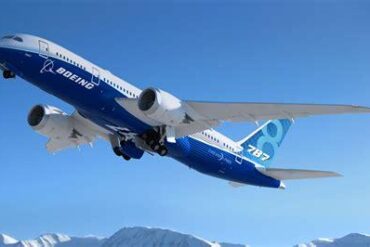
The Boeing 787-8 serves as the smallest member of the family. With seating for roughly 240 passengers in a typical two-class configuration, it offers exceptional range of about 7,300 nautical miles. This capability makes it ideal for long but relatively thin routes where passenger demand might not justify a larger aircraft.
The 787-9, the most popular version, stretches the fuselage to accommodate around 290 to 300 passengers. Despite the increased capacity, it actually offers slightly greater range—approximately 7,565 nautical miles. This combination of capacity and range makes it the backbone of many airline long-haul fleets.
The 787-10 represents the largest version of the aircraft. Seating approximately 330 to 340 passengers, it is optimized for higher-density routes such as transatlantic or major regional corridors. Its range decreases slightly to about 6,330 nautical miles, but the additional seating significantly improves per-seat economics.
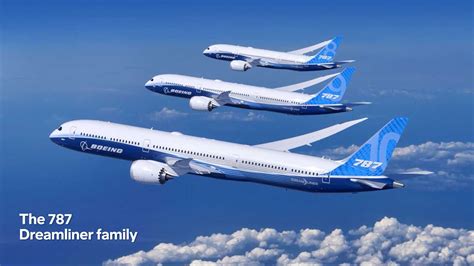
This tiered approach allows airlines to deploy the Dreamliner across a wide variety of markets. A carrier might use a 787-8 to connect secondary cities, a 787-9 for ultra-long-haul flagship routes, and a 787-10 for high-demand international sectors.
The flexibility of this aircraft family supports a growing industry trend toward point-to-point travel, where passengers fly directly between cities instead of transferring through large hubs.
The More-Electric Architecture Revolution
One of the Dreamliner’s most transformative innovations is largely invisible to passengers. Unlike previous airliners that relied heavily on pneumatic and hydraulic systems, the 787 introduced a more-electric architecture.
Many functions that once required pressurized air or complex mechanical systems are now powered by electricity. This includes environmental control systems, wing ice protection, and various onboard subsystems.
Replacing pneumatic systems with electrical ones brings several advantages. Electrical systems are generally lighter, more precise, and easier to maintain. They also reduce energy losses associated with traditional bleed-air systems that divert compressed air from engines.
By eliminating these inefficiencies, the Dreamliner ensures that more of the engine’s energy goes directly toward propulsion rather than auxiliary systems.
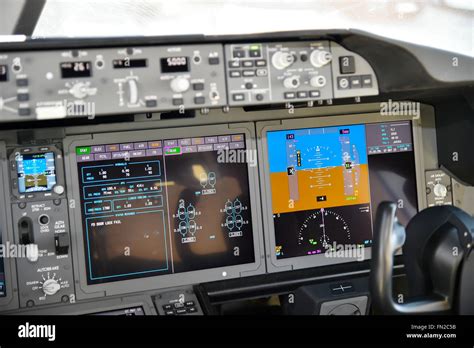
The aircraft also relies heavily on fly-by-wire flight controls, meaning pilot inputs are transmitted electronically rather than mechanically. Advanced software constantly adjusts control surfaces to optimize aerodynamic performance and maintain stability.
Over thousands of flights, these system improvements contribute to measurable reductions in operating costs and maintenance requirements.
Passenger Comfort That Supports Operational Efficiency
Passenger comfort might seem unrelated to fuel efficiency, yet the Dreamliner’s design demonstrates how the two can intersect. The composite fuselage allows the aircraft to maintain a lower cabin altitude of about 6,000 feet, compared to the 8,000-foot standard in older aircraft.
Higher humidity levels are also possible because composites resist corrosion far better than aluminum. These changes reduce passenger fatigue, dehydration, and jet lag during long flights.
Comfort improvements have indirect operational benefits as well. Reduced structural fatigue and improved environmental control systems extend the aircraft’s service life and lower maintenance demands.
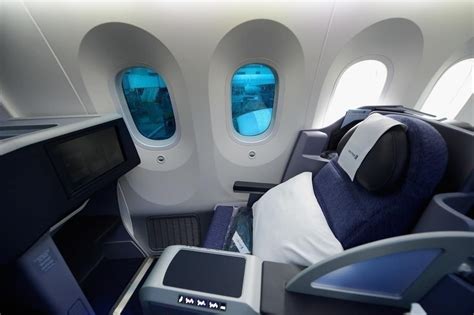
The Dreamliner also introduced the largest windows ever installed on a commercial jetliner, along with electronic dimming technology that replaces traditional window shades. While these features primarily enhance the passenger experience, they also represent the broader design philosophy behind the aircraft: integrating technology, comfort, and efficiency into a single cohesive system.
Economic Advantages for Airlines
Airlines ultimately judge aircraft by their operating economics. In this area, the Dreamliner delivers substantial advantages.
Fuel accounts for roughly one-third of airline operating costs, making efficiency improvements extremely valuable. Boeing estimates the Dreamliner burns about 20 to 25 percent less fuel per seat than the aircraft it replaces.
The aircraft’s lighter structure also reduces airport and landing fees, many of which are calculated based on aircraft weight. Lower maintenance requirements further improve operating margins over the aircraft’s lifecycle.
Perhaps the most important economic benefit lies in route flexibility. The Dreamliner enables airlines to launch long-distance routes between smaller city pairs that previously lacked sufficient demand for larger aircraft.
This capability allows carriers to bypass congested hub airports and offer passengers more direct flights. Routes such as Denver to Tokyo or San Jose to Beijing became viable largely because of aircraft like the 787.
Lessons From Development and the Future of the Dreamliner
The Dreamliner program was not without challenges. Boeing adopted an ambitious global supply chain strategy that outsourced large portions of production to international partners. While this approach enabled rapid technological innovation, it also introduced delays and quality control difficulties during early development.
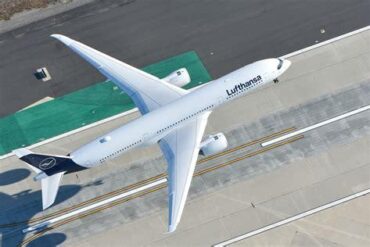
Despite these hurdles, the aircraft ultimately proved its value once it entered service. Airlines around the world—from All Nippon Airways and United Airlines to Lufthansa and Air India—have integrated the Dreamliner into their long-haul fleets.
The aircraft’s influence extends beyond its own program. Its success accelerated industry adoption of composite structures, advanced engines, and digital system architectures. Competing aircraft such as the Airbus A350 follow many of the same design philosophies.
Looking ahead, the Dreamliner platform still has room to evolve. Future improvements may include new engine technologies, sustainable aviation fuels, and advanced digital flight optimization systems. These upgrades could further enhance the aircraft’s efficiency and extend its operational relevance for decades.
In a sector constantly pressured by fuel costs, environmental regulations, and passenger expectations, the Boeing 787 Dreamliner stands as a clear example of how engineering innovation can reshape global air travel. By combining lightweight materials, cutting-edge aerodynamics, efficient engines, and intelligent system integration, the aircraft achieved something rare in aviation history: a genuine transformation in how airlines connect the world.