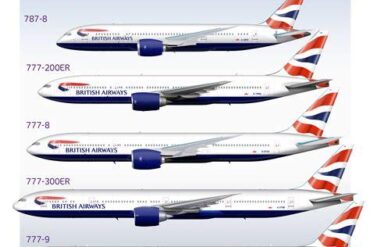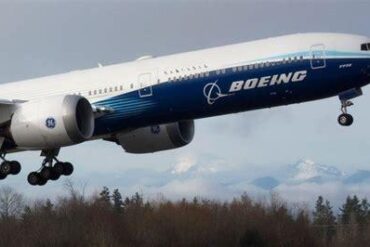
The future of long-haul aviation is increasingly defined by efficiency, and few aircraft embody that shift more clearly than the Boeing 777X. Developed as the next-generation successor to the hugely successful Boeing 777-300ER, the aircraft promises lower operating costs, greater range, and significantly improved fuel consumption at a time when airlines are under growing pressure to cut emissions and maximize profitability.
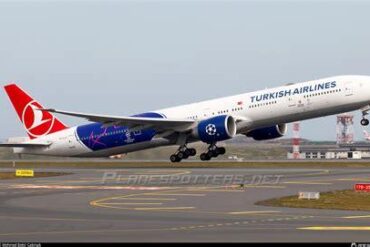
For more than two decades, the 777-300ER dominated ultra-long-haul flying. It became the backbone of global fleets at airlines such as Emirates, Qatar Airways, and Cathay Pacific because it offered the ideal balance of range, payload, reliability, and twin-engine economics. Even today, the aircraft remains one of the most capable long-haul jets ever produced.
But aviation economics have changed dramatically. Fuel prices remain volatile, sustainability targets are becoming more aggressive, and competition from highly efficient aircraft such as the Airbus A350-1000 has forced Boeing to rethink every aspect of widebody performance. The result is the 777X, an aircraft designed not merely as an upgrade, but as a complete modernization of the original 777 platform.
According to Boeing, the 777X delivers approximately 10% lower fuel burn compared with the 777-300ER. While that figure may initially sound incremental, in the economics of commercial aviation, a 10% reduction is massive. Across a global fleet operating thousands of long-haul sectors annually, those savings translate into billions of dollars in reduced fuel costs over the life of the aircraft.
The improvements come from a combination of advanced aerodynamics, lighter composite structures, revolutionary engine technology, and modern flight systems that collectively reshape how efficiently a large twin-engine jet can operate. Unlike previous generational shifts that often focused primarily on size or range, the 777X has been engineered around operational efficiency from the ground up.
Why Fuel Efficiency Matters More Than Ever In Long-Haul Aviation
Fuel has always been one of the largest expenses for airlines, but in today’s aviation landscape it has become the defining metric that shapes fleet planning decisions. On many long-haul routes, fuel alone can account for nearly one-third of total operating costs. Even small efficiency gains can therefore create major financial advantages.
For an aircraft flying routes exceeding 12 or 14 hours, every percentage point matters. Airlines operating global networks are under constant pressure to reduce cost per seat while still maintaining passenger comfort and cargo capability. The 777X was developed specifically to answer that challenge.
The 777-300ER already established itself as a benchmark for efficiency when it entered service in the early 2000s. It replaced aging four-engine aircraft like the Airbus A340-600 and older Boeing 747-400 variants by offering similar capacity with dramatically lower fuel consumption.
However, the industry continued evolving. Composite aircraft structures became more common, engines became more advanced, and airlines began prioritizing sustainability alongside profitability. Boeing therefore needed the 777X to go beyond incremental updates.
The aircraft was designed to lower fuel burn while still retaining the advantages airlines loved about the 777 family, including enormous payload capability, long range, and operational flexibility on demanding routes.
How The Boeing 777X Achieves 10% Lower Fuel Burn
The efficiency gains of the 777X are not tied to a single innovation. Instead, Boeing redesigned multiple aspects of the aircraft simultaneously to squeeze out performance improvements wherever possible.
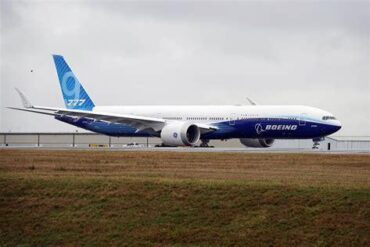
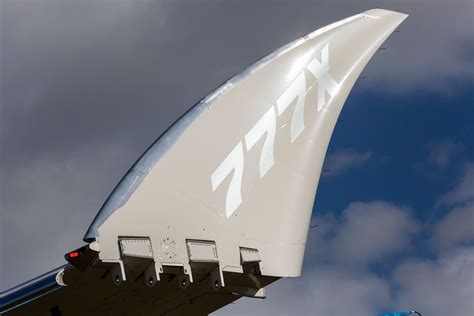
The most visible change is the wing. The 777X features an entirely new composite wing constructed using carbon-fiber-reinforced materials rather than traditional aluminum structures. The wing is longer, lighter, and aerodynamically cleaner than that of the 777-300ER.
This larger wing significantly improves lift-to-drag performance during cruise. Reduced drag means the aircraft requires less thrust to maintain speed at altitude, directly reducing fuel consumption over long distances.
The wingspan extends to roughly 235 feet 5 inches during flight, making it the widest twin-engine commercial aircraft ever developed. Yet Boeing solved the airport compatibility problem through its innovative folding wingtips, which allow the aircraft to fit existing airport gates.
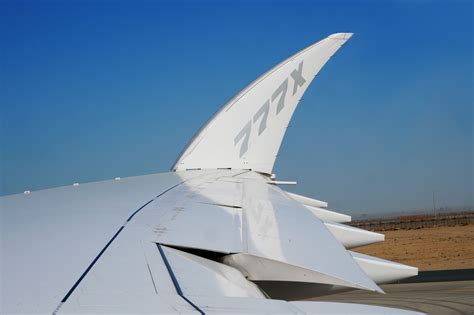
These folding wingtips are among the most distinctive engineering features ever introduced on a commercial airliner. Inspired partly by naval aviation concepts, the outer sections of the wing fold upward while on the ground, reducing the aircraft’s operational footprint.
Once airborne, the extended wing improves aerodynamic efficiency substantially. Boeing claims the wing design alone contributes significantly toward the aircraft’s lower fuel burn and better performance relative to competing aircraft.
The fuselage also incorporates weight-saving refinements throughout the structure. Even relatively small reductions in aircraft weight matter enormously over ultra-long-haul operations. Saving a few hundred kilograms on a single aircraft can result in substantial fuel reductions across years of operation.
Beyond hardware improvements, the 777X also benefits from advanced flight management systems and optimized avionics that help airlines fly more efficient routes and improve operational performance in congested airspace.
The GE9X Engine Is The Heart Of The 777X Revolution
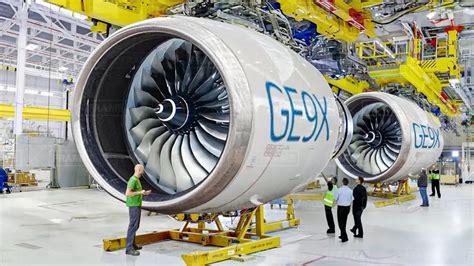
If one component truly defines the 777X program, it is the GE9X engine developed by GE Aerospace.
The GE9X is among the largest and most technologically advanced jet engines ever built for commercial aviation. Its enormous 134-inch fan diameter immediately stands out visually, but the real breakthroughs lie inside the engine itself.
The engine was designed around one primary goal: maximizing efficiency without sacrificing reliability or thrust capability.
To achieve that, GE Aerospace incorporated advanced ceramic matrix composites and next-generation lightweight materials capable of withstanding significantly higher operating temperatures than conventional turbine components. Running hotter allows jet engines to extract more energy from fuel, improving thermodynamic efficiency.
The engine also features a remarkably high bypass ratio. Modern turbofan engines generate most of their thrust from the large fan at the front rather than the hot exhaust core. Higher bypass ratios generally improve fuel efficiency because moving a larger volume of slower air is more efficient than accelerating a smaller amount of air at extremely high speed.
Aerodynamic improvements inside the compressor and turbine stages further reduce wasted energy. Every stage of airflow through the engine has been optimized to maximize efficiency and minimize drag losses.
The GE9X additionally incorporates sophisticated digital monitoring systems that continuously analyze engine health during operations. Airlines can detect potential maintenance issues earlier, reducing costly unscheduled downtime while improving long-term reliability.
For airlines operating long-haul fleets, these maintenance advantages matter nearly as much as the fuel savings themselves. Aircraft profitability depends heavily on keeping jets flying rather than sitting idle for repairs.
Compared with the older GE90 engines powering the 777-300ER, the GE9X represents a major leap forward in both efficiency and operational economics.
Passenger Capacity And Seat Economics Strengthen Efficiency Further
Fuel efficiency in commercial aviation is often measured not only by total fuel burn but also by fuel burn per seat. This is where the 777X becomes especially attractive for airlines operating dense international routes.
The larger Boeing 777-9 variant can accommodate more passengers than the 777-300ER while consuming less fuel overall relative to capacity. That combination dramatically improves seat-mile economics.
For airlines like Emirates, which specialize in moving huge passenger volumes through global hubs, the economics are particularly compelling. A larger aircraft spreading lower fuel costs across more passengers creates stronger margins on high-demand routes.
The 777X also provides flexibility. Airlines can configure cabins for premium-heavy long-haul routes or maximize seating density for trunk international markets connecting major hubs.
Passengers benefit as well. Boeing redesigned the cabin environment to improve comfort on ultra-long-haul flights. Larger windows, higher cabin humidity, improved lighting systems, and wider cabin architecture are all intended to reduce passenger fatigue during long journeys.
Overhead bins have also been enlarged, improving boarding efficiency and increasing storage space for travelers.
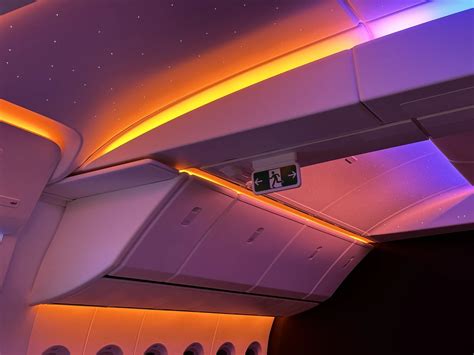
Importantly, Boeing maintained cockpit commonality with earlier 777 generations. Pilots transitioning from the 777-300ER to the 777X require less retraining compared with entirely new aircraft programs, helping airlines reduce operational complexity.
The Boeing 777X Versus The Airbus A350-1000
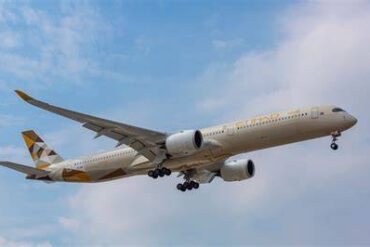
No discussion of the 777X can avoid comparisons with the Airbus A350-1000, Boeing’s primary competitor in the large twin-engine long-haul segment.
The A350-1000 has already established a strong reputation for efficiency and entered service years before the delayed 777X. Airbus benefited enormously from Boeing’s setbacks, securing major airline orders while the 777X certification process slowed.
However, Boeing believes the 777X retains important advantages.
The aircraft offers greater passenger capacity than the A350-1000 while still delivering highly competitive fuel efficiency. Boeing has also claimed that the 777X’s advanced wing design delivers roughly 5% better aerodynamics than its Airbus rival.
For airlines prioritizing sheer capacity and cargo capability on long-haul routes, the 777X remains extremely attractive.
The aircraft is especially well suited to major hub-and-spoke operators in the Middle East and Asia, where extremely dense international traffic flows justify very large twin-engine aircraft.
Routes such as New York to Singapore, Dubai to Los Angeles, or Doha to Sydney require aircraft capable of carrying large passenger loads over enormous distances while remaining economically viable. That is precisely the market Boeing designed the 777X to dominate.
Why The 777X Program Faced Years Of Delays
Despite its technological promise, the 777X program has endured a difficult development process.
Originally expected to enter service around 2020, the aircraft experienced repeated certification delays caused by engineering challenges, manufacturing complexities, and intensified regulatory oversight following the global crisis surrounding the Boeing 737 MAX program.
Regulators adopted a far stricter certification environment for all new Boeing aircraft after the 737 MAX incidents, significantly slowing approval timelines.
Testing requirements expanded, documentation reviews became more extensive, and Boeing faced increasing scrutiny across multiple systems.
The COVID-19 pandemic further complicated matters. Global long-haul demand collapsed almost overnight, reducing immediate airline urgency for new widebody deliveries. Several airlines deferred orders, while Boeing adjusted production rates accordingly.
Still, demand for the aircraft has remained surprisingly resilient despite the delays.
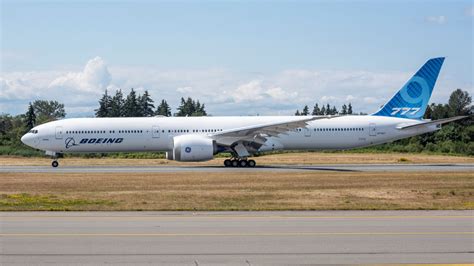
Lufthansa is expected to become the launch operator for the aircraft, while Emirates remains the largest customer by far with hundreds of orders across the 777-8 and 777-9 variants.
That level of airline commitment demonstrates how strongly carriers still believe in the aircraft’s long-term economics despite years of setbacks.
The Boeing 777X Represents The Future Of High-Capacity Long-Haul Flying
The aviation industry is moving toward aircraft that combine high capacity with dramatically improved efficiency, and the Boeing 777X sits squarely at the center of that transition.
Its approximately 10% lower fuel burn compared with the 777-300ER may sound modest at first glance, but across decades of airline operations, those gains become transformative. Reduced fuel consumption means lower costs, lower emissions, greater route flexibility, and improved profitability on some of the world’s longest flights.
The aircraft also demonstrates how modern aviation innovation increasingly depends on combining numerous incremental advances rather than relying on one revolutionary breakthrough. Composite wings, folding wingtips, advanced engines, digital systems, aerodynamic refinements, and optimized cabin layouts all work together to create meaningful operational improvements.
For airlines, the 777X represents an opportunity to replace aging large widebody fleets with aircraft capable of handling future traffic demand more efficiently than ever before.
For passengers, it promises quieter cabins, improved comfort, and the continuation of nonstop ultra-long-haul travel between distant global cities.
And for Boeing, the 777X may ultimately determine whether the manufacturer can fully reclaim dominance in the long-haul widebody market during the next generation of commercial aviation.