The Boeing 777-300ER stands as one of the most trusted widebody aircraft ever built, a machine that has quietly redefined what airlines expect from long-haul reliability. Introduced in 2004, it didn’t just extend the capabilities of the original Triple Seven family—it perfected them. With a dispatch reliability rate hovering around 99.5%, the aircraft has earned a reputation that borders on legendary in commercial aviation circles.
Reliability in aviation is not a marketing slogan—it is a measurable, unforgiving metric. Airlines depend on aircraft that depart on time, complete missions without technical interruptions, and maintain consistent performance across thousands of flight cycles. The 777-300ER excels in all of these areas, not by accident, but through a convergence of mature engineering, proven systems, and operational refinement.
What makes this aircraft particularly compelling is that its reliability is not tied to a single innovation. Instead, it is the result of layered excellence, where airframe design, engine performance, system redundancy, and global operational experience all reinforce each other. This synergy is what separates the 777-300ER from merely “good” aircraft and elevates it into the category of industry benchmark.

Unmatched Dispatch Reliability: The Metric That Matters
At the heart of the 777-300ER’s reputation lies its exceptional dispatch reliability, a critical indicator of how often an aircraft departs without delays caused by technical issues. Boeing’s reported 99.5% schedule reliability means that the aircraft operates almost flawlessly across global fleets.
This figure may seem abstract, but its implications are enormous. For airlines, every delayed flight translates into cascading operational disruptions, passenger dissatisfaction, and financial losses. The 777-300ER minimizes these risks by delivering consistent, predictable performance.
Unlike earlier generations of widebody aircraft, where reliability improvements came slowly, the 777-300ER entered service already benefiting from decades of accumulated engineering knowledge. Lessons learned from earlier aircraft programs were embedded into its design, allowing it to skip much of the traditional reliability learning curve.
The result is an aircraft that airlines can trust not just occasionally, but every single day, across long-haul routes that span oceans, continents, and extreme weather conditions.
The Power of Maturity: Why Proven Designs Win
One of the most overlooked factors behind the 777-300ER’s reliability is its design maturity. In aviation, new aircraft often face “teething issues” during their early years—unforeseen problems that emerge only after real-world operation begins.
The 777-300ER avoided much of this turbulence by building upon an already successful platform. By the time this extended-range variant entered service, the foundational systems of the 777 family had already been refined through years of operational data.
This maturity manifests in several key ways:
- Reduced system failures due to well-understood components
- Predictable maintenance cycles informed by long-term data
- Improved parts availability across global supply chains
Aircraft reliability typically follows a curve: early instability, peak maturity, and eventual decline with age. The 777-300ER has spent most of its life firmly in that peak reliability zone, where performance is optimized and unexpected failures are minimized.

Engineering Redundancy: Built to Withstand the Unexpected
A defining characteristic of the 777-300ER is its robust system redundancy. Every critical function—flight controls, hydraulics, electrical systems—is backed by multiple layers of fail-safes.
This philosophy ensures that even if one component fails, the aircraft continues operating safely and efficiently. The integration of fly-by-wire technology further enhances this reliability by replacing traditional mechanical controls with electronic systems that are both lighter and more precise.
Redundancy in the 777-300ER is not excessive—it is strategically engineered. Boeing balanced complexity with reliability, ensuring that additional systems do not introduce unnecessary failure points.
Compared to older four-engine aircraft, the 777-300ER achieves higher reliability with fewer engines and fewer critical components. This streamlined architecture reduces the number of potential failure sources while maintaining exceptional safety margins.
GE90-115B Engines: The Heart of Reliability
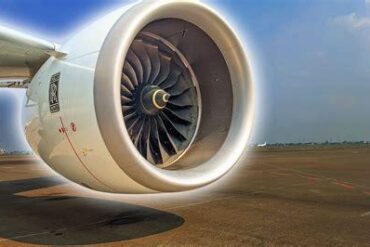
No discussion of the 777-300ER’s reliability is complete without examining its engines—the GE90-115B, the most powerful commercial jet engine in active service.
Delivering up to 115,000 pounds of thrust, this engine is not just about power—it is about consistency and durability. With a dispatch reliability rate of 99.97%, the GE90-115B sets a benchmark that few engines can match.
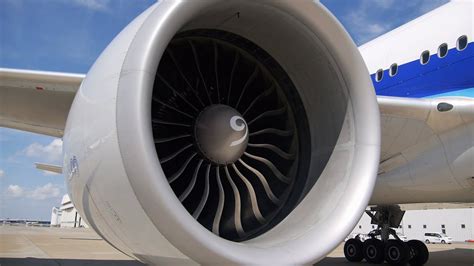
The engine’s success stems from its evolutionary design approach. Rather than introducing radical, untested technologies, it refined existing concepts to achieve incremental but highly reliable improvements. This strategy contrasts sharply with newer engines that, while more efficient, often encounter early-life reliability challenges.
Key performance advantages include:
- Extended time on wing, reducing maintenance frequency
- Lower fuel burn improvements over earlier variants
- High durability under long-haul operating conditions
The GE90’s reliability is not theoretical—it is proven across millions of flight hours. This track record plays a central role in the overall dependability of the 777-300ER.
Twin-Engine Efficiency: Less Complexity, More Reliability
Historically, long-haul aircraft relied on four engines to ensure safety over remote areas. However, advancements in engine reliability and ETOPS (Extended-range Twin-engine Operational Performance Standards) certification transformed this paradigm.
The 777-300ER was designed from the outset as a long-haul twin-engine aircraft, leveraging the reliability of modern engines to reduce complexity.
Fewer engines mean:
- Fewer components that can fail
- Simpler maintenance requirements
- Lower operational costs for airlines
This design philosophy directly contributes to higher dispatch reliability. While quadjets like the Boeing 747 or Airbus A340 are impressive machines, they inherently involve more systems, more inspections, and more potential failure points.
The 777-300ER strikes an optimal balance—maximum capability with minimal complexity.
A Virtuous Cycle: Popularity Drives Perfection
The success of the 777-300ER is not just technical—it is also economic and operational. With over 830 aircraft delivered, it has become the most popular variant in the 777 family.
This widespread adoption creates a powerful feedback loop:
- Airlines invest heavily in training and maintenance infrastructure
- Manufacturers receive continuous operational data for improvements
- Suppliers scale production, improving parts availability and quality
The more an aircraft is used, the more opportunities exist to refine its performance. Over time, this leads to incremental reliability gains that compound into industry-leading results.

Major global carriers rely on the 777-300ER for their most critical routes, further reinforcing its reputation. When airlines consistently choose an aircraft for high-demand, long-haul operations, it signals deep confidence in its reliability.
Safety Record: Reliability Proven in Real Operations
Reliability is ultimately validated through safety performance. The 777-300ER maintains an excellent safety record, with very few hull losses relative to its extensive operational history.
Importantly, most incidents involving the aircraft have been attributed to external factors or human error, rather than systemic technical failures. This distinction underscores the robustness of the aircraft’s design.
In aviation, safety is the ultimate measure of reliability. The 777-300ER’s track record demonstrates that its engineering principles translate into real-world operational resilience.
Reliability vs Maintenance: The Hidden Trade-Off
While the 777-300ER excels in reliability, it does not necessarily offer the lowest maintenance costs. This distinction is crucial.
Newer aircraft like the Airbus A350 incorporate advanced composite materials that reduce corrosion and structural fatigue. These innovations lead to lower long-term maintenance requirements, even if reliability levels are similar.
The 777-300ER, built with more traditional materials, requires more intensive maintenance routines. However, this does not diminish its reliability—in fact, it reinforces it. Regular, well-understood maintenance contributes to predictable performance and fewer unexpected failures.
This trade-off highlights an important truth: reliability is not the same as simplicity or low cost. The 777-300ER prioritizes operational consistency above all else.
Competition and Evolution: The Rise of the Next Generation
As aviation technology evolves, newer aircraft like the Airbus A350 and Boeing 787 introduce advanced materials, improved aerodynamics, and next-generation engines. These aircraft aim to match or exceed the reliability of the 777-300ER while offering greater efficiency and lower operating costs.
However, newer designs often face initial reliability challenges. Early issues with engines such as the Rolls-Royce Trent 1000 and Pratt & Whitney PW1100G-JM illustrate the risks associated with cutting-edge technology.
The 777-300ER benefits from being fully matured, while newer aircraft are still progressing along the reliability curve.
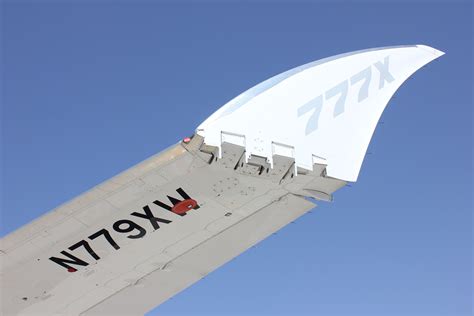
The upcoming Boeing 777X represents the next evolution, incorporating new engines and innovative features like folding wingtips. While promising, it must prove itself in service before achieving the same level of trust.
Why the Boeing 777-300ER Remains a Benchmark
The enduring reliability of the 777-300ER is not the result of a single breakthrough—it is the culmination of engineering discipline, operational experience, and strategic design choices.
It combines:
- Proven airframe architecture
- Exceptionally reliable engines
- Optimized system redundancy
- Global operational maturity
Together, these elements create an aircraft that performs with remarkable consistency, flight after flight, year after year.
In an industry where reliability directly impacts profitability and passenger trust, the 777-300ER has established itself as a gold standard. Even as newer aircraft enter the market, its legacy remains firmly intact—a testament to what happens when engineering excellence is pursued not just in innovation, but in refinement and reliability at scale.