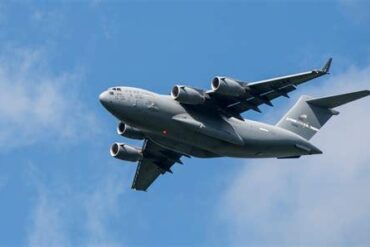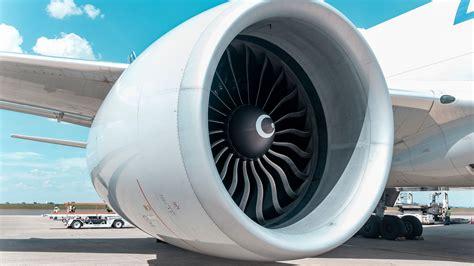
The Boeing 777-300ER became one of the most successful long-haul airliners ever built, but unlike the original Boeing 777 family, airlines never had the freedom to choose between multiple engine manufacturers. Every 777-300ER ever delivered has been powered exclusively by the General Electric GE90-115B. That exclusivity was not the result of marketing preference or corporate favoritism. It was the outcome of technical requirements, economics, timing, and a calculated decision that shaped the future of the widebody market.
The original Boeing 777 entered service during an era when airlines expected engine choice. Carriers could select between General Electric, Rolls-Royce, and Pratt & Whitney, allowing them to maintain fleet commonality and negotiate favorable maintenance agreements. However, when Boeing developed the next-generation 777-300ER and ultra-long-range 777-200LR, the requirements changed dramatically. The aircraft demanded unprecedented thrust, exceptional reliability, and a development schedule that left little room for uncertainty.
Unlike the earlier variants, which shared engine orders relatively evenly, the second-generation Triple Seven evolved into a single-engine aircraft. The GE90 became inseparable from the 777-300ER’s identity, helping transform the aircraft into a benchmark for long-haul efficiency and reliability.
The Original Boeing 777 Was Designed Around Engine Competition
When Boeing launched the first-generation 777 family, flexibility was a major selling point. Airlines could choose between three different powerplants: the General Electric GE90, Rolls-Royce Trent 800, and Pratt & Whitney PW4000-112.
Interestingly, Rolls-Royce emerged as the most popular supplier during the early years. The Trent 800 equipped more first-generation aircraft than either competitor, while Pratt & Whitney maintained strong relationships with airlines such as United Airlines and Japan Airlines. General Electric, despite introducing the all-new GE90 family, secured a smaller share of the original market.
This competitive environment reflected the airline industry’s desire for choice. Different carriers had existing maintenance infrastructure, engineering expertise, and long-standing supplier relationships. Engine selection often influenced maintenance costs for decades, making it a strategic decision rather than simply a performance consideration.
However, the arrival of the larger and longer-range 777-300ER changed the equation completely.
Boeing Needed More Than 100,000 Pounds of Thrust
The 777-300ER was far more ambitious than its predecessors. Boeing intended it to replace four-engine aircraft on ultra-long-haul routes while carrying more passengers and flying farther than previous variants.
Achieving those goals required unprecedented engine performance.
Boeing needed a powerplant capable of generating more than 100,000 pounds of thrust per engine. Existing engines simply could not reach that level without extensive redesign.
The Pratt & Whitney PW4000 family was not considered suitable for such a dramatic increase. Developing an entirely new high-thrust derivative would have demanded enormous investment, and Pratt & Whitney chose not to pursue the opportunity aggressively.
Rolls-Royce proposed the RB3025, a concept designed to meet Boeing’s requirements. While promising on paper, it existed largely as a proposal rather than a mature program. Boeing faced considerable uncertainty regarding the engine’s schedule, cost, and technological readiness.
General Electric, meanwhile, presented a practical solution. The company proposed an enhanced GE90 derivative with advanced technologies and an enormous fan diameter capable of delivering the required thrust.
Boeing ultimately viewed GE’s proposal as the least risky path.
Why The GE90 Was Years Ahead of Its Rivals
General Electric’s GE90 represented one of the most revolutionary commercial aircraft engines ever developed.
The engine family introduced composite fan blades, which provided twice the strength of conventional titanium blades while weighing only about one-third as much. This breakthrough enabled larger fan diameters and improved efficiency without excessive weight penalties.
The GE90 also became the first commercial turbofan to enter the 100,000-pound thrust class. Eventually, the GE90-115B achieved a certified thrust rating of 115,000 pounds and reached an astonishing test output of 127,900 pounds, setting a world record.
These capabilities made the engine uniquely suited to the mission Boeing envisioned.

The combination of high thrust and efficiency allowed the 777-200LR to extend range by approximately 1,200 miles compared with the earlier 777-200ER. Likewise, the 777-300ER gained around 1,800 additional miles over the original 777-300.
Those improvements enabled nonstop transpacific and ultra-long-haul routes that previously required intermediate stops.
Rolls-Royce Offered Ideas, But GE Offered Certainty
By the late 1990s, Boeing faced intense pressure to bring its upgraded 777 family to market quickly.
Airlines expected deliveries within a specific timeframe, and delays could jeopardize billions of dollars in orders. Although Rolls-Royce’s RB3025 concept attracted interest, Boeing needed confidence that the engine would arrive on schedule.
General Electric’s proposal stood out because it relied on an existing architecture rather than an entirely new engine family. That reduced technological risk and improved confidence in development timelines.
Schedule certainty became almost as important as performance itself.
For Boeing, the engine decision involved much more than thrust figures. Technical support, maintenance capabilities, customer service, and manufacturing readiness all played major roles. GE scored strongly in each category.
As a result, Boeing selected the GE90 derivative in 1999 to power the future 777-200X and 777-300X, which eventually evolved into the 777-200LR and 777-300ER.
Market Size Made Multiple Engines Economically Impossible
Aircraft engines cost billions of dollars to develop.
Manufacturers must recover those investments through decades of sales and aftermarket support. At the time Boeing made its decision, the projected market for the next-generation 777 family stood at roughly 500 aircraft.
That number appeared insufficient to justify two competing engine programs.
Creating multiple engine options would have forced Boeing to certify separate installations, redesign systems, and support parallel maintenance infrastructures. Engine manufacturers would also have faced enormous development costs with uncertain returns.
Consequently, both Boeing and GE concluded that exclusivity offered the strongest business case.
Ironically, their market forecast proved conservative.
By early 2026, more than 1,200 aircraft across the 777-300ER, 777-200LR, and 777F families had been delivered, with additional freighters still on order. In hindsight, the market may have supported more than one engine option, but that outcome was impossible to predict in 1999.
Airlines Wanted Engine Commonality
Another important factor was the preferences of launch customers.
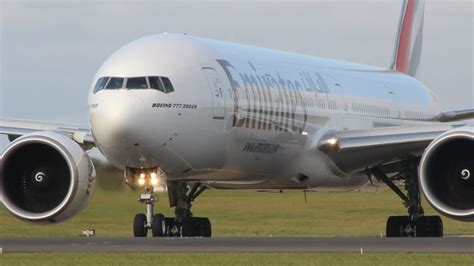
Major operators such as Emirates and Qatar Airways already flew GE-powered aircraft. Engine commonality reduces maintenance complexity, lowers spare-parts inventories, and simplifies pilot and technician training.
Large airlines often prefer fleet consistency because maintaining multiple engine types increases operational costs.
Since many of Boeing’s most influential customers already had experience with General Electric products, the GE90 offered logistical continuity.
That customer preference strengthened Boeing’s confidence in selecting a single supplier.
Over time, as hundreds of additional airlines adopted the 777-300ER, GE’s position became increasingly entrenched.
The GE90 Kept Getting Better
One reason no rival has challenged the GE90 on the 777-300ER is that the engine continued to improve after entering service.
General Electric steadily enhanced efficiency, eventually achieving a fuel-burn reduction of approximately 3.6 percent compared with the original specification.
The engine also demonstrated extraordinary reliability. GE reports an operational reliability rate approaching 99.98 percent.
For airlines operating long-haul routes across oceans and remote regions, reliability translates directly into lower operating costs and fewer disruptions.
Because the GE90 already performed exceptionally well, any alternative engine would need to deliver substantial improvements to justify the billions required for development.
That challenge became increasingly difficult as the GE90 matured.
The Success of the 777-300ER Strengthened GE’s Dominance
The enormous success of the 777-300ER transformed General Electric’s position within the commercial aviation industry.
As airlines around the world ordered the aircraft, they also invested heavily in GE90 infrastructure, spare engines, maintenance facilities, and technical expertise. Those investments created a self-reinforcing ecosystem.
Meanwhile, Rolls-Royce increasingly concentrated on Airbus programs, winning exclusivity on the A330neo and securing a dominant position on the A350. Pratt & Whitney gradually retreated from the widebody market.
By the time Boeing launched the 777X, General Electric possessed a mature foundation from which to develop the GE9X.
Existing customers appreciated the continuity, while Boeing valued the reduced risk associated with building upon decades of GE90 experience.
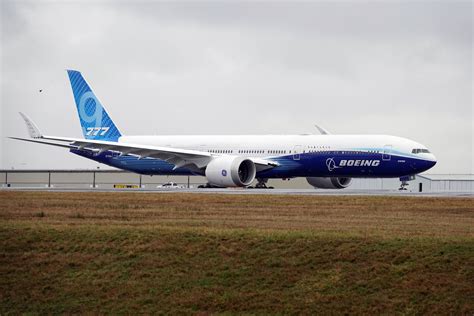
Why No Other Engine Can Power the Boeing 777-300ER Today
The absence of alternative engines is no longer simply a business decision. It has become a practical reality.
The 777-300ER’s systems, performance characteristics, aerodynamics, and certification framework are deeply integrated with the GE90-115B. Introducing a different engine would require extensive redesign, costly testing, and recertification efforts that would provide little economic return.
Furthermore, no manufacturer has a compelling incentive to undertake such a project. The aircraft’s production cycle is mature, while Boeing’s future focus centers on the 777X.
The GE90 proved so effective that replacing it became unnecessary.
In many ways, the story of the Boeing 777-300ER and the GE90 is one of perfect timing. Boeing needed record-breaking performance, airlines demanded reliability, and General Electric delivered a solution that combined both. What began as an exclusive engine agreement evolved into one of the most successful aircraft-engine partnerships in commercial aviation history.
More than two decades after entering service, the Boeing 777-300ER remains inseparable from the giant GE90 hanging beneath its wings—a relationship forged by engineering necessity and sustained by extraordinary success.