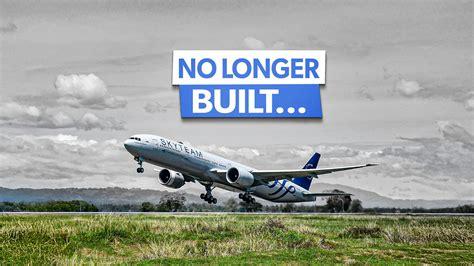
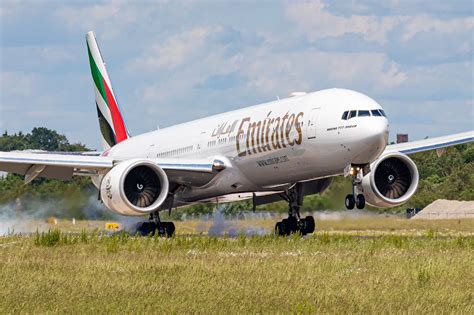
For two decades, the Boeing 777-300ER stood at the center of global long-haul aviation. It was neither the newest aircraft in the sky nor the most revolutionary design ever produced. Yet it achieved something far more significant: it became the benchmark by which modern long-range airliners were measured. Airlines across the world relied on the aircraft to connect continents, replace aging jumbo jets, and generate profits on routes that demanded high capacity, long range, and exceptional reliability.
The numbers alone tell a remarkable story. Between 2004 and 2024, Boeing delivered 837 Boeing 777-300ER aircraft, making it the most successful member of the 777 family and one of the best-selling widebody airliners ever built. The aircraft transformed long-haul operations for major carriers, including Emirates, Air France, Cathay Pacific, Qatar Airways, Singapore Airlines, and dozens of others.
Yet despite its enormous success, the aircraft’s production ended with surprisingly little fanfare. There was no grand farewell ceremony, no worldwide publicity campaign, and no dramatic final announcement. Instead, one of aviation’s most influential aircraft quietly disappeared from Boeing’s production line.
The decision left many industry observers asking the same question: if airlines still depend heavily on the 777-300ER and its replacement remains delayed, why did Boeing stop building it?
The answer lies in a combination of strategic planning, manufacturing realities, changing airline economics, and Boeing’s long-term commitment to the next generation of widebody aircraft.
The story of the 777-300ER’s quiet cancellation reveals how aircraft programs often end not because they fail, but because they succeed long enough to be replaced.
The Boeing 777-300ER entered service during a period when airlines were searching for a more efficient alternative to four-engine aircraft. Carriers around the world operated large fleets of Boeing 747-400s and Airbus A340s, aircraft that offered impressive range but increasingly struggled to justify their operating costs as fuel prices fluctuated and competition intensified.
Boeing recognized an opportunity. By combining twin-engine efficiency with near-jumbo-jet capacity, the company created an aircraft capable of carrying hundreds of passengers across intercontinental distances while significantly reducing operating expenses.
The result was a game-changing aircraft.
Airlines quickly discovered that the 777-300ER could perform missions previously reserved for larger four-engine jets while consuming less fuel and requiring less maintenance. This advantage translated directly into profitability.
For many carriers, the aircraft became the centerpiece of international operations.
Routes connecting Asia, Europe, North America, the Middle East, and Australia increasingly depended on the aircraft’s capabilities. Its combination of payload, cargo capacity, reliability, and passenger comfort made it one of the most versatile long-haul airliners ever produced.
By the mid-2010s, the 777-300ER had become synonymous with successful international aviation.
The Surprisingly Quiet End Of A Historic Aircraft Program
The final years of production unfolded gradually rather than dramatically.
After reaching a peak of 88 deliveries in 2016, output steadily declined. Boeing delivered 32 aircraft in 2018, only four in 2020, none during 2023, and just a single aircraft in 2024.
That final example carried its own unusual story.
Originally intended for China Southern Airlines, the aircraft spent nearly five years in storage before eventually being delivered through leasing company Altavair and entering service with Ethiopian Airlines. Industry observers generally regard it as the final passenger Boeing 777-300ER ever delivered.
Such an ending contrasted sharply with the aircraft’s extraordinary influence.
Few commercial aircraft have dominated their market segment so completely while leaving production with so little public attention. The subdued conclusion reflected a reality that had been developing behind the scenes for years. Airlines were still operating and valuing the aircraft, but orders for new examples had largely disappeared.
The decline was not caused by dissatisfaction with the airplane itself.
In fact, many carriers continued investing millions of dollars into cabin upgrades, premium seating products, and modernization programs designed to keep their fleets competitive for years to come.
The aircraft remained successful.
The production line simply no longer aligned with Boeing’s future strategy.
Boeing Had Already Chosen The 777X As The Successor
The most important factor behind the end of production was Boeing’s commitment to the 777X program.
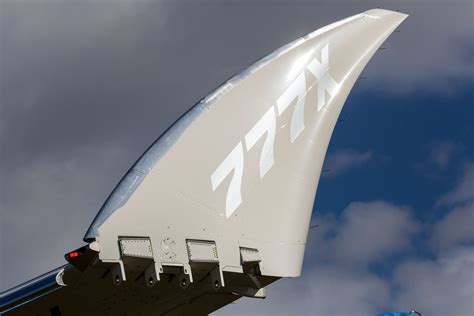
When Boeing officially launched the 777X in 2013, the company positioned it as the future of the large twin-engine market. The new aircraft promised improved fuel efficiency, greater range, more advanced systems, and higher passenger capacity.
From a strategic perspective, Boeing needed airlines to embrace the new platform.
Aircraft development programs require enormous investments measured in billions of dollars. Manufacturers depend on long-term planning to justify those expenditures. Once Boeing publicly committed to the 777X, continuing large-scale production of the older 777-300ER risked creating confusion among customers.
If airlines could continue purchasing the proven older model indefinitely, some might delay or avoid ordering the new aircraft altogether.
Such a situation would undermine Boeing’s transition strategy.
As a result, Boeing gradually shifted marketing, engineering resources, production planning, and supplier commitments toward the next-generation program.
The company effectively made a decision years before the final aircraft rolled out of the factory.
The future belonged to the 777X.
Unfortunately for Boeing, reality proved more complicated than the original plan envisioned.
The 777X Delays Created An Unexpected Gap
Under Boeing’s original timeline, the transition between the 777-300ER and the 777X was supposed to occur relatively smoothly.
Instead, the new aircraft encountered a series of challenges.
Certification requirements became more demanding. Engineering modifications consumed additional time. Regulatory scrutiny increased significantly following broader industry concerns regarding aircraft certification processes. Market conditions also shifted as airlines adjusted their fleet plans during a period of unprecedented disruption.
Each delay pushed deliveries further into the future.
What Boeing expected to be a short overlap evolved into a prolonged gap stretching several years.
Industry forecasts now place first customer deliveries no earlier than 2027, creating the unusual scenario in which the replacement remains unavailable long after production of its predecessor effectively ended.
Despite these setbacks, Boeing never seriously considered reversing its transition.
The company had already invested heavily in the future platform.
Factories had been reorganized.
Suppliers had adapted.
Engineering resources had moved.
The industrial momentum behind the 777X had become too significant to reverse economically.
Consequently, Boeing continued advancing toward the next generation even as airlines remained dependent on the aircraft it no longer produced.
Changing Airline Economics Reduced Demand For New 777-300ER Orders
While the 777X transition played a major role, changing airline economics also weakened demand for new 777-300ER aircraft.
When the jet entered service in 2004, large hub-and-spoke networks dominated international aviation. Airlines concentrated passengers through major connecting hubs before sending them across oceans aboard high-capacity aircraft.
The 777-300ER excelled in this environment.
However, aviation evolved considerably during the following two decades.
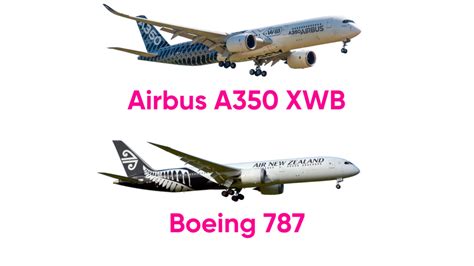
The arrival of the Boeing 787 Dreamliner and Airbus A350 fundamentally changed how airlines approached route planning. These aircraft delivered substantial fuel-efficiency improvements while offering slightly lower passenger capacity.
That combination proved highly attractive.
Instead of filling a very large aircraft, airlines could operate more frequent services using smaller but highly efficient widebody jets.
This strategy opened opportunities to connect secondary cities directly without requiring passengers to travel through major hubs.
Point-to-point travel gained momentum.
As airlines embraced this model, many routes that once required a 777-300ER could be served profitably by a Boeing 787 or Airbus A350.
The result was a gradual shrinking of the market segment that had fueled the 777-300ER’s dominance.
The aircraft remained highly capable and commercially valuable.
It simply faced stronger competition than ever before.
Boeing’s Manufacturing Priorities Had Already Moved Forward
Commercial aircraft production involves far more than assembling airplanes.
Modern widebody manufacturing requires vast networks of suppliers, highly specialized tooling, dedicated production facilities, engineering teams, testing operations, and certification resources.
Supporting two overlapping aircraft generations indefinitely creates substantial inefficiencies.
The 777X introduced several technologies that demanded major manufacturing changes.
Its massive carbon-fiber composite wing became the largest composite wing ever installed on a commercial airliner. The aircraft also introduced an innovative folding wingtip system designed to improve airport compatibility while maximizing aerodynamic efficiency.
Additionally, the powerful GE9X engine required extensive integration and testing efforts.
These developments transformed Boeing’s production priorities.
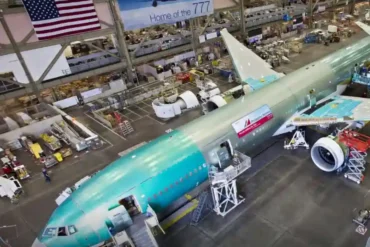
Facilities within the Everett factory increasingly focused on supporting 777X development and preparation.
Equipment was updated.
Workflows were redesigned.
Personnel transitioned toward the newer program.
By the time the full extent of the 777X delays became apparent, Boeing had already crossed a critical threshold.
Returning to high-rate 777-300ER production would have required rebuilding supplier commitments, reallocating factory resources, retraining personnel, and securing sufficient customer demand to justify the investment.
Such a reversal would have been extraordinarily expensive.
From Boeing’s perspective, maintaining the transition remained the more practical option despite the growing delay between aircraft generations.
Airlines Continue Depending On The 777-300ER
Perhaps the most fascinating aspect of the story is that the aircraft remains enormously important even after production ended.
In many aircraft programs, production stops because operators move on to newer alternatives.
The 777-300ER followed a different path.
Airlines still need it.
The delayed arrival of the 777X has forced carriers around the world to extend the lives of existing fleets. Aircraft originally expected to retire have instead received major investments designed to keep them operating for another decade or more.
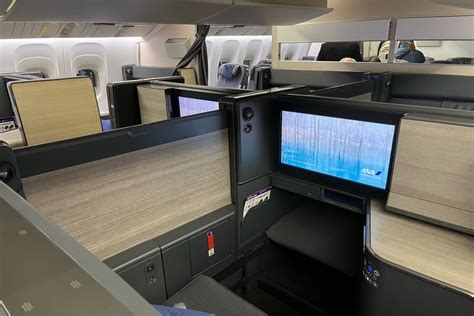
Numerous airlines have installed new business-class suites, upgraded economy cabins, improved inflight entertainment systems, and refreshed interior designs.
These projects often cost millions of dollars per aircraft.
Companies do not make such investments in fleets they intend to retire soon.
The continued modernization demonstrates how strongly airlines value the aircraft.
The situation has also supported residual values and leasing demand. Because replacement capacity remains limited, existing airframes have become increasingly attractive assets.
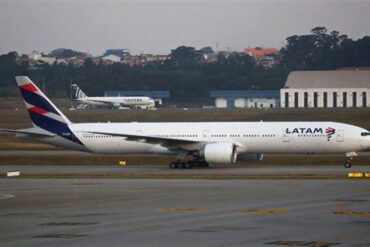
The aircraft continues serving flagship routes operated by carriers such as Emirates, Air France, Cathay Pacific, Ethiopian Airlines, and others.
Every day, hundreds of Boeing 777-300ERs transport passengers across the world’s busiest intercontinental corridors.
The aircraft remains a cornerstone of international aviation despite no longer being available for purchase from Boeing.
A Rare Aviation Paradox
The end of the Boeing 777-300ER production line represents one of the most unusual transitions in modern aviation history.
Aircraft programs typically disappear because technology advances, customer demand evaporates, or operating economics become unfavorable.
None of those conditions fully applied here.
The 777-300ER remained respected, profitable, reliable, and widely used.
Airlines continued flying it.
Passengers continued booking it.
Leasing companies continued valuing it.
The aircraft did not leave production because it became obsolete.
Instead, it disappeared because Boeing committed itself to a future built around the 777X. Once that commitment was made, industrial planning, manufacturing investments, supplier relationships, and strategic priorities gradually moved beyond the classic 777 generation.
At the same time, evolving airline economics reduced the volume of new orders required to sustain large-scale production.
The result was a rare paradox.
One of the world’s most successful airliners stopped being built while remaining indispensable to the industry it helped shape.
Years after the final aircraft quietly left Boeing’s factory, the Boeing 777-300ER continues to dominate long-haul routes across the globe. Its production may have ended, but its operational relevance remains unmistakable. In an industry defined by constant technological change, few aircraft have achieved such a remarkable combination of commercial success, longevity, and enduring importance. The silent conclusion of the 777-300ER program was not the end of a failed aircraft. It was the final chapter of one of aviation’s greatest success stories.