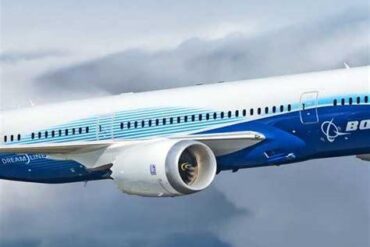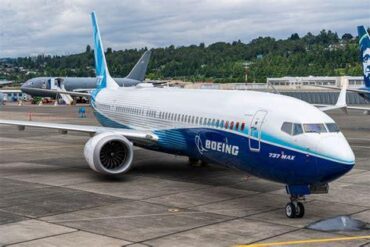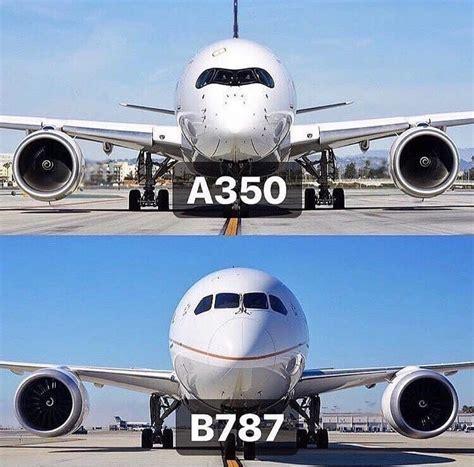
The modern widebody market is not just a contest of aluminum and carbon fiber. It is a battle over long-haul economics, airline strategy, and the future shape of global connectivity. At the center of this struggle stands the Boeing 787 Dreamliner, the world’s best-selling passenger widebody aircraft, and its closest rival, the Airbus A350. On paper, both aircraft represent the pinnacle of 21st-century engineering. In practice, the Dreamliner’s commercial dominance has created a subtle but unmistakable strategic headache for Airbus.
More than 14 years after entering commercial service in 2011, the Boeing 787 has crossed the remarkable milestone of carrying over one billion passengers. The global fleet now exceeds 1,175 aircraft, operating more than 2,100 flights per day across 85 countries. Those numbers are not merely impressive—they signal a structural shift in how airlines deploy widebody jets.
The question is not whether the Airbus A350 is technologically competitive. It unquestionably is. The deeper issue is why the 787 has captured more orders, penetrated more route networks, and embedded itself more deeply into airline business models worldwide. To understand why Airbus may be concerned, one must examine how the Dreamliner reshaped the economics of long-haul flying.
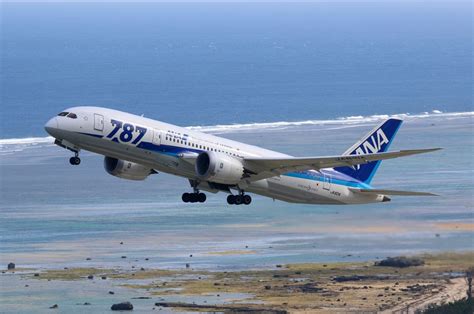
The Boeing 787: A Program That Rewrote Long-Haul Economics
Launched in 2004, the Boeing 787 was conceived as a next-generation replacement for aging widebodies like the 767 and early A330 variants. Boeing’s bet was radical at the time: instead of simply building a bigger aircraft, it would build a smarter one. The Dreamliner would use carbon-fiber-reinforced polymer composites for roughly 50% of its primary structure, dramatically reducing weight and improving fuel efficiency.
The result was a widebody optimized not for sheer capacity, but for long-range efficiency on thinner routes. Airlines no longer needed to rely solely on massive hubs to justify widebody service. A 787-8 or 787-9 could profitably connect secondary cities across continents, unlocking entirely new nonstop markets.
Three variants define the family:
- The 787-8, seating around 242 passengers typically, with a range of approximately 8,400 miles.
- The 787-9, the program’s sweet spot, accommodating roughly 296 passengers and flying up to 8,705 miles.
- The larger 787-10, optimized for capacity at around 318 passengers, with a shorter range of 7,285 miles.
This tiered approach allowed airlines to right-size aircraft for specific missions. It also created a flexible replacement pathway for multiple legacy fleets. For carriers operating long, thin routes—where passenger demand is steady but not enormous—the Dreamliner proved almost surgically precise.
One Billion Passengers: Scale as Strategic Power
The statistic of one billion passengers carried is more than a marketing milestone. It reflects deep fleet penetration and global operational trust. The 787 fleet has accumulated nearly five million flights and more than 30 million flight hours. Each day, approximately 480,000 passengers board a Dreamliner somewhere in the world.
The aircraft now serves over 520 airports, including more than 400 routes that previously had no nonstop service. That expansion matters. When airlines use an aircraft type to open new markets, they tend to develop route networks, maintenance ecosystems, and crew training pipelines around it. The 787 has become structurally embedded in global aviation.
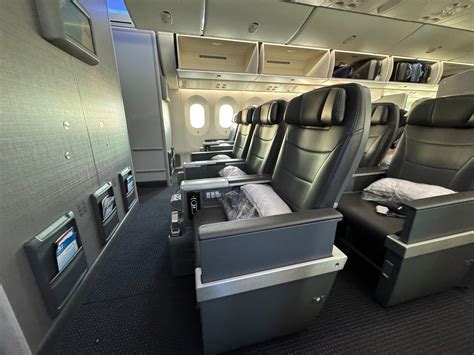
Consider extremes of operation. The longest 787 route currently connects Perth and London Heathrow, spanning roughly 9,010 miles. At the other end of the spectrum, the aircraft has flown a 74-mile hop between Aruba and Curaçao. That versatility illustrates something profound: the 787 is not merely a long-haul specialist; it is a platform adaptable across mission profiles.
For Airbus, this widespread operational footprint creates a challenge. Market leadership compounds over time. The more 787s flying, the more airlines are inclined to order additional units for fleet commonality.
The Airbus A350: Technological Masterpiece, Different Market Logic
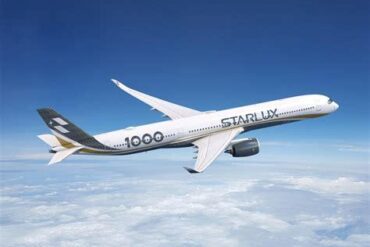
The Airbus A350 entered service in 2015 with Qatar Airways. Like the 787, it leverages advanced composites—over 50% of its structure uses carbon fiber. Its aerodynamics, including distinctive adaptive winglets, were designed to deliver approximately 25% greater fuel efficiency compared to older-generation aircraft.
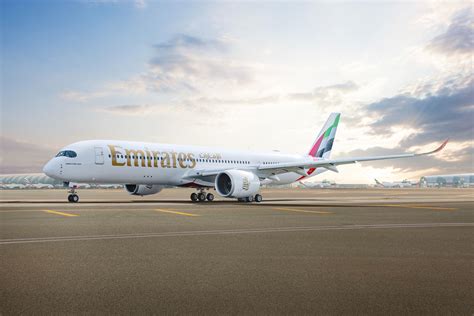
The A350 family consists primarily of two passenger variants:
- The A350-900, optimized for long-haul missions with seating typically around 300-325 passengers.
- The larger A350-1000, designed to compete more directly with the Boeing 777 in higher-capacity markets.
In terms of technology, cabin environment, noise levels, and fuel burn, the A350 stands among the most advanced widebodies ever built. Many industry analysts consider it a technical triumph.
Yet technology alone does not dictate sales volume. Market segmentation does.
The A350 generally occupies a slightly larger capacity niche than the 787-8 and 787-9. That positioning makes it ideal for trunk routes with stronger demand. But in an era where airlines increasingly favor flexibility and risk mitigation, the slightly smaller 787 often fits more use cases.
Timing, Market Cycles, and First-Mover Advantage
The 787 entered commercial service roughly four years before the A350. In aviation program timelines, four years can be decisive. Airlines placed early long-haul replacement orders during a period when fuel prices were volatile and efficiency was paramount. Boeing secured significant early commitments.
Once airlines invested in training, spare parts inventories, and maintenance procedures for the 787, switching to another platform for incremental expansion became less attractive. Fleet commonality reduces operational complexity and cost. This inertia is powerful.
By the time the A350 matured, many carriers had already standardized around the Dreamliner for mid-sized long-haul missions. Airbus entered a market where Boeing had already shaped airline expectations.
The “Right Size” Advantage: Why the 787 Hits a Sweet Spot
One of the Dreamliner’s most strategic strengths lies in its sizing. The 787-8 and 787-9 are ideally configured for long-range routes that do not consistently fill 350-plus seats. Airlines operating between secondary cities—think Manchester to Orlando, or Osaka to Seattle—benefit from lower trip costs without sacrificing range.
Low-cost long-haul carriers such as Scoot and Norse Atlantic Airways have embraced the 787 precisely because it allows them to experiment with intercontinental routes at manageable risk levels. The aircraft’s economics align with a fragmented global demand environment.
The A350 excels in higher-capacity, high-yield corridors. But not every long-haul route justifies that scale. In a world where network planners value flexibility, the 787’s mid-capacity niche is a powerful commercial lever.
Financial Reality: Profitability vs Volume
Order counts tell only part of the story. It is widely speculated that the A350 program may have generated healthier per-unit margins for Airbus compared to the early years of the 787, which were burdened by development overruns and compensation payments due to production delays.
The 787 program endured lithium-ion battery incidents in 2013 that led to a temporary global grounding. Later, manufacturing quality issues halted deliveries between May 2021 and July 2022. These disruptions imposed significant financial strain and reputational pressure on Boeing.
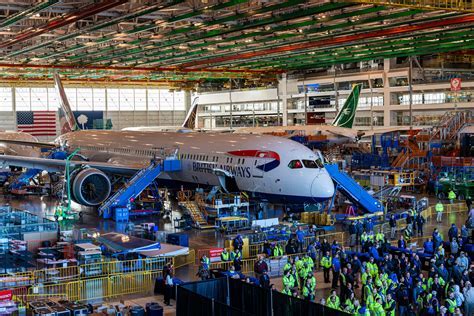
Despite those setbacks, airlines continued ordering the Dreamliner. That resilience signals something deeper than marketing—it suggests that the aircraft’s operational economics outweighed temporary turbulence.
For Airbus, this dynamic presents a paradox. The A350 may be technologically equal or superior in certain respects, yet the market momentum favors its rival.
Safety, Perception, and Long-Term Confidence
In June 2025, the fatal crash of an Air India 787 shortly after departure from Ahmedabad marked the type’s first fatal accident. Any such tragedy inevitably raises scrutiny. Aviation history shows, however, that single events rarely define the long-term trajectory of mature aircraft programs, provided investigations lead to clear conclusions and corrective measures if required.
The 787’s broader operational history spans millions of flights. Statistically, it remains aligned with the exceptionally high safety standards typical of modern commercial aviation. Airbus, too, benefits from similar safety performance across the A350 fleet.
The more relevant question for Airbus is not short-term perception shifts but long-term fleet strategy. Airlines make widebody decisions based on decades-long planning horizons.
Should Airbus Truly Be Worried?
On the surface, Boeing’s sales dominance in the widebody mid-market could justify concern. The 787 is the best-selling passenger widebody aircraft in history, with more than 2,000 orders from 89 airlines worldwide. It operates more than 12 hours per day on average per aircraft. Those metrics represent not just popularity, but structural entrenchment.
Yet worry may be too strong a word. The A350 occupies a distinct strategic niche. As airlines retire aging 777-200ERs and A340s, the A350-900 and -1000 become compelling replacements. Moreover, global air traffic growth—particularly in Asia-Pacific and the Middle East—may increasingly favor larger-capacity aircraft on high-density corridors.
The competitive landscape is not static. Boeing itself must navigate production scaling challenges, regulatory scrutiny, and the eventual need to refresh its product lineup. Airbus continues refining the A350 platform, including the upcoming A350F freighter variant, broadening the program’s relevance.
In aviation, dominance is rarely permanent. Market cycles shift. Fuel prices fluctuate. Route structures evolve. The Dreamliner’s commercial success exerts pressure on Airbus, but it also pushes both manufacturers toward continual innovation.
The real story is not about anxiety—it is about strategic tension in a duopoly that defines long-haul travel. The 787 demonstrated that efficiency and right-sized capacity can unlock global connectivity at unprecedented scale. The A350 demonstrates that technological refinement and larger-segment optimization remain vital.
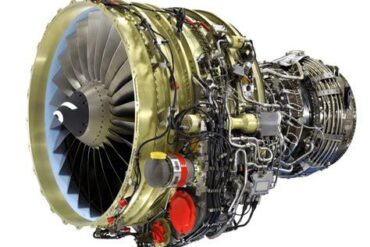
In the end, airlines will continue balancing flexibility against capacity, risk against opportunity. And somewhere at 35,000 feet, passengers will board either a Dreamliner or an A350, scarcely aware that beneath the quiet hum of high-bypass turbofan engines lies one of the most consequential industrial rivalries of the modern era.