The rivalry between Boeing and Lockheed Martin is less a simple competition and more a story of two radically different philosophies shaping modern air warfare. One leans into singular, overwhelming production surges that redefine conflict itself; the other thrives on sustained innovation across multiple aircraft programs that quietly dominate global fleets. When measured purely by production numbers, a single Boeing aircraft still towers above the rest. Yet when viewed through the broader lens of influence, adaptability, and global reach, Lockheed’s portfolio presents a formidable counterargument.
This tension—between peak dominance and sustained excellence—frames the debate over which aerospace titan truly produced the best-selling military aircraft of all time. The answer depends not just on numbers, but on how those numbers were achieved, and what they ultimately changed.
Boeing’s Defining Moment: The B-17 Flying Fortress
Boeing’s claim to the crown rests firmly on the shoulders of the B-17 Flying Fortress, a machine that didn’t just win contracts—it helped win a world war. With an astonishing 12,731 units produced, the B-17 remains the most-produced combat aircraft in history, a record forged under the existential pressures of World War II.
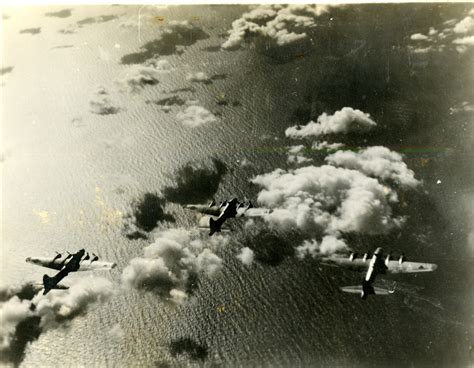
What made the B-17 extraordinary was not merely its durability or defensive firepower, but the industrial ecosystem that enabled its mass production. Boeing, alongside Douglas and Lockheed-Vega, transformed aircraft manufacturing into a high-efficiency machine. Assembly lines stretched across vast factory floors, incorporating modular construction techniques, subcontracting networks, and early forms of statistical quality control. These innovations allowed the United States to produce bombers at a scale that overwhelmed Axis defenses.
In combat, the B-17 embodied the doctrine of strategic bombing. Its ability to fly long distances, absorb heavy damage, and deliver payloads with relative precision made it the backbone of Allied air campaigns over Europe. Massive formations—known as “combat boxes”—turned the sky into a grid of interlocking machine gun fire, creating defensive networks that were incredibly difficult to penetrate.
The result was not just a best-seller, but a symbol of industrialized warfare, where production capacity itself became a weapon.
The B-29 Superfortress: A Technological Leap Forward
If the B-17 represented scale, the B-29 Superfortress represented sophistication. Produced in 3,970 units, the B-29 introduced technologies that would define modern aviation for decades.
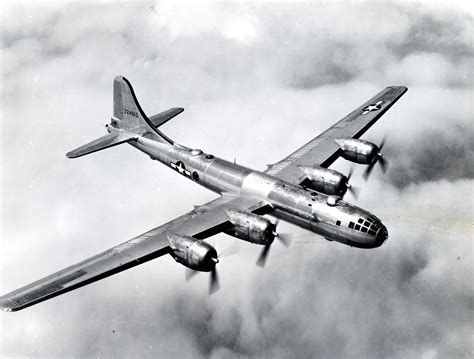
This aircraft featured pressurized cabins, remote-controlled gun turrets, and advanced fire-control systems—features that were revolutionary at the time. It was also the first bomber capable of true intercontinental reach, extending the strategic horizon of air power beyond anything previously imagined.
The B-29’s development cost exceeded even that of the Manhattan Project, underscoring the immense investment required to push technological boundaries. Yet that investment paid off decisively. The aircraft enabled sustained bombing campaigns across the Pacific and ultimately delivered the only nuclear weapons ever used in warfare.
Even as jet engines began to dominate the postwar era, the B-29 continued to serve into the Korean War, proving that its design was not just advanced, but enduring. It set a precedent for high-cost, high-capability systems that continues to influence defense procurement today.
Lockheed’s Strategy: A Portfolio of High-Selling Icons
Where Boeing surged with singular dominance, Lockheed Martin built its legacy through a series of consistently successful aircraft, each addressing a different operational need. Rather than relying on one record-breaking model, Lockheed developed a diverse ecosystem of aircraft, many of which achieved remarkable production numbers in their own right.
This approach created resilience. While no single Lockheed aircraft surpassed the B-17’s record, the company’s cumulative impact across fighter jets, transport planes, and trainers arguably reshaped global air forces more comprehensively.
The F-35 Lightning II: The Modern Benchmark of Success
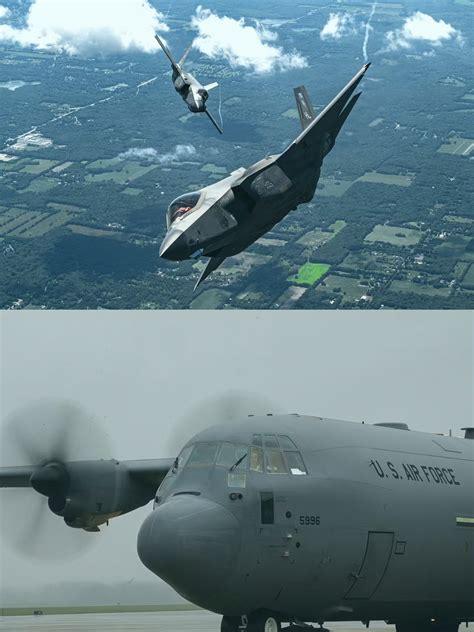
The F-35 Lightning II stands as Lockheed Martin’s most ambitious and globally influential program. With over 1,300 aircraft delivered and more than 3,400 on order, it is already one of the most successful military aviation projects in history.
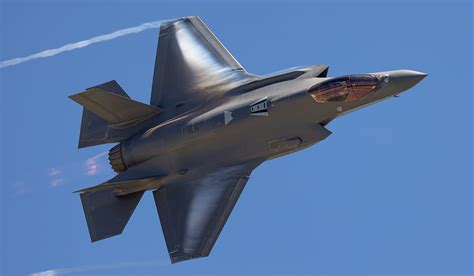
What sets the F-35 apart is not just its stealth capabilities or advanced sensor fusion, but its international integration. Developed as a joint program across multiple U.S. military branches and allied nations, the F-35 represents a new model of defense collaboration. Countries across Europe, Asia, and beyond have invested in the platform, creating an unprecedented level of interoperability.
The aircraft’s network-centric warfare capabilities allow it to act as a flying data hub, sharing real-time information across forces. This has fundamentally altered how modern militaries operate, shifting the emphasis from individual platform performance to system-wide connectivity.
Financially, the program exceeds $400 billion, making it the most expensive defense project ever undertaken. Yet its scale reflects its ambition: to standardize fifth-generation airpower across allied nations and maintain a strategic edge against near-peer adversaries.
The C-130 Hercules: The Backbone of Global Logistics
While fighters often capture headlines, the C-130 Hercules quietly became one of the most indispensable aircraft in military history. With more than 2,700 units produced, it remains in continuous production more than seven decades after its first flight.
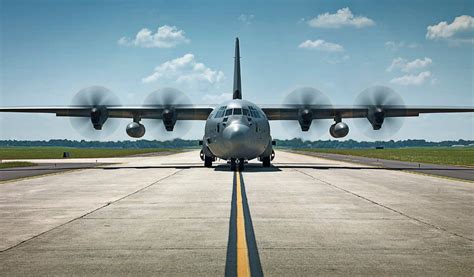
The Hercules excels in tactical airlift, capable of operating from short, unprepared runways while carrying heavy payloads. Its high-wing design and rugged construction make it uniquely suited for challenging environments, from desert airstrips to icy polar regions.
What truly defines the C-130 is its adaptability. Over the years, it has been transformed into gunships, reconnaissance platforms, refueling tankers, and special operations aircraft. This modularity has extended its lifespan and ensured its relevance across multiple generations of warfare.
The aircraft’s global reach is unmatched. Operated by dozens of countries, it has become a standardized logistical backbone, enabling rapid deployment and humanitarian response on a worldwide scale.
The F-16 Fighting Falcon: Democratizing Air Power
The F-16 Fighting Falcon, with over 4,600 units produced, represents a different kind of success—one rooted in accessibility and adaptability.
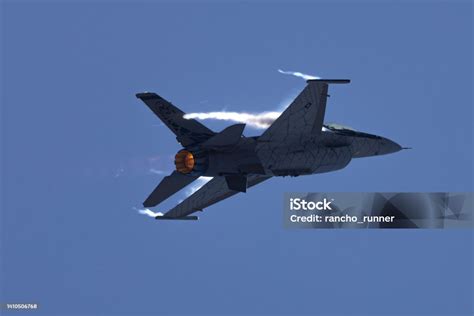
Originally designed as a lightweight, highly maneuverable fighter, the F-16 introduced innovations such as fly-by-wire controls, a side-mounted joystick, and a cockpit optimized for pilot visibility. These features enhanced agility and made the aircraft exceptionally responsive in combat.
However, its true impact came from its export success. The United States actively promoted the F-16 among allies, even supporting licensed production in countries like Turkey, South Korea, and Belgium. This created a global network of operators and manufacturers, driving down costs and increasing interoperability.
The result was a fighter that became the default choice for dozens of air forces, effectively standardizing air combat capabilities across NATO and allied nations. Even today, the F-16 continues to receive upgrades, proving that a well-designed platform can remain relevant for decades.
The T-33 Shooting Star: Training the Jet Age
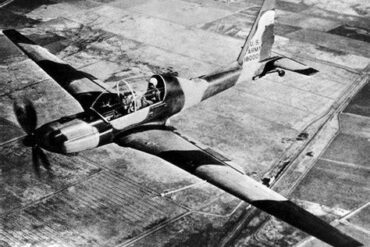
The transition from propeller-driven aircraft to jets required a new kind of training platform, and the T-33 Shooting Star filled that role with remarkable success. With 6,557 units produced, it became one of the most widely used jet trainers in history.
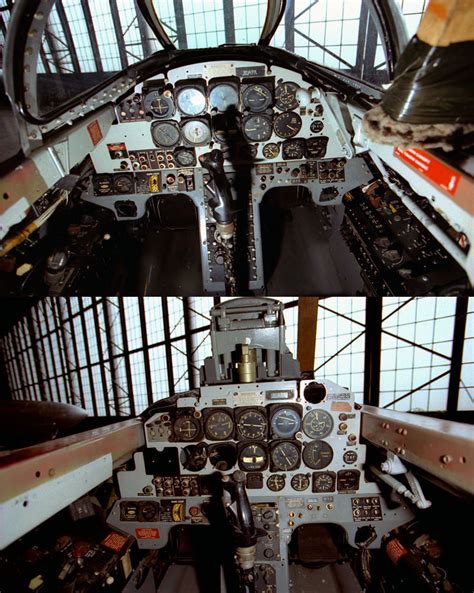
Its simplicity was its strength. The T-33 offered stable handling, straightforward maintenance, and a forgiving flight profile, making it ideal for training new pilots. It enabled air forces around the world to build independent jet training programs, accelerating the adoption of jet technology during the Cold War.
Beyond its training role, the T-33 influenced pilot development standards and operational doctrine. Thousands of pilots who would later fly advanced fighters began their careers in this aircraft, making it a foundational element of modern airpower.
The P-38 Lightning: Innovation Under Fire
The P-38 Lightning, with 10,037 units produced, stands as Lockheed’s most-produced wartime aircraft and one of the most distinctive fighters ever built.
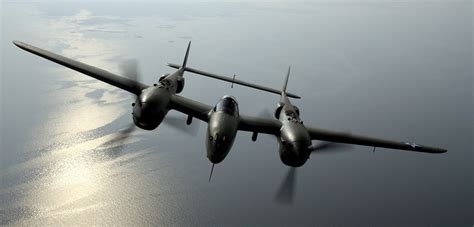
Featuring a unique twin-boom design, turbo-supercharged engines, and heavy armament, the P-38 excelled in long-range missions and high-altitude combat. It served in every major theater of World War II, with particular effectiveness in the Pacific.
The aircraft’s innovations pushed the boundaries of piston-engine design, setting new standards for performance and engineering complexity. It also demonstrated the value of multi-role capability, performing reconnaissance, interception, and ground-attack missions with equal effectiveness.
Its legacy extends beyond its production numbers. The “Lightning” name itself lives on in the F-35, symbolizing continuity in Lockheed’s design philosophy.
Numbers vs Influence: Redefining “Best-Selling”
At first glance, the answer seems straightforward: the B-17 Flying Fortress, with its unmatched production total, is the best-selling military aircraft of all time. But this conclusion simplifies a much more nuanced reality.
Boeing’s achievement was concentrated in a specific historical moment—a period when total war demanded unprecedented production volumes. The B-17’s record reflects not just engineering excellence, but the extraordinary industrial mobilization of the United States during World War II.
Lockheed Martin, by contrast, achieved success through longevity and diversification. Its aircraft span multiple eras, from piston-engine fighters to stealth jets, each contributing to a cumulative legacy that arguably surpasses any single model.
The F-35 alone, with its growing order book, may eventually challenge historical production records, especially given its multinational backing and long-term production horizon.
Industrial Philosophy: Mass Production vs Global Integration
The contrast between Boeing and Lockheed ultimately comes down to industrial philosophy. Boeing’s wartime strategy emphasized scale and speed, leveraging centralized production to achieve overwhelming output. Lockheed’s approach, particularly in the modern era, focuses on collaboration and integration, distributing production and operational responsibility across a global network.
This shift reflects broader changes in warfare. Modern conflicts prioritize precision, information dominance, and interoperability over sheer volume. As a result, the definition of success has evolved from “how many” to “how capable and connected.”
Conclusion: A Tale of Two Titans
Declaring a single winner in the Boeing vs Lockheed debate depends entirely on the standard used. If the metric is pure production numbers, Boeing’s B-17 Flying Fortress remains unmatched—a towering achievement that defined an era. If the focus shifts to sustained impact, global reach, and technological evolution, Lockheed Martin’s portfolio presents a compelling case for dominance.
In truth, the rivalry is less about who wins and more about how each company shaped the trajectory of military aviation. Boeing demonstrated the power of industrial scale at a moment when the world needed it most. Lockheed showed how continuous innovation and international collaboration could redefine airpower for generations.
Together, they tell a story not just of competition, but of progress—measured in aluminum, ambition, and the relentless pursuit of the skies.