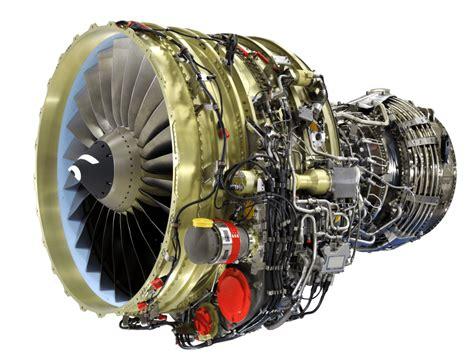
The CFM56 engine is more than just a powerplant—it is the foundation on which modern single-aisle aviation has thrived for nearly five decades. Developed by CFM International, a joint venture between General Electric (GE) Aerospace of the United States and Safran Aircraft Engines (formerly Snecma) of France, the CFM56 has become the most-produced commercial jet engine in history, powering iconic aircraft such as the Boeing 737 and the Airbus A320. With over 37,500 engines delivered to more than 570 operators worldwide, the CFM56 remains a cornerstone of commercial aviation.
The Origins of the CFM56
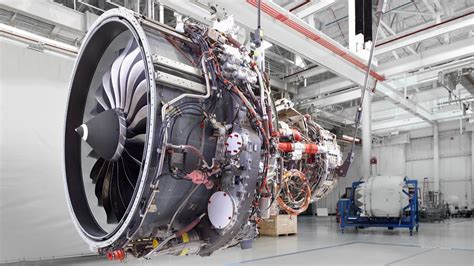
The story of the CFM56 begins in the late 1960s, when Snecma (now Safran) sought to transition from building military engines to competing in the growing commercial aviation market. Snecma initiated development on the M56 engine, but lacked the technical expertise in high-pressure turbine design. To overcome this, Snecma began discussions with global manufacturers including Pratt & Whitney, Rolls-Royce, and GE Aviation.
Previous collaborations with GE on the CF6-50 for the Airbus A300 made the American manufacturer the natural choice. In 1974, the partnership was formalized, creating CFM International, headquartered in Cincinnati, Ohio. This collaboration combined GE’s expertise in high-pressure systems with Snecma’s strengths in fans and low-pressure turbines, laying the foundation for the CFM56 program.

Development and Early Milestones
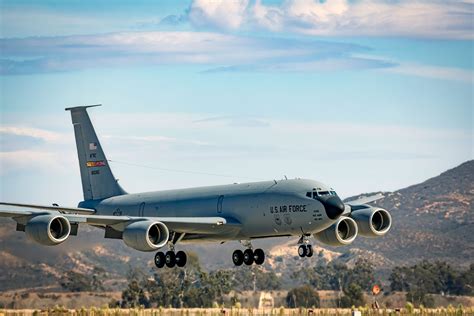
The first CFM56 prototype ran in June 1974, and by 1977, flight tests began on two platforms: the McDonnell Douglas YC-15 and a Sud Aviation Caravelle. While initially struggling to find commercial takers, the program secured a crucial breakthrough with the U.S. Air Force KC-135 Stratotanker re-engining project.
The results were revolutionary:
- 25% fuel savings compared to the Pratt & Whitney JT3D
- 3,500 ft shorter takeoff distance
- Dramatically reduced noise footprint
This contract established the CFM56 as a reliable and efficient solution. Soon after, the engine was selected for the E-3 Sentry, the E-6 Mercury, and several DC-8 re-engining programs, building momentum for entry into mainstream commercial aviation.
CFM56 in Commercial Aviation
Boeing and the 737 Classic
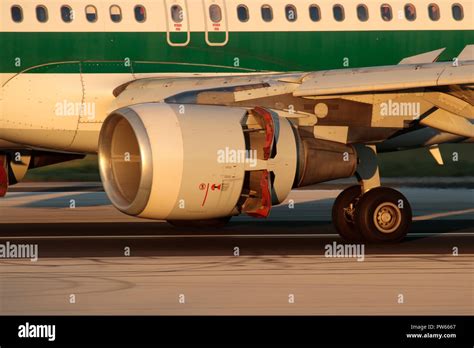
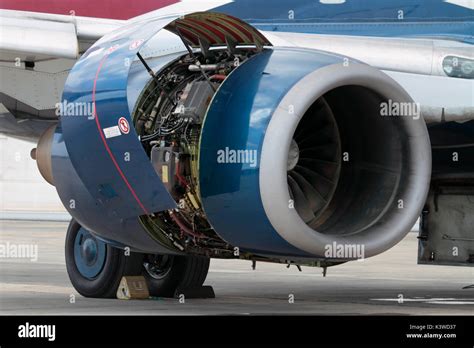
The true breakthrough came in the 1980s, when Boeing selected the CFM56-3 for its 737 Classic family. Engineers faced challenges integrating the engine due to the low ground clearance of the 737 fuselage. The solution was an innovative flattened nacelle design, giving the aircraft its distinctive “hamster pouch” look.
This decision transformed the 737 into one of the best-selling jetliners in history, with over 5,000 aircraft delivered using the CFM56-3 series.
The Next Generation: 737 NG
In the 1990s, the CFM56-7B was developed for the 737 Next Generation (NG) family. Offering higher thrust, FADEC (Full Authority Digital Engine Control), and improved cooling, the -7B became the most produced engine variant in the family. It remains the backbone of many fleets today.
Airbus and the A320 Family
Airbus adopted the CFM56-5A for the A320 in the late 1980s, later upgraded to the CFM56-5B. This variant powered the entire A320ceo family (A318, A319, A320, A321), offering enhanced fuel efficiency and thrust options.
Airbus also utilized the CFM56-5C to power the four-engine A340, demonstrating the engine’s adaptability to both narrowbody and widebody platforms.
Design Features and Performance
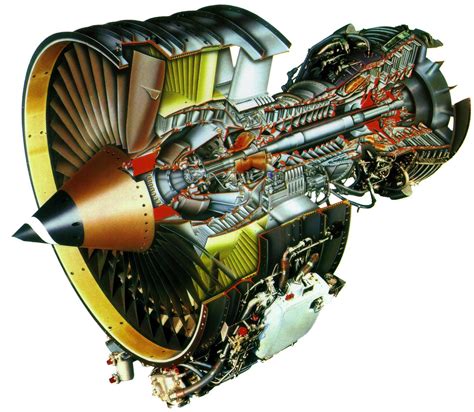
The CFM56 is a high-bypass turbofan engine, optimized for short- and medium-haul operations.
Key features include:
- Fan Diameter: 60–68 inches
- Bypass Ratio: 5:1 to 6:1 for improved fuel burn and reduced noise
- Dual-Spool Design: independent high-pressure and low-pressure spools
- Modular Construction: enabling rapid replacement of major modules
While not the most powerful engine of its era, the CFM56 achieved legendary reliability, with time-on-wing cycles surpassing expectations. Airlines valued this ease of maintenance, which directly translated into lower operating costs.
Aircraft Powered by the CFM56
Commercial Aircraft Applications
| Aircraft Type | CFM56 Variant |
|---|---|
| Boeing 737 Classic | CFM56-3 |
| Boeing 737 NG | CFM56-7B |
| Airbus A318 | CFM56-5 |
| Airbus A319/A320/A321 | CFM56-5 |
| Airbus A340 | CFM56-5C |
| McDonnell Douglas DC-8 | CFM56-2 |
Airbus A320ceo Family Performance
| Specification | A318 | A319 | A320 | A321 |
|---|---|---|---|---|
| MTOW | 150,000 lbs | 166,000 lbs | 172,000 lbs | 206,000 lbs |
| Fuel Capacity | 6,400 gal | 7,980 gal | 7,200 gal | 7,930 gal |
| Cruise Speed | 447 knots | 447 knots | 447 knots | 447 knots |
| Max Speed | 470 knots | 470 knots | 470 knots | 470 knots |
| Range (nm) | 3,100 | 4,320 | 3,860 | 3,200 |
Boeing 737 NG Family Performance
| Specification | 737-600 | 737-700 | 737-800 | 737-900 |
|---|---|---|---|---|
| MTOW | 144,500 lbs | 154,500 lbs | 174,200 lbs | 187,700 lbs |
| Fuel Capacity | 6,875 gal | 7,837 gal | 6,875 gal | 7,837 gal |
| Cruise Speed | 450 knots | 447 knots | 454 knots | 453 knots |
| Max Speed | 470 knots | 470 knots | 470 knots | 470 knots |
| Range (nm) | 3,050 | 3,365 | 3,115 | 3,200 |
Legacy and Market Impact
The CFM56 has not only powered thousands of aircraft but has reshaped airline economics. Its fuel efficiency, low noise profile, and durability made it the go-to engine for airlines worldwide. Even after the introduction of the CFM LEAP engine, many carriers continue to operate CFM56-powered fleets, especially in cargo, charter, and regional markets.
Its success is also evident in the aftermarket support ecosystem, where abundant spare parts and overhaul facilities keep maintenance costs manageable. For airlines in emerging markets, the CFM56 remains a cost-effective and reliable choice.
Conclusion
The CFM56 engine is not just the best-selling jet engine in history—it is the engine that built the modern era of commercial aviation. By powering both the Boeing 737 and the Airbus A320, it became the backbone of the global single-aisle market. Its combination of durability, efficiency, and adaptability ensured that it dominated the skies for decades and remains an indispensable part of aviation even today.
FAQ
Why is the CFM56 considered the best-selling engine in aviation history?
Because it powered both the Boeing 737 and Airbus A320 families—the two most widely produced commercial aircraft in the world. More than 37,500 engines have been delivered.
How does the CFM56 compare to its successor, the CFM LEAP?
The LEAP engine offers 15% better fuel efficiency, lower emissions, and quieter operations, but the CFM56 continues to dominate due to its proven reliability and lower maintenance costs.
Which military aircraft use the CFM56?
Several platforms, including the KC-135 Stratotanker, E-3 Sentry AWACS, E-6 Mercury, RC-135 reconnaissance aircraft, and P-8 Poseidon, all operate with variants of the CFM56.