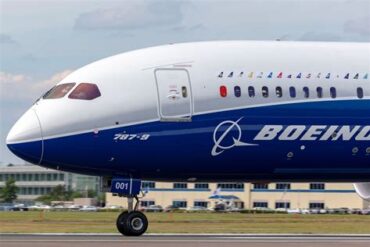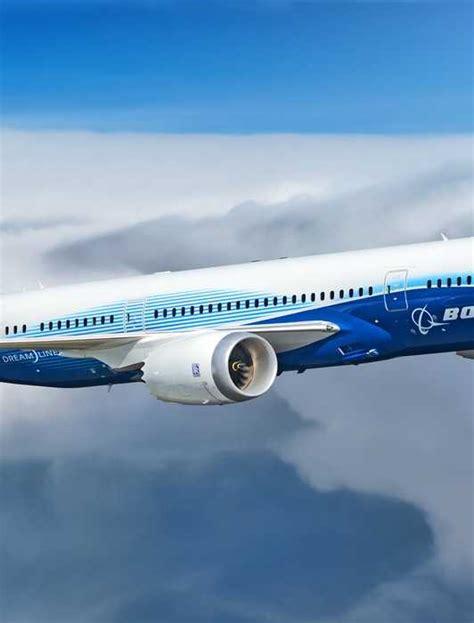
The Boeing 787 Dreamliner Has Redefined The Widebody Aircraft Market
The Boeing 787 Dreamliner has achieved something few aircraft programs in aviation history have managed: it has fundamentally changed how airlines think about long-haul travel. In less than 15 years since entering commercial service, the aircraft has become the world’s best-selling passenger widebody aircraft, surpassing traditional giants and reshaping the competitive landscape between Boeing and Airbus.
With more than 2,000 orders from nearly 90 customers, the Dreamliner has established itself as a cornerstone of global airline fleets. The aircraft has carried more than a billion passengers and completed millions of flights, proving that a smaller, highly efficient twin-aisle aircraft could outperform larger widebodies in the modern aviation market.
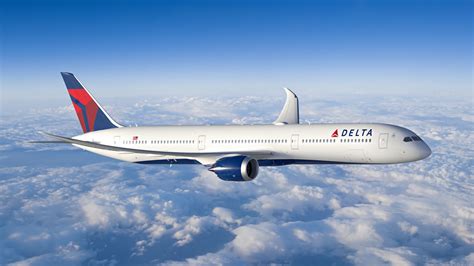
The success of the 787 is based on a simple but powerful idea: airlines no longer need the largest aircraft to operate profitable long-distance routes. Instead, they increasingly want aircraft that can efficiently connect smaller cities, reduce operating costs, and offer passengers nonstop travel options. This philosophy has allowed Boeing to capture a segment of the market that Airbus has struggled to challenge directly.
The Dreamliner’s rise represents more than just a commercial victory for Boeing. It reflects a major shift in global aviation strategy, where flexibility, fuel efficiency, and route optimization have become as important as passenger capacity. For Airbus, this shift has created a strategic challenge that continues to grow.
How The Boeing 787 Changed Long-Haul Aviation Forever
When Boeing launched the 787 program, the company made a risky decision. Instead of developing another large-capacity aircraft similar to the Boeing 747 or Airbus A380, Boeing focused on creating a mid-sized widebody designed around efficiency.
The concept was revolutionary. Airlines had traditionally relied on large aircraft to connect major international hubs. Boeing believed there was a growing market for smaller aircraft capable of flying long distances while maintaining strong economics. The Dreamliner was designed to serve this emerging demand.
The development process was far from smooth. The program experienced significant delays, production difficulties, and technical challenges, including problems with the aircraft’s lithium-ion battery system. These issues created doubts about whether Boeing’s ambitious vision could succeed.
However, once the aircraft entered airline service, those concerns gradually disappeared. Operators quickly recognized the advantages of the 787’s advanced design, including lower fuel consumption, improved reliability, and greater route flexibility.
Today, the Dreamliner has become a familiar sight at airports worldwide. Airlines including United Airlines, Qantas, and All Nippon Airways have used the aircraft to expand international networks and introduce routes that would have been difficult to justify with older widebody aircraft.
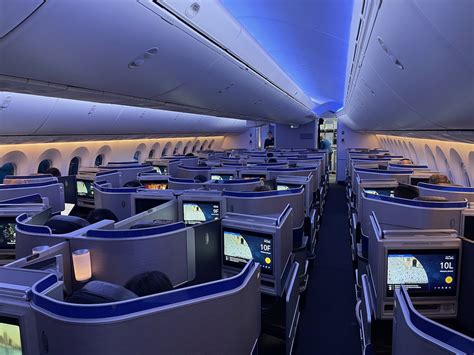
The aircraft’s success has created a powerful cycle. As more airlines adopt the 787, maintenance networks expand, pilot availability improves, and leasing companies gain confidence in the aircraft’s long-term value. This strengthens Boeing’s position even further.
Why The 787 Dreamliner’s Efficiency Became Its Greatest Advantage
The biggest reason behind the Dreamliner’s popularity is efficiency. The aircraft introduced a new generation of commercial aircraft technology, with approximately 50% composite materials used throughout its structure.
Unlike traditional aluminum aircraft, composite materials allow Boeing to reduce weight while improving structural strength. This contributes to lower fuel consumption, longer range, and improved operational performance.
The 787 typically delivers around 20% to 25% lower fuel consumption compared with older-generation widebody aircraft. At a time when airlines face unpredictable fuel prices and increasing environmental pressure, these savings provide a significant financial advantage.
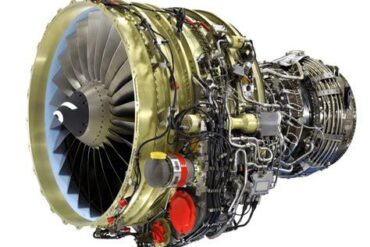
The Dreamliner is powered by advanced high-bypass turbofan engines, including the General Electric GEnx and Rolls-Royce Trent 1000, which were specifically developed to improve efficiency and reduce emissions.
But the aircraft’s advantages extend beyond fuel savings. The 787 also introduced several passenger-focused improvements. Its cabin design features larger windows, higher humidity levels, lower cabin altitude, and quieter engines. These details improve passenger comfort on flights lasting more than ten hours.
For airlines, this creates a rare combination: an aircraft that reduces costs while also improving the passenger experience. That combination has made the Dreamliner attractive to both airline executives and travelers.
The Boeing 787 Opened A New Era Of Point-To-Point Travel
Perhaps the greatest impact of the Dreamliner has been its ability to transform airline networks. Before the 787, many long-distance routes between secondary cities were considered too risky because demand was not large enough for bigger aircraft.
The Dreamliner changed that equation.
With a range of approximately 7,500 nautical miles (13,900 kilometers), the aircraft allows airlines to operate long-distance routes without depending entirely on major connecting hubs.
This capability created the era of long and thin routes, where airlines can serve smaller markets with fewer passengers but still maintain profitability.
Qantas demonstrated the aircraft’s potential with routes such as Perth–London, connecting Australia directly with Europe. United Airlines expanded international services from secondary American cities, while ANA used the aircraft to strengthen connections between Japan and North America.
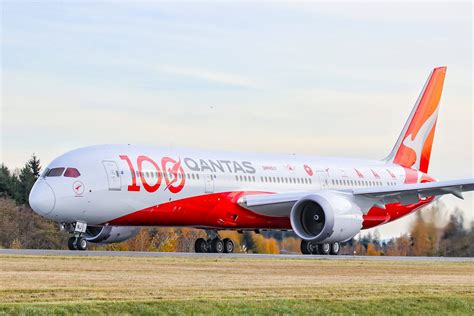
The success of these routes changed airline planning worldwide. Instead of focusing only on large hub operations, carriers began searching for opportunities to connect cities directly.
This trend has placed pressure on Airbus because the 787 became the aircraft most associated with this new approach to global travel.
Why Airbus Has A Problem In The Mid-Sized Widebody Market
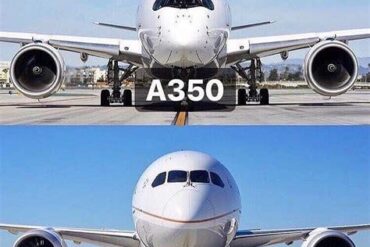
Airbus is not without successful widebody aircraft. The Airbus A350 has become one of the company’s strongest commercial products, earning praise for its efficiency, passenger comfort, and advanced technology.
However, the A350 operates in a different market segment. It competes more closely with larger aircraft such as Boeing’s 777X rather than directly challenging the 787.
The aircraft designed to compete with the Dreamliner is the Airbus A330neo. While the A330neo offers improved engines, updated aerodynamics, and a proven airframe, its sales performance has not matched Boeing’s success with the 787.
The challenge for Airbus is not simply about aircraft specifications. Aviation decisions are heavily influenced by market confidence, fleet commonality, and long-term support.
When airlines see hundreds of operators successfully using the 787, choosing Boeing becomes a lower-risk decision. The aircraft’s strong order backlog reinforces the perception that it is the leading option in its category.
The A330neo remains an important aircraft, especially for airlines seeking lower acquisition costs and operational familiarity. However, Airbus has struggled to create the same level of excitement and momentum generated by the Dreamliner.
The Boeing 787 Is Powerful, But It Is Not Untouchable
Despite its dominance, the Dreamliner faces challenges of its own. Boeing has experienced production problems, quality concerns, and delivery delays that have affected customer confidence.
Manufacturing complexity has always been one of the biggest challenges of advanced aircraft programs. The 787’s extensive use of composite materials helped create a technological breakthrough, but it also created a complicated global supply chain.
Airbus could use these difficulties as an opportunity. A manufacturer that can offer reliable production, predictable deliveries, and strong customer support may gain an advantage in future aircraft competitions.
Another challenge is the changing environmental landscape. Airlines are under increasing pressure to reduce emissions, and future aircraft success will depend heavily on compatibility with sustainable aviation fuels, improved propulsion technologies, and potentially new aircraft concepts.
The Dreamliner also faces the natural challenge of aging technology. Although the aircraft remains highly competitive today, aviation development cycles are extremely long. Airlines planning fleets decades into the future will eventually look beyond the current generation of aircraft.
This creates an opportunity for Airbus if it can introduce a more advanced successor or develop technology that surpasses Boeing’s current advantage.
Could Airbus Build A True Boeing 787 Competitor?
The question facing Airbus is not whether it can compete today. The company already has a strong widebody portfolio. The bigger question is whether Airbus can prevent Boeing from controlling the future of the mid-sized long-range aircraft market.
The aviation industry is entering a period where efficiency will become even more important. Airlines want aircraft that reduce costs, meet environmental requirements, and provide flexibility in changing travel markets.
A future Airbus response could involve a completely new aircraft program rather than another incremental upgrade. Developing a direct 787 successor competitor would require enormous investment, but allowing Boeing to maintain dominance in this category could become strategically expensive.
The commercial aircraft market has always been cyclical. Boeing dominated previous generations with aircraft such as the 747 and 777, while Airbus later challenged those positions with aircraft like the A330 and A350.
The Dreamliner’s current success does not guarantee permanent dominance. However, it has created a significant advantage that Airbus cannot ignore.
The Dreamliner’s Legacy Is Already Transforming Aviation
The Boeing 787 Dreamliner has become more than a successful aircraft program. It has changed the rules of international aviation by proving that efficient, medium-sized widebody aircraft can redefine global connectivity.
Its combination of advanced materials, lower operating costs, passenger comfort, and route flexibility has made it one of the most influential commercial aircraft of the modern era.
For Boeing, the Dreamliner represents a major strategic victory. For Airbus, it represents a reminder that innovation must continue even when the current product lineup remains competitive.
The battle between Boeing and Airbus will continue for decades, but for now, the 787 holds a unique position. It has become the aircraft that changed how airlines think about long-haul travel, and its success has left Airbus facing one of the biggest strategic questions in modern commercial aviation: how do you defeat an aircraft that changed the entire market?