The Boeing 787 Dreamliner was supposed to change the economics of long-haul aviation, but its path to becoming the world’s best-selling widebody was far more complicated than Boeing initially imagined. The aircraft arrived with revolutionary technology, ambitious production methods, and a promise to make nonstop international flying viable between cities that previously could not support large widebody aircraft. Instead, the program endured years of delays, technical problems, production stoppages, regulatory scrutiny, and a global grounding.
Yet the Dreamliner ultimately did something remarkable. In 2025, it emerged as the best-selling passenger widebody aircraft, with Boeing recording 368 net 787 orders for the year, while deliveries reached 88 aircraft. Boeing’s annual report listed 2,275 orders and 1,249 deliveries for the family through December 31, 2025.
The Boeing 787 Was Designed To Rewrite Long-Haul Aviation
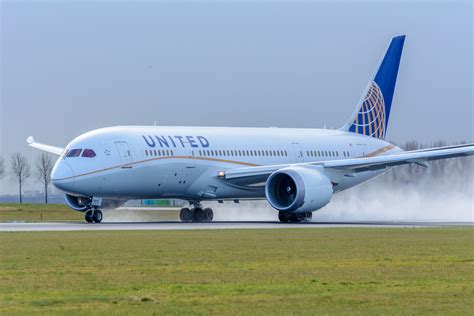
When Boeing launched the 787 program in the early 2000s, originally calling the concept the 7E7, it was pursuing something more ambitious than a replacement for the 767. The company wanted to change how airlines thought about long-haul networks. Instead of relying primarily on very large aircraft flying between major hubs, Boeing envisioned a new generation of midsize widebodies capable of connecting secondary cities directly.
That strategy was becoming increasingly attractive. Airlines did not necessarily need another enormous aircraft capable of carrying hundreds of passengers between the world’s busiest airports. They needed an aircraft that could profitably operate a smaller number of passengers over long distances while maintaining enough range and cargo capability to make international routes economically sustainable.
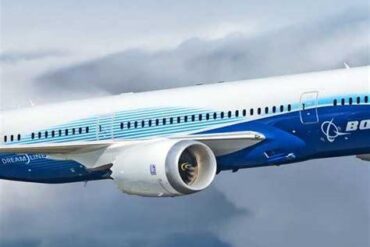
The 787 was engineered around that philosophy. Its primary structure uses a much larger proportion of carbon-fiber-reinforced composite material than previous commercial widebodies, helping reduce structural weight. Boeing also developed a highly electric architecture, advanced aerodynamics, raked wingtips, and systems designed to improve efficiency while reducing the aircraft’s dependence on conventional pneumatic systems.
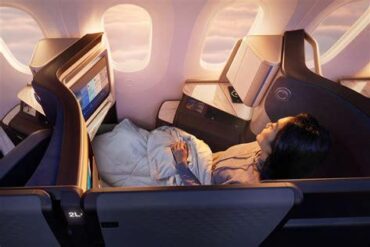
The passenger experience was also part of the equation. The Dreamliner introduced unusually large windows, higher cabin humidity, improved air filtration, quieter interiors, and a lower equivalent cabin altitude than the traditional 8,000-foot standard found on many older aircraft. Those features helped make the aircraft attractive not only to airlines calculating fuel costs, but also to passengers deciding which carriers and aircraft they preferred.
Boeing’s Global Production Strategy Created Its First Major Crisis
The technology behind the 787 was impressive, but Boeing’s manufacturing strategy created enormous problems. Rather than producing most of the aircraft internally, Boeing distributed major structural work among suppliers around the world.
The idea looked efficient on paper. Suppliers would manufacture large sections of the aircraft, reducing Boeing’s own production workload and potentially shortening assembly time. In practice, however, coordinating such a complex global supply chain proved extraordinarily difficult.
Parts arrived late, manufacturing standards varied, and Boeing encountered significant problems integrating components produced by different companies. Instead of accelerating the program, the outsourcing model contributed to delays lasting more than three years.
The first delivery, originally expected in 2008, did not occur until 2011. All Nippon Airways received the first 787 in October 2011, marking the beginning of commercial service and the start of a new era for Boeing’s widebody portfolio.
The irony was striking. The aircraft had been designed to simplify airline economics, yet the process of bringing it into existence had become one of the most complicated industrial projects in Boeing’s history.
Early Airline Success Was Followed By A Global Grounding
The Dreamliner quickly demonstrated why airlines had been willing to wait for it. Its combination of range, passenger capacity, cargo capability, and efficiency gave carriers a powerful tool for opening routes that older widebodies could not operate profitably.
But technical problems soon emerged. Airlines encountered electrical issues, fuel leaks, brake problems, and other early-service difficulties. Most were manageable, but the aircraft’s highly innovative systems meant that engineers and operators were dealing with technologies that differed significantly from those used on previous generations of commercial jets.
Then came the crisis that threatened the entire program.
In January 2013, lithium-ion battery incidents involving Japan Airlines and All Nippon Airways resulted in fires and emergency situations. Investigators identified thermal runaway as a serious concern, creating the possibility that overheating within a battery could propagate into a dangerous fire.
Regulators responded decisively. The FAA and aviation authorities around the world grounded the global 787 fleet, which at the time consisted of roughly 50 aircraft.
This was the Dreamliner’s defining early setback. A jet marketed as one of the most advanced commercial aircraft ever built was suddenly sitting on airport ramps around the world.
The grounding itself lasted approximately three months rather than seven months. However, the broader 787 program later experienced much longer delivery stoppages and production interruptions, which helps explain why the aircraft’s history is sometimes described as involving a prolonged grounding period.
Boeing redesigned the battery system, adding improved insulation, enhanced monitoring, and a stainless-steel containment system intended to prevent a battery fire from spreading. Regulators eventually approved the modifications, allowing the Dreamliner to return to commercial service.
The episode damaged confidence, but it did not destroy demand.
The Dreamliner Survived Another, Longer Production Crisis
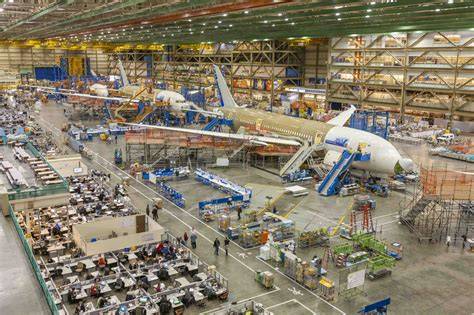
The battery grounding was dramatic, but the Dreamliner’s more persistent challenge came years later. Starting around 2020, Boeing discovered manufacturing-quality problems involving areas such as fuselage joins, horizontal stabilizers, and composite surfaces.
These problems were fundamentally different from the 2013 battery crisis. They were not centered on one dramatic system failure. Instead, they reflected the difficulties of maintaining precise manufacturing standards across a highly complex composite aircraft.
Boeing repeatedly halted 787 deliveries while inspections and corrective work were carried out. At one point, deliveries were stopped for close to a year, leaving more than 100 completed aircraft awaiting customer handover.
Production rates fell sharply. The company had once planned to build as many as 14 Dreamliners per month, but output dropped to only a fraction of that level during the worst disruptions.
For airlines, the consequences were significant. A carrier ordering a 787 does not simply receive another aircraft. A delayed widebody can affect an entire international network, forcing airlines to postpone new routes, retain older aircraft longer, lease replacement capacity, or modify schedules.
For Boeing, the impact was equally serious. Inspections, rework, compensation, inventory management, and lost production efficiency created substantial financial pressure.
The company also faced greater regulatory scrutiny. The FAA demanded stronger quality controls and more extensive inspections before aircraft could be delivered.
Yet the remarkable thing was that airlines continued ordering the 787.
Why Airlines Kept Buying The Boeing 787
The answer is largely economic.
A widebody aircraft is an enormous investment, and airlines can tolerate significant complexity if the airplane consistently produces attractive economics over decades of operation. The 787’s fuel efficiency became particularly valuable as fuel prices, environmental pressures, and competitive international markets forced airlines to examine operating costs more closely.
Boeing says the 787 family can provide up to 25% better fuel efficiency than the aircraft it replaces, depending on the comparison and operating configuration. Its long range and midsize capacity allow airlines to match aircraft size more closely with demand rather than flying larger widebodies with too many empty seats.
That flexibility is arguably the aircraft’s greatest commercial advantage.
A 787-8, 787-9, or 787-10 can serve different strategic purposes. The smaller variants can operate long-range routes where passenger demand is limited, while the larger 787-9 and 787-10 can support higher-demand international markets.
This versatility fits modern airline planning extremely well. Airlines increasingly want to reduce their dependence on massive connecting hubs while offering passengers more nonstop choices.
The Dreamliner has become particularly effective at connecting cities that would struggle to support an aircraft such as a Boeing 777-300ER or Airbus A380.
Boeing says the 787 family has enabled more than 500 new nonstop routes, illustrating how deeply the aircraft has influenced airline network planning.
The Passenger Experience Became Another Competitive Advantage
Airline economics explain much of the 787’s popularity, but passengers also played an important role.
The Dreamliner’s large electronically dimmable windows became one of its most recognizable features. Instead of conventional mechanical window shades, the system allows passengers to control the amount of light entering the cabin while maintaining the appearance of an open window.
The cabin environment was equally important. Boeing designed the aircraft with a lower cabin altitude and greater humidity than many older widebodies. The result is intended to reduce some of the dryness and fatigue associated with long-haul travel.
For passengers spending 10, 12, or even 15 hours aboard an aircraft, those details matter.
The aircraft’s quieter cabin, improved lighting, larger overhead bins, and smoother ride technology also contributed to its reputation. None of these features alone makes an aircraft commercially successful, but together they give airlines another reason to market the 787 as a premium long-haul product.
That creates an unusual alignment of incentives: airlines save fuel while passengers receive a more comfortable cabin.
The 2025 Air India Crash Changed The Dreamliner’s Story
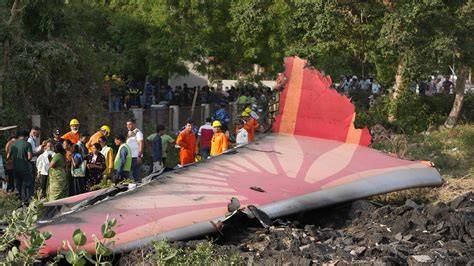
The Dreamliner’s troubled history gained another devastating chapter in 2025 when Air India Flight AI171, operated by a 787, crashed shortly after takeoff, causing a significant loss of life.
The accident became the first fatal crash involving the 787 and immediately intensified scrutiny of the aircraft and Boeing.
However, regulators did not respond with a fleet-wide grounding like the action taken in 2013. Investigators began examining the circumstances of the accident, while the wider 787 fleet continued operating.
That distinction is important. A fatal accident involving a particular aircraft does not automatically establish that the aircraft type has a systemic design defect. Determining whether a problem is isolated or fleet-wide requires detailed investigation, evidence, and technical analysis.
The tragedy nevertheless became an important reminder that the Dreamliner, despite its extraordinary commercial success, is not immune from the risks inherent in aviation.
Why 2025 Became The Dreamliner’s Breakthrough Year
Despite everything that had happened before, 2025 produced one of the strongest commercial performances in the 787 program’s history.
Boeing recorded 368 net 787 orders in 2025, according to year-end figures reported in January 2026. The company also delivered 88 Dreamliners, making the 787 the backbone of Boeing’s widebody delivery output for the year.
The order surge was especially notable because the market was not simply rewarding Boeing for producing more aircraft. Airlines were making major long-term commitments to the Dreamliner despite years of production difficulties.
One of the most important developments was Qatar Airways’ agreement covering 130 787 Dreamliners as part of a larger widebody deal announced in May 2025. Boeing described it as the largest 787 order and the largest widebody order in its history at the time.
Other major airlines also expanded their Dreamliner fleets, reinforcing the aircraft’s position as a preferred tool for long-haul growth.
The market evidence therefore tells a powerful story. Airlines were not buying the 787 because its history was flawless. They were buying it because its combination of range, efficiency, capacity, and flexibility remained difficult to match.
The Dreamliner’s Real Achievement Is Bigger Than Sales
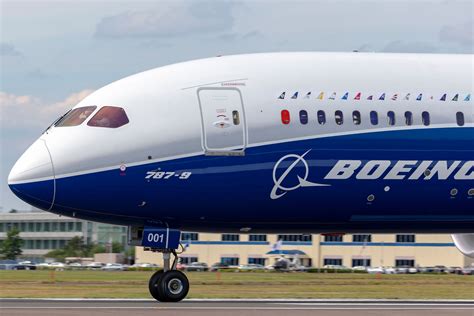
Calling the 787 the best-selling widebody of 2025 captures only part of its significance. The aircraft has changed the way airlines think about international networks.
Before the Dreamliner, opening a long-distance route between two relatively small markets could be financially risky. Airlines often needed enough passengers to fill a large widebody or depended on connecting traffic through a major hub.
The 787 changed that calculation.
A carrier can now operate a long route with a midsize widebody, generating revenue from passengers who would previously have connected elsewhere. The result is greater network flexibility and more nonstop opportunities.
That strategy has influenced the broader industry. Airbus’s A350 family follows a similar philosophy of combining long range with strong efficiency, while airlines have increasingly favored efficient twin-engine widebodies over four-engine aircraft.
In that sense, the 787 did not merely become a successful airplane. It helped accelerate a fundamental transition in long-haul aviation.
From Grounding To Global Dominance
The Boeing 787 Dreamliner’s journey is difficult to summarize with a simple success story.
It began with an ambitious vision, suffered years of development delays, endured a global grounding after battery fires, faced repeated production and delivery stoppages, and encountered renewed scrutiny after a fatal accident in 2025.
Yet the same aircraft became a cornerstone of international airline fleets.
By the end of 2025, Boeing reported more than 1,249 Dreamliner deliveries, while the wider fleet had carried more than one billion passengers since entering service. Boeing also highlighted operations across more than 85 countries and more than 520 airports.
That scale demonstrates why the 787 remains so important.
Its greatest achievement is not that it survived a grounding or overcame production problems. It is that the fundamental idea behind the aircraft proved correct. Airlines really did want efficient midsize widebodies capable of flying long distances, opening thinner routes, and giving passengers more direct connections.
The Dreamliner arrived with enormous promises and an equally enormous list of problems. More than a decade later, its commercial record suggests that the promises ultimately mattered more than the turbulence.
The Boeing 787 did not become the world’s best-selling widebody because its journey was easy. It became a best-seller because, despite everything that went wrong, the aircraft continued to solve the problem airlines cared about most: flying farther with fewer seats, lower fuel consumption, and greater network flexibility.