United Airlines’ ambitious push into a new era of premium long-haul travel has hit an unexpectedly turbulent start, as its brand-new Polaris-configured Boeing 787-9 Dreamliner—tail number N61101—has suffered two separate groundings within just five days. The aircraft, intended to showcase the airline’s most advanced cabin product to date, instead finds itself under scrutiny after a series of technical setbacks disrupted its highly anticipated debut.
The first incident unfolded shortly after departure from Singapore Changi Airport, when passengers and crew reported a persistent electrical odor circulating through the cabin. What should have been a routine long-haul journey quickly transformed into a prolonged in-flight anomaly, forcing the aircraft to enter a holding pattern before eventually returning to Singapore after nearly two hours in the air. The situation was serious enough to halt the aircraft’s inaugural international service, leaving passengers stranded overnight.
Despite efforts by ground crews to diagnose and resolve the issue, time constraints and operational limitations prevented a same-day fix. The aircraft was ultimately ferried back to San Francisco without passengers, a quiet and symbolic retreat for what was meant to be a headline-grabbing launch.
A Second Setback Deepens Concerns Over Reliability
If the first grounding raised eyebrows, the second incident intensified concerns. Shortly after undergoing initial inspections and returning to limited domestic operations, the aircraft experienced another mechanical issue—this time before takeoff. While less dramatic, the recurrence suggested that the underlying problem had not been fully resolved, prompting further maintenance scrutiny.
Following these events, the jet was repositioned to Houston’s George Bush Intercontinental Airport, where it underwent additional inspections and test flights. Data indicates that the aircraft completed a controlled sortie lasting nearly two and a half hours, a step typically used to validate system performance after maintenance interventions. However, the lack of immediate redeployment into international service signals that United is taking a cautious approach.
Inside the 78L Dreamliner: A High-Stakes Investment
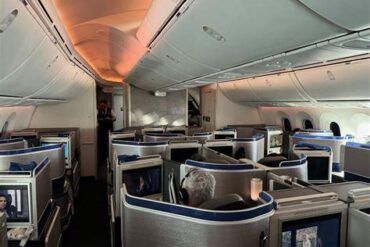
The troubled aircraft is not just another addition to the fleet—it represents the launch platform for United’s new “78L” subfleet, a premium-heavy configuration of the Boeing 787-9 designed to redefine long-haul comfort. With just 222 seats, it is among the least densely configured Dreamliners in operation, prioritizing luxury over capacity.
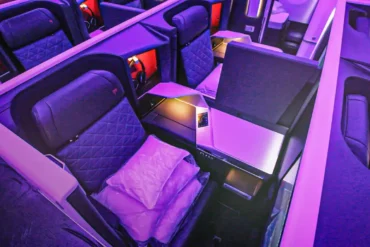
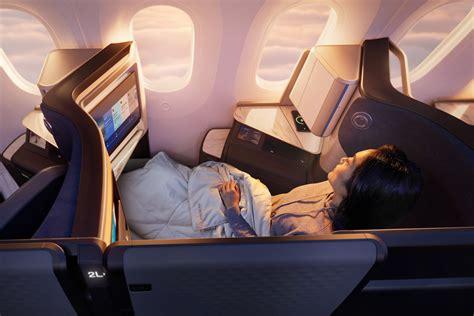
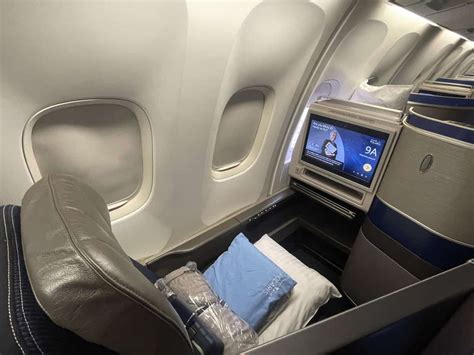
At the heart of the design is the Polaris Studio concept, an elevated business-class experience featuring eight oversized front-row suites that are approximately 25% larger than standard Polaris seats. These exclusive spaces are tailored for high-yield travelers seeking privacy and comfort on ultra-long-haul routes.
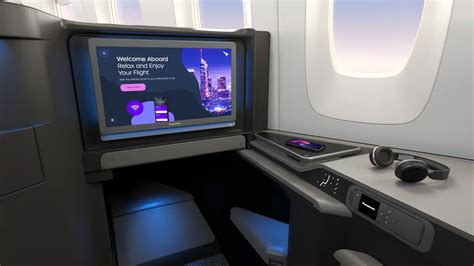
Beyond the Studios, the aircraft offers 56 Polaris business-class suites, each equipped with sliding privacy doors—a long-awaited enhancement that aligns United with competitors offering fully enclosed business-class products. Premium Plus, the airline’s premium economy cabin, includes 35 seats with upgraded amenities such as wireless charging and enhanced personal space.
Even the economy cabin reflects a step forward. With only 123 seats, passengers benefit from reduced density and advanced in-flight entertainment, including 13-inch 4K OLED screens with Bluetooth connectivity—features rarely seen at this scale in economy class.
A Critical Moment for United’s Premium Strategy
The timing of these setbacks is particularly sensitive. The 78L subfleet is central to United’s broader “United Next” transformation strategy, a multi-year initiative focused on expanding international routes while significantly upgrading the onboard experience. The airline plans to receive 20 of these aircraft within the year, with a long-term goal of 30 by 2027.
San Francisco is slated to serve as the primary hub for these premium-heavy Dreamliners, with Singapore and London designated as the initial flagship routes. These markets demand reliability and consistency, especially when targeting premium travelers who expect seamless experiences.
The early struggles of N61101 therefore carry implications beyond a single aircraft. They highlight the operational challenges that can accompany even the most advanced aviation technology, particularly when introducing new cabin configurations and electrical systems.
Operational Pressure Meets Passenger Expectations
Modern aircraft are marvels of engineering, but they are also complex ecosystems where even minor faults can cascade into major disruptions. The reported electrical smell—likely linked to environmental control systems or wiring components—underscores how sensitive passenger cabins are to anomalies.
For United, the stakes are amplified by the visibility of this rollout. Aviation enthusiasts, frequent flyers, and industry analysts are closely tracking the performance of the new Polaris product, making any hiccup more pronounced. Social media commentary has already framed the debut as a rocky start, adding reputational pressure to resolve the issues swiftly.
Looking Ahead: Recovery and Redemption
Despite the setbacks, the long-term outlook for the 78L Dreamliner program remains strong. Early technical issues are not uncommon in aviation, particularly when introducing new configurations. What matters now is how effectively United identifies and resolves the root cause of these failures.
The airline’s decision to conduct extensive testing and limit the aircraft to domestic routes during troubleshooting reflects a measured approach. Once cleared, the jet is expected to resume its role as a flagship on key international routes, where its premium offerings could redefine passenger expectations.
For now, N61101 stands as both a symbol of innovation and a reminder that even the most advanced aircraft can face unexpected challenges. The coming weeks will determine whether this rocky introduction becomes a footnote—or a defining chapter—in United Airlines’ next generation of long-haul travel.