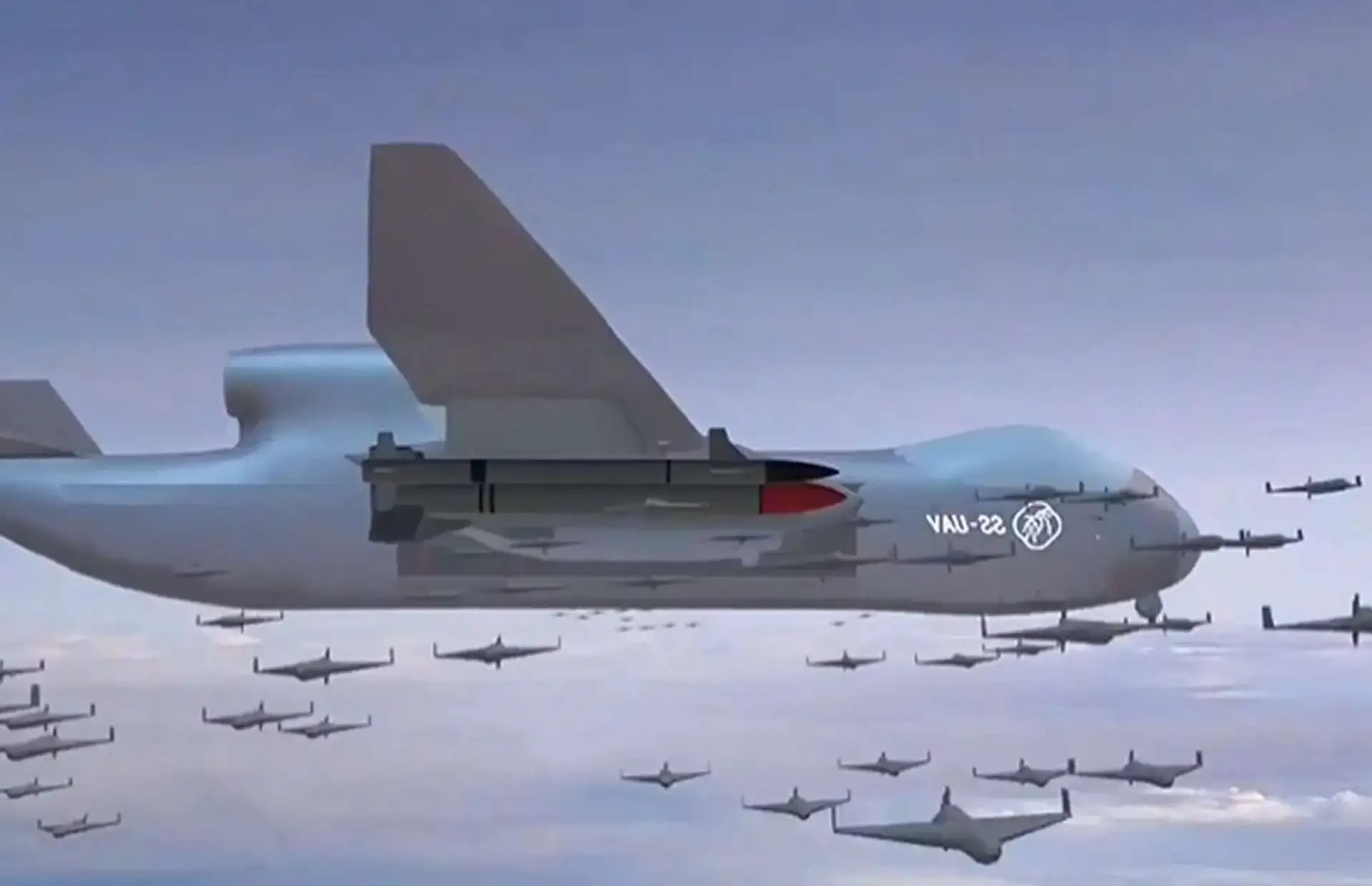
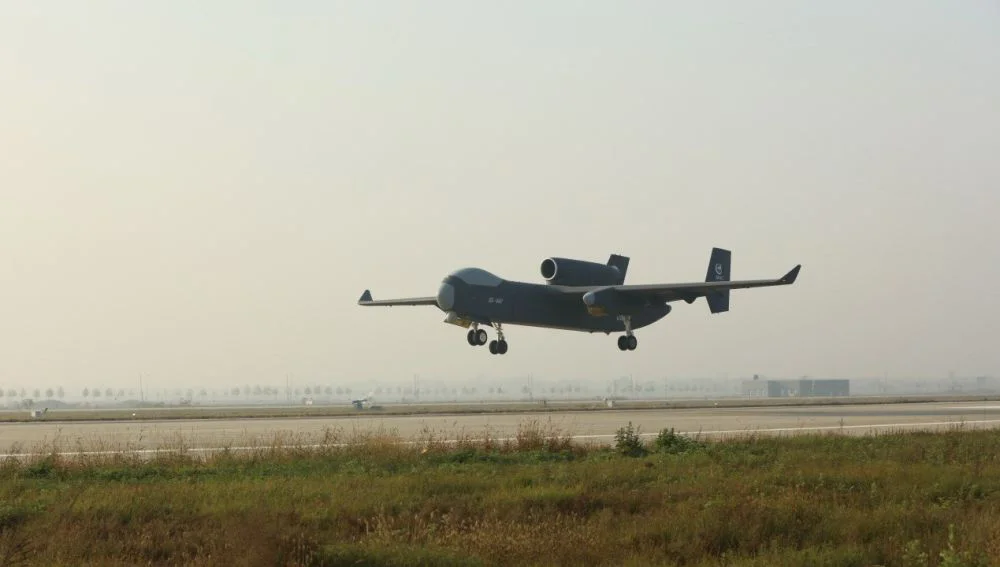
The unveiling of China’s Jiutian UAV mothership, also known as Jetank, marks a milestone in the evolution of aerial combat and strategic warfare. On December 11, 2025, this formidable high-altitude unmanned platform took to the skies for its maiden flight over Shaanxi Province, pushing the boundaries of drone swarm warfare and reasserting China’s ambitions to lead in next-generation military technology. Built by the Aviation Industry Corporation of China (AVIC), the Jiutian is heralded by Chinese media as the world’s largest drone carrier and a game-changing asset for the People’s Liberation Army (PLA).
The Birth of a Drone Mothership: A Leap in Aerial Strategy
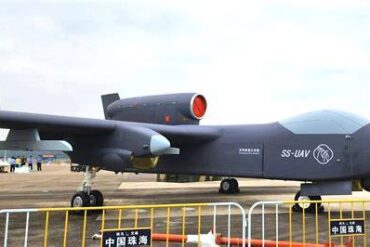
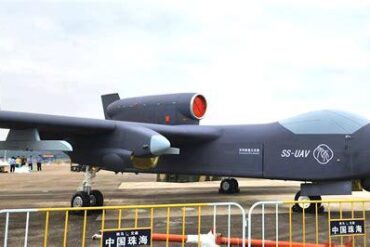
Originally previewed at the Zhuhai Airshow in November 2024, the Jiutian, or SS-UAV (designation still unclear), represents a technological and doctrinal leap in warfare. Its design is based on a universal platform with modular payloads—meaning it can switch operational roles with remarkable agility. The platform’s modularity allows it to seamlessly transform from an airborne logistics hub to a loitering munitions dispenser or an AI-enabled reconnaissance vessel within two hours.
The specifications are nothing short of staggering. With a wingspan of 25 meters, a maximum takeoff weight exceeding 16 tons, and a payload capacity of 6,000 kilograms, Jiutian dwarfs most contemporary UAVs. It can reach altitudes of 49,212.5 feet (15,000 meters) and boasts a range of nearly 7,000 kilometers, giving it true inter-theater operational reach.
A High-Altitude Arsenal: Jiutian’s Combat Capabilities
More than just an oversized UAV, Jiutian’s core capability lies in its ability to launch and coordinate up to 100 smaller drones mid-flight. These include kamikaze drones, air-to-air, air-to-ground, and anti-ship missiles, giving the Jiutian a comprehensive role in multi-domain warfare. This suite of weapons allows the PLA to:
- Saturate enemy defenses with drone swarms.
- Perform precision strikes using loitering munitions.
- Disrupt and suppress radar and electronic defense networks.
- Relay signals and act as an airborne communications hub.
Its jet engine, mounted in a nacelle above the fuselage, enables sustained high-altitude loitering, while its tricycle landing gear retracts into sponsons beneath the wings, optimizing aerodynamics and stealth profile.
Strategic Implications for the Indo-Pacific
The strategic impact of Jiutian is profound, especially in the context of Taiwan and the contested South China Sea. Jiutian enables the PLA to project power deep into disputed territories without risking expensive manned aircraft. In scenarios like a Taiwan contingency, it could be launched from the mainland, deploying hundreds of drones to saturate and overwhelm Taiwanese or allied defenses from 150–200 kilometers offshore.
This capacity for long-range saturation attacks could neutralize key defensive nodes such as radar installations, missile batteries, and command centers. Additionally, with AI-integrated targeting algorithms, the Jiutian could dynamically assign drones to targets in real time, achieving a high kill-to-launch ratio with minimal human intervention.
The Technology Behind the Monster: Modular Isomerism-Hive Architecture
One of the Jiutian’s most advanced features is its isomerism-hive storage module, designed to house a swarm of small drones or loitering munitions. This hive architecture, embedded deep in the fuselage, allows rapid launch sequencing and drone recovery operations. This modular payload design not only ensures mission flexibility but also reduces turnaround time between missions, boosting operational tempo and response efficiency.
This system offers unparalleled multi-role deployment capability, enabling the Jiutian to conduct:
- Coordinated drone swarms for area denial or shock-and-awe attacks.
- Target-specific strikes using loitering munitions.
- Emergency supply drops and reconnaissance during humanitarian missions.
The ability to conduct varied missions with a simple payload swap sets Jiutian apart as a truly multirole unmanned platform.
China’s Embrace of Swarm-Centric Warfare
Jiutian is not a solitary innovation—it’s the crown jewel of China’s broader shift toward asymmetric and swarm-centric warfare doctrines. The country’s military planners, observing lessons from the Ukraine war and global drone usage, have embraced cheap, scalable, AI-driven weapons platforms as a counter to the West’s reliance on large, high-cost systems.
Swarm tactics provide several operational advantages:
- Overwhelming defenses through volume and unpredictability.
- Reducing dependence on singular, high-value platforms.
- Distributing lethality and survivability across a network of autonomous nodes.
As per Wang Ya’nan, editor of Aerospace Knowledge, Jiutian’s launch capacity is comparable to a crewed bomber, further cementing its value as a strategic game changer. Compared to the Wing Loong-10 with a 3.5-ton max takeoff weight, or even the Wing Loong-3 at 6 tons, the Jiutian redefines the scale of UAV warfare.
A Cautionary Note: The Jetank’s Weaknesses
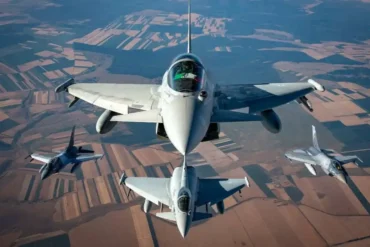
While the technological prowess of Jiutian is undeniable, its survivability in contested airspace has been called into question by several military analysts. Group Captain MJ Augustine Vinod (retd), an Indian Air Force veteran, described the Jetank as a “juicy target” due to its massive size and lack of stealth. With a wingspan of 82 feet and a radar cross-section (RCS) likely much higher than stealth aircraft, Jiutian could be easily tracked and targeted by:
- Advanced radar systems on platforms like the F-35, Rafale, or Taiwanese F-16s.
- Long-range surface-to-air missile (SAM) systems.
- Dedicated air interceptors equipped with air-to-air missiles and electronic warfare suites.
Group Captain Vinod further warns that despite its high operational ceiling, 15,000 meters is not out of reach for modern interceptors and high-altitude SAMs, particularly systems like the S-400 or Patriot PAC-3.
Doubts About Swarm Utility
In addition to the vulnerability of the mothership itself, skeptics have raised concerns about the effectiveness of the swarm drones it carries. These drones, while numerous, may be limited in range and endurance, particularly when launched from high altitudes. Their capacity to penetrate advanced multi-layered air defense systems remains debatable.
Vinod emphasized that “swarm tactics rely on numbers and coordination, but quantity doesn’t always beat quality.” He noted that modern defense systems are increasingly designed to identify, prioritize, and intercept swarm threats through machine learning-based counter-UAV systems, directed energy weapons, and layered kinetic defenses.
An Expanding Trend: Global Arms Race in Drone Motherships
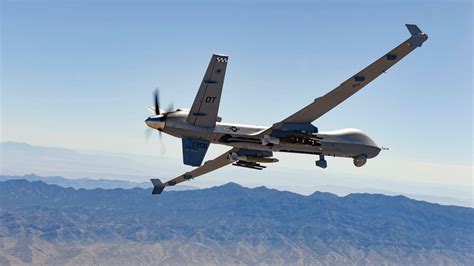
Despite criticism, China is not alone in pursuing drone mothership capabilities. The United States is also evolving its Reaper MQ-9A platform into a drone carrier. Earlier in 2025, General Atomics and AeroVironment successfully launched a Switchblade 600 loitering munition from a Reaper, proving the concept is viable.
The U.S. and other NATO allies see drone motherships as critical to maintaining persistent ISR (Intelligence, Surveillance, Reconnaissance) and conducting deep-strike missions without placing pilots at risk. The difference lies in execution—Western systems prioritize stealth, survivability, and secure satellite command links, while China appears to be leveraging scale and speed of production as its force multiplier.
Jiutian’s Future: Symbolism and Strategic Purpose
Symbolically, Jiutian showcases China’s drive to control the skies using autonomy and scale, particularly in the Indo-Pacific where maritime and airspace dominance are tightly contested. Whether it can survive in a full-blown peer-to-peer conflict is uncertain, but its implications go far beyond raw combat capability.
From a psychological warfare perspective, Jiutian creates strategic dilemmas for adversaries. Each takeoff implies the threat of low-cost, high-volume aerial saturation, forcing opponents to deploy expensive interceptors and munitions in response. The cost asymmetry created by platforms like Jiutian could become one of China’s most effective strategic levers in future conflicts.
As the PLA integrates Jiutian into its Joint All-Domain Command and Control (JADC2) network, its ability to fuse sensor data, command swarms, and support rapid force projection will only increase. This is not merely a drone—it’s a flying node of digital warfare.
Conclusion: Giant Leap or High-Altitude Gamble?
The Jiutian represents the culmination of China’s UAV ambitions—a platform that combines payload, range, modularity, and swarm-launch capability in a single unmanned vessel. Its operational role in future warfighting scenarios will be closely watched by global militaries.
But alongside praise, the vulnerabilities remain conspicuous. Whether Jiutian becomes the vanguard of a new drone age or a symbolic behemoth vulnerable to modern air defense depends on how well it can adapt, survive, and integrate with evolving tactics and countermeasures.
In the fog of tomorrow’s war, Jiutian may not fly alone—but it will certainly be watched by all.